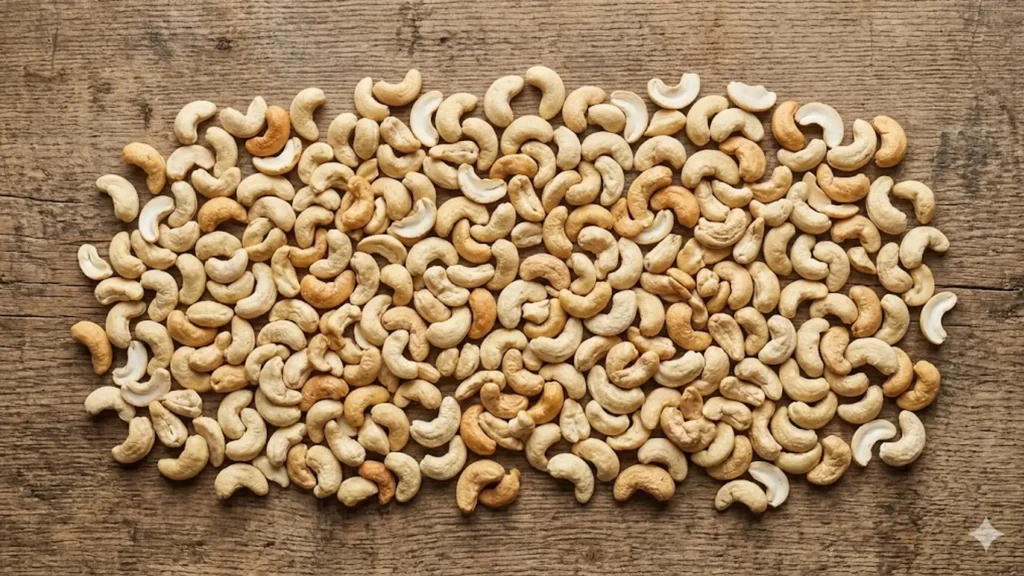
Are cashews healthy? Yes, for most people cashews are a genuinely healthy food, eaten in the right amount. A 1-ounce serving, roughly 18 cashews, delivers about 5 grams of plant protein, heart-friendly unsaturated fat, and a solid dose of copper, magnesium, and zinc for around 157 to 163 calories. The catch is the calorie density and the salt on the roasted-and-salted kind, so portion matters more than with almost any other snack.
I cook with cashews constantly, not just as a snack but as the backbone of dairy-free creams and cheeses, so I have opinions about them that a straight nutrition page will not give you. This guide covers the real numbers, who should be a little careful, and the part most articles skip entirely: how the way you buy and prep them changes both the nutrition and what they can do in your kitchen.
One thing worth saying up front, because it shapes everything below. There is a difference between asking whether a food is healthy and asking whether your habit around it is healthy. Cashews the ingredient are nutritious. Cashews the absent-minded snack you finish a whole can of while scrolling are a calorie problem. The food has not changed, only the behavior. Almost every disagreement about whether cashews are good for you dissolves once you separate those two questions, so keep them apart as you read.
What You Actually Get in a Handful
Cashews sit in a comfortable middle of the nut world. They are not the protein champion, that is peanuts, and they are not the lowest in calories, but they carry a creamy texture and a mineral profile that earns their place. Here is the per-ounce picture, which is the number worth memorizing because an ounce is the standard serving everyone quotes.
| Per 1 oz (about 18 cashews) | Amount |
|---|---|
| Calories | 157 to 163 |
| Protein | about 5 g |
| Fat (mostly unsaturated) | 12 to 13 g |
| Fiber | about 0.9 g |
| Copper, magnesium, zinc | a meaningful share of your day |
The minerals are the quiet headline. One ounce covers a large chunk of your daily copper, which your body uses for iron metabolism and nerve function, plus a real dose of magnesium, the mineral most of us run short on. The fat is mostly oleic acid, the same monounsaturated fat that makes olive oil heart-friendly. That combination is why cashews show up in research on cholesterol and blood pressure, though the honest caveat is that cashew-specific studies are still thin, and no single nut is a cure for anything.
Cashews Versus Other Common Nuts
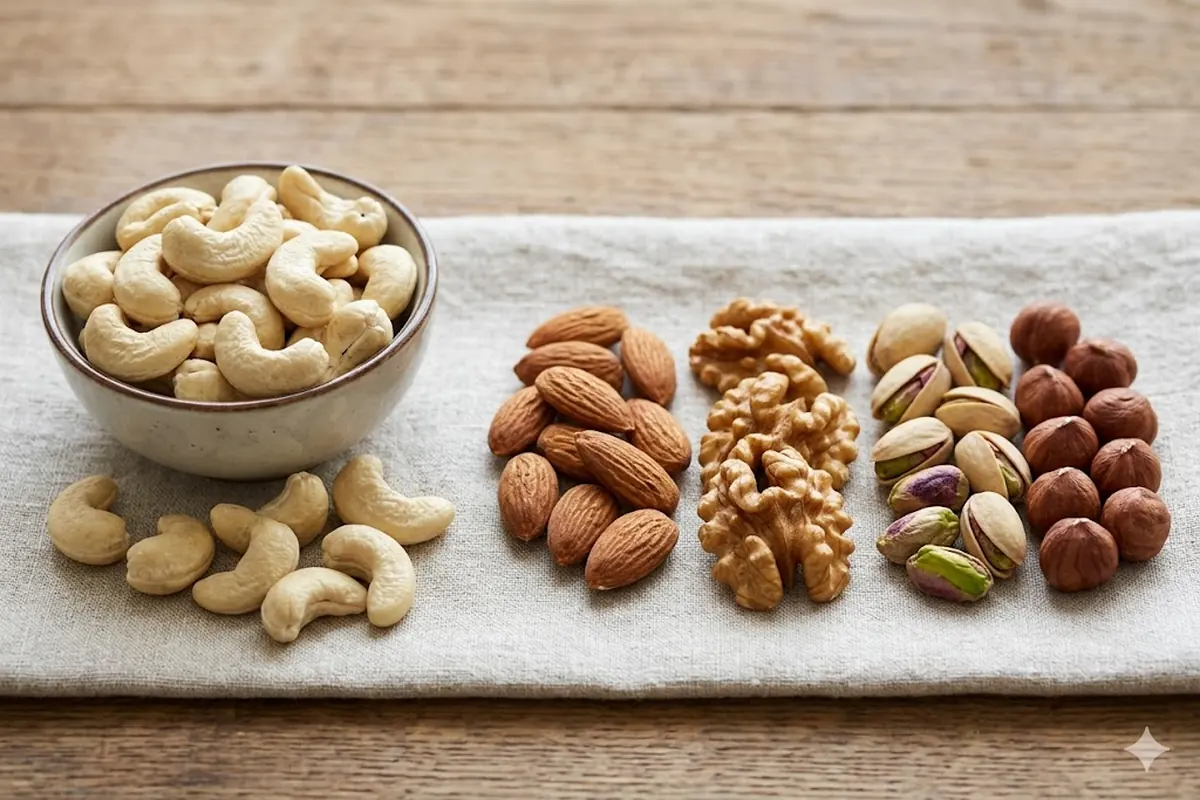
People rarely eat just one kind of nut, so the useful question is not whether cashews are healthy in isolation but how they stack up against the nuts they compete with in your pantry. Here is how I think about the three that share my shelf.
| Per 1 oz | Protein | Fiber | Best at |
|---|---|---|---|
| Cashews | about 5 g | about 0.9 g | creamy sauces, dairy swaps |
| Almonds | about 6 g | about 3.5 g | fiber, vitamin E, crunch |
| Peanuts | about 7 g | about 2.4 g | protein per dollar |
Cashews lose the protein race to peanuts and the fiber race to almonds. What they win is creaminess and copper, and creaminess is not a nutrition stat you find on a label, but in a plant-based kitchen it is the whole reason cashews matter. No other common nut blends into something that convincingly mimics dairy cream. So the honest verdict is that cashews are not the most nutritious nut, but they are the most useful one if you cook without dairy. I rotate all three rather than crown a winner, and that variety covers more bases than leaning on any single nut.
The Health Benefits, Without the Hype
Several real benefits hold up. The unsaturated fat and minerals support heart health, with some studies showing improved LDL-to-HDL cholesterol ratios when cashews replace refined-carb snacks. The protein-and-fat combination is filling, which is why a small handful curbs the 3 p.m. cookie urge better than a granola bar. There is even some evidence that we do not absorb all the calories in whole nuts, because the fibrous cell walls lock some fat away from digestion. That effect shrinks when nuts are ground into butter, which is worth knowing if you track intake.
Where I push back on the typical article is the framing. Cashews are not a superfood you should eat by the bowlful to chase benefits. They are a nutrient-dense ingredient that rewards a steady, modest habit. An ounce a day, most days, is the sweet spot for most adults. That is enough to get the minerals and the satiety without the calories quietly stacking up, since three or four ounces of cashews while watching a movie is over 600 calories before you notice.
The blood sugar angle deserves a clearer note than most pages give it. Because cashews carry protein and fat alongside their carbohydrate, they blunt the spike you would get from a refined-carb snack eaten alone. Swapping a handful of cashews for a handful of pretzels is a small, real upgrade for steadier energy. A 2019 study even found lower insulin levels when participants got 10 percent of their daily calories from cashews. That does not make them a treatment for anything, and no single food fixes type 2 diabetes, but as a snack choice they sit on the right side of the ledger.
The magnesium is worth lingering on too. A large share of adults fall short of the magnesium they need, and the mineral is tied to muscle function, sleep quality, and steady blood pressure. One ounce of cashews supplies a meaningful slice of the daily target. It is not a reason to overeat them, but it is a quiet reason the modest daily handful earns its keep beyond just tasting good.
Who Should Be a Little Careful
This is the section most cheerful nutrition posts gloss over. Two groups should pay attention.
First, anyone watching sodium. Plain cashews have almost none, around 4 to 5 mg per ounce. Roasted-and-salted cashews are a different food, often carrying 100 to 200 mg of sodium per ounce plus added oils. If you eat them by the handful from a can, the salt adds up fast. Buy raw or dry-roasted unsalted and you sidestep the whole issue.
Second, people prone to calcium-oxalate kidney stones. Cashews are moderately high in oxalates, the compounds that can contribute to stone formation in susceptible people. If you have a history of stones, cashews are not off-limits, but they are not the nut to eat daily by the handful either. Almonds are even higher in oxalates, so this is a nut-wide consideration rather than a cashew-only one. For most people with healthy kidneys, this is a non-issue.
And the curious one: truly raw cashews are mildly toxic. The shell contains urushiol, the same irritant in poison ivy. The cashews labeled raw at the store have actually been steamed to remove it, so they are safe. You will never find genuinely raw, in-shell cashews at a grocery store, which is a good thing, because the people who shell them by hand in producing countries risk real chemical burns from that same compound. It is part of why cashews cost more than peanuts despite both being widely grown.
Allergies round out the cautions. Cashews are a tree nut, and tree-nut allergies can be severe. Someone allergic to one tree nut is often advised to be careful with others, and cashew allergy specifically has been linked to stronger reactions in some people. If you are introducing cashew-based foods to a household with allergy history, treat the cashew cream and cheese in this site’s recipes as you would any nut product and check with the people you are feeding. For everyone without a nut allergy, none of this applies.
Raw, Roasted, or Soaked: A Cook’s Decision
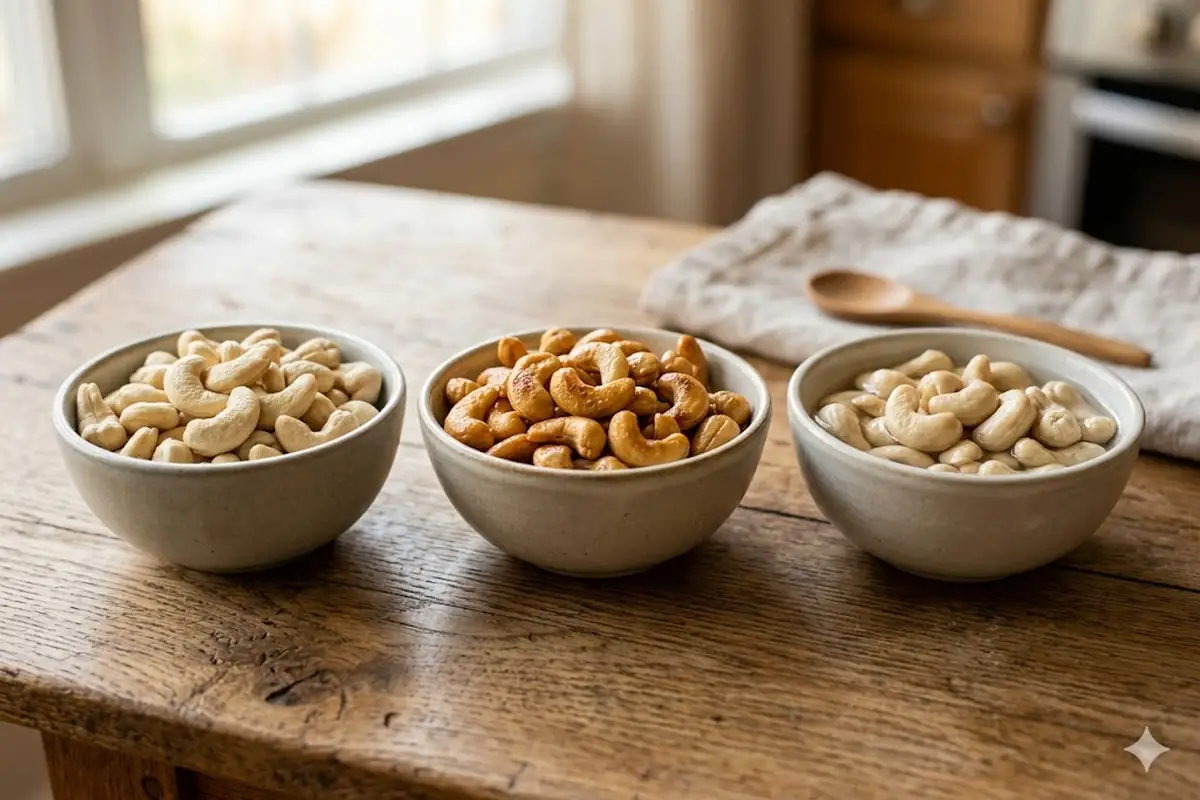
Here is the part no nutrition page tells you, and it is the reason I buy cashews in two-pound bags. The form you choose should follow the job.
For snacking, dry-roasted unsalted cashews win. Roasting deepens the flavor and may even bump the antioxidant activity slightly. For cooking, especially dairy-free cooking, you want raw cashews, because roasting locks in a toasted flavor you do not want in a neutral cream. This is the single most useful distinction for a plant-based kitchen, and it maps cleanly to a decision: snacking goes roasted, building goes raw.
There is a small nutrition wrinkle in that choice worth knowing. Roasting can slightly reduce some heat-sensitive nutrients while making others more available, and one study found roasting nudged digestibility up, which means you absorb marginally more of the calories from roasted nuts than raw ones. The differences are small enough that they should not drive your decision, taste and recipe role should. But if you are tracking intake to the gram, it is a real footnote. For practical purposes, buy raw for the freezer and roast a batch yourself when you want snacking nuts, which gives you both forms from one bag and full control over the salt.
The technique that turns cashews into a kitchen workhorse is soaking. Cover raw cashews with water and let them sit 2 to 4 hours, or speed it up by boiling them for 15 minutes, then drain. Soaked cashews blend into a silky cream with no grit, and that cream becomes the base for dairy-free alfredo, soup finishers, and the foundation of most homemade vegan cheese. If you want the full breakdown of how cashews become cheese, my piece on plant-based dairy swaps and the soaking ratios there will save you a gritty first batch.
I learned the soaking lesson the hard way. My first cashew cream went into a soup unsoaked because I was impatient, and it stayed faintly sandy no matter how long the blender ran. A high-speed blender can almost get there with unsoaked nuts, but soaking is what gives you that pourable, restaurant-smooth texture every time. Now I keep a jar of cashews soaking in the fridge the way other people keep stock.
A few ratios make this practical. For a pourable cream, blend 1 cup of soaked cashews with about three-quarters of a cup of water and a pinch of salt. For a thicker, spreadable base closer to ricotta, drop the water to a quarter cup. Add lemon juice and nutritional yeast and you are at a quick cheese. The same soaked cashews can swing from sweet to savory depending on what you blend in, which is why one bag covers so much ground. Buying cashew pieces instead of whole halves saves money here too, since you are pulverizing them anyway and the broken bits cost less per pound.
Storage is the last practical piece. Because of their fat content, cashews go rancid faster than you would expect at room temperature, especially in a warm kitchen. I keep my bulk bag in the freezer and pull out what I need, which keeps the oils fresh for many months instead of a few weeks. Rancid nuts are not dangerous, but they taste flat and slightly bitter, and that off-flavor will ruin a delicate cashew cream before you figure out the bag is the culprit. A quick sniff before blending is a habit worth building.
How Cashews Fit a Plant-Based Diet
For vegans, cashews pull double duty in a way they do not for most eaters. They are a snack, yes, but they are also the closest thing the plant kingdom has to a dairy stand-in for creaminess. That makes them more central to a vegan pantry than to an omnivore one, which is why portion awareness matters even more here. It is easy to eat cashews as snacks and then also cook with them all week, doubling your intake without realizing it.
The minerals matter for plant-based eaters too. Zinc and copper can be a bit harder to get without animal foods, and cashews quietly contribute both. Folded into a weekly rotation, they slot well alongside legumes and whole grains, the kind of pairing I build into a full vegan meal prep plan so the nutrition spreads across the week instead of spiking in one sitting.
There is also a practical iron note for vegans. Cashews contain a modest amount of non-heme iron, the plant form that your body absorbs less efficiently than the iron in meat. Eating them alongside something rich in vitamin C, a squeeze of lemon, some bell pepper, a side of tomatoes, boosts that absorption. So a cashew-based cream stirred into a tomato soup is quietly doing more nutritional work than either ingredient alone. These small pairings add up across a week of plant-based eating and are the kind of detail that separates a thrown-together vegan diet from a well-built one.
One honest limitation: cashews are not a complete protein powerhouse, and leaning on them for protein would be a mistake. Five grams per ounce is fine as a contribution, but a vegan building real protein intake should anchor on lentils, tofu, tempeh, and beans, then treat cashews as the creamy supporting player they are. I have seen people assume that because nuts are filling they must be high-protein, then come up short. Filling and protein-rich are not the same thing, and cashews are firmly in the filling camp.
For the deepest dive on nuts and long-term health outcomes, the evidence summaries at NutritionFacts.org are the most rigorous I have found, and if you want recipes that put cashew cream to work, Minimalist Baker has a deep catalog. On the snack-pairing side, a handful of cashews next to a bowl of pasta rounds out a meal without much thought.
Frequently Asked Questions
How many cashews can I eat a day?
For most adults, about 1 ounce a day, which is roughly 18 cashews or a small handful, is a sensible target. That gives you the minerals and the satiety benefit without overshooting on calories, since cashews run 157 to 163 calories per ounce. If you also cook with them, count that toward your total so you do not double up by accident.
Are roasted cashews still healthy?
Dry-roasted unsalted cashews are just as healthy as raw and arguably tastier, with possibly a slight bump in antioxidant activity. The version to watch is roasted-and-salted, which adds 100 to 200 mg of sodium per ounce plus extra oils. For everyday eating, choose unsalted and you keep all the benefits.
Are cashews good for weight loss?
They can be, in moderation. The protein and fat are filling, which helps curb snacking, and your body does not absorb all the calories in whole nuts because the cell walls trap some fat. The key is portion control, since cashews are calorie-dense and easy to overeat by the handful.
Why do some people say raw cashews are dangerous?
Truly raw cashews contain urushiol, the same irritant found in poison ivy, in and around the shell. But the cashews sold as raw in stores have been steamed to remove it, so they are completely safe to eat and to soak for cooking. You cannot buy genuinely raw, unprocessed cashews at a normal grocery store.
Should I soak cashews before using them?
For snacking, no. For blending into creams, sauces, or vegan cheese, yes. Cover raw cashews with water for 2 to 4 hours, or boil them 15 minutes for a quick version, then drain and blend. Soaking softens them so they blend silky-smooth instead of gritty, which makes a real difference in dairy-free recipes.
Are cashews bad for kidney stones?
Cashews are moderately high in oxalates, which can contribute to calcium-oxalate kidney stones in people prone to them. If you have a history of stones, you do not need to avoid cashews entirely, but do not eat them daily by the handful. For people with healthy kidneys, oxalates from cashews are not a concern.
Are cashews healthier than almonds or peanuts?
Each has a niche. Peanuts have more protein, almonds have more fiber and vitamin E, and cashews lead on copper and creaminess for cooking. Cashews are also lower in oxalates than almonds. None is clearly best, so variety across all three is the smart move rather than picking a single winner.