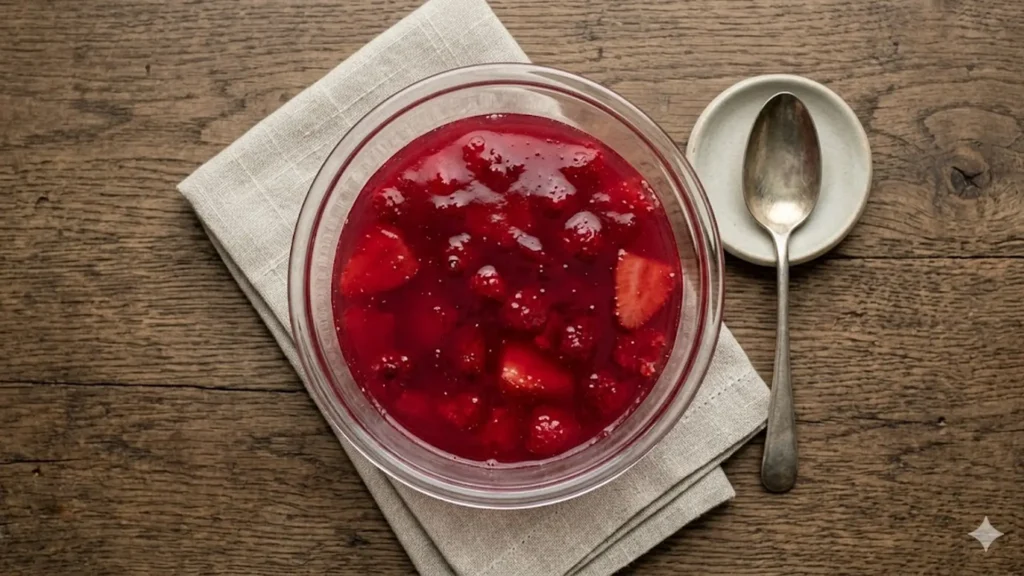
A vegan gelatin substitute is any plant-based ingredient that sets, thickens, or gels a liquid without the animal collagen that ordinary gelatin is made from, and the right one depends entirely on what you are making. Gelatin comes from boiled animal bones, skin, and connective tissue, so it is off the table for anyone eating plant-based. The good news is that the plant kingdom offers several setting agents that work beautifully, from seaweed-derived agar to fruit pectin to a handful of starches. The catch is that none of them behaves exactly like gelatin, so swapping blindly leads to runny puddings or rubbery bricks. This guide walks through every reliable option, exact conversions, how to activate each one, and how to fix a batch that did not set, so you can pick the right tool the first time.
Why Regular Gelatin Is Not Vegan
Gelatin is a protein extracted by boiling the bones, skin, hooves, and connective tissue of animals, usually cows and pigs. It is what gives gummy candies their chew, panna cotta its wobble, and many marshmallows their structure. Because it is purely an animal product, it is not vegan and not even vegetarian in the strict sense, since it is a byproduct of slaughter. That is why so many desserts that look harmless, including most store-bought jellies, gummies, and some yogurts and frostings, are quietly off-limits. Once you know to look for it, you start spotting gelatin everywhere, which is exactly why having a few plant-based replacements on hand is so useful. The first time I tried to make a plant-based panna cotta I assumed any setting agent would behave like the gelatin I grew up with, dumped in agar without boiling it, and ended up with a gritty puddle. That one failure taught me more than any recipe could: these ingredients are not gelatin in disguise, they each have their own rules, and learning those rules is the whole job.
Agar Agar: The Closest Match
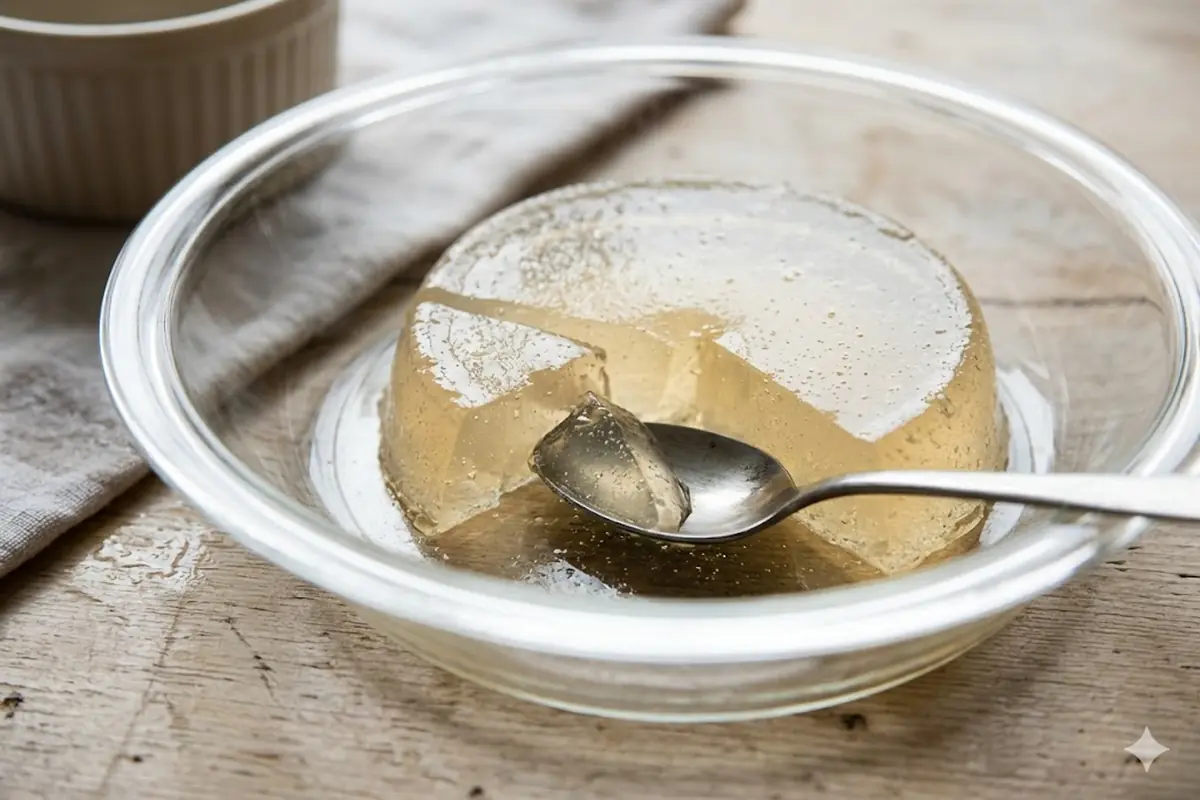
Agar agar, made from red seaweed, is the substitute that comes closest to gelatin and the one I reach for most. It sets firmer and cleaner than gelatin, and here is the part I love: it holds its shape at room temperature. An agar jelly will not slump or melt on the counter the way a gelatin one does, which is a small miracle if you have ever watched a dessert collapse on a warm afternoon. It carries no flavor of its own, so it disappears into whatever you make, whether that is a clear fruit jelly, a panna cotta, a custard, a slice of vegan cheesecake, or a batch of homemade marshmallows.
The most important thing to understand about agar is that it must be boiled to activate. Gelatin only needs to be bloomed in cold water and gently warmed; agar has to come to a real boil and simmer for a couple of minutes to dissolve fully, or it will set into a grainy, weeping mess. After dissolving, it sets fast as it cools, beginning to firm up at around 100 to 110 degrees Fahrenheit, so work quickly once it is off the heat.
Agar also comes in three forms, and they are not interchangeable spoon for spoon, which trips up a lot of first-timers. Powder is the most concentrated and the easiest to dose precisely. Flakes are less concentrated, so you need roughly three times the volume of flakes to match powder. Bars, the freeze-dried form common in Japanese cooking, have to be soaked, squeezed, and broken up before use. If a recipe gives you a measurement, check which form it means, because using a tablespoon of powder where it wanted a tablespoon of flakes will give you a hockey puck instead of a jelly. When in doubt, powder is the most forgiving and the easiest to find.
On conversions, sources genuinely disagree because agar is sold at different gel strengths, so treat any single ratio as a starting point. A widely used guideline is about 1 teaspoon of agar powder, or 1 tablespoon of agar flakes, to set 1 cup of liquid to a firm gel; for a softer, more gelatin-like wobble, use less, closer to half a teaspoon per cup. The smart move is to run a tiny test: dissolve your measured agar in a small amount of liquid, chill a spoonful for a couple of minutes, and check the firmness before committing the whole batch. One real advantage over gelatin is that if your test sets too firm or too soft, you can re-melt the mixture, adjust, and set it again. Gelatin gives you no such second chance.
Pectin: Best for Jams and Fruit
Pectin is a fiber that already lives inside fruit, concentrated in apples and citrus peels, and it is what has set jams and jellies for as long as people have made them. Since it comes from plants, it slots right in as a vegan gelatin substitute, though only for the fruit-based jobs it was built for: preserves, pie fillings, glazes. Do not expect a clean jiggle out of it. What you get instead is that soft, spoonable fruit set you know from a good jar of homemade jam, and for that purpose nothing beats it.
Pectin needs both sugar and acid to gel properly, which is why classic jam recipes call for a lot of sugar and a squeeze of lemon. There are low-sugar and no-sugar pectins on the market that use a different setting mechanism if you want to cut the sweetness. Pectin is not a general-purpose gelatin swap; it shines in fruit-based applications and falls flat in something like a clear savory aspic. Follow the package directions for your specific pectin, since rapid-set, low-sugar, and standard pectins all behave differently.
One thing worth knowing is that most commercial pectin is vegan, since it is extracted from fruit, but a few specialty pectins are blended with other ingredients, so a quick label check never hurts. You will also see packaged vegan gelatin products marketed directly as one-to-one replacements; these are usually a blend of agar and other plant gums tuned to mimic gelatin’s wobble more closely than agar alone. They are convenient and worth trying if you make jellied desserts often, though they cost more than buying plain agar and dialing it in yourself.
Carrageenan: For Creamy, Softer Sets
Carrageenan, also called Irish moss, is another seaweed extract. It sets less rigidly than agar and is prized for creamy applications: vegan panna cotta, mousses, ice creams, and puddings where you want a soft, luscious body rather than a firm slice. It is flavorless and works especially well with dairy-free milks, including ones you can make at home, like the kind I cover in my guide to making a dairy-free coffee base that doubles as a dessert milk. If you can find whole dried Irish moss, you can soak and blend it into a gel base yourself, which is a favorite trick for silky raw desserts. For most home cooks, the refined powder is easier to dose and the more practical choice.
Starches: When You Want Thick, Not Gelled
Here is where people get tripped up. Cornstarch, tapioca starch, and arrowroot are not true gelling agents at all. They thicken; they do not set. But thickening is exactly what you want for pastry cream, pudding, pie filling, and custard, so they earn their place. The method is always the same: stir the starch into cold liquid to make a slurry, then cook it into the warm mixture until it thickens and turns glossy. Each one has a personality. Arrowroot is the silky, clear one, lovely for a fruit glaze, but it sulks around dairy and turns slimy if you push the heat. Tapioca runs glossy and a little stretchy. Cornstarch is the dependable everyday choice, with one rule: cook it all the way or it tastes raw and chalky. None of the three will give you something you can turn out of a mold, so save them for the soft and creamy end of the spectrum.
Vegetable Gums: Powerful Stabilizers
Xanthan gum and guar gum are stabilizers and thickeners rather than setting agents. They add body, stop ice cream from getting icy, and emulsify sauces, but they will not set a liquid into a gel you can slice. They are also extremely potent: a typical dose is just an eighth to a quarter teaspoon per cup of liquid, and a heavy hand turns things slimy and snotty fast. Whisk or blend them in for even distribution so they do not clump. Use them as a supporting player, often alongside agar or starch, rather than as a standalone gelatin replacement.
Which Substitute for Which Job
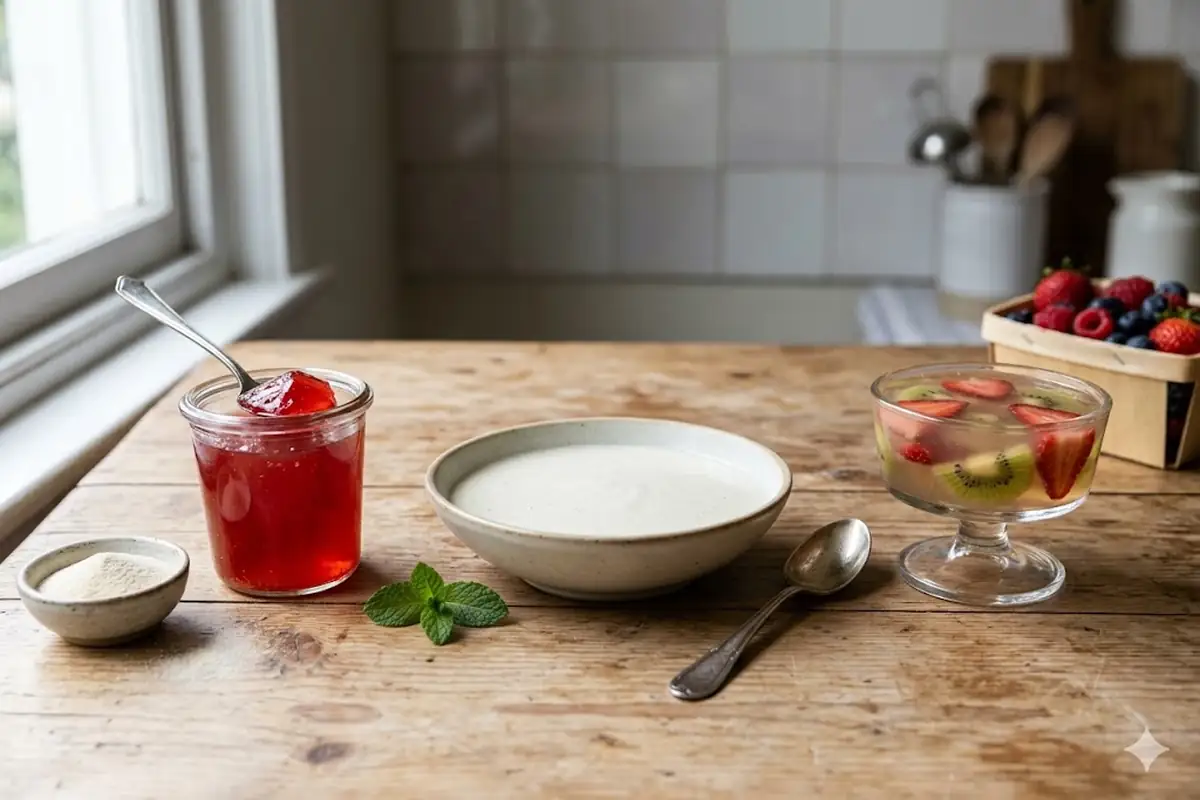
Matching the substitute to the application is the whole game:
- Firm jelly, panna cotta, vegan cheesecake, marshmallows, unmolded desserts: agar agar.
- Jam, jelly, fruit preserves, pie glaze: pectin.
- Creamy mousse, soft panna cotta, ice cream, pudding: carrageenan, or a small amount of agar dialed down.
- Pastry cream, custard, thick pie filling: cornstarch, tapioca, or arrowroot.
- Stabilizing ice cream or emulsifying a sauce: xanthan or guar gum, in tiny amounts.
This kind of label and ingredient awareness is the same skill that helps with any plant-based swap. The detective work of checking what is really in a packaged product is exactly what I walk through when sorting out whether Oreos are vegan, and gelatin is one of the most common hidden animal ingredients you will run into.
How to Convert a Gelatin Recipe to Vegan
Most people come to this topic holding a recipe that calls for gelatin and wondering how to rescue it. The approach depends on what the gelatin is doing in that recipe. If it sets a clear or firm dessert that gets unmolded, swap in agar and expect a firmer result, so dial the amount down toward half a teaspoon of powder per cup of liquid if you want it closer to the original wobble. Remember that agar has to be boiled, which gelatin does not, so you will add a brief simmer step that was not in the original method. If the gelatin is stabilizing something creamy like a mousse, reach for carrageenan or a light hand of agar instead. If it is thickening a pudding or pie filling, a starch slurry does the job and is often easier than the original.
A worked example: a classic panna cotta uses gelatin bloomed in cream, then gently warmed. The vegan version uses plant milk or a cashew-cream base, whisks in agar, brings it to a boil for two minutes to activate, then pours and chills. The mixture sets faster than the gelatin version because agar firms as it cools, so have your molds ready before you start. For homemade marshmallows, agar replaces the gelatin while aquafaba, the liquid from canned chickpeas, provides the whip that gelatin would normally give. These swaps are reliable once you accept that the method changes, not just the ingredient.
The Acidic Fruit Trap, and Other Troubleshooting
The most common reason an agar dessert refuses to set is raw acidic or enzyme-rich fruit. Pineapple, kiwi, mango, papaya, and figs contain enzymes that break down gelling agents, and high acidity weakens the set further. The fix is to boil the fruit puree first, which deactivates the enzymes, or to use canned fruit, which has already been heat-treated. If your set is too firm and rubbery, you used too much agar; re-melt it and add more liquid. If it is too soft or weeping, you either used too little or did not boil the agar long enough to dissolve it fully. With starches, a runny result usually means it was not cooked long enough or hot enough to activate, while a lumpy one means the slurry was added to a too-hot liquid without whisking. Almost every failure traces back to one of these, and almost all of them are fixable on a second pass.
If you are deciding among these for everyday cooking and want grounding in the broader plant-based picture, Minimalist Baker has reliable agar and pectin-based dessert recipes, and NutritionFacts.org covers the nutrition side of seaweed-derived and fiber-based ingredients if you like to know what you are eating.
Storing and Working With Plant-Based Setters
Agar, pectin, carrageenan, and the gums are all dry powders that keep for a long time in a sealed container in a cool, dark cupboard, so a single purchase lasts through many projects. Desserts set with agar hold up well in the fridge for several days and, because agar is stable at room temperature, they travel better than gelatin-based ones to a picnic or potluck. Starch-thickened puddings are best within three or four days and can weep a little as they sit, which a quick stir usually fixes. Buy small quantities of the more specialized items like carrageenan and the gums at first, since a little goes a very long way and you do not want a jar going stale before you use it up. Keep the lids tightly closed and a small scoop nearby, because these powders are fine and clump if moisture gets in, and clumped agar disperses unevenly and sets poorly.
Frequently Asked Questions
What is the best vegan substitute for gelatin?
Agar agar, derived from red seaweed, is the closest all-purpose match because it sets firm, is flavorless, and holds its shape at room temperature. It is the best choice for jellies, panna cotta, cheesecake, and anything you want to unmold. For fruit jams use pectin, and for soft creamy desserts consider carrageenan or a reduced amount of agar.
How much agar do I use to replace gelatin?
Because agar is sold at different strengths, treat ratios as a starting point. A common guideline is about 1 teaspoon of agar powder, or 1 tablespoon of flakes, per cup of liquid for a firm set, and closer to half a teaspoon per cup for a softer, more gelatin-like wobble. Run a small test, chill a spoonful for a couple of minutes, and adjust before setting the whole batch.
Do I have to boil agar agar?
Yes. Unlike gelatin, which only needs to be bloomed and gently warmed, agar must be brought to a real boil and simmered for about two minutes to dissolve fully. If you skip the boil, it sets grainy and weak. After dissolving, it firms up quickly as it cools, so work fast once it is off the heat.
Why won’t my vegan jelly set?
The usual culprit is raw acidic or enzyme-rich fruit like pineapple, kiwi, mango, or papaya, which break down the gelling agent. Boil the fruit puree first to deactivate the enzymes, or use canned fruit. Other causes are using too little setting agent or not boiling agar long enough to dissolve it. With agar you can simply re-melt the mixture and adjust.
Is agar healthier than gelatin?
Agar is plant-based and provides soluble fiber, while gelatin is an animal protein. Neither is a significant source of nutrition in the small amounts used to set a dessert. The main reasons to choose agar are that it is vegan, flavorless, and sets at room temperature; the nutritional difference between a teaspoon of one and a teaspoon of the other is minor.
What is the difference between agar and carrageenan?
Both come from seaweed, but they set differently. Agar produces a firm, clean gel that holds at room temperature and can be unmolded, which makes it the choice for jellies and sliceable desserts. Carrageenan sets softer and creamier and is better for mousses, puddings, and ice creams where you want a tender body rather than a firm slice. Choose agar for structure and carrageenan for silkiness.
Can I use cornstarch instead of gelatin?
Only when you want a thick, creamy texture rather than a firm gel. Cornstarch, tapioca, and arrowroot work well in puddings, pastry cream, and pie fillings, where they thicken the liquid into a soft set. They will not give you a sliceable, unmoldable gel the way agar does, so match the starch to soft applications and use agar when you need real structure.