How to make a dairy-free coffee comes down to three things done right: choosing a plant milk that froths and holds up to heat, warming and frothing it properly so it turns creamy instead of curdling, and matching the milk to the drink you want, and once you get those steps the result rivals any dairy latte. The reason so many people end up with thin, split, or curdled dairy-free coffee is that they treat all plant milks the same and pour cold milk straight into hot acidic espresso. Plant milks behave differently from cow’s milk and from each other, so the trick is knowing which one to reach for and how to handle it. Get that right and a dairy-free flat white, latte, or simple creamy cup is genuinely easy to make at home.
This guide walks through everything you need: which plant milks froth best and which to avoid, why barista editions exist and when they matter, the curdling problem and exactly how to prevent it, step-by-step methods for frothing with or without a machine, recipes for the common coffee drinks, how to sweeten and flavor without dairy creamer, and the mistakes that ruin a cup. Whether you have a full espresso machine or just a jar and a kettle, you will be able to make a smooth, satisfying dairy-free coffee by the end. The core skill is simple once the pieces click into place.
Choosing the right plant milk
The single biggest factor in a good dairy-free coffee is the milk you choose, because they froth, taste, and react to heat very differently. Protein and fat are what create stable foam and creamy body, and the milks highest in those tend to perform best. Here is how the common options compare.
| Plant milk | Froths? | Curdle risk | Taste in coffee |
|---|---|---|---|
| Oat | Excellent | Low | Naturally sweet, creamy, neutral |
| Soy | Excellent (high protein) | Medium (acid-sensitive) | Creamy, mild bean note |
| Pea | Very good | Low | Neutral, creamy |
| Almond | Weak (low protein/fat) | High (acidic) | Nutty, thin |
| Coconut | Fair | Low to medium | Coconut flavor, rich |
| Potato | Good | Low | Neutral, creamy |
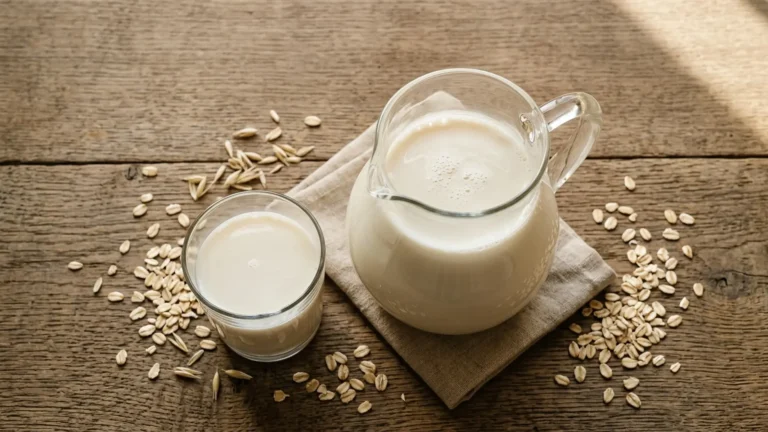
For most people the answer is oat or soy. Oat milk is the closest to dairy in mouthfeel, naturally sweet, and the most forgiving for latte art, which is why it dominates coffee shops. Soy milk is the protein champion and froths into a dense, stable foam, with the only catch being that its protein can react with hot, acidic espresso, the same plant protein that makes soy such a staple among plant-based protein sources. Pea and potato milks are strong newer options with high protein and neutral flavor. Almond milk, by contrast, is low in protein and fat and fairly acidic, so it froths weakly and curdles easily, making it the hardest to work with. If you want reliable results, start with oat. Many of these are soy-based, and if you are checking whether your milk and other staples fit a plant-based diet, our guide to whether soy sauce is vegan covers the same label-reading habit.
Why barista editions matter
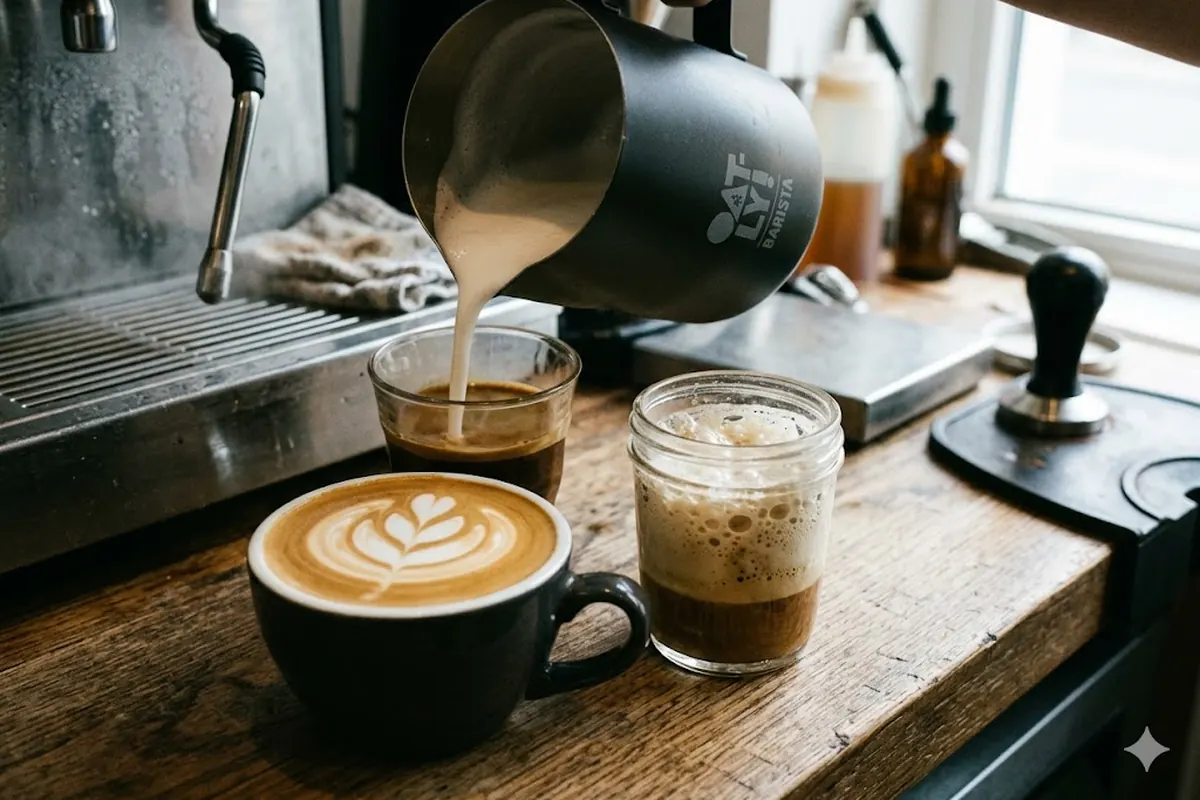
If you have ever wondered why coffee shop dairy-free lattes taste better than your home attempts, the answer is usually the milk, so this is worth understanding. Barista edition plant milks are not a marketing gimmick. They are formulated specifically for coffee, with added fat (often from a vegetable oil) and sometimes extra protein and stabilizers, which together let them froth into stable microfoam and resist curdling far better than standard cartons.
A regular oat milk meant for cereal will froth poorly and split more readily than the barista version of the same brand. The added fat creates a richer, more stable foam, and emulsifiers and acidity regulators help the milk survive contact with hot espresso. For drinking plain or pouring into drip coffee, a standard plant milk is fine. But for any frothed drink (latte, cappuccino, flat white) the barista edition is the difference between thin bubbles and proper creamy foam. It is the easiest single upgrade you can make to home dairy-free coffee.
The curdling problem and how to prevent it
Curdled plant milk is the most common dairy-free coffee disaster, so it deserves a clear explanation and fix. Curdling happens when the proteins in plant milk react to two things: heat and acid. Coffee, especially a concentrated espresso shot, is acidic, and when you pour cold milk into hot, acidic coffee, the sudden temperature shift and low pH can cause the proteins to clump into unappetizing flecks.
The prevention is straightforward and worth memorizing:
- Warm the milk first. Heating the plant milk before it meets the coffee narrows the temperature gap and helps the proteins stay smooth.
- Let very hot coffee cool slightly. Pouring milk into scalding coffee is the most common trigger; a few seconds of cooling helps.
- Pour milk into coffee, not the reverse, and pour slowly so the milk acclimates.
- Use a less acidic coffee. Darker roasts and cold brew are lower in acidity, so they curdle plant milk far less than bright, light roasts.
- Choose a stable milk. Oat, pea, and potato milks curdle less than almond and plain soy; barista editions resist it best of all.
If your milk still splits, the culprit is almost always too much heat plus too much acid at once. Switch to a barista oat milk and a darker roast and the problem usually disappears entirely.
How to froth dairy-free milk, with or without a machine
Frothing is what turns plain coffee into a cafe-style drink, and you do not need expensive gear to do it. Here are the main methods, from simplest to most advanced.
Handheld electric frother
The cheapest reliable tool. Warm about half a cup of barista oat or soy milk (microwave or stovetop, until hot but not boiling), then plunge the spinning frother into it, holding it near the surface to pull in air, then deeper to texture the foam, for 20 to 30 seconds. You get a quick, creamy foam ideal for lattes.
French press
A French press doubles as a frother. Pour warm plant milk into the press until it is about a third full, then pump the plunger up and down briskly for 30 to 60 seconds. The mesh aerates the milk into a thick foam. This is the best no-special-equipment method for a generous head of foam.
Jar and shake
No tools at all: pour warm (not hot) milk into a sealed jar no more than half full, shake hard for 30 to 60 seconds until frothy, then microwave the frothed milk uncovered for 20 to 30 seconds to stabilize the foam. Quick and surprisingly effective.
Espresso machine steam wand
If you have a machine, steaming gives the finest microfoam. Submerge the wand tip just below the surface to stretch the milk and introduce air, then lower it to create a whirlpool that texturizes the foam, stopping when the pitcher is hot to the touch. Barista edition milk is essential here for latte art. Whichever method you use, stop before the milk boils, since overheating both ruins the foam and worsens any off-flavors.
Recipes for the common dairy-free coffee drinks
Once you can froth, the popular drinks are simple ratios, so here is how to build each one. Use a barista oat or soy milk for the best results.
Dairy-free latte: Pull or brew a strong shot of espresso (or a small amount of very strong coffee). Froth about three-quarters of a cup of warm plant milk to a light, creamy foam, then pour it into the espresso, holding back the thick foam until the end. The result is mostly creamy milk with a thin layer of foam.
Dairy-free cappuccino: Same espresso base, but use equal parts espresso, steamed milk, and a generous, thick foam on top. Froth the milk longer for more foam.
Dairy-free flat white: A double shot of espresso topped with a smaller amount of velvety microfoam, less foam than a latte, for a stronger coffee flavor. Oat milk shines here.
Iced dairy-free latte: Brew espresso or strong coffee, let it cool, pour over ice, and top with cold plant milk. No frothing needed, and curdling is less of an issue because everything is cold.
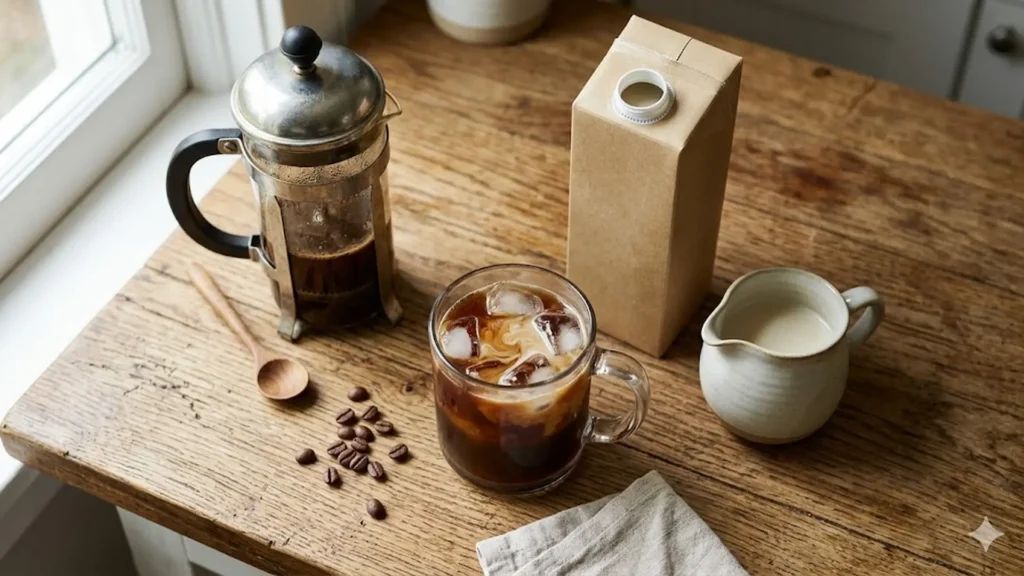
Dairy-free cold brew: Steep coarse coffee in cold water 12 to 18 hours, strain, and dilute with plant milk over ice. Cold brew is naturally low in acid, so almost any plant milk works without curdling. Recipe sites like Minimalist Baker have plenty of plant-based coffee and creamer ideas if you want to branch out.
Sweetening and flavoring without dairy
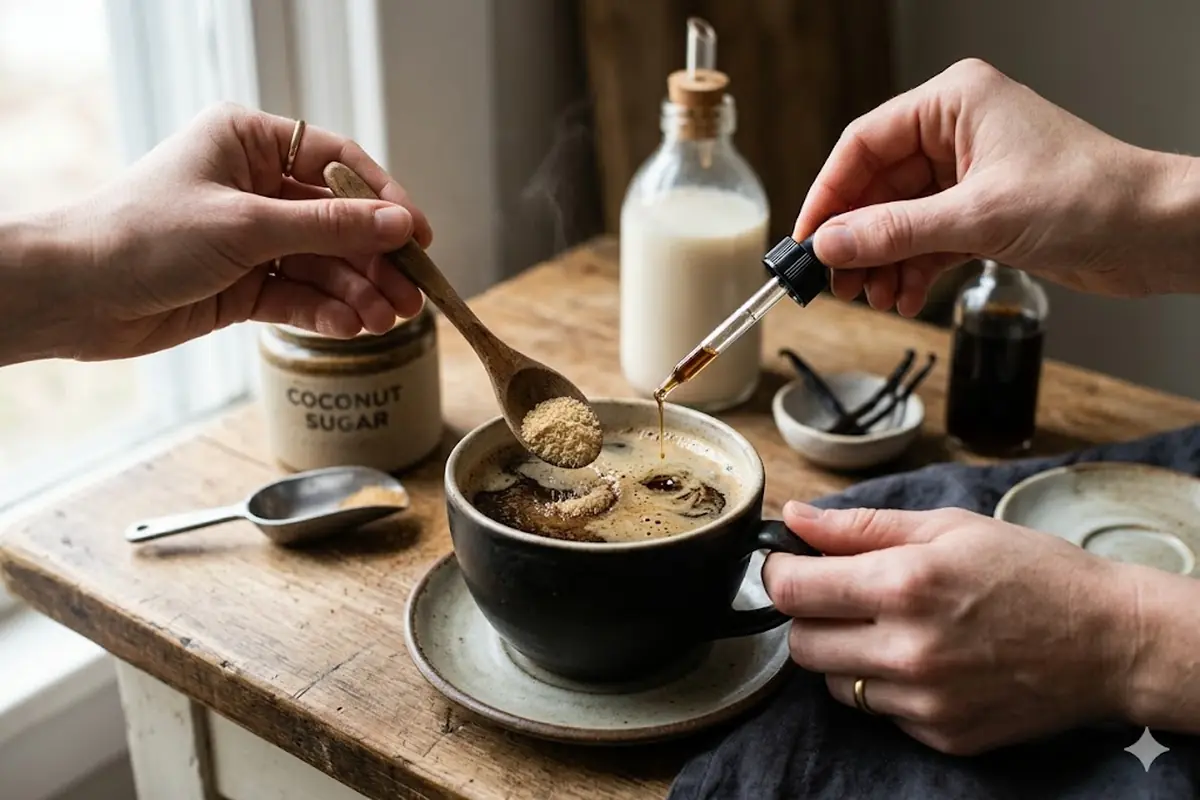
Dairy-free coffee does not have to mean black or plain, so here are the better ways to add sweetness and body. Skip the dairy creamers entirely and reach for these instead.
For sweetness, maple syrup, agave, date syrup, and simple sugar all dissolve well, with maple and date adding a pleasant depth. Many oat milks are already lightly sweet, so taste before adding more. For richness, a splash of full-fat coconut milk or a homemade cashew creamer adds body that low-fat plant milks lack. For flavor, real vanilla extract, cinnamon, cocoa powder, or a homemade spiced syrup turn a plain cup into a flavored one without artificial creamer. A homemade creamer of blended cashews, water, a little maple, and vanilla keeps several days in the fridge and beats anything from a bottle. The point is that dairy-free coffee can be every bit as indulgent as the dairy version, just built from plant ingredients.
Making your own plant milk for coffee
If you want full control over what goes into your cup, making plant milk at home is easier than most people expect, and it can be tuned specifically for coffee. The two best homemade options for frothing are oat and cashew, because both give body without the strong flavor of some store-bought milks. For oat milk, blend one cup of rolled oats with three to four cups of cold water for about 30 seconds (no longer, or it turns slimy from released starch), then strain through a nut-milk bag or fine cloth. Keep it cold and use it within four to five days. The catch is that homemade oat milk froths less reliably than a barista carton, since it lacks the added oil and stabilizers, so it suits drip coffee and iced drinks better than latte art.
Cashew milk is the easier homemade choice for richness and frothing, because cashews are high in fat and blend completely smooth with no straining needed. Soak half a cup of raw cashews for a few hours, then blend with two to three cups of water until silky. The natural fat gives a creamier foam than homemade oat milk and a neutral, slightly sweet flavor that works in almost any drink. A pinch of salt and a little maple syrup round it out into a creamer-style milk. Homemade milks skip the additives entirely, which appeals to anyone who reads labels closely, and the broader case for whole-food plant eating is laid out well at Forks Over Knives. The trade-off is shelf life and froth stability, so many people keep a barista carton for lattes and a homemade jar for everyday cups.
Common mistakes and how to fix them
Most dairy-free coffee failures come from a few repeat errors, so here is how to troubleshoot them. Knowing these turns a frustrating cup into a reliable one.
Milk curdles into flecks: too much heat and acid. Warm the milk, cool the coffee slightly, use a darker roast or cold brew, and switch to a barista oat milk.
Foam is thin and watery: the milk is too low in protein and fat, usually almond or a non-barista carton. Switch to barista oat, soy, or pea milk.
Coffee tastes watery overall: the milk is diluting a weak coffee base. Brew a stronger shot or use less milk, since plant milks need a bold coffee to stand up to.
Off or beany flavor: some soy and almond milks have a stronger taste; try oat or pea milk, which are more neutral, or a different brand.
For a low-effort everyday cup, the winning combination is simple: a barista oat milk, a darker roast or cold brew, milk warmed before pouring, and a frother of any kind. That setup sidesteps nearly every common problem at once.
Frequently asked questions
What is the best dairy-free milk for coffee?
Oat milk is the best all-around choice for coffee, since it is naturally sweet, creamy, frothes well, and curdles rarely. Soy milk is a close second and froths into a denser foam thanks to its high protein, though it can split with very acidic coffee. For any frothed drink, choose the barista edition of your milk, which adds fat and stabilizers for better foam and less curdling.
Why does my plant milk curdle in coffee?
Plant milk curdles because its proteins react to heat and acid at once. Pouring cold milk into hot, acidic espresso is the usual trigger. To prevent it, warm the milk first, let very hot coffee cool a few seconds, pour milk into coffee slowly, use a darker roast or cold brew that is lower in acid, and choose a stable milk like barista oat rather than almond.
Can you froth dairy-free milk without a machine?
Yes. A handheld electric frother, a French press pumped up and down, or simply shaking warm milk in a sealed jar all create foam. For the jar method, fill it no more than half full with warm milk, shake hard for about a minute, then microwave the frothed milk briefly to stabilize it. Barista edition milks froth best with any of these methods.
Is almond milk good in coffee?
Almond milk is the trickiest plant milk for coffee because it is low in protein and fat and fairly acidic, so it froths weakly and curdles easily. It can work in iced coffee or with a darker, low-acid roast, and a barista almond milk performs better than the standard carton. For reliable hot lattes, oat or soy milk is a much easier choice.
How do you make a dairy-free latte at home?
Brew a strong shot of espresso or very strong coffee, warm and froth about three-quarters of a cup of barista oat or soy milk until creamy, then pour the milk into the coffee, holding the thick foam back until the end. Warming the milk first prevents curdling. The drink should be mostly creamy milk with a thin layer of foam on top.
What can I use instead of dairy creamer?
Use a barista plant milk, a splash of full-fat coconut milk for richness, or a homemade cashew creamer blended from cashews, water, a little maple syrup, and vanilla. For sweetness, maple, agave, or date syrup dissolve well, and cinnamon, cocoa, or vanilla add flavor. These give the same indulgent result as dairy creamer without any animal products.
The bottom line
Making a great dairy-free coffee is mostly about three choices: pick a plant milk that froths and resists heat (oat and soy lead, with pea and potato close behind, while almond is the hardest), use the barista edition for any frothed drink, and handle the milk so it does not curdle by warming it, cooling very hot coffee slightly, and leaning on darker roasts or cold brew that are lower in acid. From there, a handheld frother, a French press, or even a shaken jar gets you cafe-style foam without a machine, and the common drinks are just simple ratios of espresso to milk. Sweeten with maple or date syrup and add body with coconut milk or a homemade cashew creamer, and a dairy-free coffee is every bit as rich and satisfying as the dairy version, built entirely from plants.