Is hummus healthy? Yes, hummus is genuinely healthy for most people, because it is built almost entirely from whole plant foods: cooked chickpeas, sesame tahini, olive oil, lemon, and garlic, which together deliver plant protein, fiber, heart-friendly unsaturated fat, and a long list of minerals. The reason it deserves its good reputation is that nothing in a classic recipe is empty: the chickpeas bring fiber and protein, the tahini and olive oil bring the kind of fat that supports your heart rather than working against it, and the whole blend has a low glycemic effect that keeps your blood sugar steadier than most snacks. For everyday eating, a scoop of hummus is one of the easier wins in a plant-based kitchen.
There are a couple of honest caveats worth knowing, and they are exactly why this question is worth asking instead of taking the answer on faith. Hummus is calorie-dense for its size because of the oil and tahini, store-bought tubs can carry a surprising amount of sodium, and what you dip into it matters as much as the dip itself. This guide walks through the real nutrition numbers, the specific benefits and who they help, the sodium and FODMAP cautions, how homemade compares to store-bought, how hummus stacks up against other dips, and how to actually eat it so the health upside is real. By the end you will know not just whether hummus is healthy, but how to make it the healthiest version for you.
What is actually in hummus
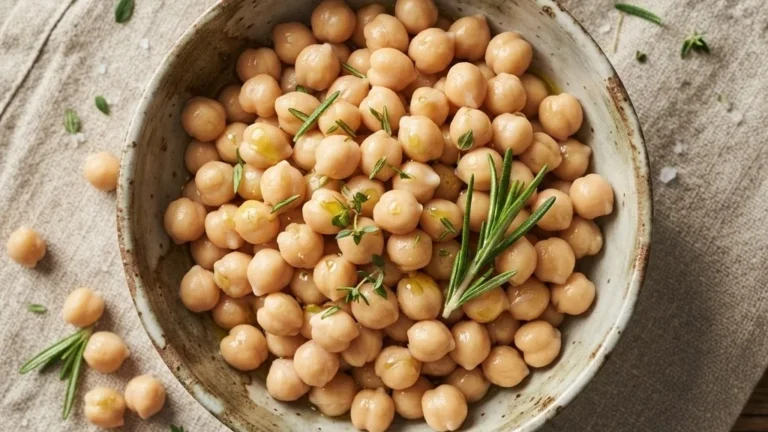
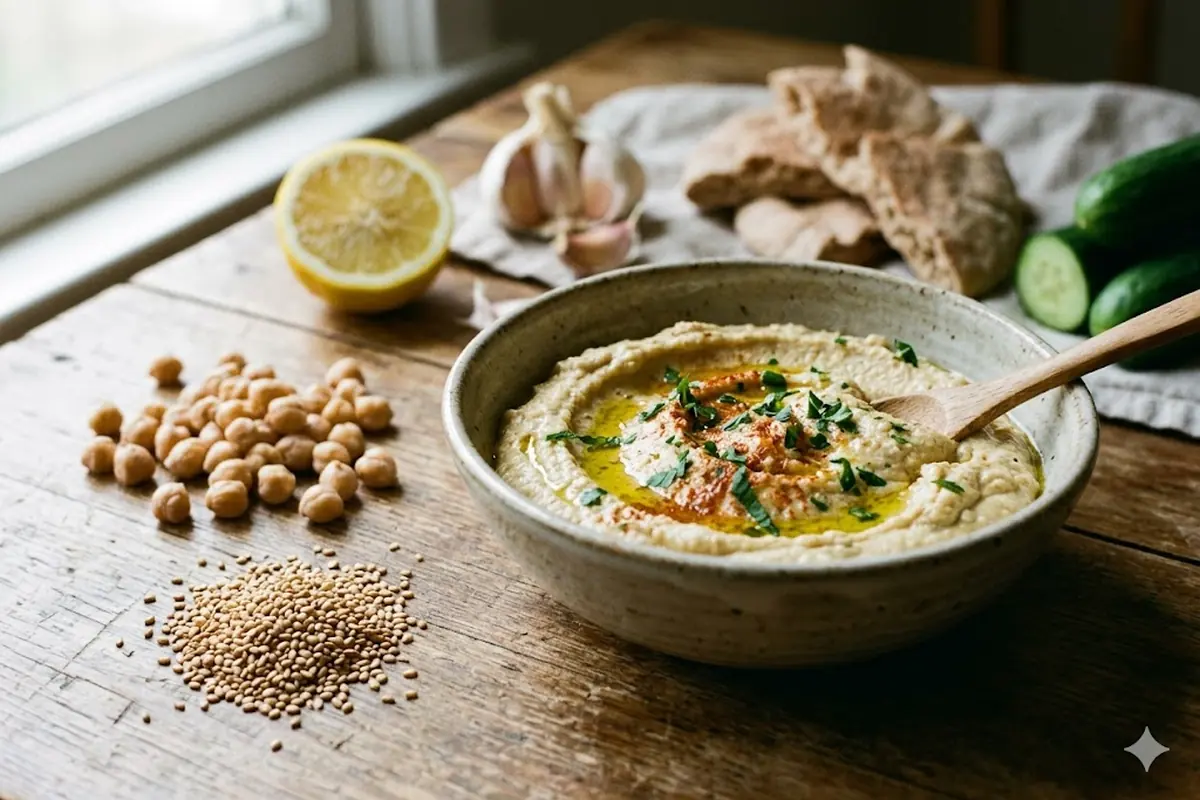
The healthiness of any food starts with its ingredient list, and classic hummus has a short, clean one. Traditional hummus is chickpeas (also called garbanzo beans) blended with tahini (ground sesame seed paste), extra virgin olive oil, lemon juice, garlic, and salt. That is the whole thing. Each of those five core ingredients is a recognizable whole food, not a processed isolate, which is the first reason hummus reads as healthy rather than as a novelty dip.
Chickpeas are the backbone and they carry most of the nutrition: protein, fiber, complex carbohydrates, iron, folate, magnesium, and manganese. Tahini adds calcium, healthy fat, and a deep nutty flavor, while contributing more protein. Olive oil brings monounsaturated fat and antioxidants. Lemon and garlic add brightness and trace plant compounds with very few calories. Because the base is legumes, hummus naturally fits into the same nutritional family as other beans, which is why it pairs so well with the kind of cooking built around lentils and other legumes in a plant-based kitchen. There is no dairy, no meat, and in a plain recipe, nothing artificial.
The watch-outs come from variations on that base. Flavored hummus (roasted red pepper, caramelized onion, dessert-style chocolate hummus) can add sugar, extra oil, or sodium. Some commercial brands add preservatives, stabilizers like potassium sorbate, or extra emulsifiers to keep the texture smooth on a shelf for weeks. None of these are dangerous, but they move a tub a step away from the clean homemade version. The base answer, then, is firmly yes, with the quality of the specific product setting how healthy it really is.
Hummus nutrition, by the numbers
To judge a food fairly you need the actual figures, not just a verdict, so here is what a standard hummus delivers. The numbers vary by recipe and brand, but a typical 2 tablespoon serving (about 30 grams) of plain hummus lands close to this:
| Nutrient | Per 2 tbsp (~30g) | Per 100g |
|---|---|---|
| Calories | 70 to 80 | ~230 to 270 |
| Protein | 2 to 2.5g | ~7 to 8g |
| Fiber | ~2g | ~6g |
| Total fat | 5 to 6g | ~17 to 20g |
| Carbohydrate | 4 to 5g | ~14 to 16g |
| Sodium | 100 to 180mg | ~350 to 600mg |
A few things stand out in those numbers. First, the fat is most of the calories, which is why hummus is calorie-dense relative to a vegetable: nearly two thirds of its energy comes from the olive oil and tahini. That fat is the good kind, mostly monounsaturated and polyunsaturated, but it still means a heaping bowl adds up faster than the same volume of raw carrots. Second, the protein-to-calorie ratio is solid for a dip but not enormous; you get roughly 2 grams of protein for 75 calories, so hummus is a protein contributor rather than a protein source on its own. Third, the sodium range is wide, and that range is the single most important number to watch when you compare brands.
One detail the calorie count hides is fiber quality. The fiber in chickpeas is a mix of soluble and insoluble, and a good share of it is resistant starch, the type that feeds the bacteria in your gut and ferments slowly. That slow fermentation is part of why hummus keeps you full and why it has such a gentle effect on blood sugar, but it is also the reason a very large serving can cause bloating in sensitive people, which the FODMAP section below covers.
The real health benefits, and who they help
Beyond the macro numbers, hummus earns its healthy label through several effects that are well supported, so here is what it actually does for you. These are the benefits worth knowing, with the honest scope of each.
Steadier blood sugar and longer fullness
The combination of fiber, protein, and fat gives hummus a low glycemic effect, meaning it raises blood sugar slowly rather than spiking it. Chickpeas in particular have been studied for blunting the blood-sugar rise of a meal, and eating them in place of faster carbohydrates is linked to better appetite control. In practice this is why a few crackers with hummus hold you over far longer than the same crackers alone: the dip slows everything down. For anyone managing blood sugar or simply trying to snack less between meals, this is the standout benefit.
Heart-friendly fats
The olive oil and sesame in hummus are sources of unsaturated fat, the type associated with better cholesterol patterns and lower heart-disease risk when it replaces saturated fat. Swapping a sour-cream or cheese-based dip for hummus is a genuine upgrade on this front. The plant compounds in olive oil add a modest antioxidant bonus. The broad evidence on legumes and heart health, summarized at NutritionFacts.org, consistently puts beans and bean-based foods like hummus among the better everyday choices for cardiovascular health.
Digestive support and gut health
The fiber in chickpeas feeds beneficial gut bacteria and supports regular digestion. Most people who eat more legumes report easier, more regular digestion over time, and the resistant starch in chickpeas acts as a prebiotic. The caveat is that the same fiber can cause gas or bloating if you go from eating little to eating a lot quickly, so building up gradually matters.
Plant protein and minerals for vegans
For a plant-based eater, hummus is a useful contributor of protein, iron, and folate, especially when paired with whole grains. Chickpeas are not a complete-protein powerhouse on their own, but combined with bread, pita, or grains they round out an amino acid profile nicely. This is the same logic behind pairing hummus with other plant-based protein sources across a day rather than relying on any single food to hit your targets.
The honest cautions: sodium, calories, and FODMAPs
A fair answer has to include where hummus can work against you, because a food being healthy on balance does not make it limitless. Three cautions deserve attention.
Sodium is the biggest one. Store-bought hummus can range from a reasonable 100 milligrams per serving to well over 200, and since few people stop at a single 2 tablespoon serving, the salt adds up fast. If you eat half a small tub in a sitting, you can easily take in 400 to 600 milligrams of sodium from the dip alone. For anyone watching blood pressure, this is the number to compare across brands, and it is the single strongest argument for making your own, where you control the salt entirely.
Calorie density is the second. Because most of hummus’s energy comes from fat, it is easy to eat a lot of calories without feeling like you ate much. This is not a problem in normal portions, but mindless dipping straight from a large container while distracted can quietly add a few hundred calories. The fix is simple: portion a scoop onto a plate rather than eating from the tub.
FODMAPs are the third, and they matter for a specific group. Chickpeas contain galacto-oligosaccharides, a fermentable fiber that can trigger gas, bloating, and discomfort in people with irritable bowel syndrome or sensitive digestion. A small portion (around 2 tablespoons) is generally tolerated even on a low-FODMAP approach, but a large serving can cause symptoms. If hummus reliably bothers your stomach, smaller portions, well-rinsed canned chickpeas, and thorough blending all help, since smoother texture and rinsing reduce some of the offending compounds.
Homemade versus store-bought hummus
Where your hummus comes from changes its health profile more than most people expect, so this comparison is worth making deliberately. Both can be healthy, but they differ in the details that matter.
Store-bought hummus wins on convenience and is still a solid choice, but it tends to carry more sodium, sometimes uses cheaper seed oils in place of olive oil, and may include preservatives and stabilizers to extend shelf life. Flavored versions can hide added sugar. None of this makes it unhealthy, but it does mean the label is worth a glance: look for a short ingredient list, olive oil rather than soybean or canola oil if you prefer, and the lower-sodium option when two brands sit side by side.
Homemade hummus wins on control and freshness. You decide the salt, you use real extra virgin olive oil, you can skip preservatives entirely, and you can adjust the tahini and oil to make it lighter or richer. It is also genuinely cheap, since a can of chickpeas and a jar of tahini make far more hummus than an equivalent tub costs. The main downsides are effort and shelf life: fresh hummus keeps only about four to five days refrigerated. For the healthiest possible version, homemade with reduced salt, a generous squeeze of lemon, and good olive oil is hard to beat, and recipe resources like Minimalist Baker show how little work a smooth batch actually takes.
How hummus compares to other dips
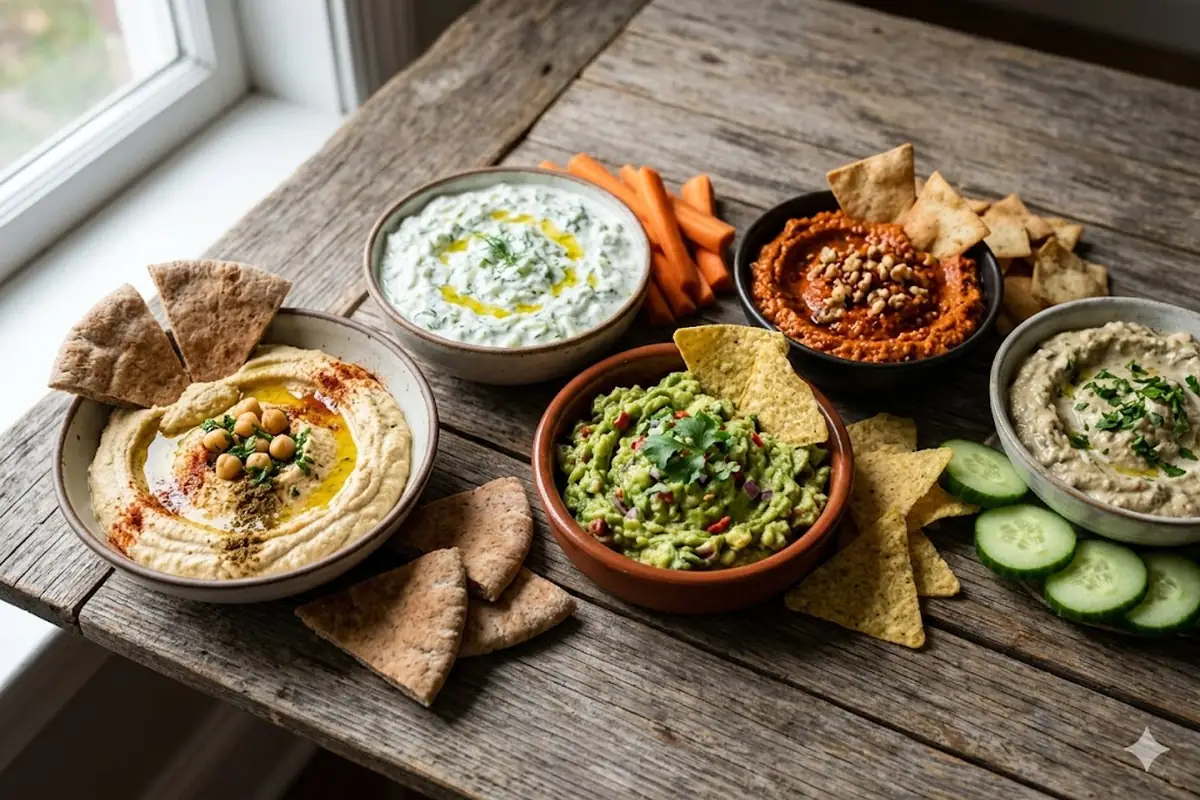
Healthy is a relative word, so it helps to see where hummus sits next to the dips it usually competes with. Against the common alternatives, hummus generally comes out ahead.
| Dip | Main fats | Fiber and protein | Vegan? |
|---|---|---|---|
| Hummus | Unsaturated (olive, sesame) | Good fiber, some protein | Yes |
| Sour cream dip | Saturated (dairy) | Little to none | No |
| Ranch dressing | Mixed, often refined oils | Little to none | No (usually) |
| Guacamole | Unsaturated (avocado) | Good fiber, little protein | Yes |
| Cheese dip | Saturated (dairy) | Some protein, no fiber | No |
Hummus and guacamole are the two standouts, both built on whole plant foods with unsaturated fat and real fiber. Hummus edges ahead on protein thanks to the chickpeas, while guacamole offers a different set of nutrients from avocado. The dairy-based dips fall behind mainly because their fat is saturated and they bring little fiber. The lesson is that hummus is not just healthy in isolation; it is usually the healthiest choice on the snack table.
How to eat hummus the healthy way
The dip can only be as healthy as the meal it is part of, so the last piece is using it well. A few habits turn hummus from a good food into a genuinely good-for-you one.
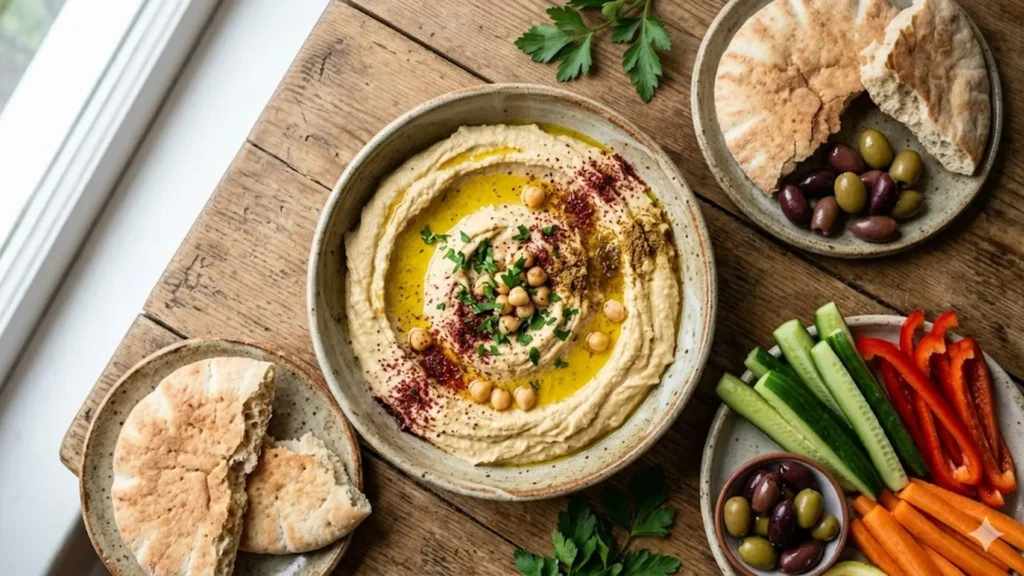
Mind the dipper. Hummus with raw vegetables (carrots, cucumber, bell pepper, celery) is a nutrient-dense snack with almost no downside. Hummus scooped with a bag of fried chips or buttery crackers is a different story, since the dipper can outweigh the dip in calories and salt. Whole-grain pita, vegetable sticks, or seedy crackers keep the whole snack on the healthy side.
Use it as a spread, not just a dip. Hummus makes a strong replacement for mayonnaise on sandwiches and wraps, adding protein and fiber while cutting saturated fat. It works as a base under roasted vegetables, thinned with lemon and water into a salad dressing, or dolloped onto a grain bowl. Used this way, it adds nutrition to a meal instead of being an extra on the side.
Watch the portion and the brand. A scoop or two is a healthy serving; half a tub in front of a screen is where the calories and sodium creep up. When buying, scan for the lowest-sodium option with a short ingredient list and real olive oil. And if you can, make a batch yourself now and then, since homemade is where hummus is at its cleanest and cheapest. Treated this way, the answer to whether hummus is healthy stays a confident yes.
Frequently asked questions
Is hummus good for weight loss?
Hummus can support weight management because its fiber and protein help you feel full and steady your blood sugar, which tends to reduce snacking. It is calorie-dense from the oil and tahini, though, so portion matters. A scoop with vegetables is a smart filling snack; eating large amounts straight from the tub can add calories quickly. Keep the serving reasonable and it helps rather than hurts.
How much hummus can I eat in a day?
There is no strict limit, but a reasonable daily amount for most people is around 2 to 4 tablespoons, roughly one or two servings. That gives you the fiber, protein, and healthy fat benefits without overdoing the calories or sodium. If you have IBS or a sensitive stomach, smaller portions are easier to tolerate because of the fermentable fiber in chickpeas.
Is store-bought hummus as healthy as homemade?
Store-bought hummus is still healthy, but homemade usually edges it out. Commercial tubs tend to have more sodium, sometimes use cheaper oils instead of olive oil, and may include preservatives. Homemade lets you control the salt, use real extra virgin olive oil, and skip additives, and it is cheaper. If you buy, choose a short ingredient list and the lower-sodium option.
Is hummus high in protein?
Hummus has a moderate amount of protein, about 2 to 2.5 grams per 2 tablespoon serving, from the chickpeas and tahini. That makes it a useful protein contributor rather than a high-protein food on its own. Pairing it with whole grains like pita or with other beans rounds out the amino acids and adds up to a more complete protein intake across the day.
Can hummus cause bloating?
It can in some people, because chickpeas contain galacto-oligosaccharides, a fermentable fiber that produces gas in sensitive digestion or IBS. A small serving is usually fine even on a low-FODMAP approach, while a large one may cause discomfort. Rinsing canned chickpeas well, blending the hummus very smooth, and building up your portion gradually all reduce the effect.
Is hummus healthier than other dips?
In most cases yes. Hummus is built on whole plant foods with unsaturated fat and real fiber, which puts it ahead of dairy-based dips like sour cream, ranch, or cheese dip that are higher in saturated fat and lower in fiber. Guacamole is its closest healthy rival, offering similar plant-based benefits from avocado, while hummus adds a bit more protein.
The bottom line
Hummus is a healthy food for nearly everyone, because it is made from whole plant ingredients (chickpeas, tahini, olive oil, lemon, and garlic) that together provide fiber, plant protein, heart-friendly unsaturated fat, and a useful spread of minerals, all with a gentle effect on blood sugar. The honest caveats are easy to manage once you know them: it is calorie-dense from the oil, store-bought tubs can be high in sodium, the chickpea fiber can bloat sensitive stomachs in large amounts, and the dipper you choose matters as much as the dip. Reach for a low-sodium tub with a short ingredient list or make your own with real olive oil and less salt, pair it with vegetables and whole grains rather than fried chips, keep the portion to a scoop or two, and hummus stays exactly what it should be: one of the easiest healthy choices in a plant-based kitchen.