How do you prepare tofu for cooking? You prepare tofu by choosing the right firmness for the dish, draining and pressing out the excess water, optionally marinating or coating it, and then cooking it with a method that suits the texture you want, and most of the disappointment people have with tofu comes from skipping the water step. Tofu arrives packed in liquid, and that water is the single biggest thing standing between a soggy, bland block and a browned, flavorful, satisfying one. Once you understand that the whole game is about managing moisture, choosing firmness, and giving the surface something to grab onto, tofu becomes one of the most reliable ingredients in a plant-based kitchen rather than a gamble.
The good news is that none of it is complicated, and not every dish even needs the full routine. A silken tofu blended into a sauce never gets pressed, while an extra-firm block destined for a crispy stir-fry benefits from a thorough press, a coating, and a hot pan. This guide walks through how to pick the right tofu, how to drain and press it (with and without a press), when you can skip pressing entirely, how to marinate and coat it so flavor actually sticks, the freezing trick that changes its texture, the main cooking methods, common mistakes and fixes, and how to store what you do not use. By the end you will be able to look at any tofu recipe and know exactly how to set the block up for success.
Start by choosing the right tofu
Good tofu cooking begins in the store, because the firmness you buy decides almost everything that follows. Tofu is sold by water content, from the soft, custardy types to the dense, dry ones, and matching the type to the dish is the first real step of preparation.
| Type | Texture | Press it? | Best for |
|---|---|---|---|
| Silken | Soft, custard-like | No | Smoothies, sauces, desserts, scrambles |
| Soft / medium | Tender, fragile | Lightly or not | Soups, braises, mapo tofu |
| Firm | Holds shape, some give | Yes | Stir-fries, scrambles, baking |
| Extra firm | Dense, chewy | Yes | Pan-frying, grilling, crisping |
| Super firm / high protein | Very dense, dry | No need | Quick crisping, no-press recipes |
The practical takeaway is simple. For anything you want browned and chewy (stir-fries, pan-fried cubes, baked nuggets), reach for extra-firm or super-firm. For anything creamy (sauces, dressings, dessert fillings), reach for silken, which should never be pressed because pressing would just crush it. Soft and medium tofu sit in between, perfect for soups and braised dishes where you want it to soak up broth without falling apart. Super-firm and high-protein tofu, which come vacuum-sealed rather than in water, are the easiest of all, since the maker has already pressed out most of the moisture for you. Tofu is also a cornerstone of plant-based eating, a soy food whose nutrition is well summarized at NutritionFacts.org, which is why it shows up alongside other plant-based protein sources in so many vegan dishes.
Draining and pressing: the most important step
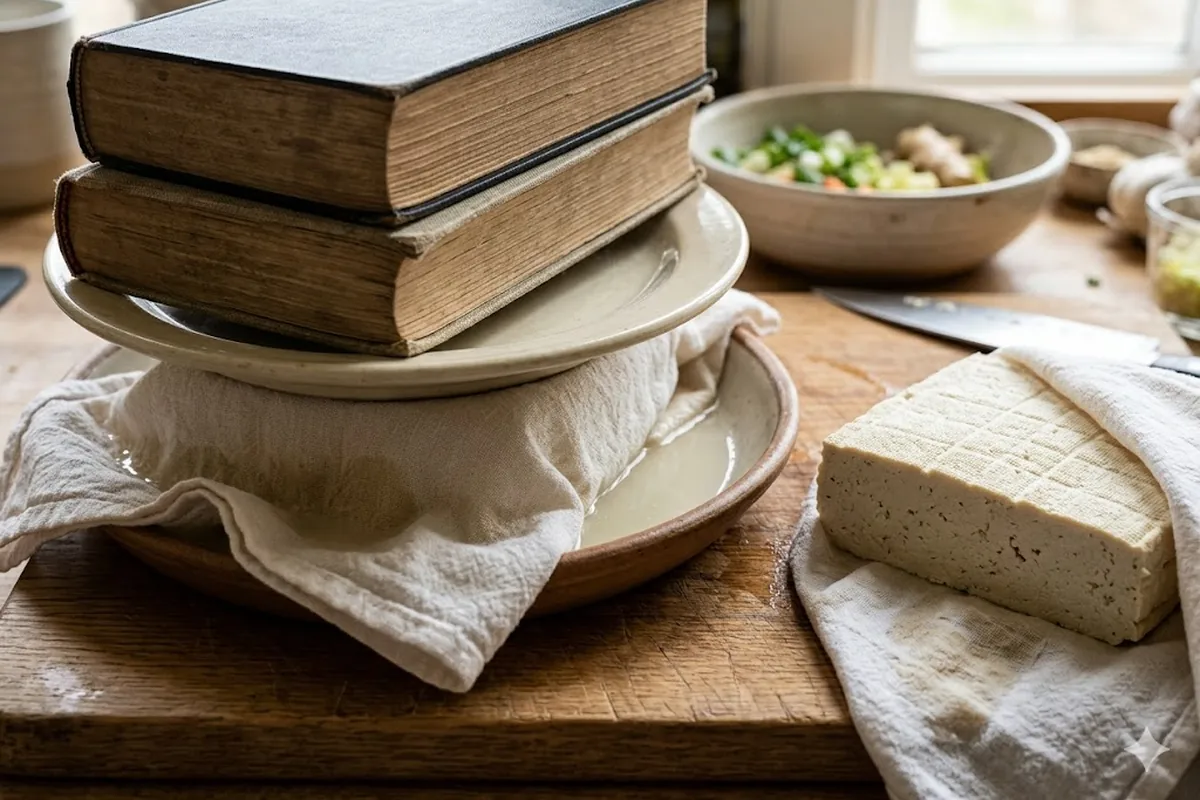
If you do only one thing to prepare tofu well, drain and press it, because that water is what keeps tofu from browning and from absorbing flavor. Tofu is roughly 80 to 88 percent water depending on firmness, and a wet surface steams instead of sears in a hot pan. Removing some of that water leaves room for marinade to soak in and lets the surface crisp.
Why pressing works
Two things happen when you press. First, you physically squeeze out free water held in the tofu’s sponge-like structure, which concentrates the texture and makes it firmer and chewier. Second, you create empty space where seasoning can move in, so a pressed block takes up far more marinade than an unpressed one. The drier the surface, the faster it browns, because the pan can get past the boiling point of water and start the browning reactions that build flavor.
How to press with a tofu press
A dedicated tofu press is the easiest route if you cook tofu often. Drain the package, set the block in the press, and tighten the plates until the tofu is snugly compressed but not cracking. Let it sit 15 to 30 minutes for everyday cooking, tightening a turn or two partway through as water releases. For a very dense, chewy result, press up to an hour in the refrigerator. The press catches the liquid and applies even pressure, so the block keeps its shape.
How to press without a press
You do not need special equipment. Wrap the drained block in a clean kitchen towel or a few layers of paper towel, set it on a plate, lay a second plate or a cutting board on top, and weight it down with something heavy: a large can, a cast-iron pan, or a few cookbooks. Let it press 15 to 30 minutes, swapping the towel if it gets soaked. The key is even, moderate weight; too much sudden pressure on firm tofu can split it, so build up gradually. For a faster version, slice the block first, since thinner pieces release water more quickly.
The quick boil and microwave shortcuts
Two faster methods exist when you are short on time. Microwaving the drained block on a paper-towel-lined plate for about 2 to 4 minutes drives out steam and firms the tofu noticeably; press lightly afterward to mop up the released water. Simmering drained cubes in lightly salted water for a few minutes also firms the texture and seasons from the inside, a trick used in some Chinese cooking before stir-frying. Neither replaces a full press for maximum crispness, but both help in a pinch.
When you can skip pressing
Pressing is not always necessary, and knowing when to skip it saves time without hurting the result. You can usually skip the press in these cases:
- Super-firm or high-protein tofu: it comes pre-pressed and vacuum-sealed, so just pat it dry.
- Long oven baking or air frying: the prolonged dry heat drives off moisture as it cooks, so a quick pat-dry is often enough.
- Crumbled tofu for scrambles or taco filling: you break it up anyway and the moisture cooks off in the pan.
- Soups and braises: you want the tofu to absorb liquid, not stay dry, so pressing works against you.
- Silken tofu: never press it; it is meant to be soft and would simply collapse.
For everything else, especially anything you want golden and chewy in a pan, pressing earns its time. When in doubt, the more you want the tofu to brown and hold a coating, the more pressing helps.
Marinating and coating so flavor actually sticks
Pressed tofu is a blank canvas, and the two ways to give it flavor and texture are marinating and coating. Each does a different job, and they work well together.
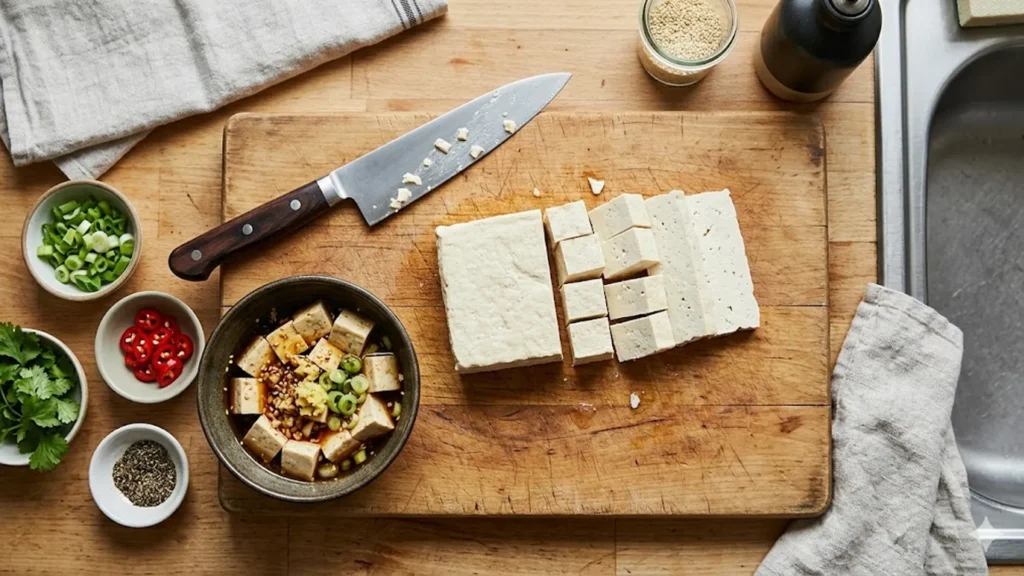
Marinating adds flavor from the inside. After pressing, cut the tofu into cubes, slabs, or triangles and soak it in a marinade for at least 15 to 30 minutes, or up to several hours in the refrigerator for a deeper flavor. Because you pressed out water, the tofu draws the marinade into the space you created. Acidic and salty marinades (soy sauce, citrus, vinegar, miso) penetrate best. A simple, dependable marinade is soy sauce or tamari with a little oil, garlic, ginger, and a touch of maple or rice vinegar. If you want to know whether your base sauce is plant-based, our breakdown of whether soy sauce is vegan covers the rare exceptions to watch for.
Coating adds crunch on the outside. Tossing pressed tofu cubes in a thin layer of cornstarch (about a tablespoon per block) before pan-frying or air frying is the single best trick for a genuinely crispy crust. The starch dries on the surface and crisps into a shell that stays crunchy. Arrowroot or potato starch work the same way. For a thicker crust, dredge in seasoned flour or a flour-and-starch mix. A pinch of salt in the coating seasons the surface directly. Marinate first, pat the tofu so it is tacky but not wet, then toss in starch right before it hits the pan for the best of both.
The freezing trick that changes everything
One preparation method deserves special attention because it transforms tofu’s texture: freezing. When you freeze tofu, the water inside forms ice crystals that expand and carve out pockets in the protein structure. After thawing and pressing, the tofu is chewier, spongier, and far more absorbent, soaking up marinade and sauce like a sponge.
To do it, drain the block, freeze it solid (overnight is fine), then thaw it fully in the refrigerator or under warm water. Press out the substantial water it releases (there will be a lot) and you are left with a denser, meatier tofu that holds up to braising and grilling and grips sauce beautifully. The texture shift is dramatic, so it is worth trying once to see whether you prefer it. Frozen-then-thawed tofu is a favorite for hearty stir-fries and stews where you want every cube saturated with flavor.
The main cooking methods
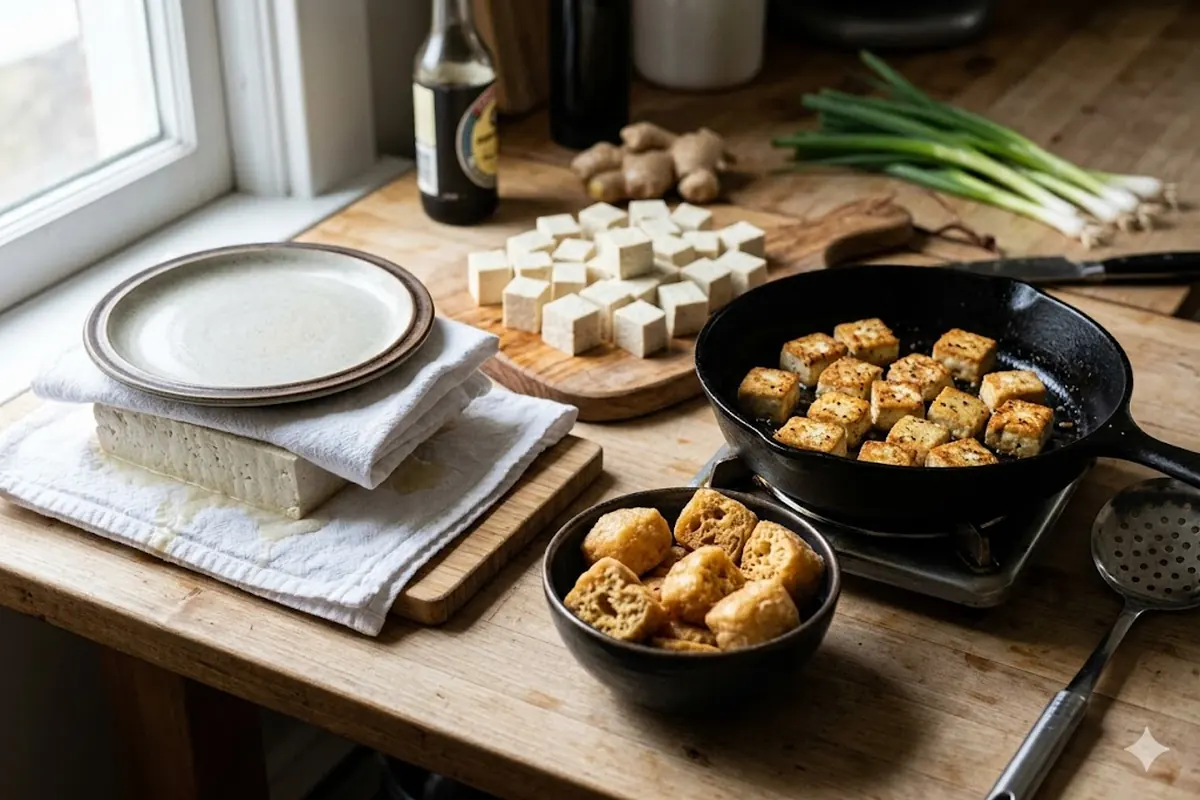
Once the tofu is prepped, the cooking method shapes the final texture, so match it to the dish. Here are the dependable ones.
Pan-frying gives the fastest crispy result. Heat a tablespoon or two of oil in a nonstick or well-seasoned pan over medium-high, add cornstarch-coated cubes in a single layer, and leave them alone until each side is golden before turning. Crowding the pan or flipping too soon are the two reasons pan-fried tofu turns out pale and soft.
Baking is hands-off and even. Spread coated cubes on a parchment-lined sheet and bake at around 400 degrees Fahrenheit for 25 to 35 minutes, flipping once, until golden and firm. Baking dries the tofu thoroughly, so it works even with less pressing.
Air frying produces a crisp exterior with little oil. Toss pressed, coated cubes with a teaspoon of oil and air fry at about 375 to 400 degrees for 12 to 18 minutes, shaking the basket once or twice.
Stir-frying works best with pre-crisped or super-firm tofu added toward the end so it stays intact, then tossed with sauce off the heat. Scrambling uses crumbled firm tofu cooked with turmeric, salt, and spices for an egg-style breakfast, no pressing required. Recipe resources like Minimalist Baker show how each of these methods turns the same humble block into very different dishes.
Common mistakes and how to fix them
Most tofu failures trace back to a handful of avoidable errors, so here is how to troubleshoot the usual ones. Knowing these saves a lot of disappointing dinners.
Soggy, pale tofu almost always means too much water and too crowded a pan. Press longer, pat the surface dry, use a starch coating, and give each piece space so it sears instead of steams.
Tofu that falls apart usually means the firmness was too low for the method, or it was flipped too early. Use firm or extra-firm for frying, and wait until a crust forms before turning, since a browned surface releases from the pan on its own.
Bland tofu means flavor never got in. Press to make room, marinate with something salty and acidic, season the coating, and finish with sauce. Tofu has almost no flavor of its own, so every step that adds seasoning counts.
Tofu sticking to the pan means the pan was not hot enough or had too little oil, or you tried to move the tofu before it had browned. Heat the oil properly, and let the crust form before touching it.
Storing tofu before and after prep
Good storage keeps your prepped tofu safe and usable, so it is worth a quick word. An unopened package keeps until its printed date in the refrigerator. Once opened, store leftover raw tofu submerged in fresh water in a sealed container in the fridge, changing the water daily, and use it within three to four days. Pressed or marinated tofu that you have not cooked keeps a couple of days in a sealed container. Cooked tofu keeps three to four days refrigerated and reheats well in a pan or oven, though it loses some crispness. For longer storage, freeze raw drained tofu, which also gives you the chewier texture described above as a bonus.
Frequently asked questions
Do you have to press tofu before cooking?
Not always. You should press firm and extra-firm tofu when you want it to brown, crisp, or absorb a marinade, since the water otherwise keeps it soggy and bland. You can skip pressing for super-firm tofu (already pressed), for soups and braises where you want it to soak up liquid, for crumbled scrambles, and always for silken tofu, which would collapse.
How long should you press tofu?
For everyday cooking, press tofu 15 to 30 minutes, which removes enough water for good browning and marinade absorption. For a denser, chewier texture, press up to an hour in the refrigerator. A microwave or a few minutes of simmering can firm it faster when you are short on time, though neither matches a full press for maximum crispness.
What kind of tofu is best for frying?
Extra-firm or super-firm tofu is best for frying because it holds its shape and crisps well. Press extra-firm tofu first, then coat the cubes in a thin layer of cornstarch for a crunchy crust. Super-firm and high-protein tofu come pre-pressed, so you can pat them dry and cook right away, making them the easiest choice for quick crispy tofu.
How do you make tofu crispy?
Press the tofu well to remove water, cut it into even cubes, toss them in a thin coat of cornstarch with a little salt, and cook in a hot pan with enough oil, an air fryer, or a hot oven. Give the pieces space so they sear instead of steam, and wait until each side is golden before turning. The starch coating is the key to a crunchy shell.
Why does my tofu fall apart when cooking?
Tofu falls apart usually because it is too soft for the method or it was moved too soon. Use firm or extra-firm tofu for frying and stir-frying, not soft or silken. Let a brown crust form before flipping, since the tofu releases from the pan on its own once seared. Gentle handling and a hot, oiled pan keep the cubes intact.
Should you marinate tofu before or after pressing?
Marinate after pressing. Pressing removes water and creates space inside the tofu, so a pressed block absorbs far more marinade than an unpressed one. Soak the pressed, cut tofu for at least 15 to 30 minutes, or several hours in the fridge for deeper flavor. Salty and acidic marinades like soy sauce, citrus, and vinegar penetrate best.
The bottom line
Preparing tofu for cooking comes down to a short, logical sequence: choose the firmness that fits your dish, drain and press out the water that otherwise keeps it soggy and bland, then add flavor and texture through marinating and a starch coating before you cook. Match the method to the result you want, pan-frying or air frying for fast crispness, baking for hands-off browning, soups and braises for soft tofu that soaks up broth, and the freezing trick when you want a chewier, more absorbent block. Skip the press for silken, super-firm, crumbled, or braised tofu, and lean into it for anything you want golden and chewy. Get the water out, give the surface something to grab, and cook it with confidence, and tofu turns from an intimidating block into the most versatile protein in your plant-based kitchen.