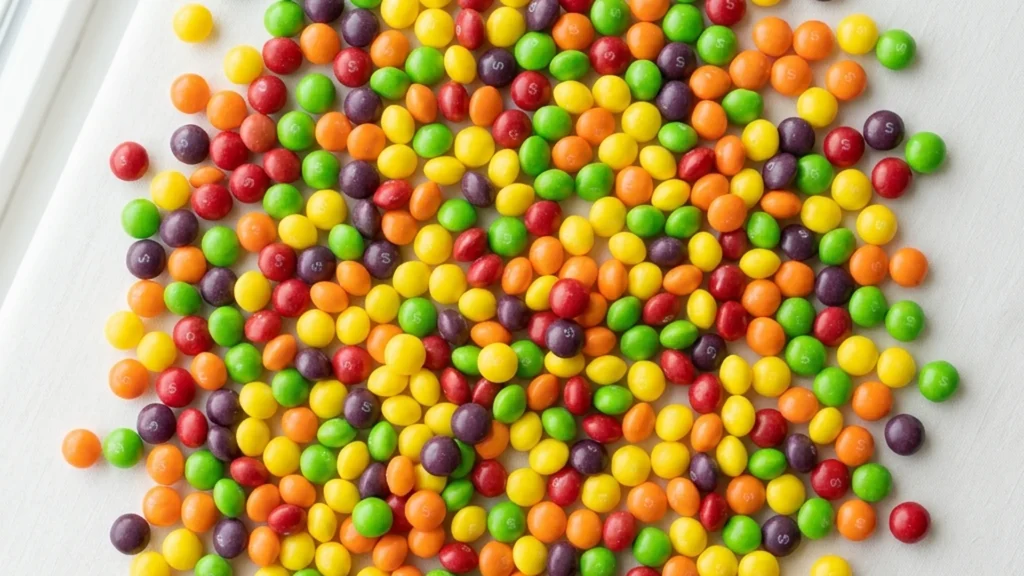
Are Skittles vegan? In almost every country today, the regular fruit Skittles you grab at a checkout are made without animal-derived ingredients, so most plant-based eaters can eat them. That short answer hides a longer story, though, and the longer story is where people actually get tripped up. The recipe changed more than once. Some varieties still are not vegan. And depending on how strict your own line is, two facts about Skittles may sit a little uneasily with you even when the ingredient panel reads clean.
Reading candy labels closely pays off, especially for wrappers picked up at gas stations and airport shops. Skittles come up more than any other candy. Here is the whole picture, laid out as if standing in the snack aisle: what is in them now, what used to be in them, which bags to skip, and the two gray areas worth knowing before you decide.
The Quick Verdict: Yes, With Two Asterisks
Standard Skittles, the Original fruit mix in the red bag, contain no meat, dairy, eggs, gelatin, or insect-derived color as of their current formulations in the United States and the United Kingdom. The same is true for the common spin-offs: Sour, Tropical, and Wild Berry. By the plain reading of the ingredient list, those are vegan.
The two asterisks are these. First, not every Skittles product is the same recipe. Skittles Gummies, a newer chewy format, contain gelatin, which comes from animal collagen. Those are not vegan, full stop. Second, even the clean-label varieties involve refined sugar and palm-based ingredients, and both of those carry a footnote that strict eaters care about. All of it is covered below. But if you only needed the headline, there it is: regular Skittles yes, Skittles Gummies no, and read the rest if you want to know exactly why.
What Is Actually in a Bag of Skittles Right Now
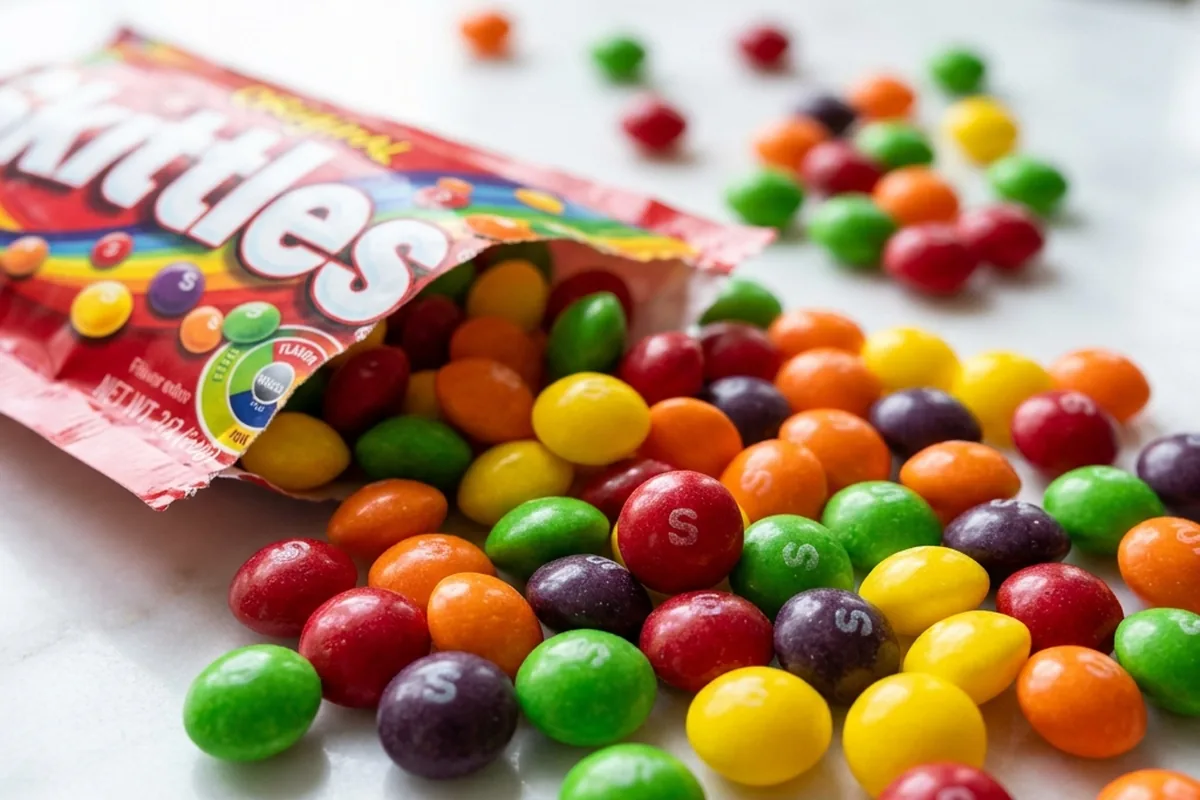
Here is a current United States Original Skittles ingredient list, the kind printed on the back of the bag: sugar, corn syrup, hydrogenated palm kernel oil, and less than two percent of citric acid, tapioca dextrin, modified corn starch, natural and artificial flavors, colors (Red 40 Lake, Yellow 5 Lake, Yellow 6 Lake, Blue 2 Lake, Yellow 5, Yellow 6, Blue 1), sodium citrate, and carnauba wax.
Run down that list and ask the only question that matters for veganism: does any single item come from an animal? Sugar, no (with a caveat explained below). Corn syrup, no. Palm kernel oil, no, it is a plant fat. The acids, starches, and citrates are plant or mineral based. The synthetic dyes, Red 40 through Blue 2, are made in a lab from petroleum feedstocks, not from bugs or animals. Carnauba wax is the shine on the candy shell, and it comes from the leaves of a Brazilian palm tree, so it is plant based too. Nothing on that panel is animal-derived. That is the technical foundation for calling Skittles vegan.
A Note on the Colors That Trips People Up
A lot of folks assume bright candy color means crushed bugs, because they have heard about carmine, also called cochineal or E120, which really is made from a scale insect. Skittles did use carmine in some markets years ago. They do not now. The reds and pinks in today’s Skittles are synthetic dyes, which are not animal products. If you are scanning a label fast, the word to fear is “carmine” or “cochineal,” not “Red 40.” More on that distinction below.
The Ingredients Skittles Used to Contain
The reason this question refuses to die is that the answer used to be different, and the internet never quite catches up to a reformulation. Two ingredients are responsible for the old “Skittles are not vegan” reputation.
Gelatin came first. For years, Skittles used gelatin, an animal protein rendered from skin and bones, to get that slightly springy bite. The brand phased it out of the standard fruit Skittles around 2009 to 2010. A truly ancient bag found in the back of a cabinet may not match the modern recipe, but anything bought in the last decade and a half is gelatin-free in the regular line.
Carmine came second, and this one is regional. In the United Kingdom, Skittles contained carmine, the insect-derived red, until roughly 2015, when it was removed. United States formulations had already moved to synthetic dyes earlier. This is exactly why a British vegan and an American vegan can read two old blog posts and walk away with opposite conclusions. They were looking at different products in different years.
US vs UK Skittles: Why the Answer Depends on Where You Are
Most articles on this topic quietly assume one country. That is the single biggest source of confusion, so here is a side-by-side that none of the big pages lay out plainly.
| Concern | United States | United Kingdom / Europe |
|---|---|---|
| Gelatin | Removed from fruit line ~2010 | Removed from fruit line ~2010 |
| Carmine (E120, insect red) | Moved to synthetic dyes earlier | Removed ~2015 |
| Synthetic dyes used | Red 40, Yellow 5, Yellow 6, Blue 1, Blue 2 | Often plant and mineral colors (concentrates, etc.) |
| Titanium dioxide (E171) | Permitted in food | Banned in EU food since 2022 |
The practical takeaway: the modern fruit Skittles are vegan on both sides of the Atlantic, but the exact additives differ. If you ever import candy or buy duty-free, do not assume the bag in your hand matches the recipe you read about online.
Which Skittles Are NOT Vegan
This is the part people most need and rarely get in one tidy place. Below is the variety-by-variety rundown.
| Variety | Vegan? | Why |
|---|---|---|
| Original (fruit) | Yes | No animal ingredients in current recipe |
| Sour | Yes | Same shell base plus a sour coating, no animal source |
| Tropical | Yes | Flavor change only |
| Wild Berry | Yes | Flavor change only |
| Skittles Gummies | No | Contain gelatin for the chewy texture |
| Limited / special editions | Check each | Past editions (e.g. Once in a Blue Moon) were reported non-vegan |
The honest rule with Skittles is that the hard-candy shelled formats are reliably plant based, and the chewy gummy format is not. If a new Skittles product looks soft, springy, and gummy-like, treat it as suspect until you read the panel. Texture is a surprisingly good first clue, because gelatin is what gives candy that particular bouncy chew.
The Two Gray Areas: Sugar and Palm Oil
Here is where this answer gets more honest than a lot of “yes they are vegan” verdicts. Two ingredients pass the no-animal test on paper but make some vegans pause.
Refined Sugar and Bone Char
In the United States, some cane sugar is filtered through bone char, a charcoal made from animal bones, to whiten it. The bone char does not end up in the sugar, and the final product contains no animal molecules, but the process touched an animal product. Beet sugar and a lot of cane sugar do not use this method, and manufacturers rarely disclose which they used. Many vegans treat packaged candy sugar as acceptable precisely because it is impossible to trace and contains nothing animal-derived. A smaller group avoids any sugar they cannot verify. Neither position is wrong; it just depends on where you draw your own line. Skittles do not tell you their sugar source, so this is a judgment call, not a clear yes or no.
Palm Kernel Oil
Hydrogenated palm kernel oil is plant based, so it is vegan by ingredient. The catch is ethical rather than biological. Conventional palm oil production is tied to deforestation and habitat loss for orangutans and other species. Many people who go plant based do so partly for animal welfare and the environment, and for them an ingredient that drives habitat destruction sits awkwardly even though no animal is in the candy. This is the gap between ingredient veganism and ethical veganism, and Skittles land right on that seam. This does not disqualify the candy. Still, the tension is real and worth a moment of thought.
A Word on Titanium Dioxide
One additive almost no candy explainer mentions: titanium dioxide, listed as E171 in Europe. It is a whitening and opacifying agent, not an animal product, so it is vegan. It gets a flag because the European Union banned it as a food additive in 2022 over safety questions, while it remains permitted in food in the United States. It has nothing to do with whether Skittles are vegan, but if you are the kind of label reader who cares about additives in general, you should know it exists in some US confectionery and that the regulatory view differs by region. For a deeper, evidence-based look at food additives and color dyes, the research summaries at NutritionFacts.org are a solid, citation-heavy place to read more.
How to Read Any Candy Label in 10 Seconds
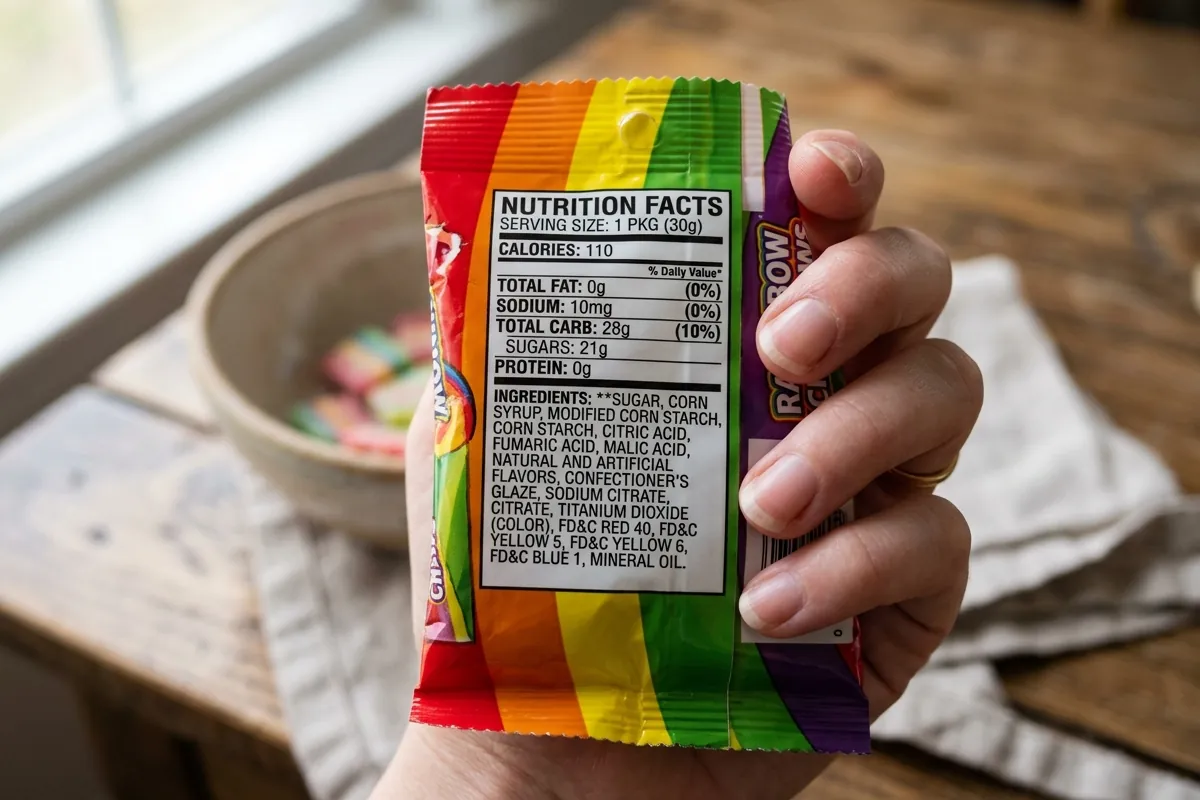
You will not memorize every product, and recipes change, so the durable skill is scanning a label fast. Here is a method that works on more than Skittles.
Scan for these specific words, which are the usual animal-derived suspects in candy: gelatin (collagen from animals), carmine, cochineal, or E120 (insect red), shellac or confectioner’s glaze (a resin from the lac insect, used as a shine), beeswax, honey, and any dairy term like milk, whey, casein, or lactose. If none of those appear, the product is almost always vegan by ingredient. The synthetic dye names, Red 40, Yellow 5, and so on, look alarming but are lab-made and not animal-derived. Carnauba wax, the other common shine, is from a palm and is fine.
If you want to apply the same label-reading instinct to savory products, the same “scan for the real animal words” logic runs through this breakdown of whether soy sauce is vegan, where the surprises hide in flavor enhancers rather than colors. For candy specifically, this label-by-label look at Sour Patch Kids walks through the same gelatin-versus-no-gelatin question for a chewy candy where the answer is genuinely happier than people expect.
The Animal Testing Question People Forget to Ask
There is one more ethical layer that the ingredient panel will never show you, and it is the parent company. Skittles are made by Mars, a large multinational that has been involved in animal testing in the past, including studies that were not required by law. For a vegan whose motivation is purely about not eating animal products, this changes nothing about whether the candy is vegan. The candy still contains no animal ingredients. But for someone whose plant-based choice grows out of animal welfare more broadly, a company’s testing history is a legitimate thing to weigh.
The point is not to talk you out of Skittles; honesty simply matters more than a clean yes. A candy can be vegan by ingredient and still come from a company whose practices you might not love. Those are two separate questions, and conflating them is how people end up feeling misled later. Decide each one on its own terms. If the corporate angle bothers you, the alternatives further down give you ways to get a similar treat from smaller makers.
Synthetic Dyes, Kids, and Why Some Vegan Parents Still Skip Skittles
Plenty of questions about Skittles are not really about veganism at all. They come from plant-based parents who notice that the candy is essentially sugar plus a stack of artificial dyes, and who wonder whether that is something they want their kids eating by the handful. The dyes, Red 40, Yellow 5, Yellow 6, Blue 1, and Blue 2, are vegan, so they pass the test this article is about. They are also the subject of ongoing debate about behavioral effects in some children, which is exactly why the European versions lean more on plant and mineral colors.
This is a good example of how “is it vegan” and “is it worth eating often” are different questions. Skittles can be perfectly vegan and still be a once-in-a-while candy rather than a daily snack. A rainbow of dye and sugar is not health food. If you are building a plant-based pantry you actually feel good about, treat candy as the occasional bright spot, not a staple, and lean on whole-food sweetness most of the time.
Why the Recipe Keeps Changing, and What That Means for You
Candy formulas are not fixed. Companies reformulate for cost, for supply, for regulation, and for shifting consumer demand. Skittles dropping gelatin and then carmine is a clear example: market pressure from vegetarians and vegans nudged a giant brand to change a recipe twice. That is genuinely good news, because it means the trend is moving in your favor. It also means no online answer, including this one, can be the last word forever. A bag printed three years from now might differ from a bag printed today.
So treat any candy verdict as a snapshot, not a guarantee. The single habit that protects you is reading the panel on the actual bag in your hand, every time you buy a new format or a new edition. It takes ten seconds with the method above, and it beats trusting a memory of an article you read once. Recipes drift; your label-reading skill does not.
Better-Tasting, Cleaner Alternatives if You Want Them
If the palm oil or the mystery sugar bothers you, you are not stuck. Several candy makers now sell fruit chews and hard candies that use plant or mineral colors, fair-trade or organic sugar, and no palm oil at all. Look for brands that carry a registered vegan certification mark on the front of the pack, because that means a third party checked the supply chain, not just the final ingredient list. Naturally sweet whole foods, like dried mango or freeze-dried strawberries, scratch a similar fruity-chewy itch with zero label anxiety. None of that means you have to give up Skittles. It just means you have options when you want them.
For broader, dietitian-style reading on how candies and processed snacks fit into a balanced plant-based diet, the nutrition resources at Healthline give a measured overview without the hype.
Frequently Asked Questions
Are Skittles vegan in the United States?
Yes. Current US Original, Sour, Tropical, and Wild Berry Skittles contain no animal-derived ingredients. The colors are synthetic dyes, not insect-based carmine, and gelatin was removed from the fruit line around 2010.
Do Skittles still contain gelatin?
Regular shelled Skittles do not. Skittles Gummies, the chewy format, do contain gelatin and are not vegan. Texture is your tell: gummy and springy usually means gelatin, while the classic hard-shell chew does not.
Are Skittles vegetarian if they are vegan?
Yes. Anything that contains no animal products at all is automatically suitable for vegetarians too. The regular fruit Skittles qualify on both counts.
Why do some websites say Skittles are not vegan?
Usually because the article is old or written for a different country. Skittles once used gelatin, and UK Skittles used carmine until about 2015. Old posts describing those recipes still circulate, even though the product changed.
Is the sugar in Skittles vegan?
It contains no animal molecules, but some US cane sugar is filtered through bone char during refining. The sugar source is not disclosed, so it is a personal judgment call. Most vegans accept untraceable packaged sugar; a stricter minority avoids it.
Are sour Skittles vegan?
Yes. Sour Skittles use the same plant-based shell as the original, plus a sour citric and malic acid coating, none of which is animal-derived.
Bottom Line
Are Skittles vegan? For the regular fruit varieties sold today, yes, with no animal ingredients on the panel. Skip Skittles Gummies, which use gelatin, and double-check any limited edition. The only real decisions left are personal ones: how you feel about refined sugar that may have touched bone char, and whether palm oil’s environmental cost outweighs the fact that the candy itself contains nothing animal. Knowing exactly where those lines sit is what lets you grab the bag, or pass on it, without second-guessing. Either way, you are now reading that wrapper better than most people in the snack aisle.