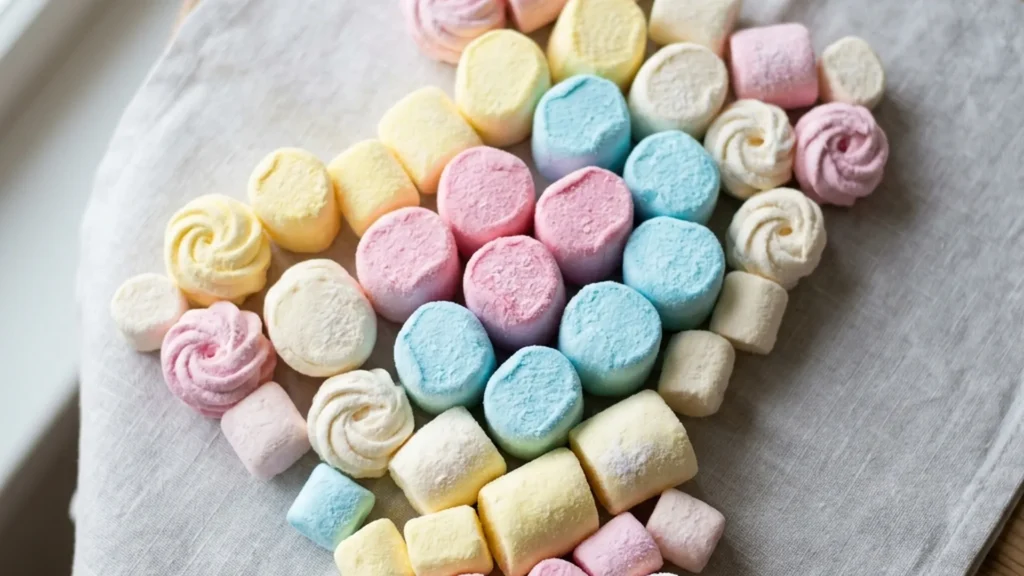
Are marshmallows vegan? Standard supermarket marshmallows are not, because almost all of them are built on gelatin, an animal protein that comes from boiled bones, skin, and connective tissue. That is the bad news, and it catches a lot of people off guard, because nothing about a fluffy white marshmallow looks like it came from an animal. The good news is that genuinely good vegan marshmallows now exist, both on store shelves and from your own kitchen, and once you understand why the original recipe needs gelatin, the plant-based swaps stop feeling like a compromise.
Marshmallow questions come up constantly around campfire season and again every winter when people want them bobbing in hot cocoa. So this is the full picture: why the classic version is off the table, the sneaky second animal ingredient people forget, which brands actually deliver, and how to make your own that hold up to a s’more. The texture science is covered too, because that is the part that makes everything else click.
Why Regular Marshmallows Are Not Vegan
A marshmallow is mostly sugar and air. The trick is getting that air to stay trapped in a soft, springy structure instead of collapsing into syrup. Gelatin is what does that job in the traditional recipe. When you whip a hot sugar syrup with gelatin and let it cool, the gelatin forms a flexible web that locks the bubbles in place. That springy, slightly chewy bounce, the thing that makes a marshmallow a marshmallow, is gelatin doing its work.
The problem for vegans is what gelatin is. It is collagen extracted by boiling the bones, skin, tendons, and ligaments of cattle and pigs. There is no plant version of gelatin itself. So any marshmallow that lists gelatin, and the overwhelming majority of mainstream brands do, is not vegan and not vegetarian either. This is not a gray area like some candy sugar. Gelatin is unambiguously an animal product.
The Hidden Second Ingredient: Egg Whites
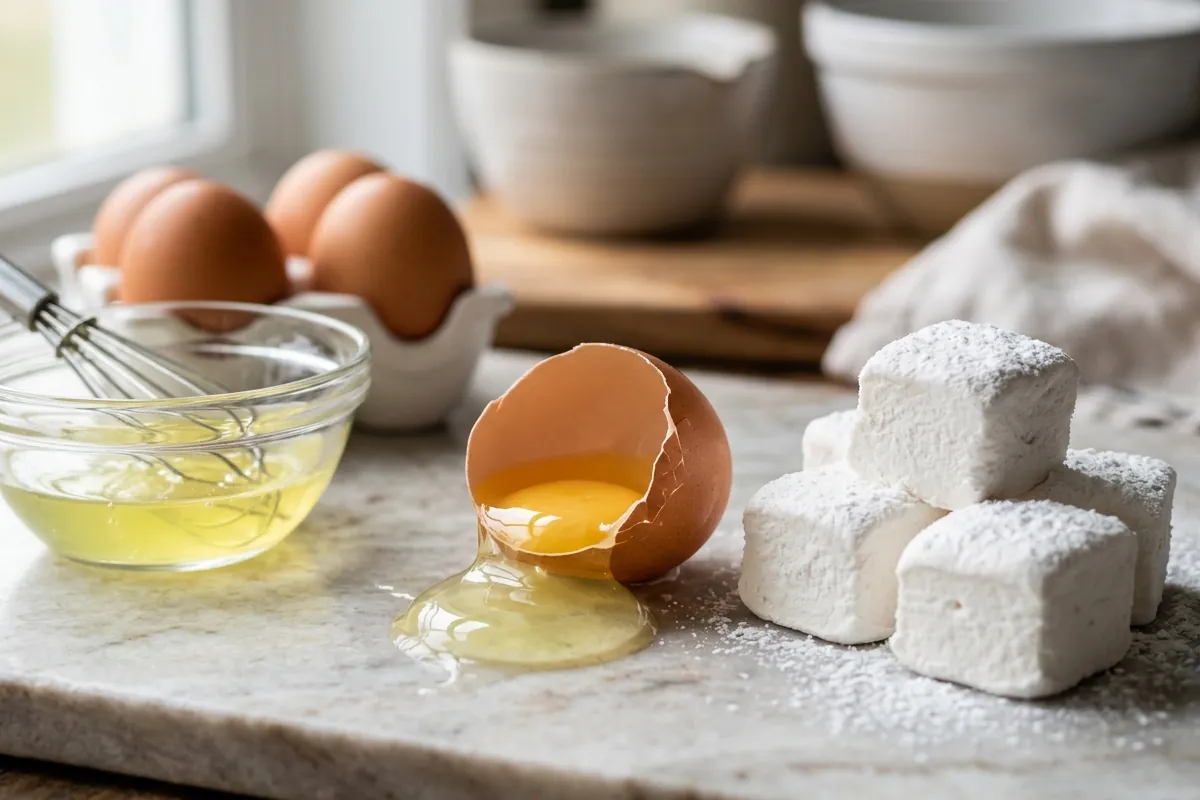
Here is the trap that even careful label readers fall into. People learn that gelatin is the issue, so they go looking for gelatin-free marshmallow products, find a jar of marshmallow fluff or creme that does not list gelatin, and assume they are safe. Often they are not. Many marshmallow cremes and fluffs are stabilized with albumen, which is simply egg white. Egg is also an animal product, so a gelatin-free fluff can still be off-limits for vegans.
The lesson is to scan for two words, not one. On any marshmallow or marshmallow spread, check for both gelatin and egg or albumen. If either appears, it is not vegan. This is the same two-word-scan discipline that saves you across the candy aisle in general, the kind of label habit applied in this breakdown of whether Oreos are vegan, where the surprise hides in a different place entirely.
How Vegan Marshmallows Are Made Instead
If gelatin gives marshmallows their set, a plant-based marshmallow needs a different gelling agent to fill that role. Three are commonly used, and they do not behave the same way. Understanding the differences explains why some vegan marshmallows are excellent and others feel off.
| Setting agent | Source | Texture result | Where it struggles |
|---|---|---|---|
| Agar agar | Red seaweed | Firm, clean set; can be slightly less springy than gelatin | Sets fast and hard, so timing matters; can turn brittle if overused |
| Carrageenan (Irish moss) | Red seaweed | Soft, pillowy, close to classic; used by leading brands | Harder to work with at home; mostly a commercial ingredient |
| Aquafaba (with agar) | Chickpea cooking liquid | Light, airy; great whip and volume | Needs agar for structure; can deflate if underwhipped |
The big commercial vegan brands lean on carrageenan because it gets closest to that soft, pillowy classic feel. Home cooks usually reach for agar agar plus aquafaba, because carrageenan is fussy to source and handle. Both routes work; they just land in slightly different spots on the texture map.
The Best Store-Bought Vegan Marshmallows
You no longer have to make these from scratch unless you want to. A handful of brands have made vegan marshmallows their whole reason for existing.
Dandies is the most widely available and the best first pick. They are carrageenan-based, melt and toast properly over a fire, and come in regular and mini sizes, including a vanilla and a pumpkin version. Trader Joe’s sells its own vegan mini marshmallows that are budget-friendly and great for hot cocoa, though they are not third-party certified, so always glance at the current label. In the United Kingdom, Ananda’s and Freedom Mallows are solid picks. For the spreadable format, Funky Mello makes a vegan marshmallow creme that fills the fluff-shaped hole in your life.
One practical tip: not every vegan marshmallow toasts the same. Carrageenan-based ones generally brown and slump over heat the way you want for s’mores, while some agar-heavy formulas hold their shape more stubbornly. If campfire performance matters to you, try a small batch before a big gathering.
How to Make Vegan Marshmallows at Home
Homemade vegan marshmallows are genuinely doable, and the payoff is a fresh, fluffy result with no mystery ingredients. The general method, in US measurements, looks like this.
You bloom and dissolve about 2 teaspoons of agar agar powder in roughly 1/2 cup water, then cook a syrup of about 1.5 cups granulated sugar with light corn syrup or a similar invert sweetener until it reaches the soft-ball stage near 240 degrees Fahrenheit on a candy thermometer. Separately, whip about 1/2 cup aquafaba (the liquid drained from a can of chickpeas) with a stand mixer until it holds soft peaks. Stream the hot syrup and the dissolved agar into the whipping aquafaba, keep beating until the mixture is thick, glossy, and tripled in volume, then spread it into a pan dusted with a mix of powdered sugar and cornstarch. Let it set for several hours, cut into cubes, and roll the cut faces in more of the sugar-cornstarch dust so they do not stick.
The aquafaba provides the foam and lightness, the agar provides the set, and the sugar provides the sweetness and stability. That division of labor is exactly why you need both a whipping agent and a gelling agent to replace what gelatin did alone. If you want a warm vegan drink to float them in while you experiment, this guide to making genuinely good dairy-free coffee covers the milk choices that also make the best plant-based hot cocoa base.
Troubleshooting Homemade Vegan Marshmallows
This is the part recipe posts almost never include, and it is where most first attempts go sideways. Here is what tends to fail and why.
If your marshmallows will not set and stay sticky-soft, your agar was probably underdissolved or your syrup did not reach a high enough temperature. Agar must be fully boiled and dissolved or it will not gel, and a syrup that stalls below soft-ball stage leaves too much water behind. If the texture comes out grainy or brittle, you likely used too much agar; it sets hard and fast, so a heavy hand turns pillowy into chalky. If the whip deflates before it sets, the aquafaba was not whipped to firm enough peaks, or the hot syrup was added too quickly and cooked the foam. Work fast once the syrup is ready, because agar starts setting the moment it cools. Treat the first batch as a calibration run; the second one is almost always right.
What About Cereal, Hot Cocoa, and Peeps?
The marshmallows hiding inside other products are their own minefield. The little dehydrated marshmallows in marshmallow cereals are made with gelatin in their standard versions, so those cereals are not vegan. The mini marshmallows tucked into many instant hot cocoa packets are usually gelatin-based too, which is why buying plain cocoa and adding your own vegan marshmallows is the safer move. Peeps, the molded Easter marshmallow candies, are made with gelatin and are not vegan. As always, a special edition or a reformulated product could differ, so the panel is the final word, but the default assumption for embedded marshmallows should be that they contain gelatin until proven otherwise.
Vegan Marshmallows in Real Cooking: S’mores, Rice Treats, and Baking
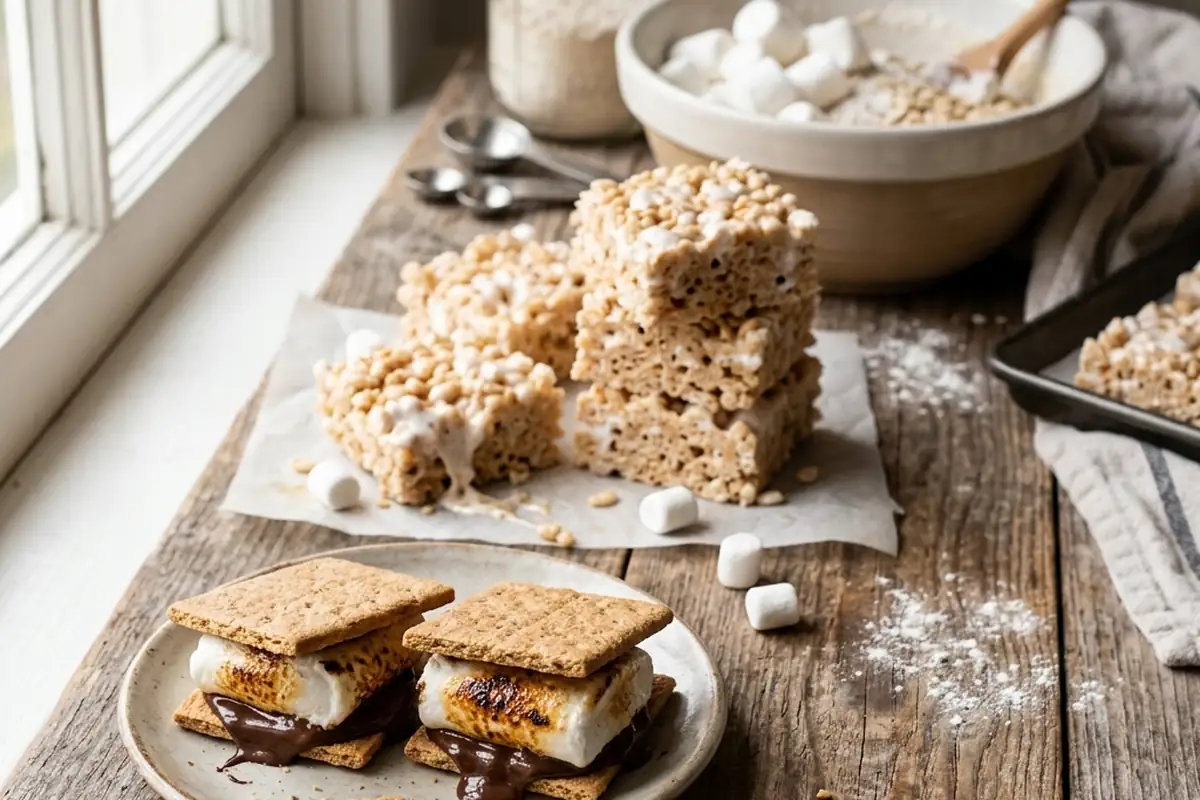
Knowing a marshmallow is vegan is only half the win. The other half is whether it performs the way you need it to in an actual recipe, because marshmallows are rarely eaten alone. The three big jobs are toasting for s’mores, melting for crispy rice treats, and folding into baked goods or frostings, and vegan marshmallows handle each a little differently.
For s’mores, you want a marshmallow that browns and slumps over heat. Carrageenan-based brands like Dandies do this best, developing that golden, gooey exterior, so they are the first pick for a campfire. Hold them a touch farther from the flame than you would a gelatin marshmallow, because some plant-based versions scorch a bit faster on the outside before the inside softens. For crispy rice cereal treats, vegan marshmallows melt down with a little vegan butter into the same sticky binder you remember, though the mixture can set slightly firmer, so press it into the pan while it is still warm and pliable. For baking, mini vegan marshmallows fold into cookies, sweet potato casserole, and hot chocolate cookies just like the originals, but they can dry out faster, so store anything containing them in an airtight container.
The practical headline is that vegan marshmallows are not a one-to-one swap in every single application, but they are close enough that with one small adjustment per use, nobody at the table will notice the difference. If you bake a lot and want a reliable library of plant-based methods, the recipe developers at Minimalist Baker are a dependable source for vegan techniques that actually work the first time.
Are Vegan Marshmallows Healthier?
People often assume that swapping out gelatin makes a marshmallow healthier, and the honest answer is: not really. A vegan marshmallow is still mostly sugar and air, just like the original. Removing gelatin changes the ethics and the dietary suitability, not the calorie count or the sugar content. If anything, the macronutrient profile is nearly identical, because the structural ingredient was never the main event; sugar was.
What does change is that you avoid an animal product and, depending on the brand, you may avoid a few additives or get organic sugar. Those are real reasons to choose them. But do not let the plant-based label talk you into treating marshmallows as a health food. They are a treat, and a treat is exactly what they should be. The healthiest move is the same for both versions: enjoy them occasionally and keep the bulk of your sweetness coming from fruit and whole foods. Veganism and nutrition overlap, but they are not the same axis, and marshmallows are a clean example of that distinction.
The Sugar and Coating Footnotes
Two smaller details round out an honest answer. First, like a lot of candy, marshmallows are made with refined sugar, and some US cane sugar is filtered through bone char during processing. The final sugar contains no animal molecules, and most vegans accept untraceable packaged sugar, but a stricter minority avoids it; brands that use organic or beet sugar sidestep the issue. Second, the dusting that keeps marshmallows from sticking is usually a cornstarch and powdered sugar blend, which is plant based, but a few coated confections use confectioner’s glaze, a shine derived from the lac insect. Marshmallows rarely use it, yet it is worth knowing the word exists. For a deeper, evidence-led look at how sweeteners and additives stack up nutritionally, the research summaries at NutritionFacts.org are a level-headed place to read on.
How to Shop for Vegan Marshmallows Without Getting Burned
Even with good brands on the market, the shelf can still trip you up, because packaging is designed to sell, not to inform. A bag that shouts “natural” or “all-natural” on the front tells you nothing about gelatin; natural marshmallows can absolutely contain it. The only thing that matters is the ingredient panel and, ideally, a certification mark.
Here is how to shop. First, flip the bag and read the ingredient list before anything else, scanning for gelatin and egg or albumen. Second, look for a registered vegan certification logo on the front, because that means a third party verified the whole supply chain rather than just the headline ingredients. Third, check the format: bagged marshmallows for toasting, mini marshmallows for cocoa and baking, and creme or fluff in a jar for spreading and fillings, with the jarred products being the ones most likely to hide egg whites. Fourth, when a product is a limited edition or a seasonal shape, re-read it even if the regular version is vegan, because special runs sometimes use a different recipe. Spend the ten seconds. Marshmallow recipes vary more between products than almost any other candy, so a habit of reading every new bag is what keeps you from an unpleasant surprise halfway through a batch of treats.
Frequently Asked Questions
Are normal marshmallows vegan?
No. Standard supermarket marshmallows contain gelatin, which is made from animal bones and connective tissue, so they are neither vegan nor vegetarian. You need a dedicated plant-based brand or a homemade version.
What is the gelatin in marshmallows replaced with?
Plant-based marshmallows use agar agar or carrageenan, both from seaweed, to provide the set. Homemade versions often add aquafaba, the liquid from canned chickpeas, to create the airy whip that sugar and gelatin used to provide together.
Is marshmallow fluff vegan?
Usually not. Many marshmallow cremes and fluffs are stabilized with egg whites, listed as albumen, even when they contain no gelatin. Check for both gelatin and egg before assuming a fluff is vegan, or buy a brand made specifically to be vegan.
Are Dandies marshmallows vegan?
Yes. Dandies are a carrageenan-based vegan brand that toasts and melts much like traditional marshmallows, which makes them the go-to choice for vegan s’mores and hot cocoa.
Are the marshmallows in hot cocoa packets vegan?
Generally no. The mini marshmallows in instant cocoa mixes are typically gelatin-based. Buying plain cocoa and stirring in your own vegan marshmallows is the reliable way to keep the drink plant based.
Can you make vegan marshmallows at home?
Yes. Whip aquafaba to firm peaks, stream in a hot sugar syrup cooked to soft-ball stage along with fully dissolved agar agar, beat until thick and glossy, then set in a pan dusted with powdered sugar and cornstarch. Expect to calibrate on your first try.
Bottom Line
Are marshmallows vegan? The classic ones are not, because gelatin sits at the heart of the recipe, and the fluffs can hide egg whites on top of that. But this is one of the easiest non-vegan foods to replace well. Brands like Dandies give you toastable, pillowy marshmallows off the shelf, and a batch of homemade agar-and-aquafaba marshmallows is a genuinely fun weekend project once you know the failure points to dodge. Read for both gelatin and egg, pick your route, and you can keep the campfire and the cocoa exactly as they should be.