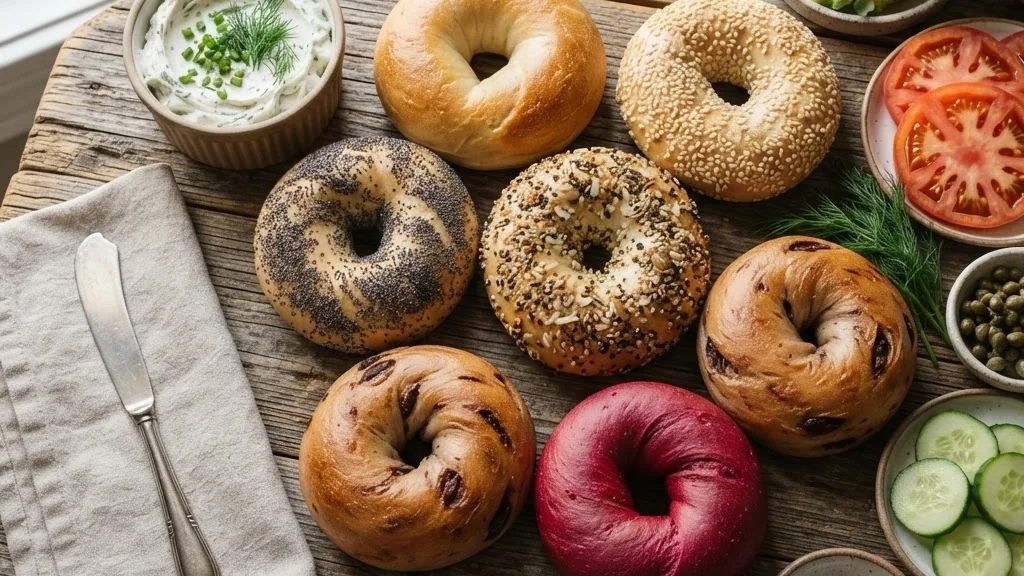
Are bagels vegan? Most plain, traditional bagels are, because the classic dough is nothing more than wheat flour, water, yeast, salt, and a little sugar or barley malt. That is the short version. The longer version is the reason to read the panel on every bag, because a handful of bagel styles and a couple of quiet additives can turn a plant-based staple into something that is not.
Ingredient details below are taken from current brand labels and named food-safety and vegan authorities, not from memory.
Quick answer: Plain, sesame, poppy, salt, onion, garlic, and most everything bagels are usually vegan. The ones to slow down for are egg bagels (egg is in the dough), honey-wheat and honey-oat bagels (honey is an animal product), dairy and cheese bagels, and any bagel brushed with an egg wash for shine. Two label additives sit in a gray zone: L-cysteine, a dough conditioner often made from feathers or hair, and mono- and diglycerides, which can be plant or animal fat. When a label lists neither of those and no egg, milk, whey, or honey, you are almost always fine.
What a plain bagel is actually made of
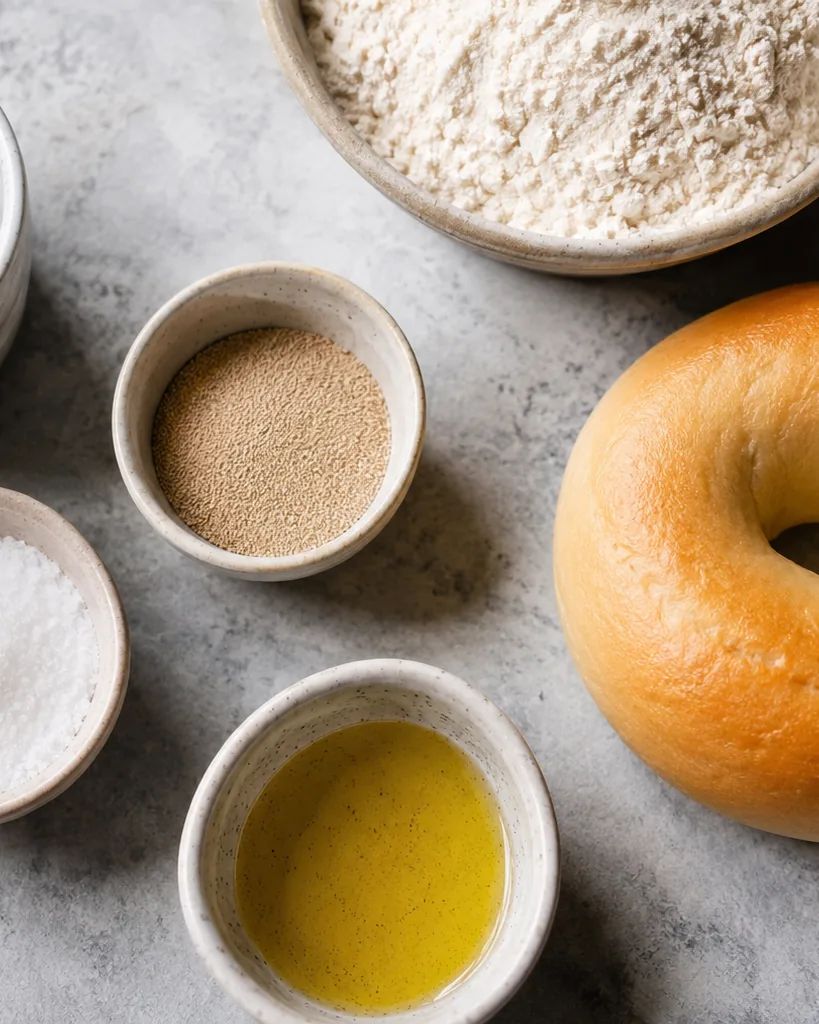
A traditional bagel is one of the more honest breads you can buy. Strip it back and you get five things: wheat flour, water, yeast, salt, and a sweetener, usually cane sugar or barley malt syrup. Every one of those is plant-based or mineral. Nothing in the base recipe needs an animal to exist, which is why the default answer to this question leans yes. The style is old, traced to Poland in the early 1600s, and it has stayed lean ever since; Thomas’ has been baking in the United States since 1880 on much the same short-ingredient logic.
The method reinforces it. Real bagels are shaped into rings roughly 3.5 to 4 inches across and boiled for about 30 to 60 seconds a side before they ever hit the oven, which is what gives them that dense, chewy pull. From there they bake hot, usually 425 to 450F. The boiling bath is usually just water with a spoon of barley malt or baking soda. Water and malt are vegan, so the technique does not introduce anything either. The only rare exception is a bath sweetened with honey, which a few old-school shops still use.
The Vegan Society defines veganism as a way of living that excludes, as far as is practicable, all animal exploitation, which in food terms rules out eggs, dairy, honey, and gelatin. Hold a bagel’s ingredient list against that single test and the whole question gets simple. You are hunting for four plain words, egg, milk, whey, and honey, plus a couple of additives whose source is not printed. Once you know that short list by heart, the answer takes seconds instead of a search.
The bagel types that are usually safe
If you buy by flavor rather than by brand, these are the styles that rarely cause worry. They rarely carry animal ingredients, though a bakery version can always differ from a bagged one.
- Plain: the baseline. Flour, water, yeast, salt, sweetener.
- Sesame and poppy: the seeds are plant toppings. The catch is how they get stuck on, covered under egg wash below.
- Everything: sesame, poppy, dried garlic, dried onion, and salt. All plant. My most-bought bagel.
- Salt, onion, and garlic: essentially plain dough with a topping.
- Pumpernickel and rye: usually flour, water, yeast, and molasses or caramel color, all vegan. A few add honey, so glance at the list.
- Cinnamon raisin: usually vegan, but sugar glazes and the occasional splash of milk show up on some brands.
Notice the pattern. The base is safe; the risk lives in the extras a specific baker chose to add. That is why no flavor should be assumed off-limits or safe without the panel in front of you.
The bagels that hide animal ingredients
Now the ones that catch people. These are not fringe products. Egg bagels and honey-wheat bagels sit in the same grocery case as the plain ones, and they look nearly identical through a plastic bag.
Egg bagels are the clearest miss. Egg is worked into the dough, which gives them a yellow crumb and a softer, richer chew. That color is a decent field cue, but color alone lies more than a label does, so confirm it anyway. If the word egg appears, it is out.
Honey-wheat and honey-oat bagels are the most common trap. Honey is an animal product under the vegan definition, and it turns up in wheat and multigrain styles constantly. Einstein Bros lists honey right on its Honey Whole Wheat bagel, which puts it off the vegan list on that ingredient alone. If you want the full reasoning on why bees change the answer, it is broken down in this guide to whether honey is vegan.
Dairy and cheese bagels are the third group. Asiago, cheddar-jalapeno, and other cheese-topped bagels obviously carry dairy. Softer brioche-style or some New York-style bagels can also add milk, butter, or whey powder to the dough for richness, which does not show through the wrapper at all. Whey is the sneaky one here, because it reads as a dry, technical-sounding word rather than an obvious dairy flag. It is the liquid left after milk is curdled into cheese, dried into powder, and added to soften crumb, and it disqualifies a bagel just as cleanly as a slice of cheese does. Scan for the letters w-h-e-y specifically, because the eye slides right past it when looking only for the word milk.
An original label cheat sheet by bagel type
This table is built from the brand panels and published definitions so you can scan a case fast. Treat “usually vegan” as a starting point that still earns a label check, because formulas vary by brand and by bakery.
| Bagel type | Typically vegan? | What to watch for |
|---|---|---|
| Plain | Usually yes | Monoglycerides, L-cysteine on some brands |
| Sesame / poppy | Usually yes | Egg wash used to glue seeds at bakeries |
| Everything | Usually yes | Egg wash at bakeries |
| Salt / onion / garlic | Usually yes | Same as plain |
| Pumpernickel / rye | Usually yes | Occasional honey; molasses is fine |
| Cinnamon raisin | Usually yes | Milk, honey, sugar glaze on some brands |
| Blueberry / fruit | Usually yes | Milk, honey, egg wash on some |
| Egg bagel | No | Egg is in the dough |
| Honey-wheat / honey-oat | No | Honey |
| Asiago / cheese | No | Dairy cheese, milk, whey |
| Brioche-style | Often no | Butter, milk, egg |
The additives that trip up the label: L-cysteine and mono/diglycerides
Two ingredients cause more confusion than eggs and honey combined, because their names give nothing away. Both are legal, common, and neither one tells you its source on the panel.
The first is L-cysteine, listed sometimes as L-cysteine or L. cysteine or the code E920. It is a reducing agent that breaks the disulfide bonds in gluten, which softens dough and makes it easier to machine. According to the FDA, L-cysteine monohydrochloride is affirmed as generally recognized as safe as a dough conditioner under 21 CFR 184.1271. Safe is not the same as vegan. The additive is commonly derived from duck and poultry feathers or from human hair, though it can also be made synthetically or by microbial fermentation. The label almost never says which, so strict vegans treat an unexplained L-cysteine as a reason to pass or to email the maker.
The second is mono- and diglycerides, sometimes coded E471. These are emulsifiers, essentially a fat, added to keep crumb soft and slow staling. They are frequently plant-derived from soybean oil, but they can also come from animal fat, and again the panel rarely specifies. This is the single line that shows up on many mainstream plain bagels, and it is the reason for saying “almost always vegan” rather than a flat yes.
A working rule: an additive that cannot be sourced is not automatically non-vegan, but it is automatically a question. For a weekday breakfast, plant-typical emulsifiers are a reasonable pass; for anyone avoiding all uncertainty, a certified label or a homemade batch removes the guesswork.
There is a third additive worth knowing because it hides in the fortification, not the dough: vitamin D3, listed as cholecalciferol. Some breads and fortified bakery products carry it. According to the Tufts Health and Nutrition Letter, most vitamin D3 is derived from lanolin, the waxy grease collected from sheep wool, which makes standard D3 an animal ingredient. A lichen-sourced vegan D3 exists, and vitamin D2 from mushrooms is plant-based, but a plain “vitamin D3” on a panel with no plant note is a fair thing to question. Bagels are fortified less often than sliced sandwich bread, so this comes up more with multigrain and “added vitamin” lines than with a basic plain bagel, but it belongs on the same watch list as L-cysteine.
The egg wash problem at the bakery counter
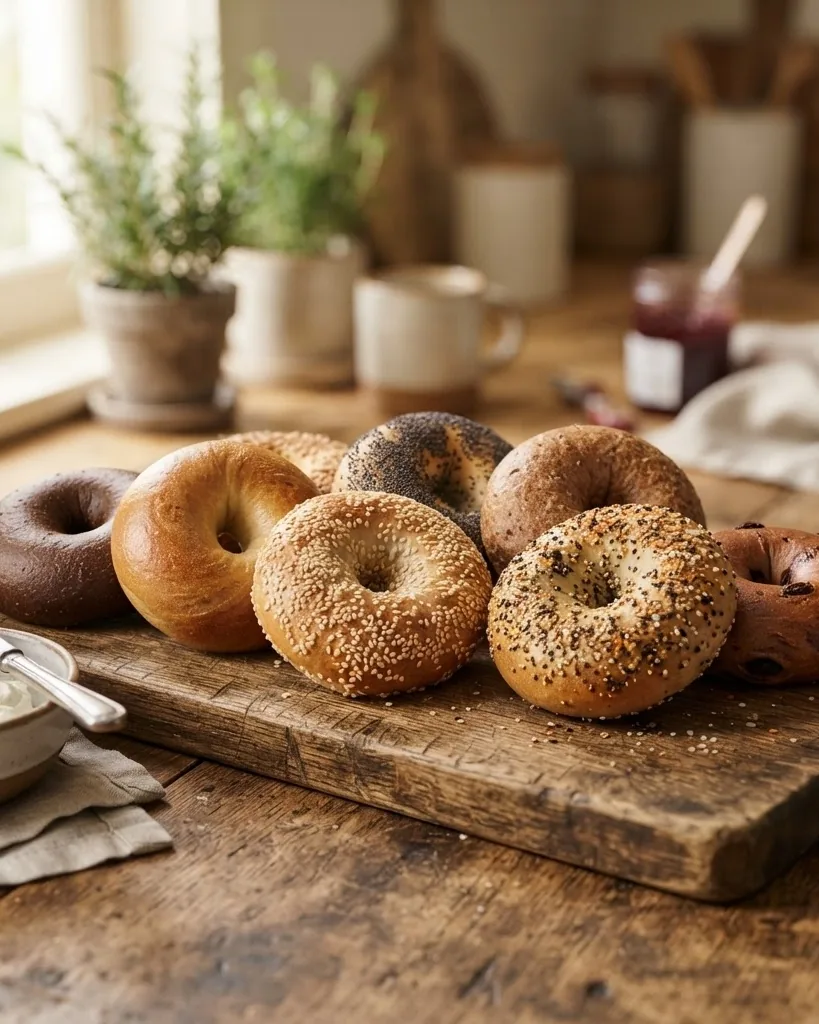
Bagged grocery bagels tell you everything on the panel. A fresh bagel from a bakery or deli counter does not come with one, and that is where the egg wash issue lives. An egg wash is beaten egg brushed over the dough before baking to produce shine, a crisp shell, and a surface that seeds cling to. The dough underneath can be completely plant-based while the coating is not.
The tell is gloss. A matte, floury top usually means no wash; a lacquered, deep-golden shine is worth a question. Even a corner-shop sesame bagel that looks plain and simple can have a glaze on it, so it is worth asking the counter what made it shine. Check the shine first, before the flavor. If you bake at home and want that gloss without egg, a brush of plant milk or an aquafaba wash does most of the job; the vegan egg substitute guide keeps a running list of swaps.
How three popular brands stack up
Brands change formulas, so read the current bag, but here is where three widely stocked names landed on their published panels.
- Thomas’ Plain Bagels: the list runs enriched wheat flour, water, sugar, yeast, wheat gluten, salt, cornmeal, calcium propionate and sorbic acid as preservatives, monoglycerides, citric acid, guar gum, soybean oil, and soy lecithin. No egg, dairy, or honey, and no L-cysteine on the current plain panel. The only gray line is those monoglycerides, so this reads as almost certainly vegan with one asterisk. For scale, one 95 g Thomas’ plain bagel runs about 270 calories with 53 g of carbohydrate and 10 g of protein, so the animal-ingredient question is separate from the calorie one.
- Dave’s Killer Bread Plain Awesome and Epic Everything: organic grain flours, water, cane sugar, rolled oats, yeast, wheat gluten, and a short “2% or less” list of canola oil, vinegar, cornmeal, sea salt, cultured wheat flour, and enzymes. No egg, dairy, or honey. The cleanest mainstream option on this list.
- Einstein Bros: varies sharply by flavor. The Honey Whole Wheat bagel lists honey and L-cysteine, so it is out on the honey alone. Their classic egg bagel contains egg. Plainer varieties differ, so this is a brand where the flavor decides the answer, not the logo.
- Sara Lee Plain: nearly a mirror of the Thomas’ panel. Enriched wheat flour, water, sugar, yeast, wheat gluten, salt, cornmeal, calcium propionate and sorbic acid, monoglycerides, citric acid, guar gum, soybean oil, and soy lecithin. No egg, dairy, or honey, and the same lone monoglyceride asterisk. Practically speaking, if you are fine with Thomas’ plain, you are fine with Sara Lee plain.
- Aldi L’oven Fresh Plain: a short “2% or less” list of wheat gluten, salt, yeast, calcium propionate, sorbic acid, citric acid, cornmeal, monoglycerides, guar gum, enzymes, and ascorbic acid over enriched wheat flour, water, and sugar. No egg, dairy, or honey. A budget option that reads about as clean as the name brands, with the familiar monoglyceride caveat.
The lesson across all five: a “healthy” or “whole grain” label tells you nothing about vegan status. Dave’s is plant-based and Einstein’s honey-wheat is not, and both market themselves as wholesome. The plain lines from Thomas’, Sara Lee, and Aldi all land in the same spot, very likely vegan with one ambiguous emulsifier, while the flavored and specialty lines are where the animal ingredients actually appear. Only the ingredient panel settles it, and the panel beats the marketing on the front every single time.
One habit that saves real time at the store: photograph the panel of any brand you clear once, then re-check it only when the packaging is redesigned. Formulas do change, and a redesigned bag is the cue to read again from scratch rather than trust last month’s memory. It sounds fussy, but it is faster than re-reading eleven ingredients on a bag already vetted in March.
Reading a bagel label in ten seconds
After enough grocery runs this became a reflex, and it is faster than reading this sentence. Here is the exact scan to run.
- Sweep for the obvious four first: egg, milk, whey, honey. Any hit ends it.
- Look for cheese, butter, or casein on flavored or specialty bagels.
- Flag L-cysteine and mono- and diglycerides as source-unknown, and decide your own comfort level.
- Treat calcium propionate, sorbic acid, citric acid, guar gum, xanthan gum, soy lecithin, barley malt, and vegetable oils as vegan. They are mineral, synthetic, or plant-based.
- At a bakery with no panel, ask two things: is there egg in the dough, and is there an egg wash on top.
One extra note some readers care about: refined cane sugar is sometimes filtered through bone char. That is a sugar-refining question rather than a bagel one, and it applies to countless foods, but strict eaters may weigh it. It does not change the base dough.
When you want zero doubt, make them
The surest vegan bagel is one where you chose all four ingredients. Homemade dough is flour, water, yeast, salt, and a spoon of sugar or malt, boiled about a minute in malted water and baked hot. No emulsifier you cannot source, no wash you did not choose. It is genuinely a weekend project rather than a chore, and it beats standing in the aisle decoding a panel. You also get to control the sweetener, skip the conditioners entirely, and top the ring with whatever seeds you like without wondering how they were made to stick. If you want a plant-based bagel bake to start with, the bagel wreath recipe uses the same simple dough logic.
Frequently asked questions
Are plain bagels always vegan?
Almost always, since the base is flour, water, yeast, salt, and sugar. The exceptions are additives like L-cysteine or mono- and diglycerides, or a bakery egg wash on top, so a quick label check or counter question still matters.
Are everything bagels vegan?
Usually yes. Sesame, poppy, dried garlic, dried onion, and salt are all plant-based. The main risk is a bakery using an egg wash to make the seeds stick, so ask if the bagel is unwrapped and shiny.
Why is L-cysteine a problem for vegans?
L-cysteine, or E920, is a dough conditioner the FDA lists as safe under 21 CFR 184.1271, but it is often made from poultry feathers or human hair. It can also be synthetic or fermented, and the label rarely says which, so many vegans avoid it when the source is unstated.
Are honey-wheat bagels vegan?
No. Honey is an animal product, and honey-wheat and honey-oat bagels list it directly. Einstein Bros Honey Whole Wheat is one clear example, so treat any honey-named bagel as off the list.
Is an egg wash really not vegan if the dough is?
Correct. An egg wash is beaten egg brushed on for shine, so even a plant-based dough stops being vegan once it is coated. A glossy, lacquered top is the visual cue to ask about.
Which store brand of bagels is easiest for vegans?
On their published panels, Dave’s Killer Bread Plain Awesome and Epic Everything were the cleanest, with no egg, dairy, honey, or L-cysteine. Thomas’ plain is very likely vegan aside from ambiguous monoglycerides.
Sources: The Vegan Society (definition of veganism and animal products including honey); U.S. FDA, eCFR 21 CFR 184.1271 (L-cysteine monohydrochloride, dough conditioner); Tufts Health and Nutrition Letter (vitamin D3 and lanolin); brand ingredient panels from Thomas’, Sara Lee, Aldi L’oven Fresh, Dave’s Killer Bread, and Einstein Bros.