Choosing the right vegan egg substitute is less about finding one magic replacement and more about matching the swap to the job the egg was doing. The short version: for binding, use a flax egg or chia egg (1 tablespoon ground seeds plus 3 tablespoons water); for moisture in cakes and muffins, use a quarter cup of applesauce or mashed banana; and for lift and fluffiness, reach for aquafaba, the starchy liquid from a can of chickpeas, using 3 tablespoons per egg. Once you understand what your recipe actually needs from the egg, replacing it becomes simple and reliable.
Eggs are sneaky little multitaskers in cooking. In one recipe an egg binds ingredients together, in another it adds moisture, in a third it provides the lift that makes things rise, and sometimes it does richness or glaze. No single substitute does all of those jobs equally well, which is exactly why people get frustrated swapping randomly and ending up with dense, crumbly, or gummy results. This guide breaks down every reliable vegan egg substitute, what each one does best, the exact ratios, and how to pick the right one so your baking turns out right the first time. Let us crack it open.
First, figure out what the egg is doing
This is the single most important step, and the one most people skip. Before you choose a substitute, ask what role the egg plays in that particular recipe, because that determines which swap will work. Eggs perform four main jobs in cooking, and recipes usually lean on one or two of them.
The four jobs are binding, which holds ingredients together so your cookies and burgers do not fall apart; moisture, which keeps cakes and quick breads tender; leavening, which traps air and provides lift so things rise light and fluffy; and richness or structure, which adds body to custards and dense bakes. A recipe with one or two eggs usually uses them mainly for binding and moisture, which are the easiest to replace. A recipe built around six whipped eggs, like a souffle or angel food cake, leans heavily on leavening and is the hardest to veganize. Knowing which camp your recipe falls into tells you exactly where to look on the list below.
The best vegan egg substitutes for binding
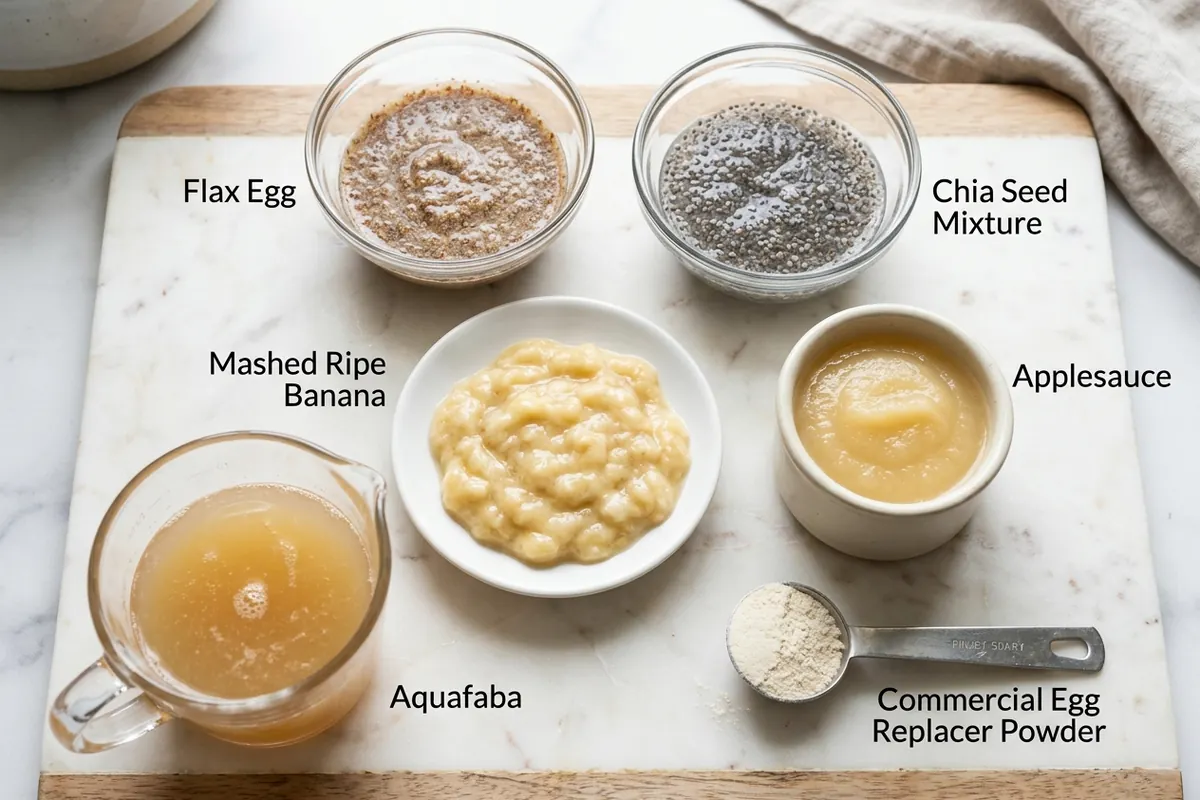
Binding is the most common job in everyday baking, and happily it is the easiest to replace. The all-stars here are flax eggs and chia eggs, and they are the swaps I reach for more than any other.
To make a flax or chia egg, stir 1 tablespoon of ground flaxseed or chia seeds into 3 tablespoons of water and let it sit for about five to ten minutes until it thickens into a gel. That gel mimics the binding action of a real egg beautifully and works in cookies, muffins, pancakes, quick breads, and veggie burgers. Flax has a mild nutty taste and a slightly heartier result, while chia is more neutral and can be made with whole seeds if you do not mind the speckles. Each replaces one egg. Chickpea flour is another excellent binder, whisked with water, and it shines in savory applications like fritters and egg-free omelets. One small tip with flax and chia eggs: grinding the seeds fresh, or buying them pre-ground, releases more of the binding compounds than whole seeds do, so a fine grind gives you the strongest hold. Whole chia still works and leaves pleasant little speckles, while ground flax disappears completely into a darker batter. Either way, store ground seeds in the fridge or freezer, since their healthy oils go rancid faster once the seed is broken open.
The best substitutes for moisture
When an egg is mainly there to keep a cake or quick bread tender and moist, fruit and vegetable purees step in perfectly, with the bonus of a little natural sweetness. Use a quarter cup of any of these to replace one egg.
Unsweetened applesauce is the classic, neutral enough to disappear into most cakes, muffins, and brownies while keeping them soft. Mashed ripe banana works just as well, though it does lend a banana flavor that suits some bakes more than others, so save it for muffins and breads where that taste is welcome. Pumpkin puree and other vegetable purees behave similarly and add their own gentle character. These purees do not provide lift, so they are best in recipes that are already fairly dense or that get their rise from baking powder and soda. If you use them in something that needs to be light, pair them with a little extra leavening to compensate.
The best substitute for lift and fluffiness
This is where most people stumble, because moisture purees cannot make things rise. When your recipe depends on eggs for airy lift, the hero is aquafaba, and it feels like a small miracle the first time you use it. Aquafaba is simply the starchy liquid you usually pour down the drain from a can of chickpeas, and it whips up exactly like egg whites.
The ratios are easy: 3 tablespoons of aquafaba replaces one whole egg, and 2 tablespoons replaces one egg white. For recipes that need stiff peaks, like meringues, macarons, mousse, or to lighten a cake, aquafaba is genuinely the best vegan option there is, whipping into a glossy foam that holds its shape. It is also a great binder in a pinch. The taste is neutral once cooked, with no chickpea flavor coming through. Save the liquid from your next can of chickpeas, or cook your own and reduce the cooking liquid slightly, and you have a free, remarkable egg replacer on hand. A commercial powdered egg replacer is another reliable choice for lift, since these are formulated specifically to provide structure and rise.
Substitutes for richness and structure
For dense, custardy, or extra-rich recipes, you want a substitute that brings body rather than just moisture or air. Silken tofu is the go-to here, blended smooth and used at a quarter cup per egg. It adds protein and a creamy density that works wonderfully in brownies, cheesecakes, custards, quiches, and fudgy bakes, without contributing any noticeable flavor of its own.
Plain plant-based yogurt does a similar job, adding moisture and a touch of tang along with structure, and it is especially nice in cakes and muffins. Use about a quarter cup per egg, and choose an unsweetened soy or coconut yogurt so it does not throw off the sweetness of your recipe. The extra protein in soy yogurt gives a little added structure that plain purees lack, which makes it a nice middle ground between a moisture swap and a richness swap. For savory dishes that need an egg-like set, a combination of silken tofu and a starch like cornstarch or chickpea flour can mimic the firm texture eggs provide. This pairing is the secret behind a good vegan quiche or frittata, where the tofu brings the body and the starch helps it firm up into sliceable wedges as it bakes. A pinch of black salt, called kala namak, is the finishing touch many vegan cooks add to these savory bakes, since its sulfurous note gives an uncanny eggy flavor that completes the illusion. A small amount goes a long way, so add it sparingly at the end of cooking and taste as you go, since too much can turn overpowering. These richer substitutes are heavier than purees or aquafaba, so reserve them for recipes that are meant to be dense and decadent rather than light and airy. Match the weight of the substitute to the weight of the result you want.
A quick reference for every swap
Here is the cheat sheet to keep handy. Each of these replaces one large egg, so scale up for recipes calling for more.
| Substitute | Amount per egg | Best for |
|---|---|---|
| Flax egg | 1 tbsp ground flax + 3 tbsp water | Binding: cookies, muffins, breads |
| Chia egg | 1 tbsp chia + 3 tbsp water | Binding: pancakes, quick breads |
| Aquafaba | 3 tbsp | Lift: meringue, cakes, mousse |
| Applesauce | 1/4 cup | Moisture: cakes, brownies |
| Mashed banana | 1/4 cup | Moisture: muffins, breads |
| Silken tofu | 1/4 cup blended | Richness: brownies, custards |
| Chickpea flour | 3 tbsp + 3 tbsp water | Binding: savory, omelets |
| Commercial replacer | per package | All-purpose baking |
| Baking soda + vinegar | 1 tsp soda + 1 tbsp vinegar | Lift: simple cakes |
How many eggs can you actually replace?
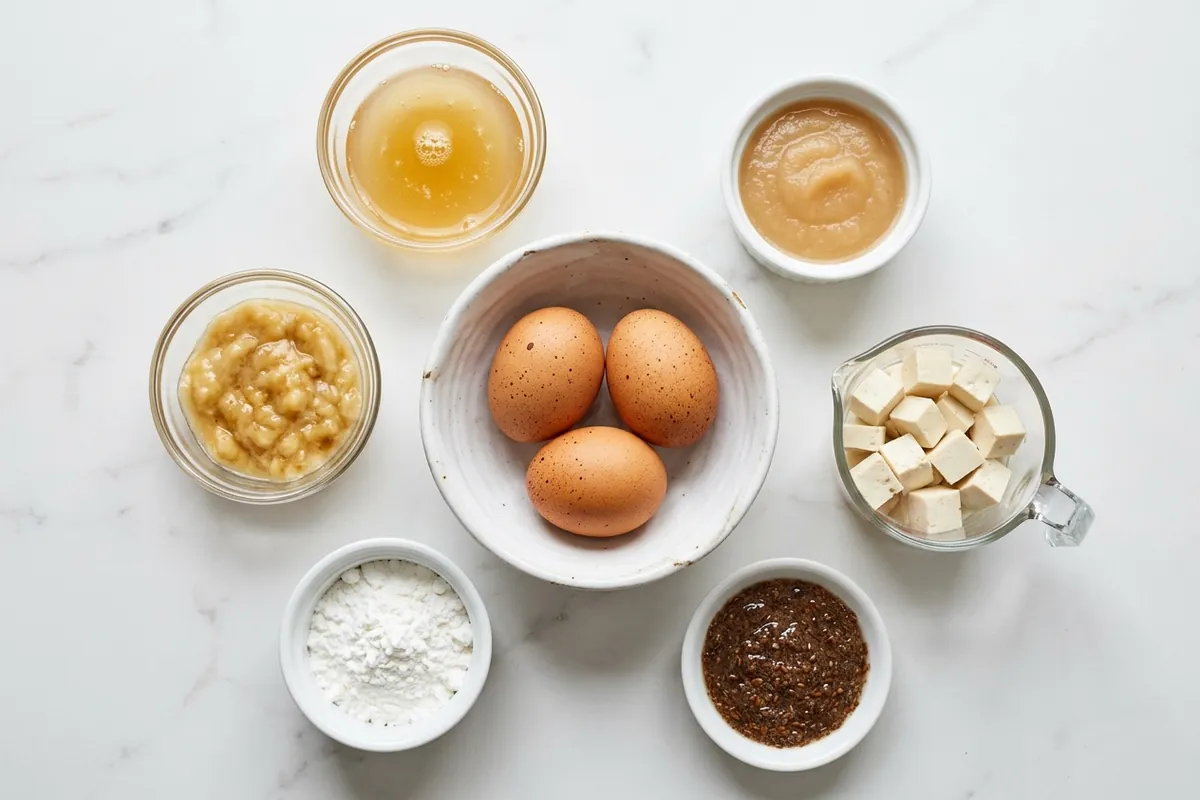
A fair question, because the swaps have limits. As a general rule, these substitutes work beautifully in recipes calling for one to two eggs, where the egg is a supporting player. The cake, cookie, or muffin still has flour, leavening, and liquid doing most of the structural work, so a swap slides in easily.
Recipes that call for three or more eggs are trickier, because at that point the eggs are doing serious structural and leavening work, and replacing all of them can leave you with a dense or gummy result. For these, you are often better off finding a recipe developed to be vegan from the start rather than converting a traditional one, since the whole formula has been balanced around the substitutes. When you do want to convert a heavy-egg recipe, aquafaba and commercial replacers handle the load better than purees, and reducing the total to what is realistic helps. Knowing this limit saves a lot of disappointing experiments, and there is no shame in reaching for a purpose-built vegan recipe instead.
Common egg-substitute mistakes to avoid
A few predictable missteps trip people up, and knowing them in advance saves a lot of flat cakes and crumbly cookies. The first and most common is using a moisture substitute when the recipe needed lift. Swapping applesauce into a fluffy cake that relied on whipped eggs leaves you with a dense, sunken result, because applesauce adds no air. When in doubt about whether a recipe needs rise, lean toward aquafaba or add a little extra baking powder alongside your moisture swap.
The second mistake is not letting flax and chia eggs gel long enough. They need a full five to ten minutes to thicken into the binding gel that does the work, so mixing the seeds and water and immediately dumping them into the batter shortchanges the effect. Make your flax egg first, before you gather your other ingredients, so it has time to set. The third is forgetting that some substitutes add flavor. Banana tastes like banana, and it will announce itself in a delicate vanilla cake, so save it for recipes where that flavor belongs and use neutral applesauce or aquafaba elsewhere.
Finally, people often try to replace too many eggs at once and then blame the substitute when the bake fails. As covered above, these swaps shine in one and two egg recipes and struggle past three. If a recipe leans hard on eggs, that is a sign to find a purpose-built vegan version rather than forcing a conversion. Respect what each substitute can and cannot do, and your success rate climbs dramatically. Most egg-free baking failures trace back to one of these four errors rather than to any shortcoming in the substitutes themselves.
Putting it into practice
The best way to get comfortable is to start with forgiving recipes and build confidence from there. Muffins, pancakes, quick breads, and drop cookies are wonderfully tolerant and a great place to practice your flax and chia eggs. A warm bowl of apple cinnamon oatmeal needs no eggs at all and shows how naturally egg-free much of breakfast already is, and once you start baking, a simple batch of cookies made with a flax egg is the perfect first project.
From there, branch out as your confidence grows, reaching for aquafaba when you want something light and silken tofu when you want something rich. If you are newer to plant-based cooking generally, it helps to understand how egg-free baking fits the bigger picture, which ties into knowing your plant protein sources and how a plant-based kitchen comes together. For a deep library of tested egg-free recipes that take the guesswork out entirely, the baking section at Minimalist Baker is one of the best resources around. Keep flax, chia, and a can of chickpeas in the house and you are ready for almost anything.
Frequently asked questions
What is the best vegan egg substitute for baking?
It depends on the job. For binding in cookies and muffins, a flax egg or chia egg is the most versatile choice. For moisture in cakes, applesauce or mashed banana works well. For lift and fluffiness, aquafaba is unmatched. Match the substitute to what the egg was doing in the recipe.
How do you make a flax egg?
Stir 1 tablespoon of ground flaxseed into 3 tablespoons of water and let it sit for five to ten minutes until it thickens into a gel. That gel replaces one egg and works as a binder in cookies, muffins, pancakes, and quick breads. A chia egg is made the same way with chia seeds.
What is aquafaba and how do I use it?
Aquafaba is the starchy liquid from a can of chickpeas. It whips up like egg whites, making it ideal for meringues, mousse, and adding lift to cakes. Use 3 tablespoons to replace a whole egg or 2 tablespoons for one egg white. The flavor is neutral once cooked.
Can I use applesauce instead of eggs?
Yes, for moisture-focused bakes. Use a quarter cup of unsweetened applesauce per egg in cakes, muffins, and brownies. It keeps things tender but does not provide lift, so it works best in denser recipes or alongside a little extra baking powder if you need rise.
How many eggs can I replace in a recipe?
These substitutes work best in recipes calling for one or two eggs. Beyond three eggs, the eggs are doing heavy structural work that is hard to fully replicate, so results can turn dense. For egg-heavy recipes, it is usually better to find one developed to be vegan from the start.
What is a good egg substitute that is also gluten-free?
Most are naturally gluten-free, including flax eggs, chia eggs, aquafaba, applesauce, mashed banana, and silken tofu. Chickpea flour is gluten-free too. Just check any commercial egg replacer’s label, since a few contain wheat starch. This makes egg-free baking easy to combine with a gluten-free diet.
The bottom line
There is no single perfect vegan egg substitute, only the right one for the job your recipe needs done. Use flax or chia eggs for binding, applesauce or banana for moisture, aquafaba for lift, and silken tofu for richness, and keep the swaps to recipes with one or two eggs for the most reliable results. Once you start thinking about what the egg is actually doing rather than just that it is there, egg-free baking stops feeling like a gamble and becomes second nature. Stock a few of these staples, match the swap to the task, and your plant-based cakes, cookies, and breads will turn out every bit as good as the originals.