Is Jello vegan? No, standard Jell-O and almost every gelatin dessert like it is not vegan, because the wobble itself comes from gelatin, an animal protein boiled out of the bones, skin, and connective tissue of pigs and cows. That applies to the classic boxes, the sugar-free boxes, the ready-to-eat cups, and most generic gelatin desserts on the shelf. It is one of the clearest non-vegan foods out there, because the single ingredient that defines the product is the animal one.
The happier news is that you can get the same jiggly, fruity dessert without any animal product, and once you understand why Jello needs gelatin, the plant-based route makes complete sense. The main swap is agar agar, a gelling agent from seaweed, and it behaves a little differently from gelatin in ways worth knowing before you pour it into a mold. So here is the whole story: why the original is off the table, which commercial vegan options exist, how to make your own that actually sets, and the mistakes that turn a hopeful batch into a soupy or rubbery one.
Why Jello Is Not Vegan
Jello is essentially flavored, colored sugar water that has been set into a soft solid. The thing that turns liquid into that bouncy, sliceable gel is gelatin. Gelatin is collagen extracted by simmering animal parts, typically the hides and bones of cattle and pigs, until the collagen breaks down into a form that gels when cooled. There is no plant source of true gelatin. It is an animal ingredient by definition.
Because the gelling itself depends on gelatin, you cannot have traditional Jello without it. This is different from a candy where the animal ingredient is a minor additive you might hope to find a clean batch without. With Jello, gelatin is the entire structural point of the food. So unless a product is specifically formulated with a plant-based gel, a gelatin dessert is not vegan, end of story.
Is Sugar-Free Jello or Kosher Jello Vegan?
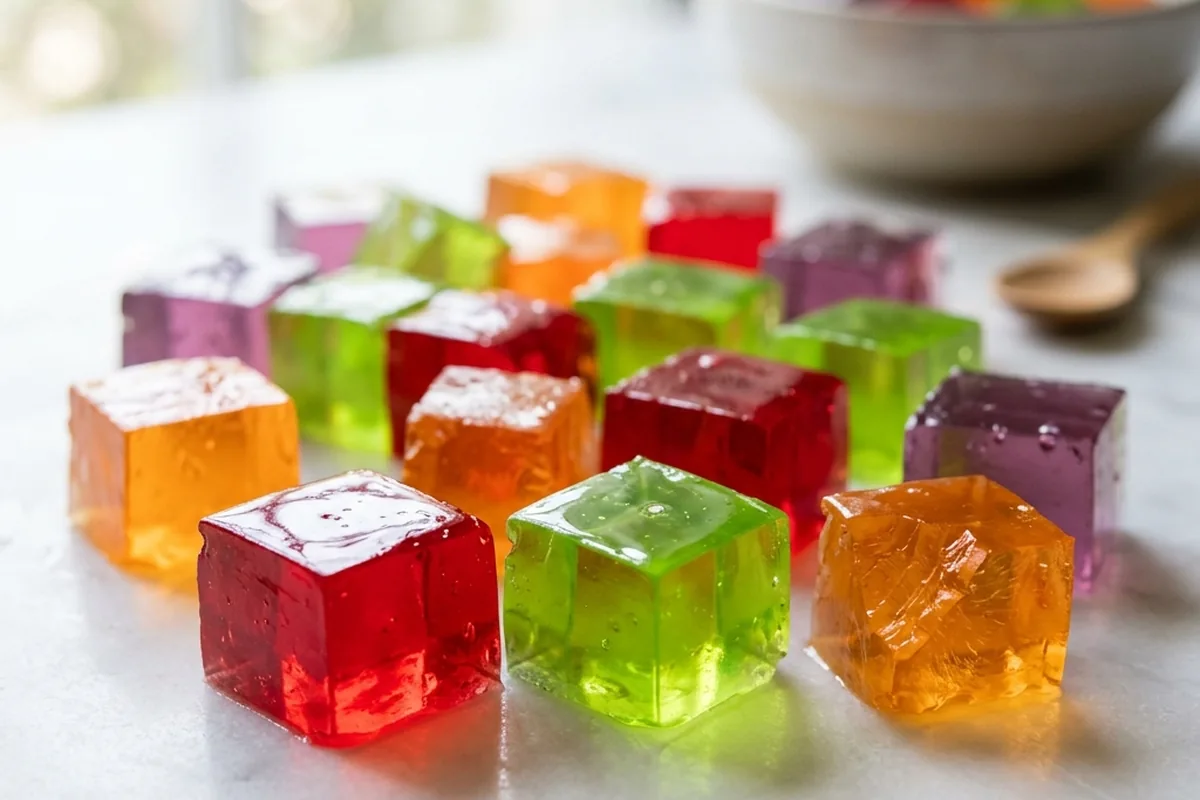
Two common assumptions deserve a direct answer. First, sugar-free Jell-O is not vegan. Removing sugar does nothing about gelatin, which is still the setting agent, so the sugar-free boxes contain the same animal protein as the regular ones. They just swap the sweetener.
Second, kosher gelatin is not vegan either, and this trips up a lot of people. Kosher refers to religious dietary law, not to plant versus animal. Much kosher gelatin is actually made from fish, and the rest is still animal-derived. A product can be certified kosher and still be entirely off-limits for a vegan. Kosher and vegan are two separate questions that happen to overlap sometimes, but not here.
How Vegan Jello Is Made: Agar Agar
If gelatin gives Jello its set, a vegan version needs a plant-based gelling agent to do that job. The workhorse is agar agar, extracted from red algae. It dissolves into hot liquid and then sets firm as it cools, much like gelatin, which is why it is the standard swap.
The catch is that agar is not a one-to-one replacement in feel. Agar sets firmer and more sliceable than gelatin, with less of that signature shimmy. A little goes a long way, and using too much gives you a dense, almost rubbery block instead of a soft wobble. It also must be brought to a real boil to activate; unlike gelatin, you cannot just dissolve it in warm liquid and chill. Get those two things right, the amount and the boil, and agar gives you a clean, fruity gel that holds its shape beautifully.
Agar Powder vs Flakes
Agar comes as powder or flakes, and they are not interchangeable spoon for spoon. Powder is far more concentrated. A rough rule is that 1 teaspoon of agar powder roughly equals 1 tablespoon of flakes, so flakes are something like two to three times weaker by volume. If a recipe calls for powder and you only have flakes, scale up accordingly, or you will end up with a dessert that never sets. The powder works better for jello because it dissolves more evenly and is easier to measure precisely.
A Reliable Vegan Jello Method
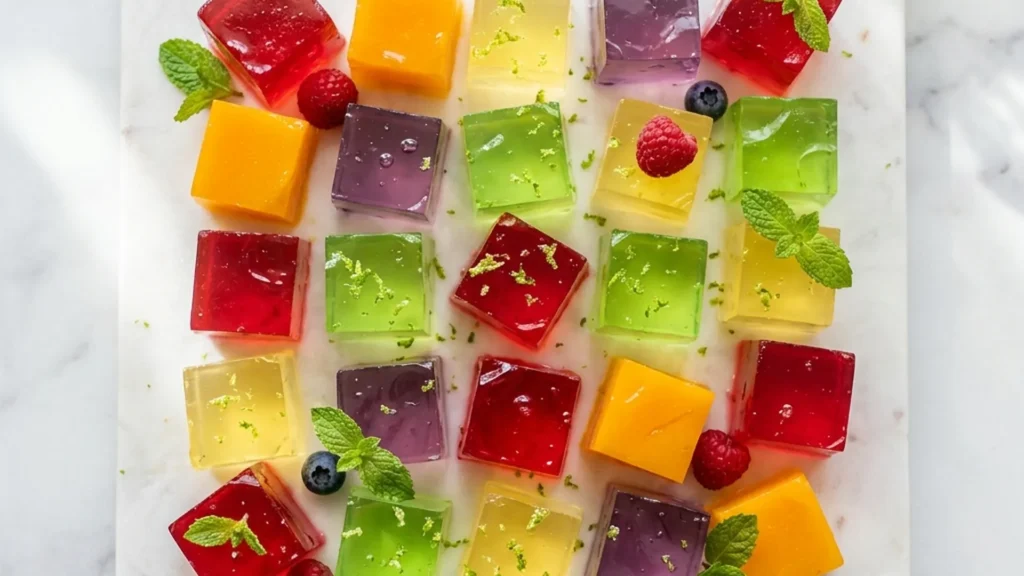
Here is a method that works, in US measurements. For a soft, classic wobble, combine 1 cup water, about 1/4 cup cane sugar, and roughly 3/4 to 1 teaspoon agar agar powder in a saucepan, and whisk while you bring it to a full rolling boil. Keep it boiling and whisking for about 2 minutes so the agar fully activates. Take it off the heat, stir in 1 cup of fruit juice, then pour into a mold or glasses and let it cool to room temperature before chilling for about 2 hours until set.
The reason you boil the water-and-agar first and add the juice after is that a hard boil can dull delicate fruit flavors and color, and adding the juice off the heat keeps it fresher. Want layers? Make one batch at a time, let each layer firm up slightly before adding the next, and you get that striped, glass-parfait look. Clear glassware shows it off best. For a deeper library of plant-based dessert techniques, the recipe developers at Forks Over Knives are a dependable reference when you want to build a whole spread around it.
The Fruit Trap: Why Some Juices Will Not Set
This is the single most common reason a vegan jello fails, and almost no recipe warns you about it. Certain fresh fruits contain enzymes that interfere with gelling. Fresh pineapple, kiwi, papaya, mango, and fresh ginger are the usual culprits. With gelatin, those enzymes literally break down the protein so it never sets. Agar is a carbohydrate rather than a protein, so it is more resistant, but very acidic or very enzyme-heavy fresh juices can still give you a weak or weeping result.
The fix is simple: use cooked, canned, or pasteurized versions of those fruits and juices, because heat deactivates the enzymes. Canned pineapple sets fine; fresh pineapple is a gamble. If you are using a tart juice, you may also need a touch more agar to compensate for the acidity. When in doubt, do a small test pour and chill it for fifteen minutes in the freezer to see whether it firms before you commit the whole batch.
Store-Bought Vegan Jello Options
If you do not want to cook, you have options the recipe blogs rarely mention. Several brands now sell plant-based jel dessert mixes that use agar or carrageenan instead of gelatin, designed to be prepared just like a box of Jell-O. Simply Delish is one of the more widely available lines of vegan jel desserts, sold in fruit flavors and often sugar-free versions sweetened with stevia. Natural food stores and the larger grocery chains increasingly carry a vegan gelatin-style dessert mix in the baking or natural foods aisle. As always, read the panel: look for agar, carrageenan, or “plant-based gel,” and make sure there is no gelatin hiding in a multipack where one flavor differs from the rest.
Plain agar agar powder itself, sold in the baking or Asian foods section, is also a pantry staple worth keeping, because it lets you turn any juice into jello on demand and works for far more than dessert.
Troubleshooting Vegan Jello
When a batch goes wrong, it is almost always one of a few specific issues, and each has a clear cause.
If it never sets and stays liquid, you either did not boil the agar long enough to activate it, used flakes at a powder ratio, or used a fresh enzyme-heavy juice that resisted gelling. If it comes out rubbery, dense, or too firm, you used too much agar; cut the amount next time, because agar is potent. If it turns cloudy when you wanted it clear, the agar was not fully dissolved before you added the juice, so whisk harder during that boil. If it weeps liquid as it sits, a phenomenon called syneresis, that is normal in small amounts with agar, but a lot of weeping usually means too little agar or too acidic a juice. Treat your first batch as a calibration run and adjust from there; agar is consistent once you learn its quirks.
Agar vs Carrageenan vs Cornstarch: Choosing Your Gel
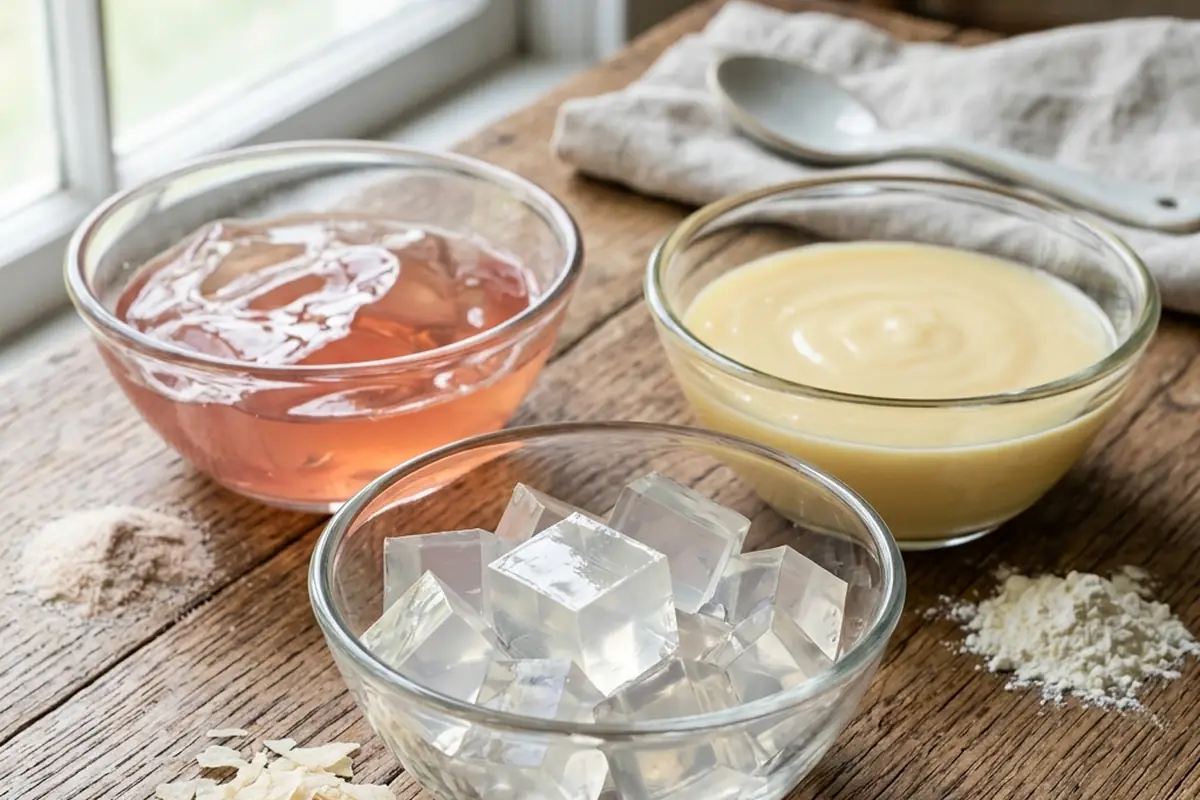
Agar is the default, but it is not the only plant-based way to get a set, and the choice shapes the final texture more than most people expect. Knowing the three main options lets you dial in exactly the wobble you want rather than accepting whatever the first recipe gives you.
Agar agar gives the firmest, most sliceable result and holds its shape even at room temperature, which is part of why it is favored for layered desserts and shapes that need to stand up. The trade-off is that classic shimmy; agar is more set than jiggle. Carrageenan, also from seaweed, produces a softer, more tender gel that lands closer to the bouncy feel of gelatin, which is why several commercial vegan mixes use it, but it is fussier to work with at home and harder to find as a standalone powder. Cornstarch and other starches do not make a true jello; they make a pudding-like set that is opaque and creamy rather than clear and wobbly, so they are a different dessert entirely. My honest take: start with agar for a clear fruit jello, and if you find it too firm, reduce the amount slightly on the next batch before you go hunting for carrageenan. Most people who think they dislike agar simply used too much of it.
One more practical point about temperature. Gelatin melts in a warm room and in your mouth, which is part of its appeal. Agar does not melt until it gets quite hot, so an agar jello will not turn to liquid on a summer picnic table the way gelatin would. That is a genuine advantage for transport and for warm-weather serving, and it is a quiet reason to like the plant-based version even setting ethics aside.
Fun Ways to Use Vegan Jello Beyond the Basic Cup
Once you can turn juice into a gel on command, a lot of doors open. Agar is far more versatile than a single bowl of wobble, and these uses are where homemade vegan jello really earns its place in your kitchen.
Layered parfaits in clear glasses look impressive and only require patience between layers. A firm agar set can be cut into cubes and tossed into a fruit salad for a chewy, jiggly contrast. You can suspend pieces of soft canned fruit inside a clear gel by letting the mixture cool until slightly thickened before adding the fruit, so it floats instead of sinking. Agar also makes a quick fruit pie glaze, a panna-cotta-style set dessert when you use plant milk instead of juice, and even savory aspics if you lean that way. Because agar sets at room temperature and reheats and resets if you make a mistake, it is forgiving in a way gelatin is not; if your first pour is wrong, you can often melt it down, adjust, and try again. That do-over ability alone makes it a friendlier ingredient to learn on than people assume.
Is Vegan Jello Healthier?
Switching from gelatin to agar changes the ethics and the dietary suitability, not the nature of the dessert. Jello, vegan or not, is mostly sugar and water with flavor and color. A homemade agar version made with real fruit juice can actually be a bit better than a boxed mix, because you control the sugar and skip the artificial dyes, and agar brings a small amount of fiber. But this is still a treat, not a health food. The honest framing is the same for sweets across the board: enjoy it, just do not let a plant-based label convince you it belongs in the daily rotation. If you want an evidence-based look at how sweeteners and additives actually stack up, the research summaries at NutritionFacts.org are a sober place to read more, and this piece on whether hummus is healthy walks through the same “vegan does not automatically mean healthy” logic for a savory snack.
What About Dye and Sugar?
Two small footnotes finish an honest answer. Boxed jello desserts, including some marketed as vegan, often use synthetic dyes for color; those dyes are not animal-derived, so they are technically vegan, but they are worth noting if you avoid artificial coloring on general principle. And like most candy and dessert, the sugar in these products is refined, and some US cane sugar is filtered through bone char during processing. The final sugar contains no animal molecules, and most vegans accept untraceable packaged sugar, but a stricter minority avoids it, which is another reason a homemade version with organic or beet sugar gives you the cleanest control. For more on reading sweet-product labels carefully, this breakdown of whether Oreos are vegan covers the same kind of surprises.
Frequently Asked Questions
Is regular Jell-O vegan?
No. Regular Jell-O is set with gelatin, an animal protein made from boiled bones, skin, and connective tissue. Because gelatin is the structural ingredient, classic Jell-O cannot be vegan or even vegetarian.
Is sugar-free Jello vegan?
No. Sugar-free Jell-O still uses gelatin for the set; only the sweetener changes. It contains the same animal-derived gelling agent as the regular version.
What can vegans use instead of gelatin for jello?
Agar agar, a gelling agent from red algae, is the standard plant-based swap. Carrageenan, also from seaweed, is used in some commercial mixes. Agar sets firmer than gelatin, so use a light hand and bring it to a full boil to activate it.
Is kosher Jello vegan?
No. Kosher refers to religious dietary law, not plant versus animal. Much kosher gelatin is made from fish, and the rest is still animal-derived, so kosher jello is not vegan.
Why won’t my vegan jello set?
The usual causes are not boiling the agar long enough, using flakes at a powder ratio, or using fresh pineapple, kiwi, papaya, mango, or ginger juice, whose enzymes interfere with gelling. Use cooked or canned versions of those fruits and boil the agar fully.
Can you buy ready-made vegan jello?
Yes. Brands such as Simply Delish sell plant-based jel dessert mixes made with agar or carrageenan instead of gelatin, prepared just like a regular box. Read the panel to confirm there is no gelatin.
Bottom Line
Is Jello vegan? The classic boxes and cups are not, because gelatin is the whole point of the wobble, and sugar-free and kosher versions do not change that. But this is one of the most satisfying foods to recreate plant-based. A box of agar-based jel dessert gets you there with zero effort, and a homemade batch with real juice gives you a cleaner, fresher result once you respect agar’s two rules: do not overdo the amount, and bring it to a true boil. Watch out for fresh pineapple and its enzyme friends, calibrate your first batch, and you will have a fruity, jiggly dessert that nobody would guess skipped the gelatin.