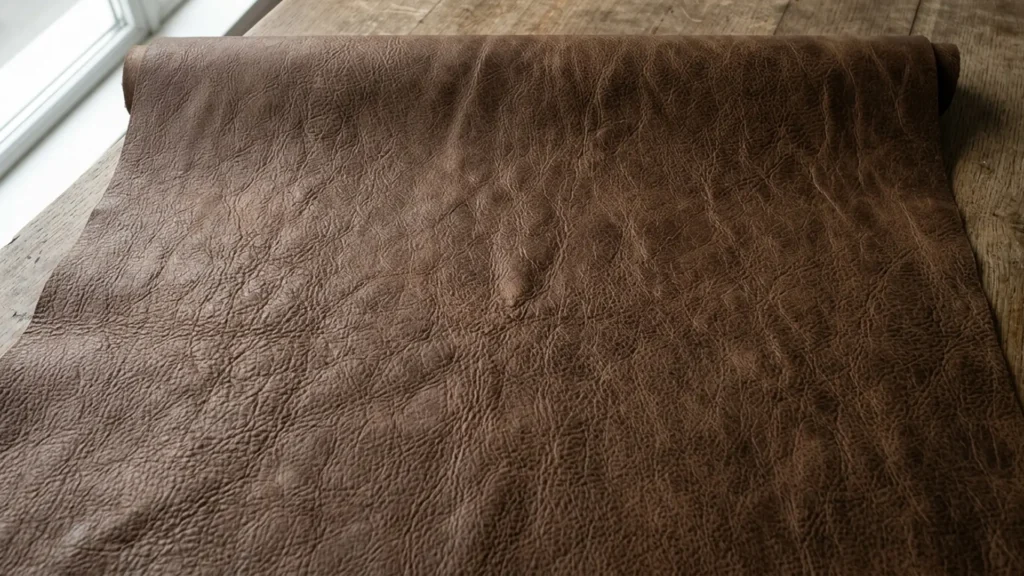
What is vegan leather? In short, it is any leather-like material made without animal skin, designed to look and feel like real leather while using no cow, sheep, or other animal hide. That single definition covers a surprisingly wide range of materials, from cheap petroleum-based plastics to high-tech fabrics grown from pineapple leaves, cactus, cork, and even mushrooms. The term tells you what the material is not, an animal product, but it does not tell you what it actually is, and that gap is where most of the confusion lives. A vegan leather wallet could be made from the same plastic as a cheap raincoat or from a plant fiber that barely existed a decade ago.
This guide explains exactly what vegan leather is made of, breaks down the two big material families and the trade-offs of each, gives an honest look at whether it is really better for the planet, and covers durability, care, and how to shop for it. Whether you avoid animal products entirely or are just curious about the alternatives, the goal is a clear-eyed picture rather than marketing on either side.
Why it is called vegan leather
The word vegan describes the absence of animal products, the same way it does in food. A vegan diet contains no meat, dairy, eggs, or honey, and vegan leather, by the same logic, contains no animal hide. That is the whole reason for the name: it is a material that fits a lifestyle of avoiding animal-derived goods. If you have read our explainer on vegan versus vegetarian, the principle is identical, vegan means no animal products at all, applied to materials instead of meals.
This is worth stating plainly because vegan leather is sometimes marketed as if the label alone guarantees it is natural or eco-friendly, which is not what the word means. Just as a food can be vegan and still be heavily processed, vegan leather can be plant based and genuinely sustainable, or it can be a petroleum plastic that simply happens to use no animals. The label answers one question, the animal question, and you have to look at the actual material to answer the rest. The same nuance shows up across vegan living, much as it does when people ask whether everyday foods like honey are vegan.
What vegan leather is actually made of
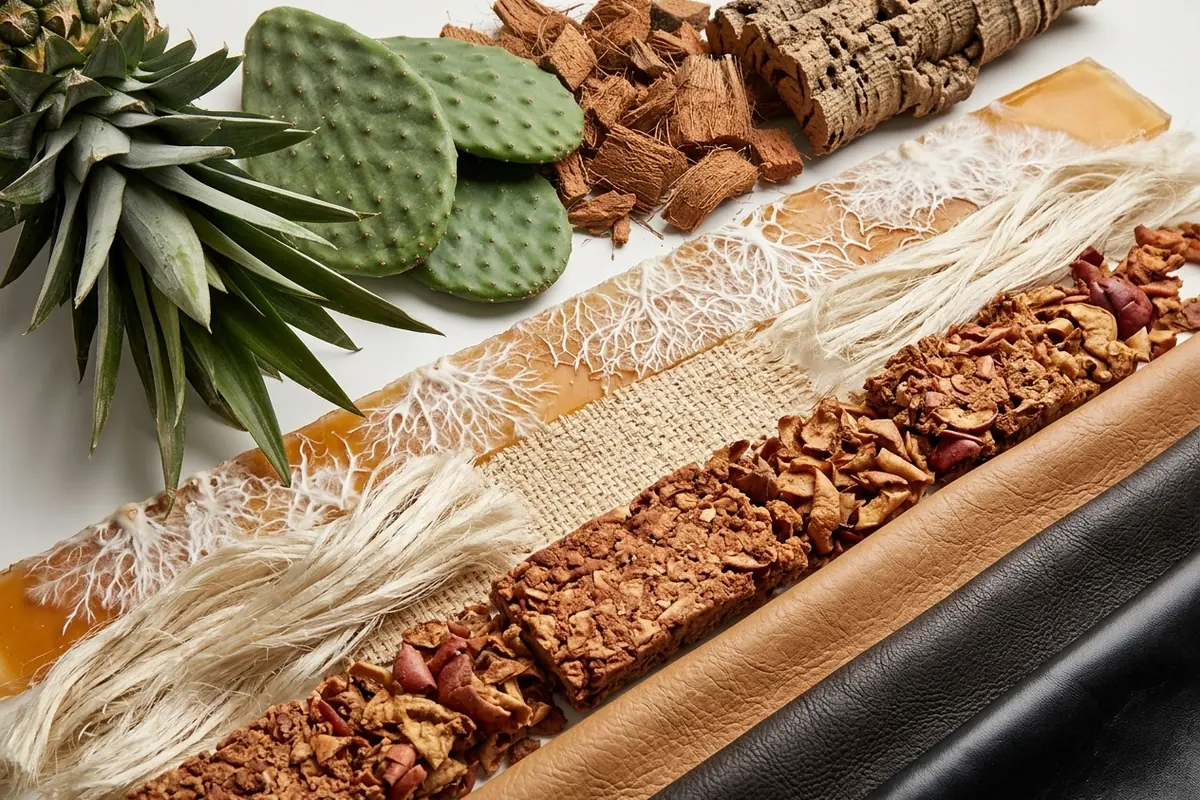
Vegan leather falls into two broad families: synthetic, plastic-based materials, and newer plant-based materials. They share a look but differ enormously in how they are made and how they affect the environment.
Synthetic, plastic-based vegan leather
The large majority of vegan leather on the market is made from one of two plastics: polyurethane (PU) or polyvinyl chloride (PVC). Both are petroleum-based, and you will often see them labeled as faux leather, pleather, or simply PU leather. PU is the more common choice today because it is more breathable, lighter, and more flexible than PVC, and it avoids the chlorine-based chemistry that makes PVC the more environmentally damaging of the two. PVC has been declining for exactly that reason. These materials are inexpensive and widely available, which is why most affordable vegan leather goods are PU.
Plant-based vegan leather
The more exciting and rapidly growing category is plant-based leather, made wholly or partly from agricultural materials, often from waste streams. These include Pinatex, made from pineapple leaf fibers; Desserto, made from cactus; cork, harvested from cork oak bark; apple leather, made from apple-industry waste; Vegea grape leather, made from leftovers from winemaking; and mushroom-based materials grown from fungal mycelium. One honest detail most marketing skips is that many plant-based leathers still use a polyurethane binder or coating to hold the plant fibers together and add durability, so they are frequently a plant-and-plastic blend rather than 100 percent plant. That does not make them bad, but it is part of an accurate picture.
| Material | Made from | Notes |
|---|---|---|
| PU (polyurethane) | Petroleum plastic | Most common, breathable, affordable, not biodegradable |
| PVC | Petroleum plastic | Older, less breathable, declining over toxicity concerns |
| Pinatex | Pineapple leaf fiber | Uses farm waste; often has a PU coating |
| Desserto | Cactus | Partly biodegradable, low water needs |
| Cork | Cork oak bark | Renewable, lightweight, water-resistant |
| Apple leather | Apple-industry waste | Roughly half apple fiber, half binder |
| Mushroom (mycelium) | Fungal roots | Promising, some fully plastic-free versions |
For a deeper technical reference on these categories, the Wikipedia overview of plant-based leather tracks the materials and the companies developing them, and it is a useful neutral starting point.
Is vegan leather actually better for the environment?
This is the question that deserves the most honesty, because the answer is genuinely mixed and depends entirely on which vegan leather you mean. Lumping all of it together is where both the hype and the criticism go wrong.
On the positive side, vegan leather uses no animals, which removes the animal-welfare issue entirely and avoids the substantial environmental footprint of raising livestock. Conventional animal leather also relies on chrome tanning, a chemical-heavy process that can pollute waterways, and some life-cycle studies have found cow leather to have a higher overall environmental impact than common synthetic materials. So the simple swap is not automatically worse for the planet. It is also worth remembering that leather is largely a byproduct of the meat industry, so its footprint is tied to livestock raised mainly for food, a connection that the plant-based community tends to weigh when thinking about materials.
On the other side, the plastic-based vegan leathers, PU and PVC, are made from fossil fuels, do not biodegrade, and shed microplastics as they wear and when they are eventually thrown away. A cheap PU bag that falls apart in two years and sits in a landfill for centuries is not an environmental win. The plant-based options are generally the more sustainable choice, especially those that use agricultural waste and minimal plastic, but even many of those rely on a PU binder. The genuinely low-impact materials, like fully plastic-free mushroom or MIRUM-style leathers, are still the smaller, newer part of the market. The honest summary: vegan leather can be much better for the planet than animal leather, but only some of it is, and durability matters as much as the material.
Durability and how to care for vegan leather
A common knock on vegan leather is that it does not last as long as the animal kind, and like everything else here, the truth depends on the material. Quality varies enormously across the category.
Cheap PU can crack and peel within a couple of years, especially with heavy use, which is the source of the “it does not last” reputation. Higher-quality vegan leathers, including the better plant-based ones and well-made PU, can last for years with reasonable care. To extend the life of any vegan leather, keep it out of prolonged direct sun and extreme heat, which dry it out and cause cracking; wipe it clean with a damp cloth rather than soaking it; avoid harsh solvents; and store it somewhere it can breathe rather than sealed in plastic. Because vegan leather does not need the conditioning oils real leather requires, the care routine is actually simpler, you are mostly just protecting it from heat and abrasion. Buying a better-made piece and treating it well does more for longevity than the material label alone, and a well-cared-for vegan leather item can easily outlast a neglected animal-leather one.
How to shop for vegan leather
Because the term covers everything from throwaway plastic to thoughtful plant-based fabric, a little label-reading goes a long way. The goal is to match what you buy to what you actually care about.
If your priority is avoiding animal products at the lowest cost, standard PU vegan leather does that, just go in knowing it is a plastic and choose a well-constructed piece so it lasts. If sustainability is a bigger concern, look specifically for the plant-based materials by name, Pinatex, Desserto, cork, apple, or mycelium, and check whether the maker discloses how much plastic binder is used. Brands that are proud of a low-plastic or plastic-free construction tend to say so clearly, while vague “eco vegan leather” claims with no material named are a yellow flag. Advocacy resources such as PETA’s overview of vegan leather can help you find brands committed to animal-free materials. As with vegan food, the most sustainable option is often the one you buy thoughtfully and keep for a long time rather than replace every season.
Vegan leather and the wider vegan lifestyle
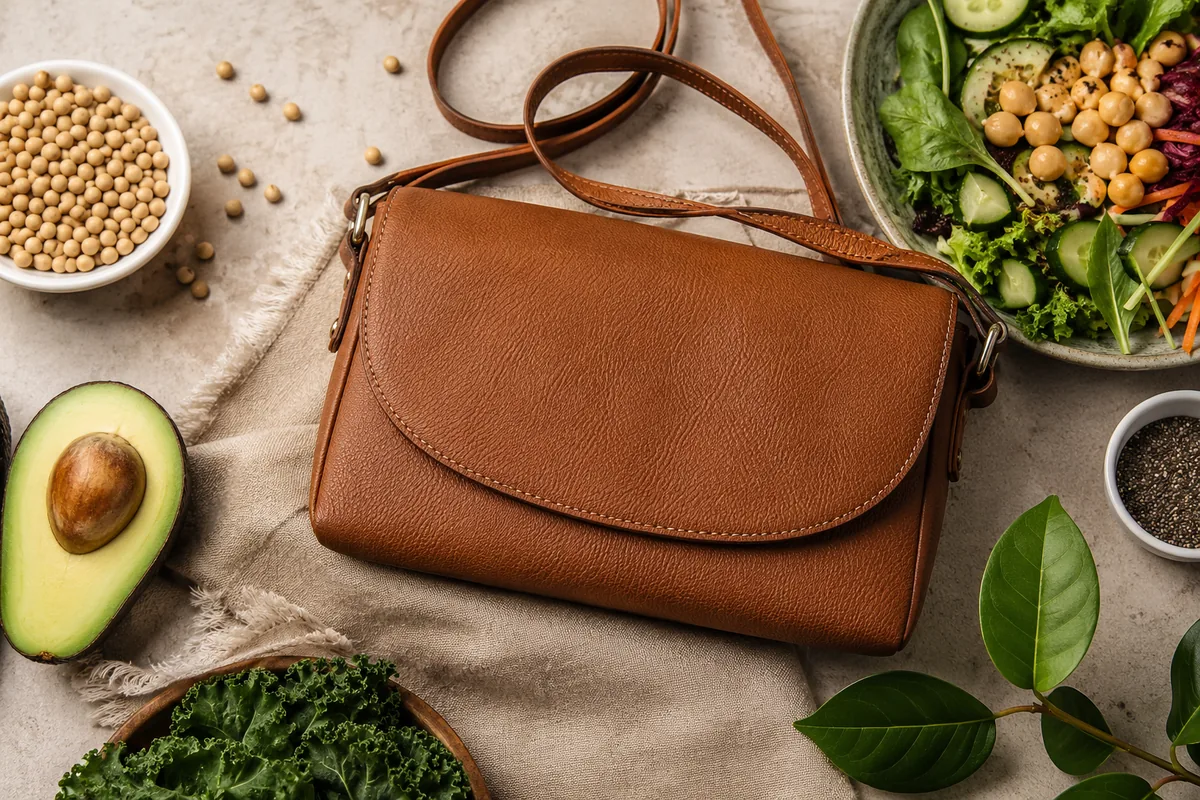
For many people, choosing vegan leather is part of a broader move away from animal products that started in the kitchen and expanded outward. The same values that lead someone to a plant-based plate, animal welfare, environmental concern, or both, often extend to clothing, shoes, and accessories.
That said, the two choices are not identical in their logic. A plant-based diet has a large and well-documented health and environmental upside, while the case for vegan leather rests more on animal welfare and avoiding the pollution of conventional tanning, with the environmental verdict depending on the specific material. Someone can be fully committed to plant-based eating and still think carefully about which vegan leather is worth buying. The plant-based wellness perspective at forksoverknives frames veganism as a positive lifestyle of abundance rather than a list of restrictions, and choosing materials that match your values, while staying realistic about their trade-offs, fits that same spirit. It is less about purity and more about informed, consistent choices.
Where you will actually find vegan leather
Vegan leather has moved well past niche shops and now shows up across mainstream products, which is part of why the question of what it is made of matters so much. Knowing where it turns up helps you spot it and ask the right questions before you buy.
The most common places are footwear, handbags, wallets, belts, and jackets, where it has long competed with animal leather on price and style. It is increasingly common in car interiors, where automakers market it as a premium animal-free option, and in furniture, where “faux leather” upholstery is often a PU vegan leather. Phone cases, watch straps, and laptop sleeves frequently use it too. In the fashion world, the high-profile plant-based materials, cactus, pineapple, and mushroom, tend to appear first in higher-end or sustainability-focused brands, while the everyday products at lower price points are usually PU. When a product simply says “man-made material” or “synthetic upper,” that is almost always a plastic-based vegan leather, even when the vegan label is not used explicitly. This is why the absence of the word vegan does not mean a product contains animal leather, and the presence of it does not tell you whether the material is plant based or plastic. Reading past the marketing to the actual material description is the only reliable way to know what you are getting.
Common myths about vegan leather
Because the category is new and fast-moving, a lot of half-truths circulate. Clearing up the most common ones makes it much easier to shop with realistic expectations.
- Myth: vegan leather is always eco-friendly. Not true. Plastic-based PU and PVC are petroleum products that do not biodegrade. Only some vegan leather, mainly the low-plastic plant-based kind, earns the green reputation the whole category gets.
- Myth: vegan leather is always cheap and flimsy. Cheap PU can be, but well-made vegan and plant-based leathers can be durable and feel premium. Quality of construction matters as much as the base material.
- Myth: plant-based leather is 100 percent plant. Many plant leathers use a polyurethane binder, so they are a plant-and-plastic blend. A few newer materials are fully plastic-free, but they are still the exception.
- Myth: real leather is more natural, so it is greener. Animal leather involves livestock impact and chemical-heavy chrome tanning, and some studies rate its overall footprint higher than synthetics. “Natural” does not automatically mean lower impact.
The thread running through all of these is the same point: the word vegan answers the animal question and nothing else. The same careful, label-reading mindset that vegans bring to food, where a product can be technically vegan yet still worth scrutinizing, like asking whether soy sauce is vegan and why, serves you just as well when shopping for materials.
The bottom line on vegan leather
Vegan leather is leather-like material that uses no animal hide, and it comes in two main flavors: petroleum-based plastics like PU and PVC, and newer plant-based materials made from pineapple, cactus, cork, apple, grape, and mushroom. The label guarantees only that no animals were used; everything else, the sustainability, the durability, the feel, depends on which material you actually buy. Plant-based options are generally the greener choice, especially the low-plastic ones, while cheap PU is a plastic that simply skips the animal. Read the material, buy quality, and keep it a long time, and vegan leather can be a genuinely good choice that aligns a wardrobe with the same values that shape a plant-based plate. The most useful habit is to treat “vegan” as the start of the conversation rather than the end of it, asking what the material actually is and how long it will last, exactly the kind of informed choice that makes plant-based living practical rather than dogmatic.
Frequently Asked Questions
What is vegan leather made of?
Most vegan leather is made from polyurethane (PU) or polyvinyl chloride (PVC), both petroleum plastics. A growing share is plant-based, made from materials like pineapple leaf fiber (Pinatex), cactus (Desserto), cork, apple waste, grapes, or mushroom mycelium, though many plant versions still use some plastic binder.
Is vegan leather better for the environment than real leather?
It can be, but not always. Vegan leather avoids animal use and the pollution of chrome tanning, but plastic-based PU and PVC are made from fossil fuels and do not biodegrade. Plant-based vegan leathers, especially low-plastic ones, are generally the more sustainable choice.
Is vegan leather just plastic?
Often, but not always. The most common types, PU and PVC, are plastics. The plant-based types are made largely from agricultural materials, though many still use a polyurethane binder, making them a plant-and-plastic blend rather than pure plant.
Does vegan leather last as long as real leather?
It depends on quality. Cheap PU can crack and peel within a couple of years, while higher-quality vegan and plant-based leathers can last for years with care. Keeping it out of heat and sun and wiping it clean rather than soaking it extends its life.
How do you clean vegan leather?
Wipe it with a damp cloth and mild soap, then dry it. Avoid harsh solvents, do not soak it, and keep it out of direct sun and extreme heat. Unlike animal leather, it does not need conditioning oils, so the routine is simpler.
Is all vegan leather cruelty-free?
By definition it uses no animal hide, so it avoids the animal-welfare issues of conventional leather. If cruelty-free is your main concern, any genuine vegan leather meets that bar; the remaining questions are about sustainability and durability rather than animal use.