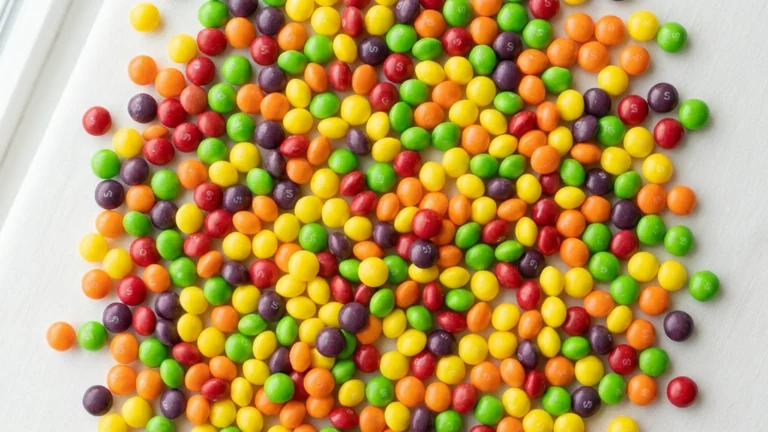
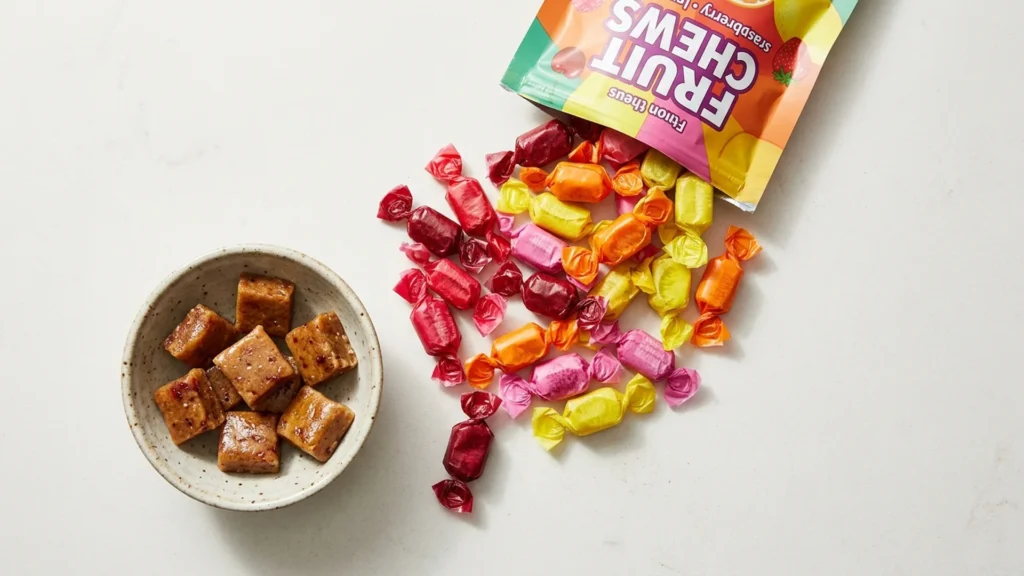
If you have ever stood in the checkout line turning a pink-and-orange pack of Starburst over in your hands, squinting at the fine print, you already know the short version: it depends on where you live. The Starburst you buy in a gas station in Ohio is a different recipe from the one sold in a corner shop in Manchester. That single fact is why the internet cannot give you one clean yes or no, and why so many quick answers leave plant-based eaters more confused than when they started.
Starburst is one of the trickier candy labels to read, because the brand splits its formula across regions and across product lines. So let us settle it properly. This guide goes ingredient by ingredient, region by region, variety by variety, and shows exactly what to look for so you never have to take a stranger’s word for it again.
The Quick Answer Before We Dig In
Standard Starburst Fruit Chews made in the United States are not vegan and not even vegetarian, because they contain gelatin and confectioner’s glaze, both of which come from animals. Standard Starburst sold in the United Kingdom and Australia are made without gelatin and are widely considered vegan-friendly, though they do contain palm oil, which some plant-based eaters avoid for environmental reasons rather than ethical-ingredient ones.
That is the headline. But “Starburst” is not one product, it is a family of products, and the answer shifts as you move from the classic chews to the gummies, the jelly beans, the minis, and the sour versions. The rest of this guide is about giving you the full map so you can make the call on any pack, anywhere.
The Two Ingredients That Decide Everything
When people ask whether a candy is vegan, they are usually worried about a handful of usual suspects. With Starburst specifically, two ingredients do almost all the heavy lifting, so it is worth understanding them before we get into the regional breakdown.
Gelatin: the dealbreaker
Gelatin is what gives the U.S. Starburst chew its characteristic dense, slightly bouncy bite. It is also unambiguously an animal product. Gelatin is made by boiling down collagen taken from the skin, bones, and connective tissue of animals, most commonly pigs and cattle, often as a byproduct of the meat and leather industries. There is no plant-based version hiding inside that label word; if you see “gelatin” on an ingredient list with no qualifier, it came from an animal. This is well documented, and the overview of how gelatin is derived from animal collagen spells out the sourcing clearly.
Gelatin is the single most common reason a chewy candy fails the vegan test, and it is the reason American Starburst does not make the cut. If a product anywhere contains it, the conversation is over regardless of what else is in the bag.
Confectioner’s glaze: the one people miss
The second culprit is sneakier. “Confectioner’s glaze,” sometimes printed as “resinous glaze,” is the shiny coating that keeps candies from sticking together and gives them a subtle gloss. It is another name for shellac, and shellac is a resin secreted by the female lac insect, harvested from the bark of trees in India and Thailand. It carries the food code E904. So even a candy with no gelatin can quietly fail on the glaze alone. The technical description of shellac and its use as a confectioner’s glaze confirms it is an insect secretion, which puts it off the table for vegans.
This one deserves a flag because it is the ingredient that catches careful shoppers off guard. You can clear a label of gelatin, milk, and egg and still trip on a three-word phrase tucked near the end. Train your eye to spot “confectioner’s glaze,” “resinous glaze,” and “shellac” and you will dodge a whole category of mistakes far beyond Starburst.
United States Starburst: Why It Fails
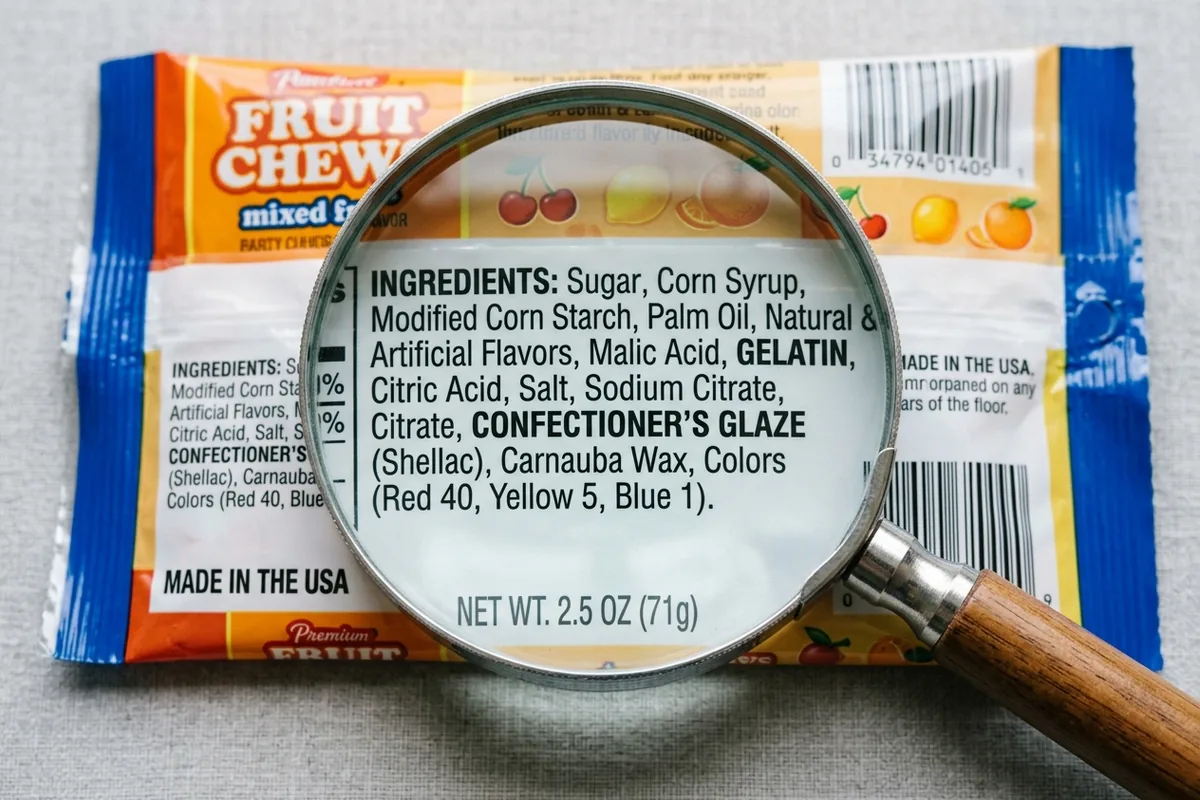
Here is the uncomfortable part for American readers. The classic Starburst Original Fruit Chews sold in the U.S. list gelatin in the ingredients, full stop. That makes them unsuitable not just for vegans but for vegetarians too, since gelatin is a slaughter byproduct. On top of that, several U.S. varieties carry confectioner’s glaze, so even setting the gelatin aside, the coating would still be a problem.
People are often surprised because Starburst markets itself on fruit flavor and bright color, not on anything obviously animal-derived. There is no milk chocolate, no visible dairy, nothing that screams “non-vegan” from the front of the pack. The animal content is structural and cosmetic rather than flavor-driven, which is precisely why it slips past so many shoppers. The texture you love is the texture gelatin creates.
So if you are in the United States and you pick up a standard pack of Starburst, treat it as off-limits. No asterisk, no “but maybe this flavor.” The base recipe disqualifies it.
United Kingdom and Australia Starburst: The Better News
Cross the Atlantic and the story changes. In the UK, Starburst reformulated years ago and now states plainly on its packaging that the product is suitable for vegetarians, and it skips gelatin entirely. The classic chews in the UK and Australia are made without animal gelatin, which is why they are commonly listed as vegan-friendly on plant-based candy roundups. The brand even dropped artificial colors and flavors in those markets, a change driven by local consumer pressure and regulation. The documented history of the Starburst candy line confirms that the UK version is labeled suitable for vegetarians and uses no artificial colors, while the U.S. version still lists gelatin.
There is one caveat worth naming honestly. UK and Australian Starburst contain palm oil. Palm oil is not an animal product, so it does not break the strict definition of vegan, but a meaningful slice of the plant-based community avoids it because of its links to deforestation and habitat loss. Whether that matters to you is a personal line to draw, not a technical one. It is mentioned here so the choice is fully informed rather than half-told, which is more than most quick answers bother to do. If you avoid palm oil, look for a sustainability certification on the pack, or lean toward the homemade route further down, where you control the fat entirely.
The takeaway for travelers and importers: a pack of Starburst is not a fixed object. The same brand name can be vegan in London and non-vegan in Los Angeles. Always check the country of manufacture, which is usually printed near the barcode or the importer line.
Variety by Variety: The Full Breakdown
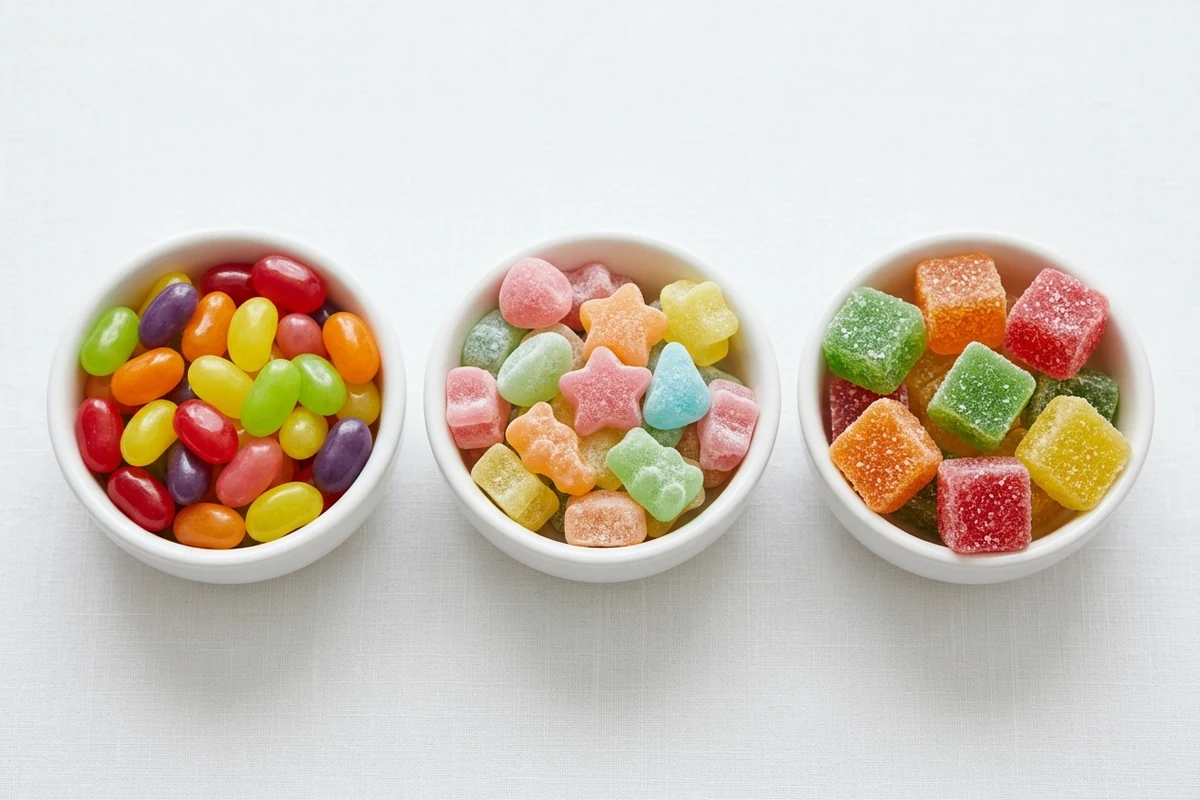
Because “Starburst” spans so many product lines, the most useful tool here is a side-by-side look at the major varieties and why each one lands where it does. The table below reflects U.S. formulations, which are the strictest case; UK and Australian equivalents are generally cleaner but still warrant a label check for glaze and palm oil.
| Starburst Variety (US) | Vegan? | Why |
|---|---|---|
| Original Fruit Chews | No | Contains gelatin; some packs add confectioner glaze |
| Gummies | No | Gelatin sets the gummy texture |
| Jelly Beans | No | Beeswax and/or confectioner glaze coating |
| Minis (unwrapped) | Check label | Often gelatin-free in the US, but verify the glaze line |
| Sour Chews | No | Same gelatin-based chew base as Original |
| Airs (whipped chews) | No | Gelatin used for the aerated structure |
The pattern is consistent: anything with a chewy gummy structure leans on gelatin, anything with a glossy finish risks confectioner’s glaze, and the few products that escape both still deserve a quick read because manufacturers reformulate without fanfare. A product that was clear last year can change the moment a supplier contract shifts.
How to Read Any Candy Label Yourself
The real skill is not memorizing which Starburst to avoid this season. It is being able to glance at any wrapper and know within ten seconds whether it works for you. Manufacturers change recipes, packaging lies by omission, and online lists go stale. Your own eyes are the only reliable tool. Here is the exact scan to run.
- Hunt for the chewy-texture flags first. Gelatin is the headline animal ingredient in candy. If it appears anywhere, you are done; put it back.
- Catch the coating words. Confectioner’s glaze, resinous glaze, and shellac all mean the same insect resin. Beeswax shows up the same way on some jelly beans.
- Spot the red-color trap. Carmine, cochineal, and the code E120 are pigments made from crushed insects. They turn up in red and pink sweets specifically.
- Mind the dairy hiding in “cream” flavors. Whey, casein, and milk powder sometimes appear in creamier candy lines even when the front of the pack says nothing about milk.
- Decide your sugar standard. Some cane sugar is filtered through bone char during refining. It is invisible on the label, so strict vegans who care about this rely on certified or beet-sugar brands rather than trying to read it off the package.
Run that five-point scan and you will clear ninety percent of candy questions without ever opening a search tab. The same checklist that handles Starburst handles gummy bears, fruit chews, and most of the rainbow aisle. It is the same discipline that applies to trickier categories like chocolate, where the answer also comes down to one careful read; if you want to see that logic applied in full, our breakdown of whether dark chocolate is vegan walks through the hidden-dairy traps the same way.
Why Do the Recipes Differ Across Regions?
This is the question almost nobody answers, and it is the most interesting part. Why would one company make the same candy two different ways? It comes down to a mix of consumer pressure, labeling law, and supply chains. The UK and parts of Europe saw earlier, louder demand for vegetarian-suitable and additive-free sweets, and large grocery chains there pushed brands to reformulate or lose shelf space. Local regulations around artificial colors added a second nudge.
In the U.S., the demand curve and the regulatory pressure arrived later and with less force on this particular product, so the legacy gelatin recipe stuck around. Reformulating a candy at industrial scale is expensive: it changes the texture, the shelf life, the machinery settings, and the supplier contracts. Companies do not do it for fun; they do it when a market makes them. That is why your odds of finding a vegan-friendly mainstream candy are simply better in some countries than others, and why “is it vegan” is so often really “where was it made.”
What to Reach For Instead
None of this means you are stuck with a sad, candy-free life. The fruit-chew category has filled out enormously, and there are genuinely good plant-based options that hit the same chewy, fruity note without the gelatin. Certified vegan fruit chews from brands built around clean labels are the easiest swap, and many are sweetened and colored without any insect or animal inputs at all.
If you would rather control every ingredient yourself, homemade is the most satisfying route. Agar agar and pectin both set a chewy candy beautifully and are entirely plant-based, and fruit juice plus a little maple or agave gives you flavor and color in one step. Making your own also sidesteps the bone-char sugar question, since you choose the sweetener. If you want a sweet project that scratches the same itch, the no-bake and quick-set treats over at our friends’ guide to no-bake cookie ideas use the same forgiving, stovetop-and-fridge approach that homemade chews do.
And if you are watching sugar specifically, the candy aisle is no longer your only option. Lower-sugar and sugar-free chewy snacks have come a long way, and the roundup of low-carb snack ideas includes several fruity, chewy formats that satisfy the same craving without the sugar load. Pairing a homemade fruit chew with one of those keeps a movie night interesting without blowing past your own standards.
A Word on Honey, Glaze, and the Gray Zones
Starburst sits inside a broader pattern worth understanding, because the same questions follow you across the whole candy aisle. Insect-derived ingredients, gelatin, and bone-char sugar are the three recurring gray zones, and where you land on each is partly a definition question rather than a pure ingredient one. Most vegans treat gelatin and shellac as clear-cut animal products and avoid them without debate. Honey and bone-char sugar generate more argument, since one comes from bees and the other leaves no trace on the label.
If you have ever wondered where the line sits on the bee side of that, our deeper look at whether honey counts as vegan lays out the reasoning most plant-based eaters use, and it maps neatly onto how to think about shellac and confectioner’s glaze too. The logic is the same: if an animal made it, it is off the list, even when the quantity is tiny and the texture is the only thing it is there for. The same principle is why we treat the fish-derived additives in certain seasoned condiments with caution, a point we cover in our guide to whether soy sauce is vegan.
None of these are moral failings if you get them wrong by accident. The point of learning the labels is not guilt; it is confidence. Once the gelatin, glaze, carmine, dairy, and sugar checks are second nature, the candy aisle stops being a minefield and becomes just another set of choices you can make in seconds. And when you want a guaranteed-safe sweet, our library of vegan dessert recipes skips the guessing entirely.
FAQ
Are Starburst vegan in the United States?
No. Standard U.S. Starburst Fruit Chews contain gelatin, an animal-derived ingredient, and several varieties also carry confectioner’s glaze, which is an insect resin. That makes them unsuitable for both vegans and vegetarians. The non-vegan content is structural and cosmetic rather than something you can taste, which is why it surprises people.
Are UK Starburst really vegan?
UK and Australian Starburst are made without gelatin and the brand labels them suitable for vegetarians, so they are widely considered vegan-friendly. The one asterisk is palm oil, which is plant-based and does not break the strict vegan definition but is avoided by some people for environmental reasons. Always confirm the country of manufacture, since imported packs can vary.
Why is confectioner’s glaze a problem if it is not gelatin?
Confectioner’s glaze, also called resinous glaze or shellac, is a resin secreted by the lac insect and harvested from tree bark. Because it comes from an animal, it is not vegan even though it is only there to make the candy shiny and non-sticky. It is one of the most commonly missed non-vegan ingredients in sweets, so it is worth learning to spot.
What are the best vegan alternatives to Starburst?
Look for certified vegan fruit chews from clean-label candy brands, which match the chewy, fruity texture without gelatin or insect glaze. For full control, make your own using agar agar or pectin to set the chew, plus fruit juice for natural color and flavor. Homemade also lets you choose a sweetener that avoids bone-char sugar, which closes the last gray-zone question.