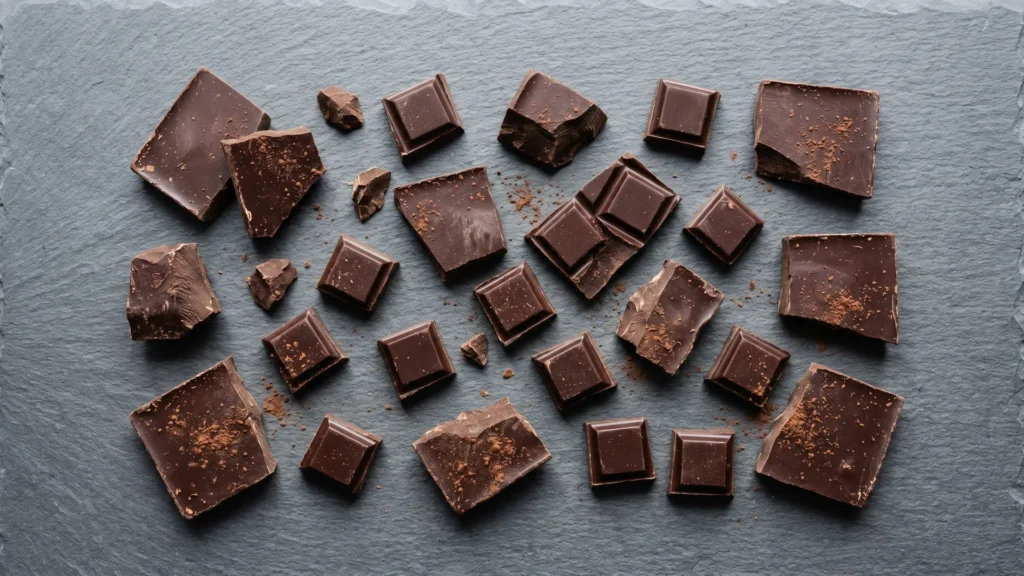
Is dark chocolate vegan? In its purest form, yes, dark chocolate is one of the easiest sweets for a plant-based eater to enjoy, because real dark chocolate is built from just cacao, cocoa butter, and sugar. None of those come from an animal. But the honest answer carries a catch: plenty of commercial bars sold as dark chocolate quietly include milk powder, milk fat, or other dairy, which means you cannot assume a bar is vegan just because it says dark on the front. The label is the only thing that settles it.
This surprises people, because dark chocolate has a reputation as the grown-up, dairy-free cousin of milk chocolate. And the reputation is mostly earned. A genuine high-percentage dark bar usually contains nothing an animal had to provide. The trouble starts when manufacturers add a touch of milk to soften the bitterness, or when a bar is flavored, filled, or made on equipment shared with milk chocolate. Suddenly a bar that looks vegan is not. This guide breaks down what dark chocolate is actually made of, the hidden animal ingredients that sneak in, why the cacao percentage is your best quick clue, how to read a wrapper in seconds, the truth about may contain milk warnings, and which everyday bars happen to be vegan already. By the end, you will be able to spot a safe bar at a glance.
What dark chocolate is actually made of
To understand why dark chocolate is usually vegan, it helps to know its simple anatomy. At its core, chocolate comes from the cacao bean. Roast and grind those beans and you get cocoa mass, which separates into cocoa solids (the dark, intense part) and cocoa butter (the smooth fat). Dark chocolate is essentially cocoa solids and cocoa butter, sweetened with sugar, and that is the whole recipe for a clean bar.
Every one of those core ingredients is plant-derived. Cacao is a seed, cocoa butter is a plant fat pressed from that same seed, and sugar comes from cane or beet. Many quality bars add a little vanilla and sometimes soy lecithin, an emulsifier that keeps the texture smooth, and both of those are plant-based too. So a bar that contains only cocoa, cocoa butter, sugar, and perhaps vanilla and lecithin is fully vegan. The reason the question even arises is that not every bar stops at that clean list. The additions are where dairy creeps in.
The hidden animal ingredients that sneak into dark chocolate

Here is the part that catches people out. Some dark chocolate bars contain dairy, added on purpose, because a small amount of milk rounds off the bitter edge of high-cacao chocolate and gives it a creamier mouthfeel. On the ingredient list this shows up as milk, milk powder, milk fat, milk solids, whey, or casein. Any of those words means the bar is not vegan, even if the front of the wrapper proudly says dark. This is the single most common reason a dark bar fails the vegan test.
Dairy is the main offender, but a few rarer animal-derived ingredients can appear too, usually in flavored or fancy bars rather than plain ones. Honey sometimes stands in as a sweetener. Shellac, a glaze made from the secretions of the lac insect, can show up as a shiny coating on chocolate-covered candies. Carmine, a red coloring made from crushed cochineal insects, occasionally appears in bars with fruit flavors or colored fillings. None of these are common in a plain dark bar, but they are worth knowing so the word dark never lulls you into skipping the ingredient list. The rule is simple: read every ingredient, and treat any dairy, honey, shellac, or carmine as a deal-breaker.
Why the cacao percentage is your best quick clue
If you remember one shortcut from this article, make it this one: the higher the cacao percentage, the more likely the bar is vegan. The math is intuitive. A bar that is 85 or 90 percent cacao is almost entirely cocoa solids and cocoa butter, which leaves very little room for anything else, dairy included. By contrast, a bar labeled dark at 45 or 50 percent has a lot of room left over, and some of that room often gets filled with milk to soften the lower-cacao bitterness.
As a practical rule of thumb, bars in the 70 to 90 percent range are very frequently vegan, and the higher you climb, the safer the bet. PETA’s chocolate guidance points shoppers toward bars in roughly the 55 to 85 percent range and notes that the higher the percentage, the purer the bar, which lines up exactly with this logic. That does not mean a high-percentage bar is automatically vegan, since a few still add milk, so the percentage is a strong clue rather than a guarantee. But if you are scanning a shelf quickly, reaching for the higher numbers stacks the odds heavily in your favor before you even flip the bar over.
How to read a chocolate wrapper in seconds
Reading a chocolate label well comes down to two passes. First, check the cacao percentage on the front, using the rule above to gauge how likely the bar is to be clean. A high number is encouraging, a low one is a flag to look closer. Second, and this is the part that actually settles it, flip the bar and read the ingredient list and allergen statement.
On the ingredient list, you want to see only plant-based items: cocoa mass or cocoa solids, cocoa butter, sugar, and possibly vanilla and soy lecithin. The instant you spot milk, milk fat, milk powder, milk solids, whey, casein, butterfat, honey, shellac, or carmine, the bar is out. Then read the allergen line at the bottom, where contains milk would confirm dairy and may contain milk signals a cross-contamination situation we will untangle in a moment. A long ingredient list is itself a mild warning, because the more a bar has been built up with extras, the more chances there are for something non-vegan to appear. A short, clean list is the dark chocolate lover’s friend. This same label-first habit serves you across the whole plant-based pantry, the same way it does when sorting out which everyday foods are vegan and gluten free at the same time.
The truth about may contain milk warnings
This is the detail that confuses the most people, so it is worth being precise. A may contain milk or made on shared equipment with milk warning does not mean the bar contains dairy. It is a cross-contamination advisory, telling you the chocolate was made in a facility that also handles milk chocolate, so trace amounts could theoretically transfer. If milk does not appear in the actual ingredient list, the bar is, by ingredient, vegan.
How you treat that warning depends on why you avoid animal products. If you are vegan for ethical reasons, a may contain milk bar with no dairy in the ingredients is generally considered vegan, since no animal product was intentionally added. If you have a dairy allergy, that same warning is a genuine medical concern and you should avoid the bar, because even traces can cause a reaction. So the may contain line is not a vegan deal-breaker the way a dairy ingredient is, but it is an allergy deal-breaker. Knowing the difference keeps you from needlessly passing up a perfectly vegan bar, while still respecting a real allergy when one exists.
Everyday dark chocolate bars that happen to be vegan
The encouraging reality is that a lot of widely available dark chocolate is accidentally vegan, meaning it was never marketed as vegan but contains no animal products anyway. Many supermarket dark bars in the 70 percent and above range fit this description, and you do not have to shop at a specialty store to find them. Plenty of mainstream brands offer high-cacao dark bars whose ingredient lists are nothing but cocoa, cocoa butter, sugar, and vanilla.
Rather than chasing a fixed brand list, which changes constantly as recipes get reformulated, train yourself to recognize the pattern: a higher-percentage bar with a short, dairy-free ingredient list. When you find one you like, it tends to stay reliable, but a quick re-check now and then catches any recipe change. Beyond plain bars, dedicated vegan chocolate makers produce everything from baking chunks to filled bars, so the category keeps expanding. If you want to put a vegan bar to work in the kitchen, dark chocolate melts beautifully into plant-based desserts, and you can lean on tricks from our vegan egg substitute guide to bind brownies and cookies without eggs. For more inspiration on the sweeter side, the recipe collection at Minimalist Baker is full of simple plant-based ways to use good dark chocolate.
Is vegan dark chocolate actually better for you?
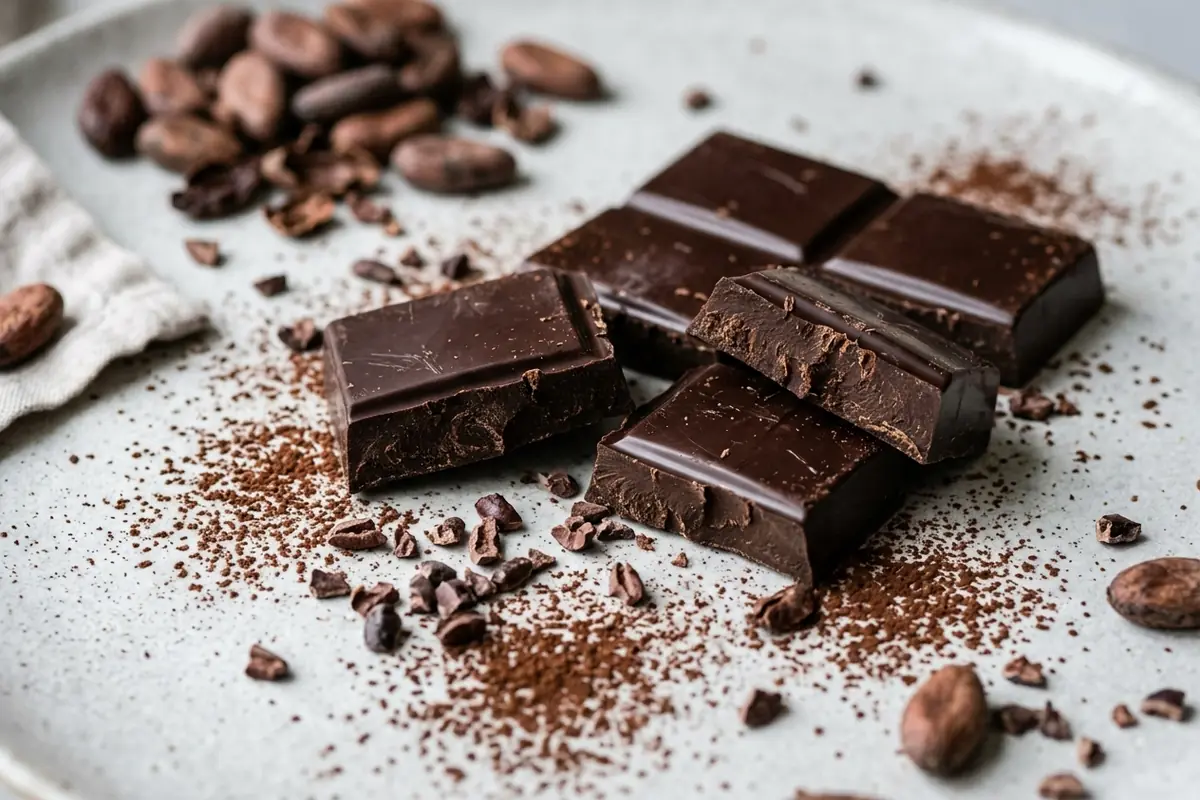
People often assume vegan dark chocolate is automatically a health food, and the picture is more nuanced than that. Dark chocolate, vegan or not, does carry some genuine perks. It is a source of flavanols, the plant compounds linked in research to benefits for heart and blood vessel health, and the higher the cacao content, the more of those compounds you get. A square of high-percentage dark chocolate is a reasonable treat with a bit of nutritional upside, which is more than you can say for most candy.
That said, chocolate is still sugar and fat, and the dose matters. A 90 percent bar has very little sugar and a lot of cacao, while a sweeter dark bar tips the balance back toward dessert. Choosing a vegan bar does not change that math, it simply removes the animal products. The smart approach is to enjoy good dark chocolate in modest amounts and to lean toward higher-cacao bars, which happen to be both the most vegan-friendly and the most flavanol-rich at once. In that sense, the same choice that keeps a bar plant-based also tends to make it the better-for-you option, which is a nice piece of overlap.
Cocoa powder, chips, and other chocolate forms
Dark chocolate bars are only one shape chocolate comes in, and the same vegan logic extends to the rest, with a few useful notes. Plain unsweetened cocoa powder is one of the most reliably vegan ingredients in any kitchen, since it is just ground, defatted cocoa solids with nothing added. Dutch-process cocoa is treated with an alkali to mellow its flavor, but that process does not introduce animal products, so it stays vegan too. Cocoa powder is a baker’s friend precisely because it is pure plant matter.
Chocolate chips are where you have to pay closer attention. Many standard semi-sweet and dark chocolate chips are accidentally vegan, but some contain milk fat or milk powder, and most milk chocolate chips obviously do, so the back-of-bag check matters here just as much as with bars. Baking chunks and chopped dark chocolate follow the same rule: read the ingredient list and lean toward higher-cacao versions. White chocolate, by contrast, is almost never vegan in its traditional form, because it is built on cocoa butter plus milk solids and sugar, though a growing number of plant-based white chocolate alternatives now use coconut or oat milk solids instead. Cocoa nibs, the crushed roasted beans themselves, are pure cacao and always vegan, making them a great topping when you want chocolate intensity with zero ingredient worries.
Ethical questions beyond the ingredient list
For many people choosing dark chocolate, vegan goes beyond whether dairy is in the bar and into how the cacao was grown, and it is worth a brief, honest look. Conventional cocoa production has a documented history of labor concerns, including child labor and exploitative conditions on some farms in major growing regions. None of that changes whether a bar is technically vegan by ingredient, but for an eater whose plant-based ethics extend to broader harm, it is part of the picture.
The practical response is to look for bars carrying fair trade, Rainforest Alliance, or direct-trade certifications, which signal better labor and environmental standards behind the cacao. Many of the small-batch chocolate makers who emphasize high cacao percentages, the same bars most likely to be vegan, also tend to source more responsibly, so the qualities often travel together. This is a personal line, and plenty of vegans simply focus on the ingredient list, which is entirely valid. But if you want your chocolate to align with the wider values that often accompany plant-based eating, the certifications on the wrapper give you a way to choose, and the whole-food, ingredient-conscious approach championed by resources like Forks Over Knives pairs naturally with that mindset. Either way, you can enjoy a square of dark chocolate that is both plant-based and, if you choose, more thoughtfully sourced.
Frequently asked questions
Is dark chocolate vegan?
Often, but not always. Pure dark chocolate made from cocoa, cocoa butter, and sugar is vegan, but many commercial dark bars add milk, milk fat, or whey to soften the flavor, which makes them non-vegan. Always read the ingredient list, since the word dark on the front is not a guarantee.
What makes some dark chocolate not vegan?
The most common culprit is added dairy, listed as milk, milk powder, milk fat, milk solids, whey, or casein. Less commonly, flavored or coated bars may contain honey, shellac (an insect-derived glaze), or carmine (an insect-derived red coloring). Any of these ingredients makes a bar non-vegan.
Does a higher cacao percentage mean more likely vegan?
Yes. The higher the cacao percentage, the less room there is for added milk, so bars in the 70 to 90 percent range are very frequently vegan. It is a strong clue rather than a guarantee, so still flip the bar and read the ingredients, but reaching for higher percentages stacks the odds in your favor.
Does may contain milk mean dark chocolate is not vegan?
No. A may contain milk warning is a cross-contamination advisory, not an ingredient. If milk is not in the actual ingredient list, the bar is considered vegan by most ethical vegans. People with a dairy allergy, however, should avoid it, since trace amounts can still trigger a reaction.
Is unsweetened baking chocolate vegan?
Usually yes. Unsweetened baking chocolate is typically just pure cocoa mass with no added dairy, which makes it one of the most reliably vegan chocolate products. As always, check the ingredient list, but plain baking chocolate and cocoa powder are almost always plant-based.
Is dark chocolate healthier than milk chocolate?
Generally, dark chocolate has more cacao and less sugar and dairy than milk chocolate, which gives it more flavanols and a better nutritional profile. Higher-percentage bars carry the most of these plant compounds. It is still a treat to enjoy in moderation, but a square of dark chocolate is a more sensible indulgence than most candy.
The bottom line
Dark chocolate is vegan whenever its ingredient list stops at cocoa, cocoa butter, sugar, and plant-based extras. The pitfalls are added dairy in lower-percentage and flavored bars, plus the occasional honey, shellac, or carmine in fancier products. Lean toward higher cacao percentages as a quick filter, read the back of every wrapper to confirm, and treat a may contain milk note as an allergy concern rather than a vegan one. Follow that and you can enjoy a square of genuinely plant-based dark chocolate any time, with the small bonus that the most vegan-friendly bars tend to be the richest in cacao too.