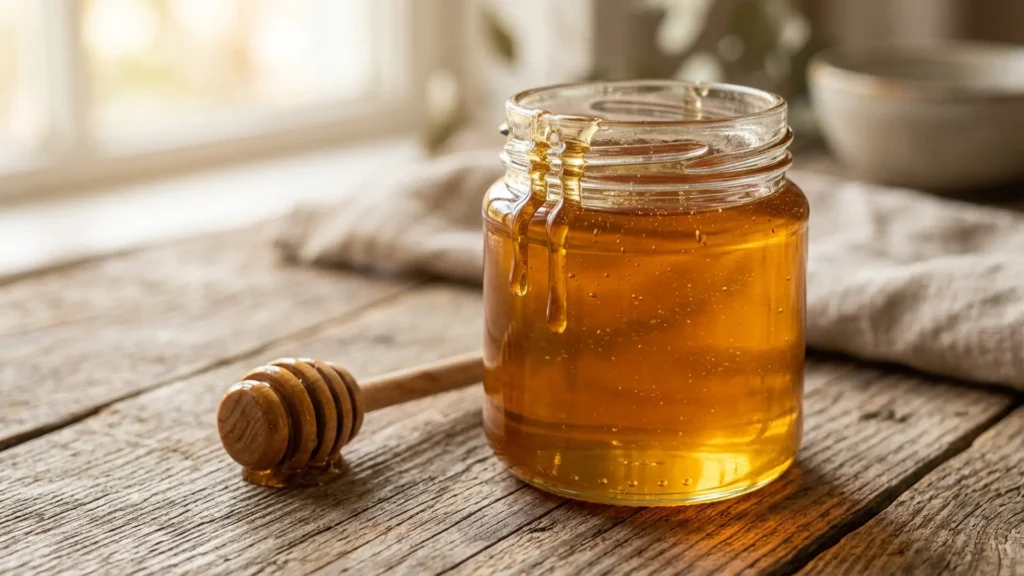
Is honey vegan? By the standard definition, no, honey is not vegan, because it is made by bees, and bees are animals. Veganism excludes foods that come from animals or rely on their exploitation, and honey is a food that bees produce for their own survival, then have taken from them. That places honey alongside milk and eggs as an animal product rather than a plant one, which is why most vegans skip it. The reasoning is simple and consistent: if it came from an animal, it is not vegan, and honey came from a bee.
Honey sits in an interesting spot, though, because it is the one animal product some self-described vegans still debate. Unlike a steak or a glass of milk, honey can feel harmless, a sweet substance bees seem to make in abundance. That perception is exactly why the question keeps coming up, and why it deserves a clear, honest answer rather than a dismissive one. This guide explains precisely why honey falls outside a vegan diet, what actually happens to bees in commercial honey production, why a minority of vegans take a more relaxed view, and the full lineup of plant-based sweeteners that stand in for honey beautifully. Whether you are newly vegan or just cooking for someone who is, you will leave knowing exactly where honey stands and what to reach for instead.
Why honey is not vegan by definition
The core reasoning is short and hard to argue with. Veganism, as defined by the people who coined the term, seeks to exclude, as far as is possible and practicable, all forms of exploitation of and cruelty to animals, for food or any other purpose. Bees are animals, specifically insects, and honey is a substance they produce. So honey, as an animal-made food, falls outside a vegan diet the same way milk and eggs do. It is not a matter of opinion within the standard definition, it is a direct consequence of it.
People sometimes push back by pointing out that bees are not slaughtered for honey the way animals are for meat, and that is true. But veganism is not only about avoiding killing, it is about avoiding exploitation, the use of an animal’s body or labor for human ends. Honey is made by bees, for bees, as their own food store, and harvesting it means taking what they produced for themselves. By that broader standard of exploitation rather than just cruelty, honey clearly does not fit. That is the foundation of why the vegan answer is no, and the practical concerns about how bees are treated only reinforce it.
What actually happens to bees in honey production
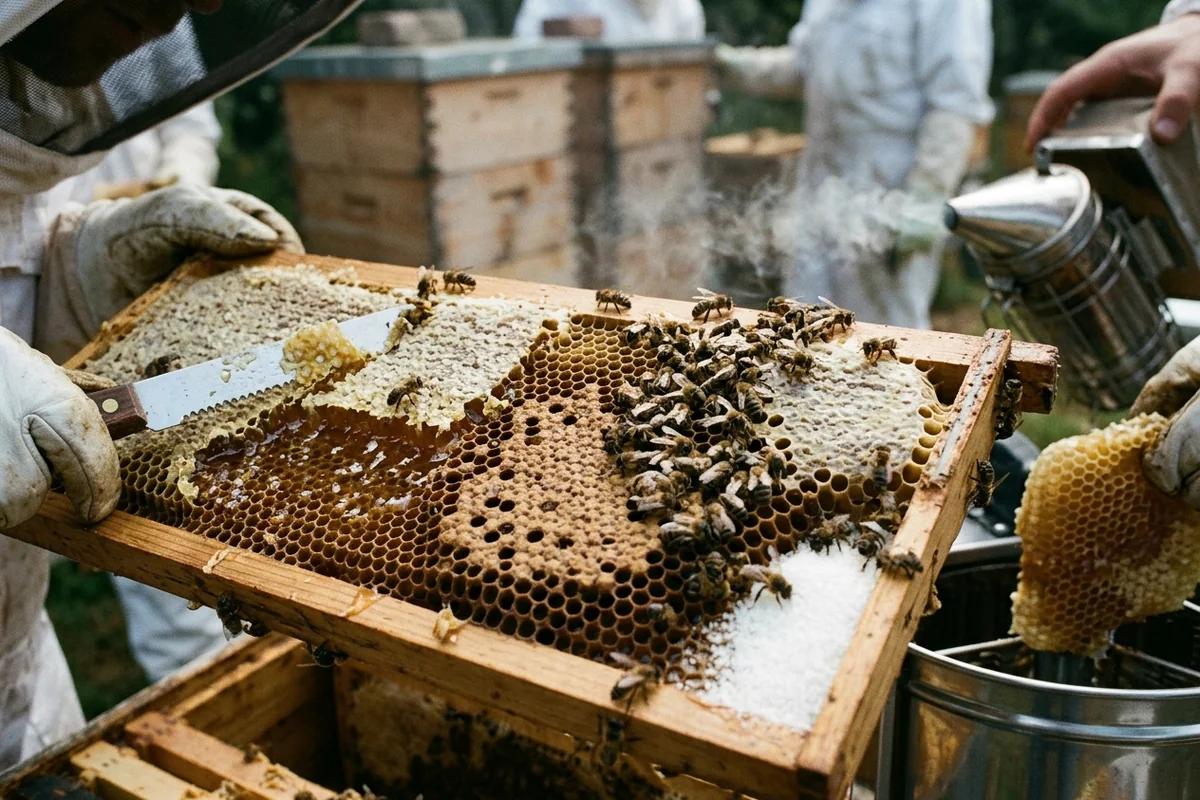
The definition alone settles the question for most vegans, but understanding commercial beekeeping makes the reasoning concrete. Honey is not a byproduct bees discard. It is their carefully made winter food supply, the carbohydrate store they rely on to survive the cold months when no flowers bloom. Honey also carries amino acids, antioxidants, and natural compounds that support bee health in ways a simple sugar cannot.
In commercial operations, that honey is harvested and sold, and the bees are frequently fed a replacement: sucrose syrup or high fructose corn syrup. Those substitutes provide calories but lack the broader nutrition of real honey, and there is evidence they can weaken the bees’ immune systems and even cause genetic changes that reduce their natural defenses against pesticides. On top of the honey itself, large-scale beekeeping involves practices many vegans object to, including routinely replacing queens, using antibiotics and synthetic chemicals to manage pests and disease, and handling colonies as production units. None of this is hidden or unusual, it is standard industry practice. For a vegan weighing animal welfare, this picture of bees giving up their own nourishment and being managed for output is exactly the kind of exploitation the diet aims to avoid.
Why some vegans disagree about honey
Honesty requires acknowledging that honey is the one animal product where even committed plant-based eaters sometimes diverge, and the reasons are worth understanding rather than dismissing. A small number of people who otherwise eat fully plant-based make an exception for honey, particularly honey from small, local, ethically minded beekeepers who prioritize colony health over maximum yield. Their argument is that responsible beekeeping can support pollinator populations and that the harm to insects is minimal compared with farming larger animals.
There is also a philosophical thread about where to draw the line on insects. Some people feel the ethical weight of a bee differs from that of a cow or a chicken, and they apply their principles accordingly. None of this changes the standard definition, under which honey is simply not vegan, and the large majority of vegans avoid it without hesitation. But it explains why you will occasionally meet a plant-based eater who uses local honey, and why the topic generates more discussion than, say, milk. The practical takeaway is straightforward: if you are cooking for vegans, leave honey out, because most will not eat it, and the plant-based alternatives are so good that there is no reason to risk it.
The best plant-based alternatives to honey
The genuinely encouraging news is that swapping out honey costs you nothing in the kitchen, because the plant world offers a whole shelf of liquid sweeteners that do the same jobs. Each has its own flavor and best use, so it is worth knowing the lineup rather than defaulting to just one.
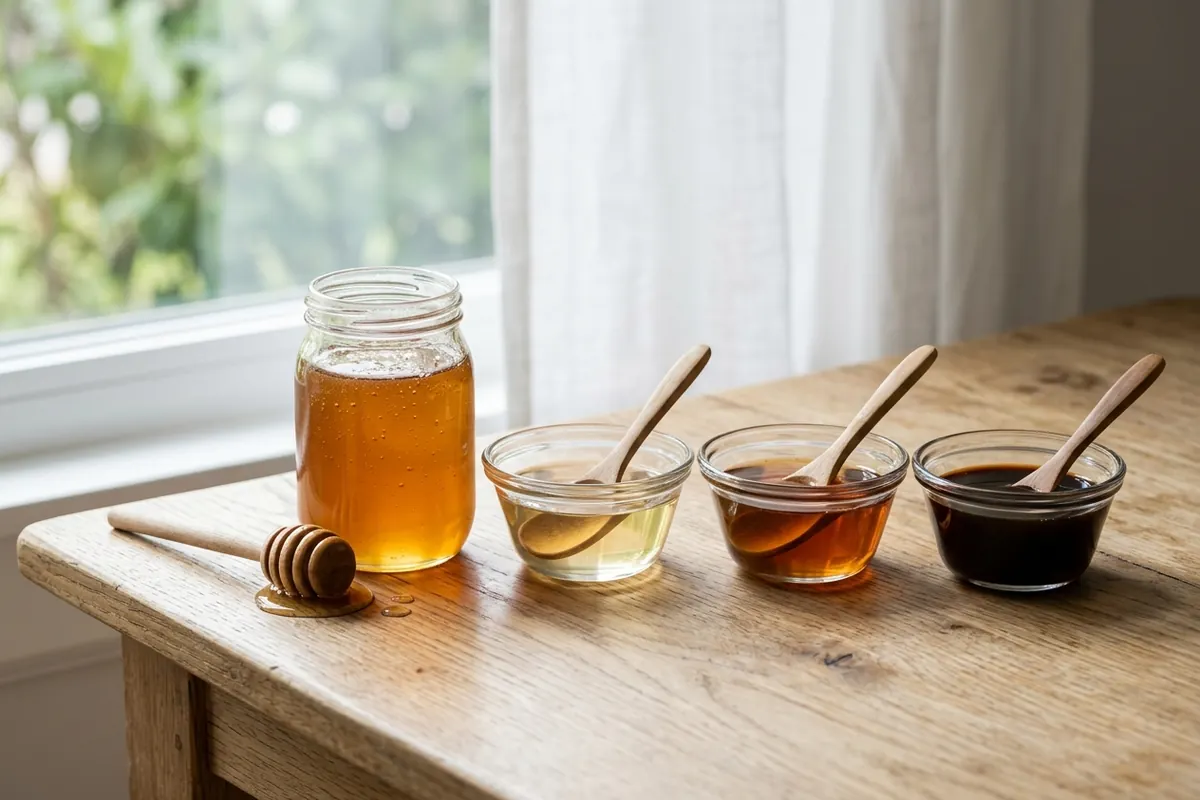
Maple syrup is the most popular swap, with a rich, distinctive flavor and a pourable texture close to honey, plus a modest dose of minerals and antioxidants. Agave nectar is milder and thinner, dissolving easily into cold drinks and dressings where you want sweetness without a strong flavor. Date syrup brings a deep caramel note and works beautifully in baking and over oatmeal. Brown rice syrup is mild and less sweet, useful when you want body without overpowering sweetness. Barley malt syrup has a malty, molasses-like depth (though note it contains gluten, so it is not for gluten-free cooking). Blackstrap molasses is intense and mineral-rich, full of iron and calcium, best in small amounts for robust bakes. There are even purpose-made bee-free honey products built from apples or other fruit with sugar and lemon, designed to mimic honey’s texture directly. The catch shared by all of them is that they are still sugars, so they belong in moderation just as honey would. For sweetening tea, drizzling over pancakes, or glazing roasted vegetables, any of these stands in without missing a beat. When you are stocking a fuller plant-based pantry, these sweeteners sit naturally alongside the other swaps in our vegan egg substitute guide.
How to swap honey in recipes
Substituting a plant-based sweetener for honey is mostly a one-to-one affair, with a few small adjustments worth knowing. In most recipes you can replace honey with an equal amount of maple syrup, agave, or date syrup, since they share a similar liquid consistency and sweetness. For drizzling, glazing, and sweetening drinks, the swap is effortless and needs no thought at all.
Baking asks for slightly more care, because honey contributes moisture and browning. Maple syrup and agave behave very similarly, so they swap in cleanly, while thicker options like date syrup or molasses may need a touch more liquid or a little less of another sweetener to balance. If a recipe relies on honey’s specific floral flavor, maple or date syrup brings its own pleasant character rather than a perfect imitation, which is usually an improvement rather than a loss. The main thing to remember is that all these alternatives are liquid sweeteners with their own flavor, so taste as you go the first time you make a swap. Once you find your favorites, honey-free cooking becomes second nature. The plant-based recipe collection at Minimalist Baker is full of bakes and dressings that use maple and date syrup well, and it is a handy reference when you want a tested honey-free version of a classic.
Is honey healthier than the vegan alternatives?
A fair question that often comes up is whether you give up nutritional benefits by dropping honey, and the honest answer is not really. Honey does contain trace antioxidants and antimicrobial compounds, and it has a long history of folk use, but it is fundamentally a sugar, around 80 percent sugar by weight, and the amounts of those beneficial compounds are small relative to the sugar load. It is not a health food, it is a sweetener with a few extras.
The plant-based alternatives stack up comparably. Maple syrup carries its own antioxidants and minerals like manganese and zinc, blackstrap molasses is genuinely rich in iron and calcium, and date syrup brings the fiber-adjacent goodness of whole dates. None of these are health foods either, since they are all concentrated sugars best used sparingly, but they are not nutritionally inferior to honey in any meaningful way. So the choice to skip honey costs you nothing on the nutrition front. The smartest approach with any of these sweeteners, honey included, is to use them in moderation and let whole foods carry the bulk of your diet, a principle that holds across the board for added sugars.
Other bee products vegans avoid
Honey is the bee product people ask about most, but it is not the only one, and a thorough plant-based eater learns to spot its relatives on ingredient lists. Beeswax, used as a coating on some candies and as an ingredient in certain glazes and chewing gums, comes straight from the hive and is not vegan. Royal jelly, the protein-rich secretion fed to queen bees and sometimes sold as a supplement, is also an animal product. Propolis, the resin bees use to seal their hives, shows up in some natural health products and throat lozenges, and it too falls outside a vegan diet.
Bee pollen and bee venom round out the list of hive-derived ingredients that occasionally appear in supplements, skincare, and specialty foods. None of these are common in everyday cooking, but they surface often enough in packaged products and wellness items that it pays to recognize the words. The same reasoning that rules out honey rules out all of them: they are produced by bees, and harvesting them uses the animals for human ends. Reading labels for these terms is the same skill that helps you sort out which packaged foods are vegan and gluten free at a glance, and it quickly becomes second nature. When a product lists beeswax, royal jelly, propolis, or bee pollen, you can set it down knowing it does not fit a plant-based diet, and reach instead for a clearly plant-derived alternative.
Cooking and baking confidently without honey
Once you have your plant-based sweeteners stocked, cooking without honey stops feeling like a restriction and starts feeling like a normal pantry choice. The trick is to match the sweetener to the job. For a salad dressing or a marinade where honey once added a glossy sweetness, maple syrup or agave slips in without changing the texture. For glazing roasted carrots or a tray of vegetables, maple syrup caramelizes beautifully and gives the same sticky finish honey would. For sweetening tea or coffee, agave dissolves cleanly even in cold liquid, where honey can clump.
Baking is where a little knowledge pays off most. Because honey is both a sweetener and a source of moisture and browning, the closest swaps in a cake or muffin are maple syrup and agave, which behave almost identically. If you reach for a thicker option like date syrup or molasses, expect a deeper flavor and adjust the other liquids slightly so the batter is not too wet. The reward is that honey-free bakes often taste more interesting, because maple and date syrup bring character of their own. Plant-based baking leans heavily on a few reliable techniques, and pairing a good sweetener with the right binder, like the options in our vegan egg substitute guide, lets you recreate almost any honey-sweetened classic. The well-tested recipes at Forks Over Knives are a dependable reference when you want a whole-food version of a dish that traditionally called for honey, and they show just how little you give up by leaving the jar on the shelf.
Frequently asked questions
Is honey vegan?
No, honey is not vegan. It is made by bees, which are animals, and harvesting it takes a food bees produce for their own survival. Veganism excludes animal products and animal exploitation, so honey falls outside a vegan diet alongside milk and eggs. The large majority of vegans avoid it.
Why do vegans not eat honey?
Because honey is an animal product, made by bees for their own use, and harvesting it is considered a form of exploitation. In commercial production, bees’ honey is taken and replaced with sugar syrup that lacks honey’s nutrition, and large-scale beekeeping involves practices like queen replacement and chemical pest control that vegans object to.
Do all vegans avoid honey?
Almost all do. A small minority who otherwise eat plant-based make an exception for honey from small, ethically minded local beekeepers, and there is some philosophical debate about insects specifically. But under the standard definition honey is not vegan, and the great majority of vegans avoid it. When cooking for vegans, it is safest to leave honey out.
What can I use instead of honey?
Plenty of plant-based sweeteners work well: maple syrup, agave nectar, date syrup, brown rice syrup, barley malt syrup, and blackstrap molasses, plus purpose-made bee-free honey products. Maple syrup is the most popular all-purpose swap. Most substitute one-to-one for honey, though each has its own flavor, so taste as you go.
Is maple syrup vegan?
Yes, maple syrup is fully vegan. It is made by boiling down the sap of maple trees, with no animal involvement at all. That makes it one of the best honey replacements, with a rich flavor, a pourable texture similar to honey, and a modest amount of minerals and antioxidants. It works in baking, drizzling, and drinks.
Is agave better than honey for vegans?
Agave is a good vegan option because it is plant-derived and very mild, dissolving easily into cold drinks and dressings. Whether it is better than honey is a matter of use and taste rather than nutrition, since both are concentrated sugars. For a flavor closer to honey, maple or date syrup may suit better, while agave shines where you want neutral sweetness.
The bottom line
Honey is not vegan, plainly and by definition, because it is an animal product made by bees for their own survival, and commercial production takes that food while managing colonies in ways vegans aim to avoid. A small group of plant-based eaters debate honey from ethical local sources, but the standard answer is clear and most vegans skip it. The good news is that you lose nothing by doing so: maple syrup, agave, date syrup, molasses, and the rest cover every use honey ever had, with comparable nutrition and easy one-to-one swapping. Keep them in moderation as you would any sweetener, and your plant-based kitchen never misses the jar of honey at all. Once your shelf holds a bottle or two of maple and date syrup, the question stops being a problem to solve and becomes a simple matter of reaching for the right plant-based sweetener, which is exactly how a confident vegan kitchen should feel.