Vegan meal prep works best when you stop thinking in finished meals and start thinking in components, because a fridge full of cooked grains, roasted vegetables, a protein, and a sauce becomes a dozen different dinners instead of five identical sad containers. Most meal prep guides hand you a stack of recipes and leave you to figure out the logistics, which is exactly where the plan falls apart by Wednesday. This guide gives you the actual system: how to batch components so nothing gets boring, exactly how long each food lasts, how to reheat without turning things to mush, and how to layer containers so your salad is still crisp on Thursday. I cook plant-based food for a living, so this is the workflow I use, not theory.
Why Component Prep Beats Recipe Prep
I learned this the slow way. For a long time I cooked five identical containers every Sunday, felt proud of myself, and then watched two of them go uneaten by Friday because I simply could not face the same bowl again. The fix was almost embarrassingly simple. Prep building blocks, not finished dishes. Cook a big batch of brown rice, a tray of roasted vegetables, a pot of seasoned lentils, and two sauces, and you have not made one meal. You have made the raw material for a grain bowl, a wrap, a stir-fry, a soup base, and a salad topper. The boredom that makes people quit meal prep comes from sameness, and sameness is the one thing this approach removes. Mix and match, and the week stays interesting with no extra cooking. Some days you want a big plate; some days a small one. Components let you decide in the moment instead of being locked into a portion you measured out three days ago.
The components I almost always prep: one or two cooked grains, a legume or two, a roasted vegetable tray, one quick fresh element like shredded cabbage, and two sauces. With those on hand, assembling a meal takes three minutes and feels like cooking rather than reheating leftovers. There is also a psychological win here that is easy to underrate: when the hard part is already done, the path of least resistance becomes eating well instead of ordering takeout. A fridge stocked with ready components quietly makes the healthy choice the easy choice, which is most of the battle on a busy weeknight.
The Five Building Blocks to Batch
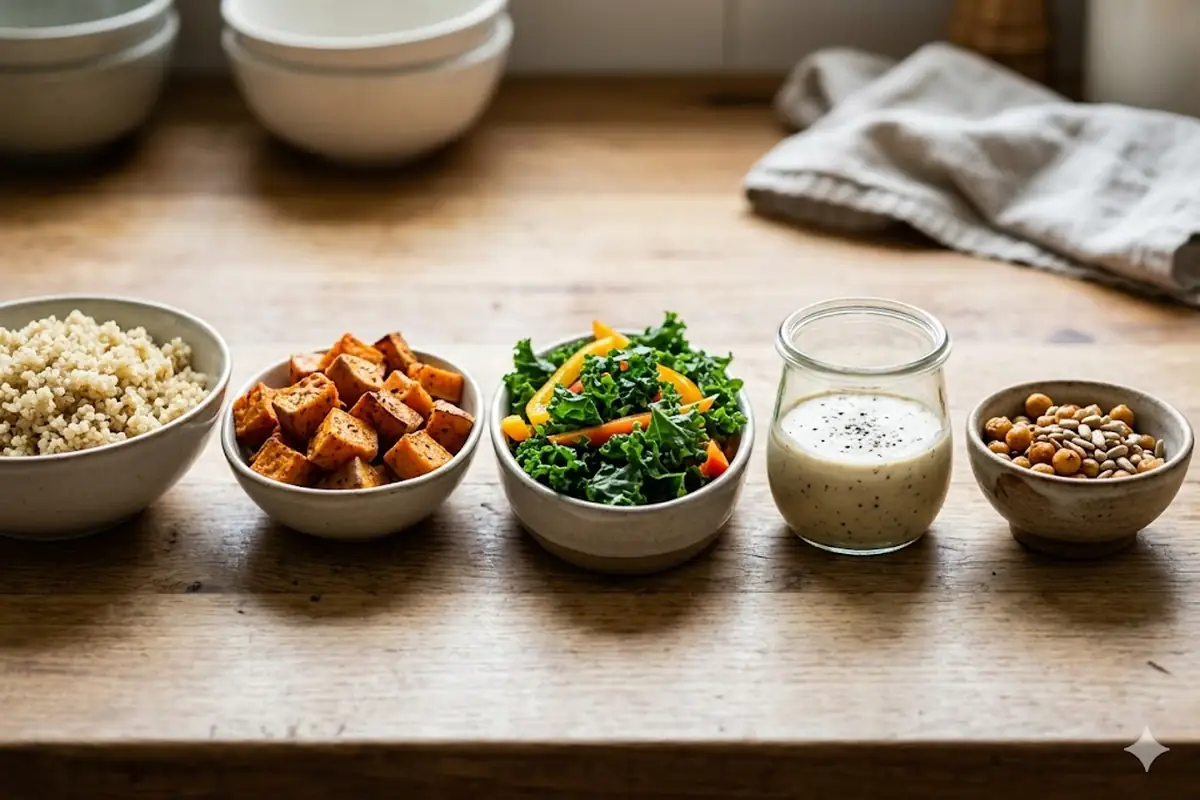
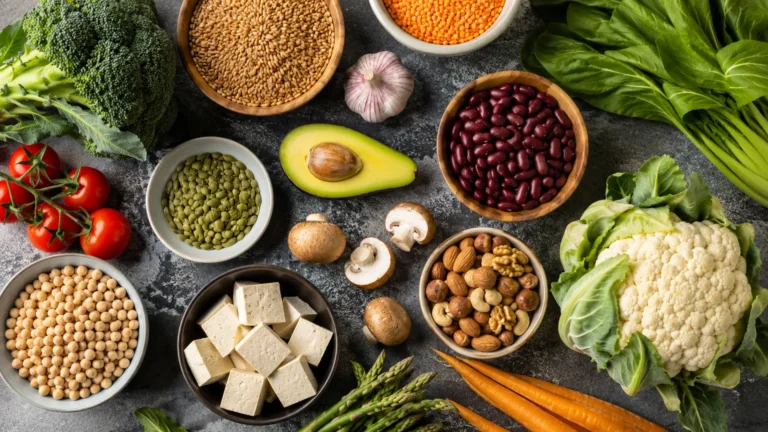
Grains and starches. Cook a double batch of brown rice, quinoa, farro, or roasted potatoes. They reheat well and form the base of bowls and the bulk of wraps. Quinoa and rice keep about four to five days; roasted potatoes are best within three or four.
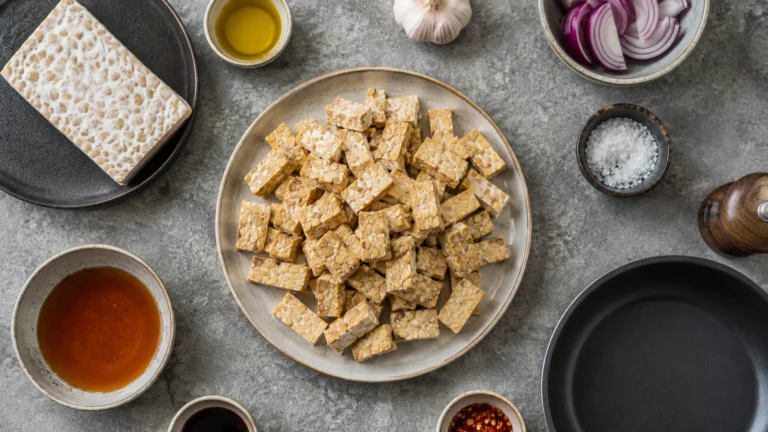
Legumes. A pot of lentils or chickpeas is your protein and fiber backbone. Cook them plain or lightly seasoned so they stay flexible across cuisines. If you want a creamy texture for one dish and firm for another, cook two types. My guide to preparing tofu for cooking covers the other workhorse protein, since a tray of baked, seasoned tofu cubes is one of the most useful things you can have in the fridge.
Roasted vegetables. Fill a sheet pan or two with whatever is in season: broccoli, cauliflower, sweet potato, zucchini, peppers, onions. Toss with oil and salt, roast hot, and you have flavor and volume for the whole week. Roast them slightly underdone if you plan to reheat, so they do not turn to paste.
A fresh, crunchy element. Shredded cabbage, sliced cucumber, or a bag of greens adds the texture that cooked-and-stored food loses. Keep this separate and add it at serving time.
Two sauces. Sauce is what turns the same five ingredients into Thai one night and Mexican the next. A tahini-lemon dressing and a soy-ginger sauce cover an enormous range. Sauces keep five to seven days and are the cheapest way to fight boredom.
Exactly How Long Each Food Lasts
Vague advice to keep things “about four days” is where food gets wasted or eaten when it should not be. Here is what holds up in a properly cold fridge, stored in airtight containers:
- Cooked grains (rice, quinoa, farro): 4 to 5 days. Cool quickly and refrigerate within an hour, since cooked rice in particular can grow bacteria if left warm.
- Cooked legumes (lentils, chickpeas, beans): 4 to 5 days, or about 3 months frozen.
- Baked or pan-fried tofu and tempeh: 4 to 5 days.
- Roasted vegetables: 3 to 4 days; softer vegetables like zucchini fade faster than dense ones like sweet potato.
- Leafy greens and cut raw vegetables: best within 2 to 3 days, kept dry and separate.
- Sauces and dressings: 5 to 7 days.
- Soups, stews, and curries: 4 to 5 days, and most freeze beautifully for months.
When in doubt, the freezer is your friend. Soups, chili, curry, cooked beans, and grains all freeze well, so cook extra and stash single portions for the weeks you do not feel like prepping at all.
Reheating Without Ruining the Texture
Most of the disappointment in reheated food comes from doing it wrong, not from the prep itself. Here is what I have settled on after a lot of rubbery tofu and gluey rice.
Grains and legumes want a splash of water before they go in the microwave, covered, so they steam back to life rather than drying into pellets. Roasted vegetables are different. They come back far better in a hot oven or a skillet than in the microwave, which just steams them limp. If a microwave is all you have, fine, but expect them softer. Tofu re-crisps in a dry hot pan or the air fryer in a minute or two and it is worth the small effort. Soups and stews go on the stovetop over medium heat, stirred, loosened with a little water if they thickened overnight. And sauces always go on after reheating, never before, or they break and turn gluey on you.
The general principle: dry heat for things you want crisp, gentle moist heat for things you want tender, and always reheat only the portion you are eating rather than the whole batch, which degrades the rest.
How to Layer Containers So Nothing Gets Soggy
Sogginess is a storage problem, not a recipe problem, and it is entirely preventable once you see what causes it. Keep wet things away from things that should stay dry until the moment you eat. For a bowl you plan to eat cold, build it from the bottom up. Dressing goes at the very bottom. Then the sturdy stuff, grains and legumes, which can sit in a little dressing without harm. Roasted vegetables next. Delicate greens and anything crunchy ride on top, sealed off from the dressing pooled below. At lunch you tip the whole thing into a bowl, toss, and it tastes like you made it that morning. This is the entire secret behind mason jar salads, and it is what lets a salad survive four days when the same salad pre-dressed would wilt in one.
For hot meals, store the components that will be reheated together and keep raw additions like avocado, herbs, sprouts, and nuts in a separate small container, adding them only at serving time. Avocado in particular browns fast; cut it fresh or store it pressed against plastic with a squeeze of lemon. Keeping crunchy toppings dry until serving is the difference between a meal that tastes prepped and one that tastes made.
A Realistic Two-Hour Prep Session
Here is how a single Sunday session actually runs. Start the longest-cooking items first and work in parallel:
- Put a pot of lentils or chickpeas on to simmer and start a batch of rice or quinoa.
- While those cook, chop vegetables for two sheet pans, toss with oil and salt, and roast.
- While everything is in the oven and on the stove, press and cube tofu, season it, and add it to a third pan or the air fryer.
- Blend your two sauces while the cooking finishes.
- Cool everything, then portion grains and proteins into containers and store vegetables, greens, and sauces separately.
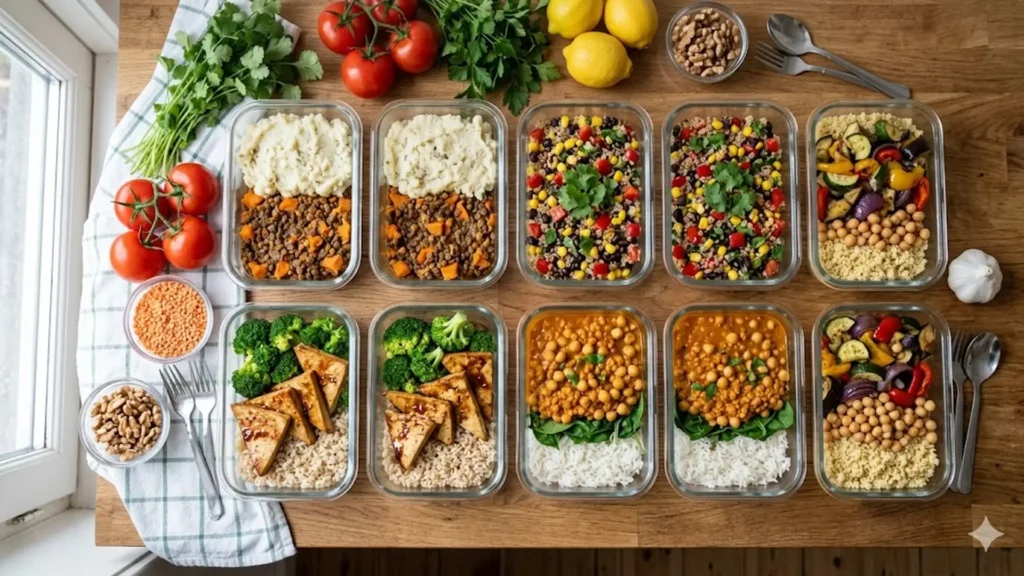
In about two hours of mostly hands-off time you have the makings of ten to twelve meals. The active work is maybe forty minutes; the rest is the oven and stove doing their job while you clean up.
A Sample Week From One Prep Session
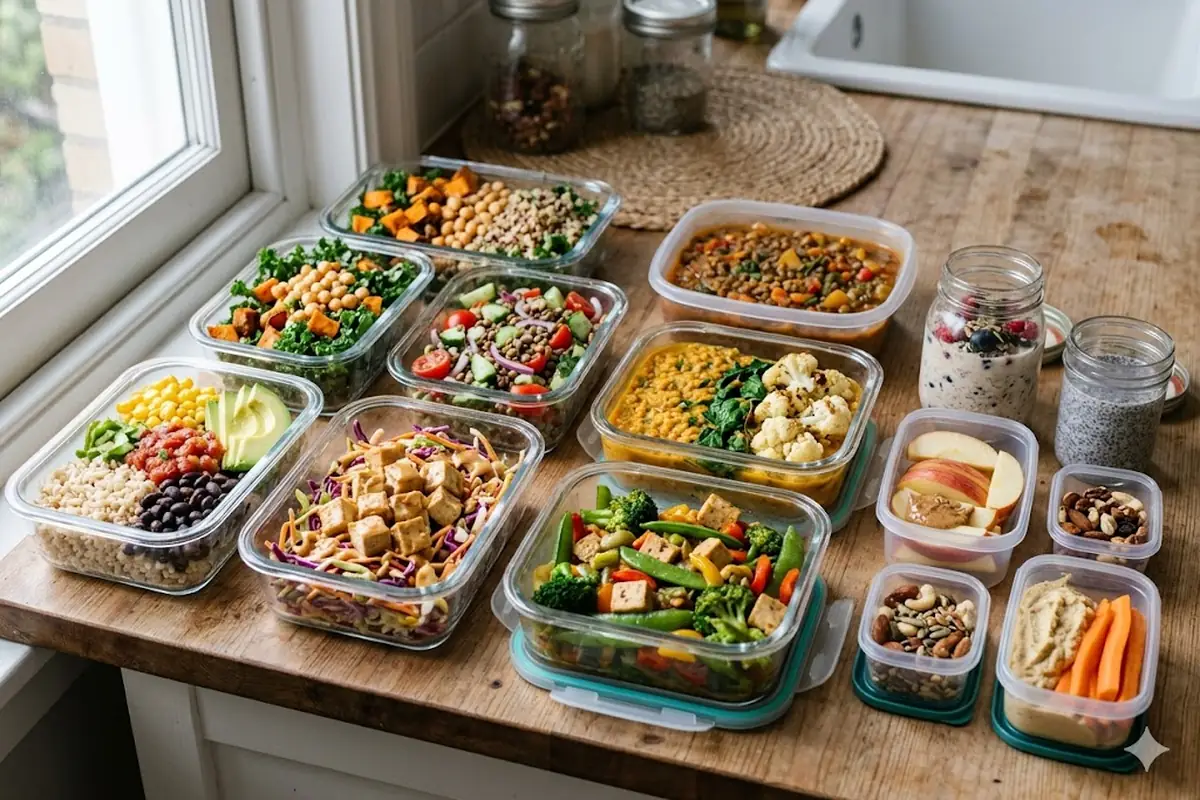
To make the component idea concrete, here is how a single batch of brown rice, lentils, baked tofu, two sheet pans of roasted vegetables, shredded cabbage, and two sauces stretches across five lunches without repeating itself:
- Monday, grain bowl: rice, lentils, roasted vegetables, cabbage, tahini-lemon sauce.
- Tuesday, stir-fry: rice, tofu, roasted vegetables reheated in a hot pan, soy-ginger sauce.
- Wednesday, wrap: tofu, lentils, cabbage, and tahini sauce rolled in a tortilla, with the roasted vegetables on the side.
- Thursday, quick soup: lentils and roasted vegetables simmered in broth with a can of tomatoes added at the end, served over the last of the rice.
- Friday, big salad: greens, cabbage, tofu, chickpeas if any remain, and whichever sauce you have left, with seeds on top for crunch.
Same six things cooked once, five meals that taste different. That is the entire promise of component prep, and once you see it work you stop dreading the repetition that kills most plans.
Food Safety You Should Not Skip
Plant-based food still needs basic safety habits, and a couple are easy to overlook. Cool hot food quickly before refrigerating; leaving a big pot of rice or beans on the counter for hours lets bacteria multiply. Spread food in shallow containers so it chills fast, and get it into the fridge within an hour or two. Cooked rice deserves special mention because it can harbor a heat-resistant bacterium if held warm too long, so chill it promptly and reheat it thoroughly. Label containers with the date you made them so you are not guessing on day six. And trust your senses: if something smells sour, looks slimy, or tastes off, throw it out rather than risk it. None of this is complicated, but skipping it is how meal prep occasionally goes wrong.
Keeping It Balanced and Interesting
A good vegan meal-prep plate follows a simple ratio: a protein source like beans, lentils, tofu, or tempeh; a whole grain or starch; a generous pile of vegetables; a healthy fat such as avocado, nuts, seeds, or a tahini sauce; and something acidic and bright to finish. If you are leaning on tofu as your main protein, it is worth understanding why tofu is healthy and how much to eat, since it does a lot of the heavy lifting in a plant-based prep rotation. Hit those notes and you get meals that satisfy rather than leave you hunting for a snack an hour later. For more on building plant-based meals that actually fill you up, Forks Over Knives has a deep library of recipes and frameworks, and Minimalist Baker is excellent for simple components and sauces you can batch.
To fight monotony, change one variable at a time. The same rice, lentils, and roasted vegetables become an entirely different meal with a peanut sauce and lime versus a tahini sauce and parsley versus a smoky tomato salsa. You are not cooking more; you are re-flavoring. If snacks are your weak point, prep those too: hummus with cut vegetables, roasted chickpeas, or energy balls keep the plan from collapsing at three in the afternoon.
The Mistakes That Sink Most Meal Prep Plans
A few predictable errors are behind almost every abandoned plan. The first is prepping too much at once: cooking ten complete meals on your very first attempt is a recipe for burnout and a fridge full of food you grow to resent. Start with three or four days and build from there. The second is over-seasoning the base components, which locks you into one cuisine; keep grains, beans, and vegetables fairly neutral and let the sauce carry the flavor. The third is dressing everything in advance, which guarantees sogginess; sauces go on at serving time. The fourth is ignoring the fresh element, since meals made entirely of cooked, stored food taste flat by midweek without something crisp and raw. And the fifth is poor cooling and labeling, which leads to either wasted food or food eaten past its prime. Avoid those five and the system mostly runs itself.
One more practical point on budget: component prep is cheaper than buying packaged vegan convenience foods, because dried beans, lentils, rice, and seasonal vegetables cost very little per serving. A pot of lentils and a bag of rice feed you for days at a fraction of what frozen vegan entrees cost. The prep work is what converts cheap raw ingredients into ready meals, so the time you invest on Sunday is also money saved all week.
Frequently Asked Questions
How long does vegan meal prep last in the fridge?
Most cooked components last 4 to 5 days in a cold fridge: grains, legumes, tofu, soups, and curries all hold well that long. Roasted vegetables are best within 3 to 4 days, and raw greens or cut vegetables within 2 to 3. Sauces keep 5 to 7 days. For anything longer, freeze it.
Can I freeze vegan meal prep?
Yes, and it makes the system far more flexible. Soups, stews, chili, curry, cooked beans, cooked grains, and baked goods all freeze well for one to three months. Freeze in single portions so you can pull exactly what you need. Things that do not freeze well include raw salad greens, cut raw vegetables, and anything with a high water content meant to stay crisp.
How do I keep meal prep from getting boring?
Prep flexible components rather than finished meals, then change the sauce and fresh elements each day. The same rice, beans, and roasted vegetables become a different meal with a peanut sauce one night and a tahini-lemon dressing the next. Cooking once and re-flavoring is the key to eating the same base food without getting tired of it.
What is the best way to reheat prepped vegan food?
Use dry heat for things you want crisp and gentle moist heat for things you want tender. Reheat roasted vegetables and tofu in a hot oven, skillet, or air fryer to keep them from going limp. Add a splash of water to grains and legumes before microwaving so they steam rather than dry out. Reheat soups and stews on the stovetop, and add sauces after reheating, not before.
How do I stop meal prep bowls from getting soggy?
Keep wet and dry components apart until serving. For cold bowls, layer dressing at the bottom, then grains and legumes, then vegetables, then delicate greens on top, sealed away from the dressing. Store crunchy toppings and raw additions like avocado in a separate container and add them only when you eat. Sogginess is a storage problem, not a recipe problem.
How much time does a week of vegan meal prep take?
A single session of about two hours produces ten to twelve meals worth of components, and most of that is hands-off time while the oven and stove work. The active effort is closer to forty minutes of chopping, seasoning, and blending sauces. Cooking items in parallel, starting the longest-cooking ones first, is what keeps the session short. If two hours feels like a lot, prep just three days at first and scale up once the rhythm feels easy.
Do I need special containers for vegan meal prep?
No, but airtight containers make a real difference in how long food stays fresh, and glass containers reheat more cleanly than plastic. Compartment containers and wide-mouth jars help you keep wet and dry elements separate, which is the main thing that protects texture. Any sealed, fridge-safe container works; the seal matters more than the brand.