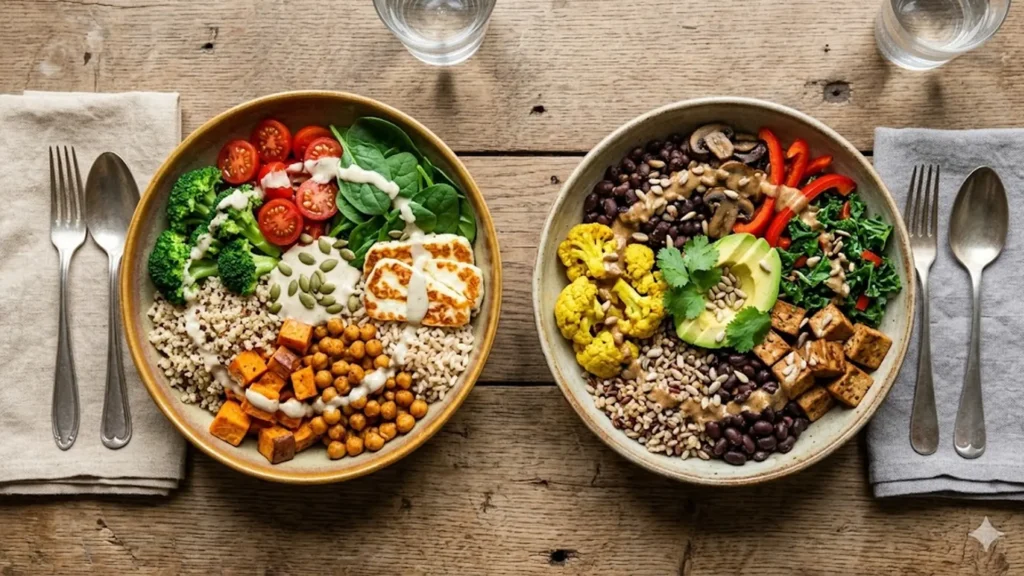
Vegetarian vs vegan is one of those comparisons people think they understand until they are standing in a grocery aisle reading a label, wondering whether a product with honey or whey counts. The short version is that a vegetarian diet drops meat, poultry, and fish but keeps animal byproducts like dairy, eggs, and honey, while a vegan diet removes every animal-derived ingredient and, for most people, extends past food into a wider set of choices. But the short version hides a lot of useful detail, especially for anyone who actually cooks. This guide breaks down the real differences in the kitchen, on the nutrition label, and in daily life, so you can decide which line you want to draw and cook confidently on either side of it.
The Core Definition, Stated Plainly
A vegetarian does not eat the flesh of any animal. No beef, pork, chicken, turkey, fish, or shellfish. What stays on the table are products that come from animals without killing them: cow’s milk and cheese, eggs, yogurt, butter, and honey. A vegan goes further and excludes anything that comes from an animal at all, which means no dairy, no eggs, no honey, no gelatin, and no animal-derived additives like certain food colorings or clarifying agents. Everything a vegan eats comes from plants, fungi, or minerals.
That single difference, whether animal byproducts are allowed, is the entire dividing line at the dinner table. Vegetarianism removes the animal from the plate; veganism removes the animal from the ingredient list. Once you hold that distinction clearly, almost every confusing edge case resolves itself.
It helps to picture the two diets as concentric circles rather than two separate boxes. Everything a vegan eats, a vegetarian can also eat, because vegan food is by definition free of meat and byproducts alike. The reverse is not true: plenty of vegetarian dishes contain dairy or eggs that a vegan would pass on. So when you cook a vegan meal, you have automatically cooked something every vegetarian at the table can eat, which is exactly why hosts who want one dish to feed a mixed group default to vegan. That single insight saves a lot of menu planning when you are feeding people with different rules.
The Types of Vegetarian Most People Never Hear About
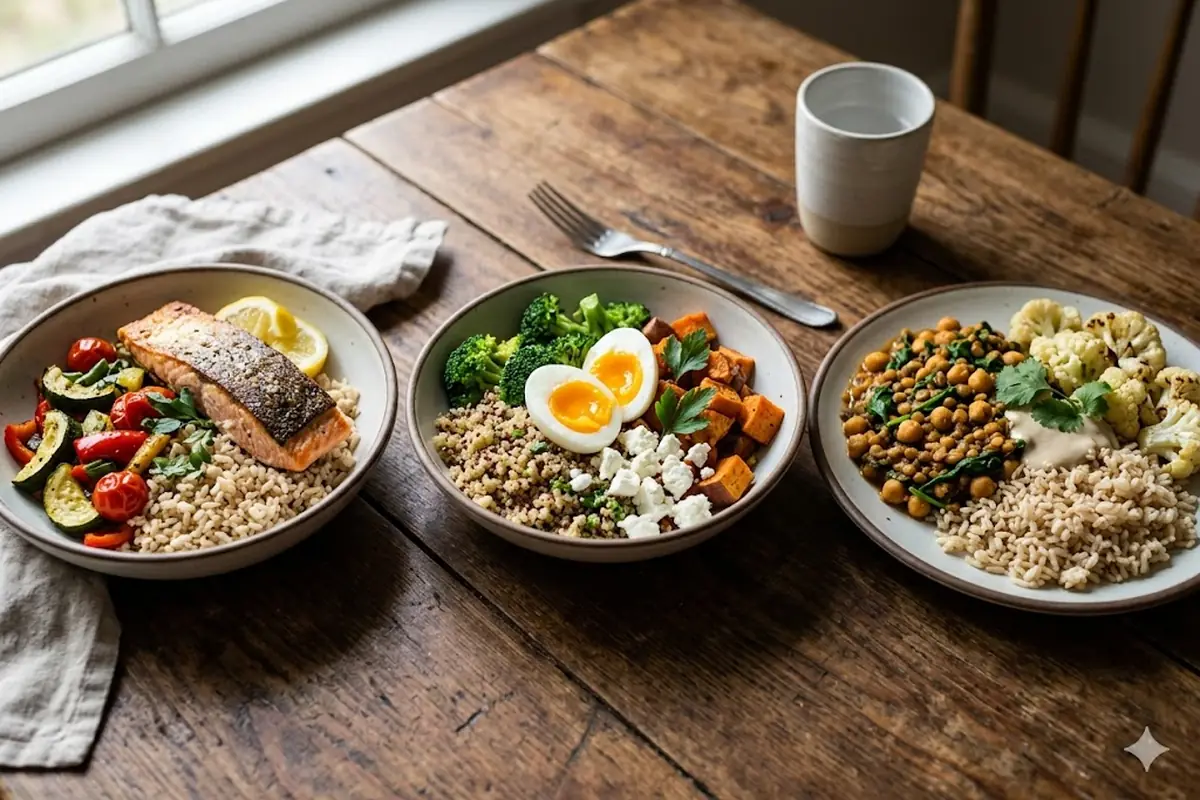
“Vegetarian” is an umbrella, not a single rule, and the subcategories matter when you are cooking for someone:
- Lacto-ovo vegetarian: The most common type in the West. Eats both dairy and eggs, just no meat or fish.
- Lacto vegetarian: Eats dairy but not eggs. Common in parts of India.
- Ovo vegetarian: Eats eggs but not dairy.
- Pescatarian: Eats fish and seafood plus dairy and eggs, but no other meat. Technically not vegetarian since fish is an animal flesh, though many people use the word loosely.
- Flexitarian: Mostly plant-based but eats meat occasionally. Again, not truly vegetarian, but a real and useful category.
Veganism, by contrast, has far fewer flavors because the rule is simpler: if it came from an animal, it is out. The closest thing to a subcategory is whether someone is vegan only in diet or vegan across their whole lifestyle, which we will get to.
Diet vs Lifestyle: Where Vegan Goes Further
This is the difference the quick comparisons usually miss. Vegetarianism is almost always just a way of eating. Veganism, for many who practice it, is a broader ethical stance that seeks to avoid animal exploitation everywhere, not only on the plate. That extends to clothing, so no leather, wool, silk, or down; to cosmetics and household products tested on animals or made with animal-derived ingredients; and to entertainment and other uses of animals. A person can absolutely eat a plant-only diet without adopting the rest, and plenty do. But the word “vegan” carries that wider meaning for a large share of the people who use it, which is why it tends to feel like more of an identity than “vegetarian” does.
For cooking purposes this matters in subtle ways. A vegan guest will not eat a dessert set with gelatin or brushed with an egg wash, even though no meat is involved, because those are animal products. Knowing the lifestyle dimension helps you avoid the small slips that a strictly meat-focused mindset would miss.
The Hidden Animal Ingredients That Trip People Up
Here is where the cook earns their keep. A surprising number of foods that look plant-based contain animal products buried in the ingredient list. The big ones to know:
- Gelatin: Made from animal collagen. Hides in gummy candies, marshmallows, some yogurts, and many jellies. Vegetarians who avoid slaughter byproducts technically should skip it too, though many do not realize it is animal-derived.
- Whey and casein: Milk proteins that show up in protein bars, breads, and snacks. Fine for vegetarians, off-limits for vegans.
- Honey: The classic vegetarian-versus-vegan dividing line. Vegetarians eat it; strict vegans do not.
- Carmine or cochineal: A red dye made from insects, found in some candies, drinks, and yogurts.
- Isinglass: A fish-derived agent used to clarify some beers and wines, which is why not all alcohol is vegan.
- L-cysteine: A dough conditioner sometimes derived from feathers or hair, found in some commercial breads.
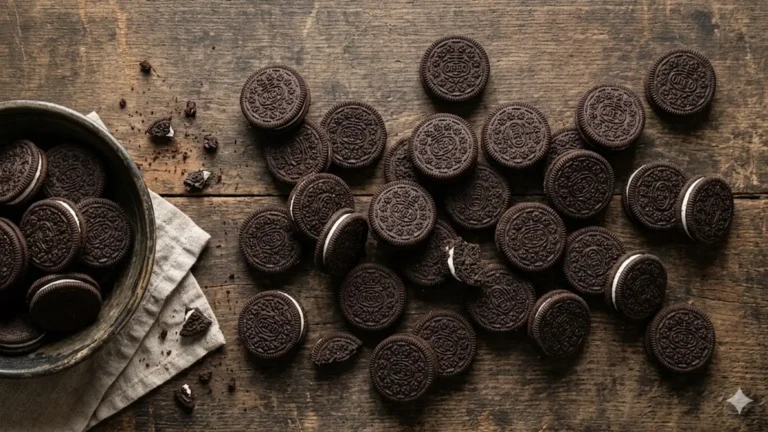
This is exactly why label-reading is such a core skill for vegans in particular. The same care that goes into checking whether a packaged snack is truly animal-free is the kind of detective work I walk through when sorting out whether Oreos are vegan, where the answer turns entirely on the fine print rather than the obvious ingredients.
Nutrition: Is One Healthier Than the Other?
Both diets, done well, are linked to lower rates of heart disease, type 2 diabetes, high blood pressure, and certain cancers, largely because they are high in fiber and plant compounds and low in saturated fat. The differences between them are smaller than the difference between either one and a typical meat-heavy diet. That said, a few real distinctions exist.
Vegans tend to have lower body weight and cholesterol on average, partly because cutting dairy and eggs removes more saturated fat. Vegetarians have an easier time covering certain nutrients because dairy and eggs supply calcium, vitamin B12, and complete protein without any planning. The nutrients that need attention shift depending on which path you choose: vegans must be deliberate about vitamin B12, vitamin D, omega-3 fats, iron, calcium, iodine, and zinc, while vegetarians mainly need to watch iron, zinc, and B12. The single non-negotiable for vegans is B12, which is not reliably available from plants and should come from a supplement or fortified foods, because a deficiency causes serious and sometimes irreversible nerve damage.
None of this makes either diet unhealthy. It means a vegan diet requires a bit more planning to be complete, and a vegetarian diet gives you a couple of easy shortcuts. Both can be excellent, and both can be junk if built on refined snacks rather than whole foods.
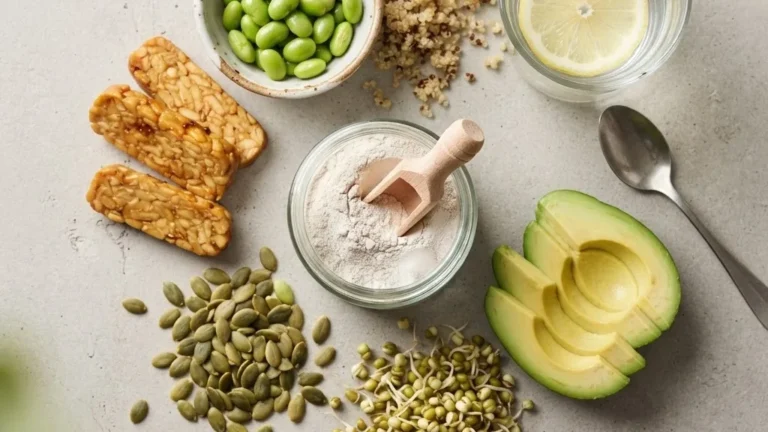
Protein is the question people ask about most, and on both diets it is easier to cover than the worry suggests. Lentils, chickpeas, black beans, tofu, tempeh, edamame, peas, nuts, seeds, and whole grains all carry meaningful protein, and eating a variety across the day gives you the full set of amino acids without any single perfect food. Vegetarians get an additional easy source from eggs and dairy, while vegans lean harder on soy foods and legumes. The old fear that you must precisely combine proteins at every meal has been set aside; what matters is variety over the course of a day, not engineering each plate. A cook who keeps cooked beans and a block of tofu on hand rarely has to think about protein at all.
Cooking on Each Side of the Line
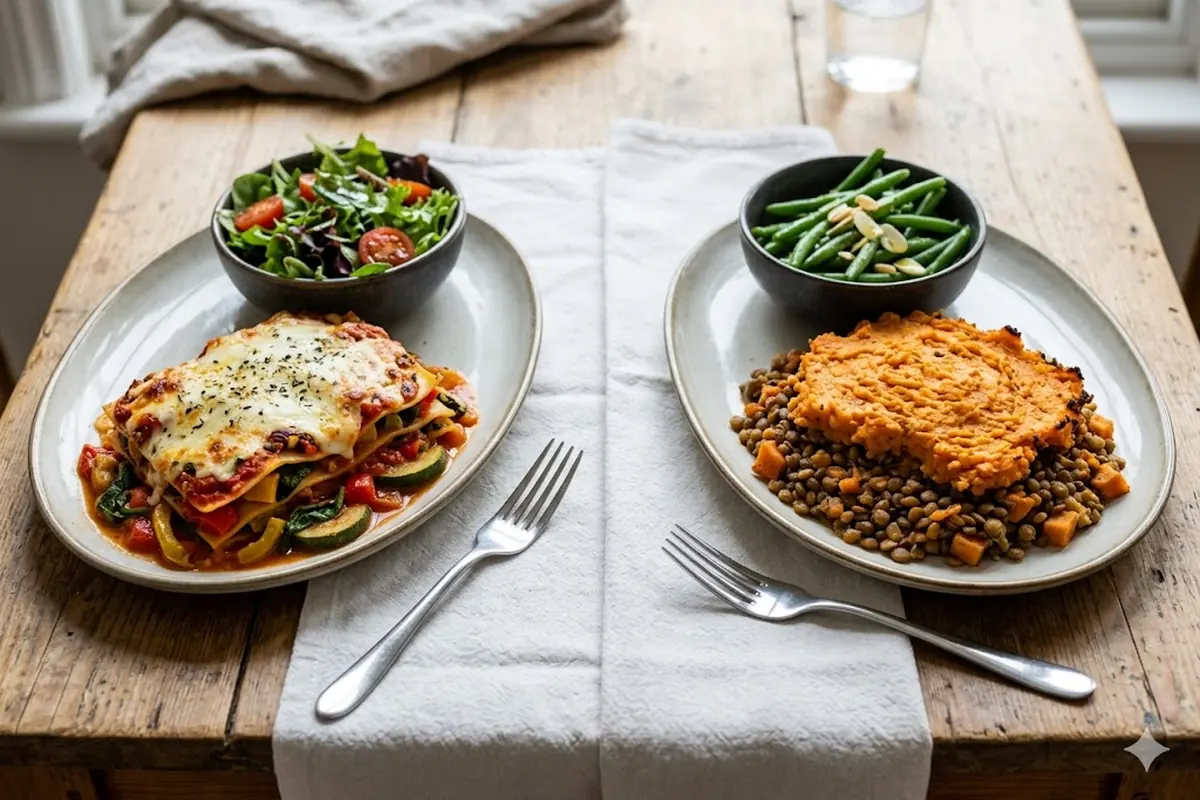
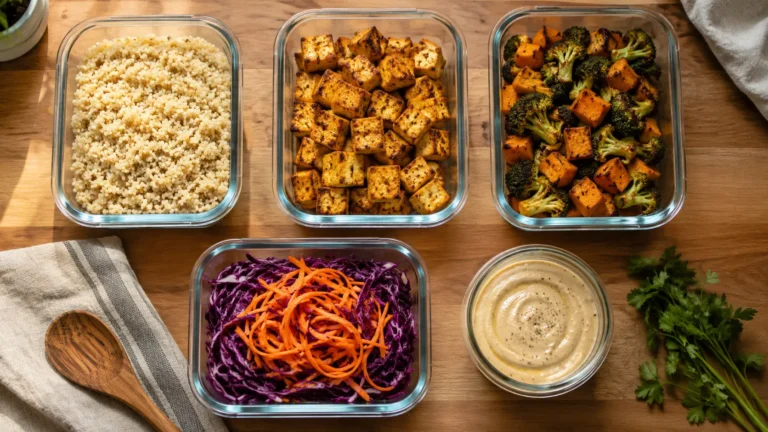
In practice, the kitchen skills overlap heavily and then diverge at a few key points. Both diets lean on the same backbone: beans, lentils, grains, vegetables, nuts, and seeds. The vegetarian cook has dairy and eggs as binders, richness, and easy protein, so a vegetarian quiche, frittata, or cheese-based dish is straightforward. The vegan cook replaces those functions with plant tools: aquafaba or flax for eggs, cashew cream or coconut for dairy richness, nutritional yeast for a cheesy savory note, and tofu or tempeh for protein and structure.
That replacement work is the real craft of vegan cooking, and it is genuinely learnable. Knowing how to prepare tofu for cooking covers a huge amount of ground because tofu can stand in for eggs in a scramble, for cheese in a ricotta-style filling, and for meat in a stir-fry. Once you have a handful of these swaps down, cooking vegan stops feeling like subtraction and starts feeling like its own cuisine.
A few of the swaps worth memorizing: one tablespoon of ground flax mixed with three tablespoons of water makes a binding “egg” for baking; aquafaba, the liquid from a can of chickpeas, whips into meringue and lightens cakes; blended soaked cashews become a pourable cream for pasta and soups; and full-fat coconut milk delivers the richness that dairy cream would in a curry or dessert. Nutritional yeast gives a savory, cheese-like depth to sauces and popcorn. None of these are exotic or hard to find, and each one unlocks a whole category of dishes that would otherwise seem off-limits. The vegetarian cook reaches for these less often because eggs and dairy already do the job, which is the practical day-to-day difference between the two kitchens.
Environment, Ethics, and Cost
People choose these diets for three broad reasons: health, animals, and the planet. On animals, the logic is a spectrum, with vegetarianism removing direct slaughter and veganism aiming to remove all use. On the environment, plant-based eating generally has a smaller footprint than meat-based eating in terms of land, water, and greenhouse gases, with veganism typically landing a bit lower than vegetarianism because dairy farming carries its own significant emissions. On cost, both diets can be cheaper than a meat-centered one if you cook from staples like dried beans, lentils, rice, and seasonal vegetables, though packaged meat and dairy substitutes can get pricey fast. The cheapest, healthiest version of either diet is the one built around whole plant foods you cook yourself.
For evidence-based deep dives on how these diets affect long-term health, NutritionFacts.org maintains a large, well-cited library, and Forks Over Knives is a solid resource for building everyday plant-based meals once you have picked your path.
Eating Out and Social Life
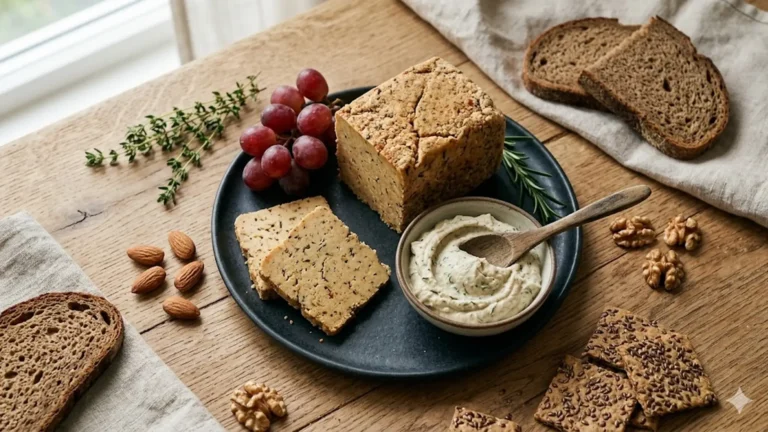
The two diets feel quite different once you leave your own kitchen. Vegetarians have an easy time at most restaurants, since cheese pizza, pasta with cream sauce, omelets, and countless dairy- or egg-based dishes are vegetarian by default. Vegans have to ask more questions, because butter, cheese, eggs, cream, and stock turn up in dishes that look plant-based on the menu. A vegetable risotto might be finished with parmesan; a soup might be built on chicken stock; bread might be brushed with butter. None of this is a reason to avoid eating out, but it does mean a vegan develops a habit of asking how a dish is made and learning which cuisines are friendliest. Indian, Thai, Ethiopian, Middle Eastern, and Mexican menus tend to have abundant naturally vegan options, which is why many plant-based eaters gravitate toward them. Vegetarians rarely have to think this hard, and that lower social friction is a real factor in why some people stop at vegetarian rather than going further.
How to Decide and How to Transition
If you are choosing between the two, be honest about your motivation and your willingness to plan. If your goal is mainly health and you want flexibility, lacto-ovo vegetarian is the gentlest landing and the easiest to sustain. If your motivation is primarily ethical or environmental, veganism aligns more fully but asks for more attention to nutrition and labels. Many people move through stages, going vegetarian first and shifting toward vegan over months as their cooking skills grow. There is no rule that says you must arrive fully formed. Start by building a rotation of five or six plant-forward meals you genuinely enjoy, get comfortable with the swaps, and let the diet expand from competence rather than willpower. The version you can keep up beats the strict version you abandon in a month.
Frequently Asked Questions
What is the main difference between vegetarian and vegan?
A vegetarian avoids meat, poultry, and fish but still eats animal byproducts like dairy, eggs, and honey. A vegan avoids all animal-derived products entirely, including dairy, eggs, and honey, and for most people extends that to non-food items like leather and wool. The dividing line is whether animal byproducts are allowed.
Can vegetarians eat eggs and dairy?
Most can. The most common type, lacto-ovo vegetarian, eats both eggs and dairy. Some variations eat only one: lacto vegetarians eat dairy but not eggs, and ovo vegetarians eat eggs but not dairy. None of them eat meat, poultry, or fish.
Is a vegan diet healthier than a vegetarian one?
Both are linked to lower rates of heart disease, diabetes, and high blood pressure when built around whole foods. Vegans tend to have lower weight and cholesterol, while vegetarians find it easier to cover nutrients like B12 and calcium through dairy and eggs. Neither is automatically healthier; planning and food quality matter more than the label.
Why don’t vegans eat honey?
Honey is produced by bees, so it is an animal product, which puts it outside a vegan diet that excludes anything derived from animals. Vegetarians generally do eat honey because it does not involve slaughtering the animal. This is one of the clearest dividing lines between the two diets.
What nutrients do I need to watch on each diet?
Vegans should pay close attention to vitamin B12, vitamin D, omega-3 fats, iron, calcium, iodine, and zinc, with B12 being the one that essentially requires a supplement or fortified foods. Vegetarians mainly need to watch iron, zinc, and B12, since dairy and eggs cover several other nutrients automatically.
Is a pescatarian a vegetarian?
Not strictly. A pescatarian eats fish and seafood along with dairy and eggs, and since fish is animal flesh, that falls outside a true vegetarian diet. The term is widely used in casual conversation, but if someone tells you they are vegetarian and you are cooking for them, it is worth confirming whether they eat fish, because the two are often blurred.
Can a dish be vegan but not vegetarian-friendly?
No, and this is a useful rule for hosts. Because vegan food contains no meat, fish, dairy, eggs, or honey, every vegan dish is automatically suitable for vegetarians as well. The reverse does not hold, since a vegetarian dish can still contain dairy or eggs that a vegan would avoid. Cooking vegan is the safe default for a mixed group.
Is it hard to switch from vegetarian to vegan?
It is mostly a matter of learning a few ingredient swaps and reading labels more carefully. The big adjustments are replacing eggs with binders like flax or aquafaba, replacing dairy with nut or soy-based products, and checking packaged foods for hidden ingredients like whey, gelatin, and honey. Many people transition gradually over several months, which makes it far easier to sustain.