Is tofu healthy? Yes, tofu is a healthy food for the vast majority of people, because it is a whole-soy protein that delivers all nine essential amino acids, comes with very little saturated fat, and carries plant compounds called isoflavones that current research links to heart and bone benefits rather than harm. For decades tofu was caught in a tug-of-war of conflicting headlines, but the better-designed human studies have largely settled the question: eating whole soy foods like tofu is associated with positive outcomes, and the scary claims that circulated for years mostly came from animal studies using concentrated extracts that do not reflect how people actually eat. For everyday meals, tofu is one of the more nutritious proteins you can put on a plate.
That said, healthy is never a blanket word, and the nuance is what this question deserves. The benefits depend on eating tofu as a whole food rather than as a deep-fried or heavily sweetened product, soy allergy is real, and a small group of people with specific medical situations should talk to a doctor about concentrated soy supplements (which are not the same as tofu). This guide walks through the actual nutrition numbers, what isoflavones do, the heart and bone evidence, the hormone myths and where they came from, the cancer question, the antinutrient and GMO concerns, who should be cautious, and how to eat tofu so the health upside is real. By the end you will have a clear, evidence-based answer rather than a headline.
What tofu is and what is in it
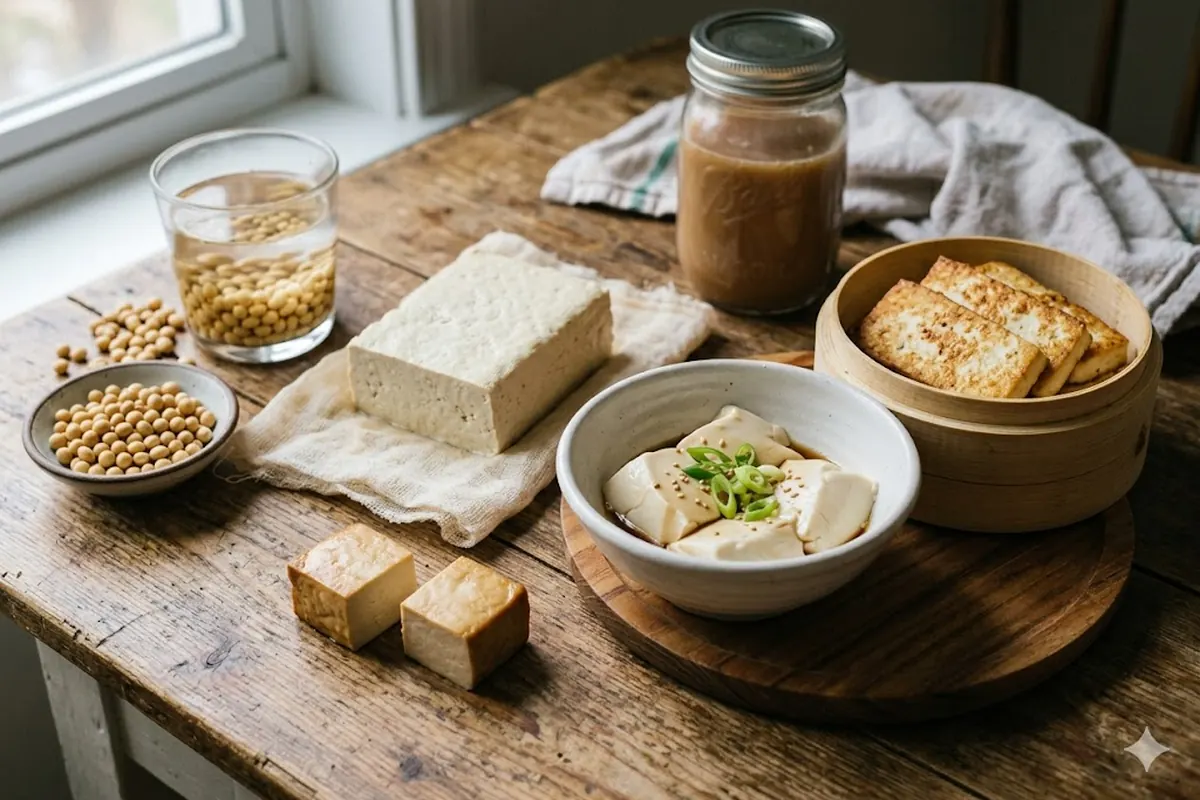
The case for tofu starts with how simple it is. Tofu is made by curdling soy milk and pressing the curds into blocks, much the way cheese is made from dairy milk. The only ingredients in plain tofu are soybeans, water, and a coagulant (usually calcium sulfate or magnesium chloride, both mineral salts). That short list is the first reason it reads as a whole food rather than a processed novelty: there is nothing in a plain block but soy and the agent that sets it.
Nutritionally, tofu punches above its weight. A half-cup serving of firm tofu provides roughly 18 to 22 grams of protein for about 180 calories, with around 11 grams of fat that is mostly the unsaturated, heart-friendly kind, and almost no saturated fat. Crucially, soy is a complete protein, meaning it contains all nine essential amino acids your body cannot make, which is rare among plant foods and a big part of why tofu is so valued in plant-based eating. When tofu is set with calcium sulfate, it also becomes a meaningful source of calcium, along with iron, manganese, and magnesium. That nutrient density is why tofu sits comfortably among the most useful plant-based protein sources for anyone eating less meat.
Tofu nutrition, by the numbers
To judge tofu fairly you need the figures, so here is what a typical firm tofu delivers. Exact numbers vary with firmness and brand, but a half-cup (about 124 grams) of firm, calcium-set tofu lands close to this:
| Nutrient | Per 1/2 cup firm tofu |
|---|---|
| Calories | ~180 |
| Protein | ~18 to 22g |
| Total fat | ~11g (mostly unsaturated) |
| Saturated fat | ~1.5g |
| Carbohydrate | ~3 to 5g |
| Calcium | ~25 to 35% daily value (if calcium-set) |
| Sodium | low (~10 to 20mg plain) |
A few points stand out. Plain tofu is naturally very low in sodium, unlike many processed plant proteins, which is a real advantage. The protein is high for the calorie cost, and because it is complete, tofu does not need to be paired with another protein the way some single plant foods do. The fat is overwhelmingly unsaturated. And the calcium figure is worth checking on the label, since it depends entirely on whether the maker used a calcium-based coagulant. The takeaway from the numbers alone is that plain tofu is a lean, high-quality, mineral-rich protein with almost nothing working against it.
Isoflavones: the compounds at the center of the debate
Almost every tofu controversy traces back to one thing, so it is worth understanding clearly. Soybeans contain isoflavones, a group of plant compounds classified as phytoestrogens because their structure loosely resembles the hormone estrogen. That resemblance is the source of both the fear and the benefit headlines, so it helps to know what isoflavones actually do.
Phytoestrogens are not the same as human estrogen. They bind weakly to estrogen receptors and can act either mildly like estrogen or mildly against it depending on the tissue and the person, which is why their net effect in studies is generally neutral-to-beneficial rather than hormone-disrupting. In whole soy foods like tofu, the amounts are modest, and they come bound up with the food’s protein, fiber, and minerals. This is a completely different exposure from a concentrated isoflavone pill, which is the form most of the genuine cautions apply to. The broad nutrition evidence on soy and isoflavones, summarized at NutritionFacts.org, consistently lands on the side of whole soy foods being beneficial when eaten in normal amounts.
The heart and bone evidence
The strongest positive case for tofu is cardiovascular, and the research here is encouraging. A large 2020 analysis found that people who ate at least one serving of tofu a week had roughly an 18 percent lower risk of heart disease compared with those who rarely ate it. Separate research has shown that eating about 25 grams of soy protein a day can lower LDL (the harmful) cholesterol by around 3 to 4 percent over several weeks, which is part of why soy protein once carried a heart-health claim on labels. The mechanism is a mix: replacing saturated animal fat with unsaturated soy fat, plus the cholesterol-modest effects of soy protein and isoflavones, and better blood-vessel function linked to isoflavone intake.
Bone health is the second area with reassuring signals. Isoflavones may help slow the loss of bone density, particularly after menopause when estrogen drops, and calcium-set tofu directly contributes a useful dose of calcium. The evidence here is less ironclad than the heart data, but it points in a favorable direction, and at minimum tofu is a calcium source that does not come with the saturated fat of dairy. Together these are the reasons tofu shows up in so many heart-healthy and bone-conscious eating patterns.
How tofu compares to other proteins
Healthy is a relative word, so it helps to see where tofu sits next to the proteins it usually replaces. Against a serving of fatty red meat, tofu offers similar protein with a fraction of the saturated fat and no dietary cholesterol, which is the core reason swapping it in tends to improve cholesterol numbers. Against chicken breast, tofu has a little less protein per calorie but brings fiber, isoflavones, and minerals that animal protein lacks, along with a much lower environmental footprint. Against other plant proteins, tofu has an edge because it is a complete protein on its own, whereas beans or grains usually need to be combined to cover all the essential amino acids. It is also lower in sodium than most processed meat substitutes. None of this makes tofu the only good protein, but it does put it among the most efficient and clean choices, animal or plant, when you weigh protein quality against what comes along for the ride.
The hormone myths, and where they came from
No food has more persistent myths than tofu, so it is worth addressing them head-on. The most common worry is that soy will lower testosterone in men or cause feminizing effects. This claim is not supported by the science. A comprehensive review of dozens of clinical studies found no significant effect of soy protein or soy isoflavones on testosterone, free testosterone, or estrogen levels in men eating normal amounts. The handful of case reports that fueled the myth involved extreme intakes, far beyond what anyone eats from tofu in a meal.
Where did the fear come from? Largely from early animal studies that fed rodents high doses of isolated isoflavone extracts, and from the phytoestrogen label, which sounds alarming but describes a weak, plant-based compound rather than a hormone. Once researchers studied actual humans eating actual soy foods, the dramatic effects disappeared. The practical conclusion from the body of evidence is that eating tofu as part of a normal diet does not disrupt hormones in men or women, and the burden of any remaining caution falls on concentrated supplements, not on the food.
The cancer question
Because of the estrogen connection, many people specifically worry about breast cancer, so it deserves a direct answer. The fear was that estrogen-like compounds might fuel hormone-sensitive cancers. The human evidence has turned out to be the opposite for whole soy foods. The American Cancer Society states that soy foods are safe for cancer survivors, and a 2022 meta-analysis found that soy isoflavone consumption was associated with reduced breast cancer risk in both pre- and post-menopausal women. In populations that eat soy regularly from a young age, breast cancer rates tend to be lower, not higher.
The one genuine caveat is the same one that runs through this whole topic: concentrated soy isoflavone supplements are a different matter, and people who have had breast cancer or are at high risk should discuss those pills with their doctor rather than assume they behave like food. For tofu and other whole soy foods, the data is reassuring. This is the same label-reading instinct that helps when checking whether a packaged product fits your needs, the way our guide to whether soy sauce is vegan breaks down a related soy product’s ingredient list.
Antinutrients, GMOs, and processing
A few smaller concerns come up often, so here is the honest read on each. They are real topics but mostly minor in practice.
Antinutrients. Soybeans contain phytates and lectins, compounds that can reduce mineral absorption. In tofu, processing (soaking, heating, and the curdling itself) lowers these substantially, and the effect on a varied diet is small. For most people eating tofu as one food among many, antinutrients are not a meaningful problem, and the protein and mineral benefits far outweigh them.
GMOs. A large share of conventional soy is genetically modified, mostly for herbicide tolerance. If that concerns you, organic tofu is by definition non-GMO, and many tofu brands also carry a non-GMO label. The health question around GMOs in food is contested, but the simple route for the concerned is to buy organic or labeled non-GMO tofu.
Processing. Plain tofu is minimally processed, just soy milk set into a block. The health picture changes with how it is cooked and which soy products you choose. Deep-fried tofu, heavily sweetened soy desserts, and ultra-processed soy-based meat analogues are further from a whole food and can carry added oil, sugar, or sodium. Whole soy foods (tofu, tempeh, edamame, soy milk) are the ones with the strongest evidence behind them, so the smart move is to lean on those and treat fried or candied versions as occasional.
Who should be cautious
Tofu suits most people, but a few groups should take note, so here is the short list. Knowing where the real cautions lie keeps the rest of the picture in proportion.
- People with a soy allergy must avoid tofu entirely; soy is one of the major food allergens.
- People taking thyroid medication may want to space soy away from their dose, since soy can slightly affect absorption; eating enough iodine usually offsets any thyroid concern for healthy people.
- People with a history of hormone-sensitive cancer can generally eat whole soy foods safely per current guidance, but should ask their doctor specifically about concentrated isoflavone supplements.
- Infants should not be given soy products as a milk replacement without pediatric guidance.
For everyone outside these groups, tofu eaten as a whole food is well supported. The cautions are specific and narrow rather than reasons for the general population to avoid it.
How to eat tofu the healthy way
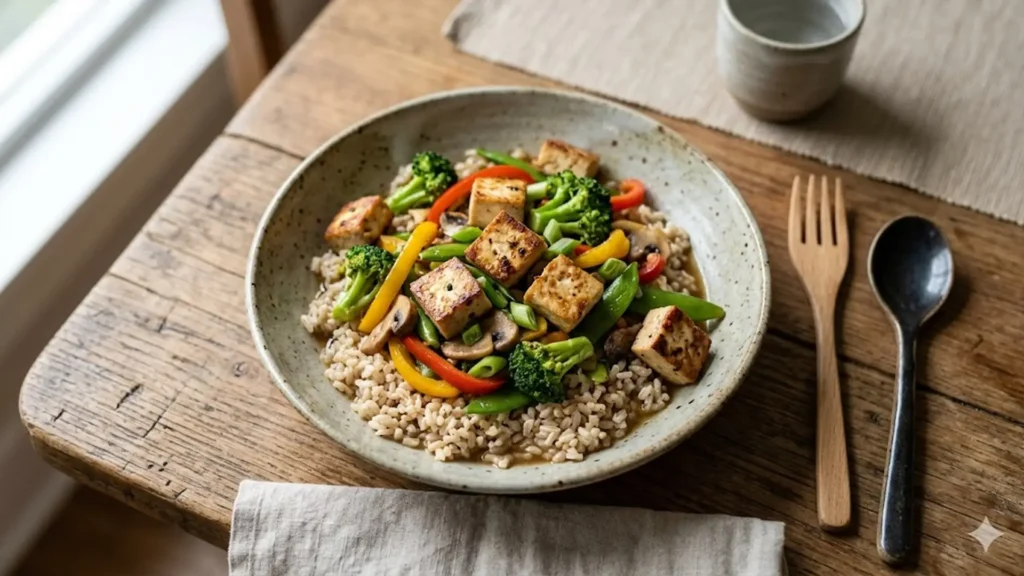
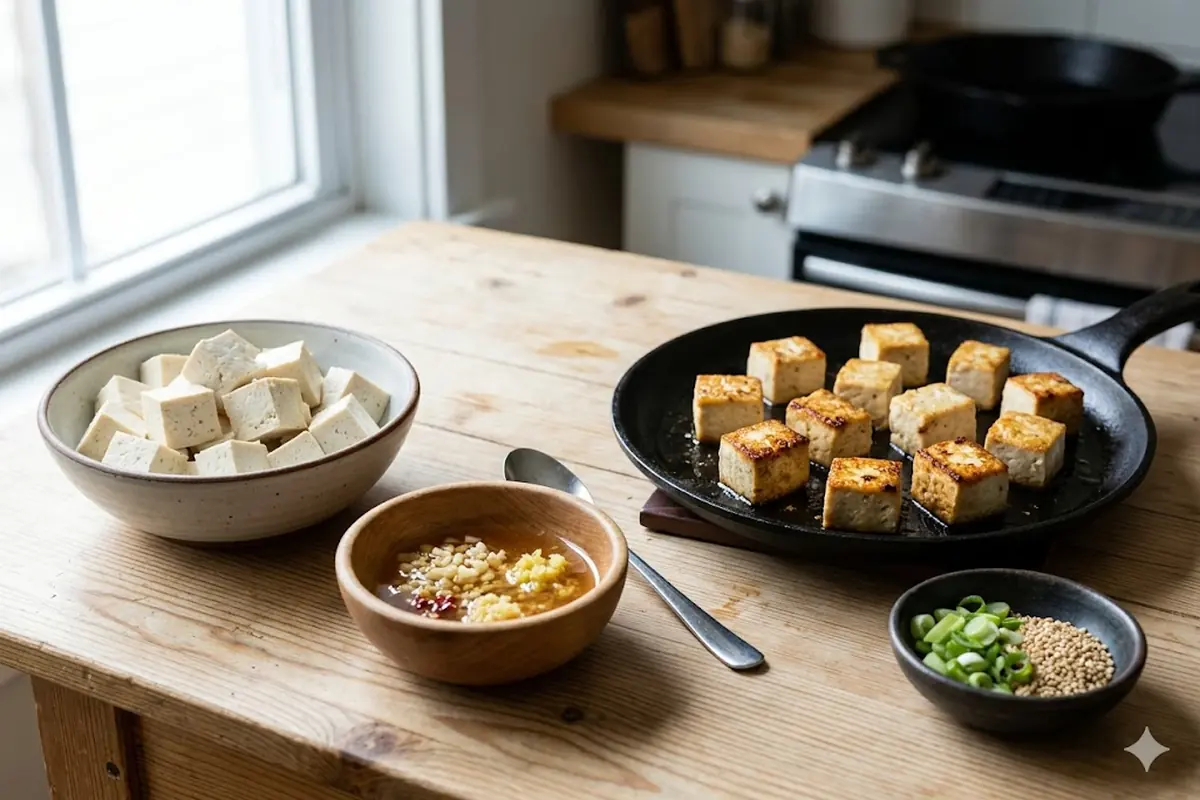
The health value of tofu depends partly on how you prepare it, so the last piece is using it well. Choose plain firm or extra-firm tofu for cooking, and silken for sauces and smoothies. Favor calcium-set tofu if you want the bone benefit, and organic or non-GMO if that matters to you. Cook it with methods that keep it close to a whole food: baking, air frying, pan-searing with a little oil, scrambling, or simmering in soups, rather than deep-frying it or drowning it in sugary sauces.
Because plain tofu is so low in sodium, you control the salt entirely, which is a quiet advantage over many ready-made proteins. Marinate it with flavorful, lower-salt ingredients, pair it with vegetables and whole grains, and let it carry the protein in a balanced plate. Recipe resources like Minimalist Baker show how versatile a single block can be across breakfasts, mains, and even desserts. Treated as the whole food it is, tofu stays firmly on the healthy side.
Frequently asked questions
Does tofu lower testosterone in men?
No. A large review of dozens of clinical studies found that soy protein and soy isoflavones have no significant effect on testosterone, free testosterone, or estrogen levels in men eating normal amounts. The myth came from animal studies using concentrated extracts and a few extreme case reports. Eating tofu as part of a normal diet does not affect male hormones.
Is tofu good for your heart?
Yes, the evidence is positive. People who eat tofu at least weekly have been found to have roughly an 18 percent lower risk of heart disease, and soy protein can modestly lower LDL cholesterol. The benefit comes from replacing saturated animal fat with unsaturated soy fat, plus the effects of soy protein and isoflavones on cholesterol and blood-vessel function.
Can tofu cause cancer?
Current human evidence says no, and may even suggest the opposite for whole soy foods. The American Cancer Society considers soy foods safe, and a 2022 meta-analysis linked soy isoflavone intake to reduced breast cancer risk. The one caveat is concentrated isoflavone supplements, which people with hormone-sensitive cancers should discuss with a doctor; whole tofu is reassuring.
Is tofu a complete protein?
Yes. Soy is one of the few plant foods that contains all nine essential amino acids your body cannot make, which makes tofu a complete protein. A half-cup of firm tofu provides about 18 to 22 grams of protein for roughly 180 calories, with little saturated fat, so it can stand on its own as a main protein source in a meal.
Is tofu processed or a whole food?
Plain tofu is minimally processed and close to a whole food, made only from soy milk, water, and a mineral coagulant. The health picture changes with preparation: baked, pan-seared, or simmered tofu stays close to whole, while deep-fried tofu and sugary soy desserts add oil and sugar. Lean on plain tofu and other whole soy foods for the best benefits.
How much tofu is safe to eat?
For most people, one to two servings of whole soy foods a day, including tofu, is well within the range studied and linked to benefits. There is no established harm from normal dietary amounts. People with soy allergy must avoid it, and those on thyroid medication may space soy from their dose, but the general population can eat tofu regularly without concern.
The bottom line
Tofu is a healthy food for nearly everyone, because it is a minimally processed, complete soy protein that is low in saturated fat, low in sodium, often rich in calcium, and carries isoflavones that the better human research links to lower heart-disease risk and possible bone benefits. The frightening claims about hormones and cancer came largely from animal studies using concentrated extracts and do not hold up for people eating whole soy foods, where the data is reassuring and often positive. The real cautions are narrow: soy allergy, concentrated supplements for those with hormone-sensitive cancers, and a sensible preference for plain tofu over deep-fried or sugary soy products. Choose plain firm or calcium-set tofu, cook it simply, pair it with vegetables and grains, and it remains one of the most nutritious and dependable proteins in a plant-based kitchen.