Is chocolate vegan? The frustrating truth is: it depends entirely on the bar in your hand. Chocolate starts as a plant, the cacao bean, which means it could be one of the most naturally vegan treats in the candy aisle. Yet a huge share of the chocolate on shelves is not vegan at all, because somewhere between the bean and the wrapper, dairy gets added. The result is a category where two bars sitting side by side can give completely opposite answers.
This guide cuts through the confusion. You will learn which types of chocolate are usually vegan and which almost never are, the hidden dairy ingredients to scan for, why even dark chocolate sometimes fails the test, how “may contain milk” labels work, and how to shop with confidence. By the end you will be able to glance at any bar and know within seconds whether it belongs in a vegan kitchen.
The Short Answer
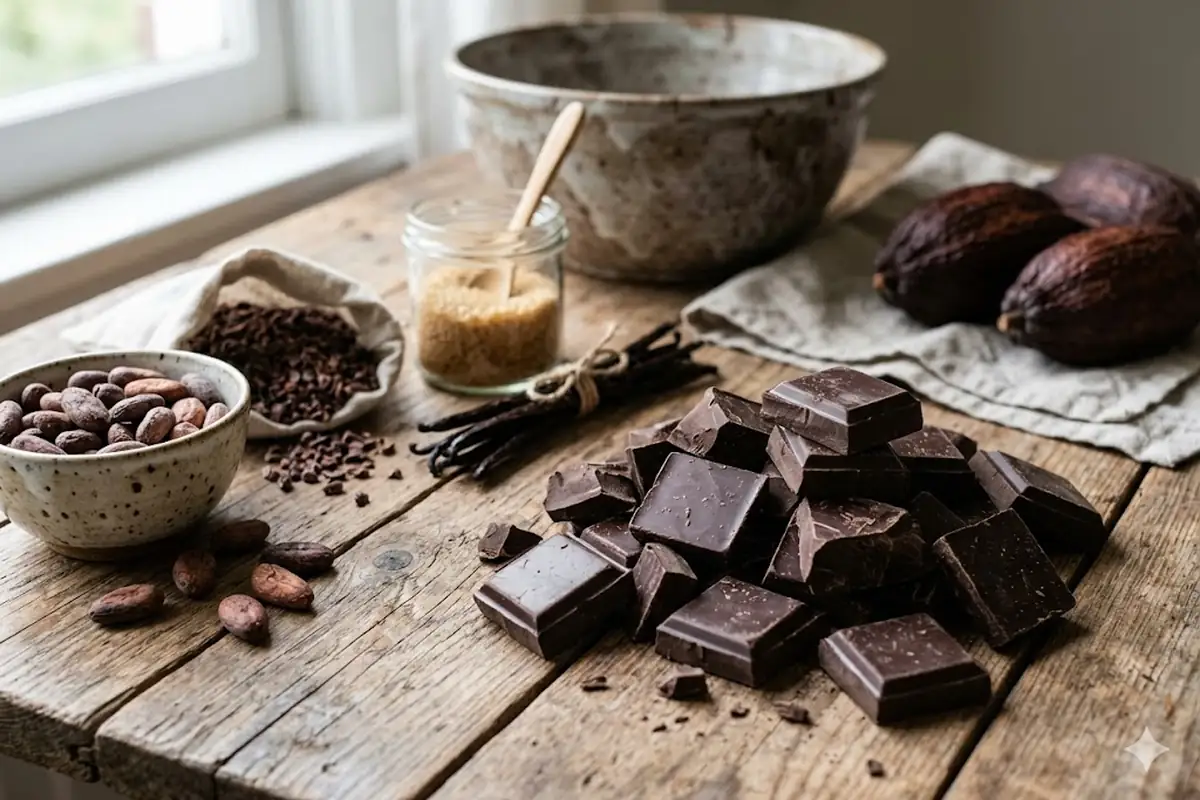
Pure chocolate, made only from cacao, cocoa butter, and sugar, is vegan. The problem is that most commercial chocolate adds dairy at some stage, and milk and white chocolate are built on it. So the honest one-line answer is this: dark chocolate is often vegan but not guaranteed, while milk and white chocolate are almost never vegan unless they are specifically made with a plant-based milk substitute. The label is the only thing that settles it for certain.
The reason chocolate trips people up is that cacao itself is unambiguously plant-based. Cocoa solids, cocoa butter, and cocoa powder all come from a bean. If chocolate were left alone, the whole category would be vegan by default. Dairy is an addition, not an inherent part of chocolate, which is why reading the ingredient list rather than guessing from the color is the only reliable method.
Type by Type Breakdown
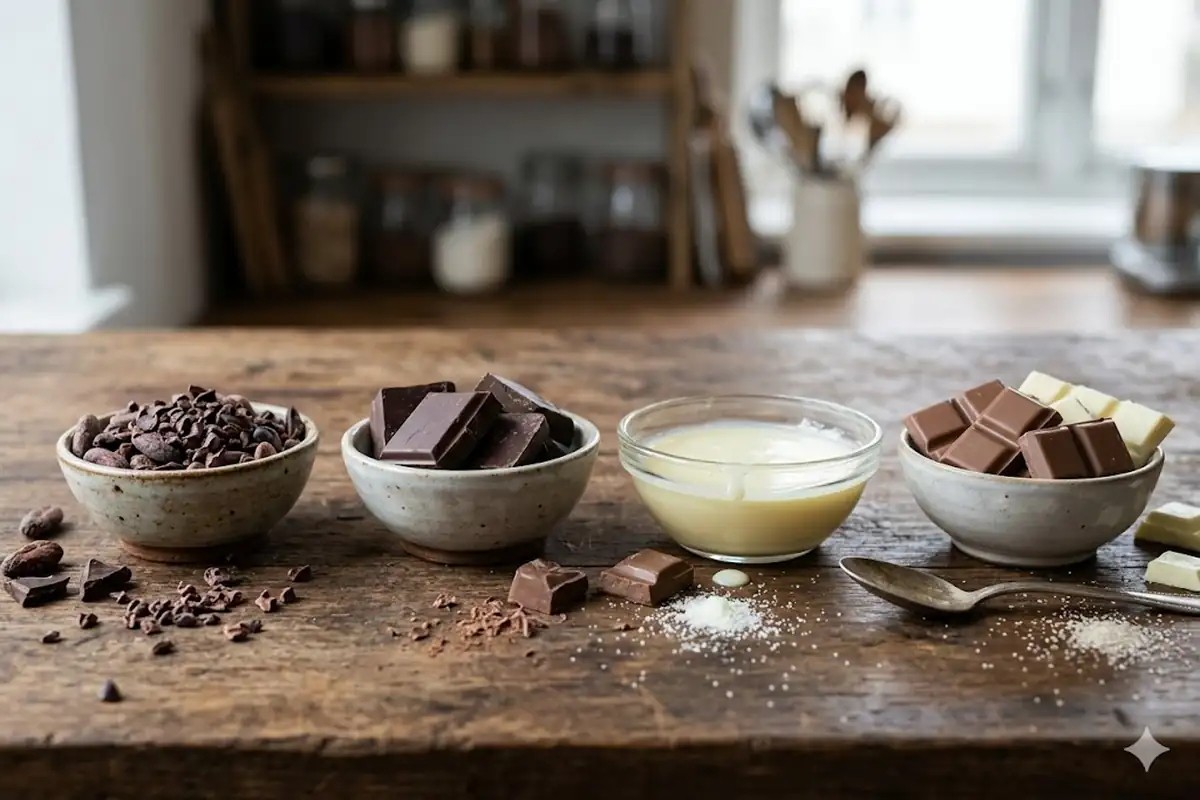
Each style of chocolate has a different baseline likelihood of being vegan. Knowing the pattern lets you make a fast first guess before you even check the label.
| Chocolate Type | Usually Vegan? | Why |
|---|---|---|
| Unsweetened / 100% cacao | Yes | Just cacao and cocoa butter, nothing else |
| Dark chocolate (70%+) | Often | High cocoa, but some brands still add milk fat |
| Dark chocolate (50-69%) | Sometimes | Lower cocoa means more room for dairy and may-contain risk |
| Semi-sweet / bittersweet | Sometimes | Can be dairy-free, but many brands add milk solids |
| Milk chocolate | Almost never | Milk powder is a defining ingredient |
| White chocolate | Almost never | Built from cocoa butter, sugar, and milk powder |
| Vegan milk / white chocolate | Yes | Uses oat, rice, coconut, or soy milk powder instead of dairy |
The takeaway: the darker and higher in cocoa percentage a bar is, the better its odds of being vegan, but odds are not certainty. Plenty of premium dark bars still slip in a small amount of milk fat for texture, and that single ingredient changes the answer.
The Dark Chocolate Trap
Most people assume dark chocolate is automatically safe, and most of the time they are lucky. But two major brands famously add milk to much of their dark range, and they are far from alone. Manufacturers sometimes include milk fat to soften the texture or mellow the bitterness, even in bars marketed as dark. A 70 percent bar from one company can be fully vegan while a 70 percent bar from another contains milk solids.
This is why “it’s dark, so it’s fine” is a habit worth breaking. The cocoa percentage tells you about intensity, not about dairy. The only way to be sure is to read the ingredient list every time, especially with a new brand. If the list shows cocoa mass, cocoa butter, sugar, and maybe an emulsifier and vanilla, you are clear. The moment milk, milk fat, milk solids, or whey appears, it is out.
Hidden Dairy Ingredients to Scan For
Dairy hides under several names, and recognizing them on sight is the single most useful skill for chocolate shopping. By food-labeling law in many countries, milk must be declared as an allergen, but it can still appear under terms that are easy to skim past.
- Milk, milk powder, milk solids — the most direct forms.
- Milk fat and butter oil — added for smoothness, common even in dark bars.
- Whey and whey powder — a milk protein that shows up in cheaper chocolate.
- Casein and caseinates — milk proteins sometimes used in coatings.
- Lactose — milk sugar, occasionally listed separately.
- Cream and skimmed milk powder — typical in milk and white chocolate.
One ingredient that often worries new vegans is cocoa butter. Despite the name, it is the natural fat pressed from the cacao bean and is completely plant-based. It is not dairy butter, and its presence is a good sign, not a red flag. Likewise, lecithin (usually soy or sunflower) is a plant-derived emulsifier and is vegan.
What About Sugar?
Here is a subtle point most chocolate articles miss. In some regions, certain cane sugar is processed using bone char as a whitening filter, which makes that sugar non-vegan in the strictest sense. This rarely appears on a label, so it is impossible to verify from the packaging alone. Most vegans treat refined sugar as a gray area and focus their attention on the clear-cut dairy question, since dairy is both more common in chocolate and actually declared on the label. Beet sugar and organic cane sugar are generally produced without bone char if you want to avoid the issue entirely.
Reading the “May Contain Milk” Label
A bar can have an entirely vegan ingredient list and still carry a “may contain milk” or “made in a facility that processes milk” warning. This is a cross-contamination notice, not an ingredient. The chocolate itself is vegan by formulation, but it was made on shared equipment with dairy chocolate, so trace amounts could be present.
How you treat this depends on your reasons and your needs. Vegans avoiding animal products for ethical reasons often consider the bar vegan, since no dairy was intentionally added. People with a genuine milk allergy, however, should take the warning seriously, because trace contamination can be a real medical risk. The ingredient list answers “is it vegan”; the allergen warning answers “is it safe for an allergy,” and those are two different questions.
Vegan Chocolate Is Easy to Find Now
The good news is that the market has changed enormously. Dedicated dairy-free milk and white chocolate now use oat, rice, coconut, almond, or soy milk powder to recreate the creamy texture without any animal product. Many mainstream dark chocolate bars are vegan by default, and a growing number of brands print a clear vegan logo on the front so you do not have to decode the back at all.
For baking, vegan chocolate chips are widely available, and many standard semi-sweet chips happen to be dairy-free already, so always check before assuming you need a specialty product. A vegan chocolate stash opens up everything from a simple square after dinner to a tray of chocolate chip cookies and a quick pour of warm dessert sauce over fruit. If you want to verify the rule on a specific style, our focused guide on is dark chocolate vegan goes deeper on cocoa thresholds and brand patterns.
Using Vegan Chocolate in the Kitchen
Once you have a reliable vegan bar or bag of chips, it behaves exactly like conventional chocolate in most recipes, because the cocoa and cocoa butter are doing the work that dairy never did. It melts, sets, and tempers the same way. The one adjustment worth knowing is in recipes that lean on milk chocolate’s built-in sweetness and creaminess; swapping in dark vegan chocolate may call for a touch more sweetener or a splash of plant milk to round it out.
Pairing chocolate with other naturally vegan staples makes dessert effortless. It melts beautifully over plant-based ice cream, folds into batters made with a vegan egg substitute, and turns a bowl of berries into something that feels indulgent with almost no effort. For anyone newly checking ingredients across their whole pantry, the same label-reading habit that cracks chocolate also answers questions like is honey vegan and is soy sauce vegan, since the principle is identical: read the list, learn the hidden names, and the guesswork disappears.
How Chocolate Is Made, and Where Dairy Sneaks In
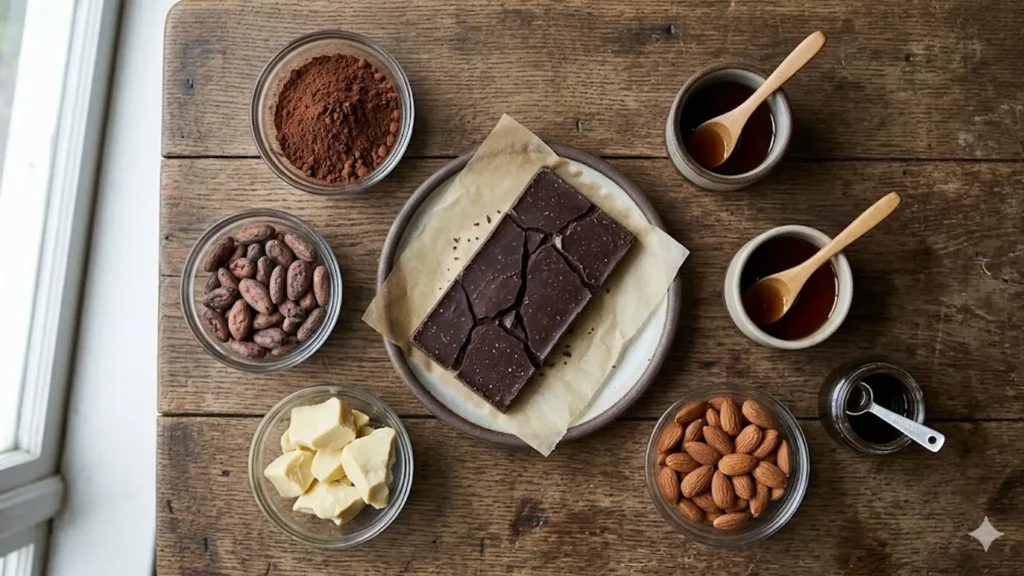
Understanding the production process makes the vegan question far easier to reason about, because it shows you exactly where the animal product enters the picture. Chocolate begins with cacao pods, which are harvested, fermented, dried, roasted, and cracked to release the nibs. Those nibs are ground into a thick paste called chocolate liquor, which despite the name contains no alcohol. The paste is then separated or blended into two components: cocoa solids, which carry the flavor and color, and cocoa butter, the smooth fat. (For the full botanical and historical background, chocolate has a surprisingly deep story.) Both come from the same bean, and both are plant-based.
At this point the chocolate is still entirely vegan. Dairy only appears in the next stage, when manufacturers blend in sugar and, for milk chocolate, milk powder. This is a deliberate recipe decision, not an unavoidable step. A maker producing dark chocolate can stop with cocoa, cocoa butter, and sugar and end up with a vegan bar, while the same factory adds milk powder on the next line to make milk chocolate. Once you picture it this way, the pattern in the type-by-type table makes intuitive sense: the more a recipe leans on creaminess and mildness, the more likely milk was added.
Vegan Chocolate Brands and Categories
Rather than memorizing specific product names that change constantly, it helps to know the categories of chocolate that tend to be reliably vegan. This lets you walk into any store, anywhere, and find options without a brand list.
- High-percentage dark bars (70% and up) from makers that list only cocoa, cocoa butter, and sugar are the easiest everyday pick.
- Certified vegan bars carry a registered vegan trademark on the front, removing all guesswork including the may-contain question for ethical eaters.
- Plant-milk chocolate using oat, rice, coconut, or soy milk powder recreates milk and white chocolate without dairy, and this category has expanded rapidly.
- Dark chocolate chips sold for baking are frequently dairy-free by default; many standard semi-sweet chips qualify, so check before buying a specialty bag.
- Bean-to-bar craft makers often produce minimal-ingredient dark chocolate that is vegan, since their whole appeal is showcasing the cacao rather than masking it with milk.
The practical lesson is that you almost never need to hunt. Between mainstream dark chocolate that happens to be vegan and the growing shelf of clearly labeled plant-based options, the modern chocolate aisle is friendlier to vegans than it has ever been. The only enemy is assuming, which is why the label habit stays worth keeping even as options multiply.
A Quick Shopping Checklist
To make the whole process fast, here is the routine to run on any chocolate bar.
- Look for a vegan logo first. If it is there, you are done.
- Read the ingredient list for milk, milk fat, milk solids, whey, casein, lactose, or cream.
- Remember that cocoa butter and lecithin are plant-based and fine.
- Treat “may contain milk” as a cross-contamination note, relevant for allergies but not an intentional ingredient.
- When in doubt, default to higher-cocoa dark chocolate, which has the best odds, but still verify.
Why Chocolate Confuses People More Than Most Foods
Chocolate sits in an unusual spot among foods people question. With something like meat, the answer is obvious. With chocolate, the same word covers a product that ranges from fully vegan to heavily dairy-laden, all under one familiar name and often in nearly identical packaging. That ambiguity is what trips people up, and it is worth naming because it explains why even experienced vegans double-check.
Part of the confusion is cultural. Many of us grew up with milk chocolate as the default, so the brain quietly assumes all chocolate contains milk. In reality, milk chocolate is a specific style, and the broader world of chocolate, especially darker varieties, was vegan long before anyone used the word. Reframing chocolate as a plant food that sometimes has dairy added, rather than a dairy food, changes how you read every label. You stop expecting milk and start simply confirming its absence.
The other source of confusion is that the non-vegan ingredient is usually present in small amounts. A bar might be 99 percent plant-based and still contain a trace of milk fat, which is enough to make it non-vegan but small enough that it never affects taste or appearance. This is why you cannot judge by flavor or color and must rely on the printed list. The good news is that this same precision works in your favor: once you trust the label, you never have to wonder again.
Frequently Asked Questions
Is dark chocolate always vegan?
No. Dark chocolate is often vegan, but it is not guaranteed. Some brands add milk fat or milk solids even to high-cocoa dark bars to smooth the texture, and lower-percentage dark chocolate is more likely to contain dairy. The cocoa percentage tells you how intense the bar is, not whether it has milk. Always read the ingredient list rather than assuming dark equals dairy-free.
Is cocoa butter dairy?
No, despite the name. Cocoa butter is the natural fat pressed from the cacao bean, so it is entirely plant-based and vegan. It has nothing to do with dairy butter. Seeing cocoa butter in the ingredient list is actually a good sign, because it usually means the bar is built around real chocolate rather than cheaper fats.
Can a bar be vegan if it says “may contain milk”?
Yes, in terms of ingredients. A “may contain milk” warning means the chocolate was made on equipment shared with dairy products, not that milk was added to the recipe. Ethically motivated vegans usually accept these bars because no dairy was intentionally used, which fits the standard definition of veganism as avoiding animal exploitation as far as is possible and practicable. People with a milk allergy, however, should avoid them, since trace cross-contamination can pose a real health risk.
Is white chocolate ever vegan?
Traditional white chocolate is not vegan, because it is made from cocoa butter, sugar, and milk powder, with dairy as a core ingredient. However, dedicated vegan white chocolate does exist, made by replacing the milk powder with oat, rice, coconut, or soy milk powder. Check for a vegan label, since standard white chocolate will almost always contain dairy.
The Bottom Line
So, is chocolate vegan? It can be, and increasingly it is, but you have to look. Chocolate begins as a plant and only becomes non-vegan when dairy is added, which happens often in milk and white chocolate and occasionally even in dark. The skill is not memorizing brands but learning to read a label in a few seconds: spot the hidden milk names, recognize that cocoa butter and lecithin are fine, and decide for yourself how to treat cross-contamination warnings. Master that, and chocolate goes back to being one of the easiest pleasures in a vegan kitchen.