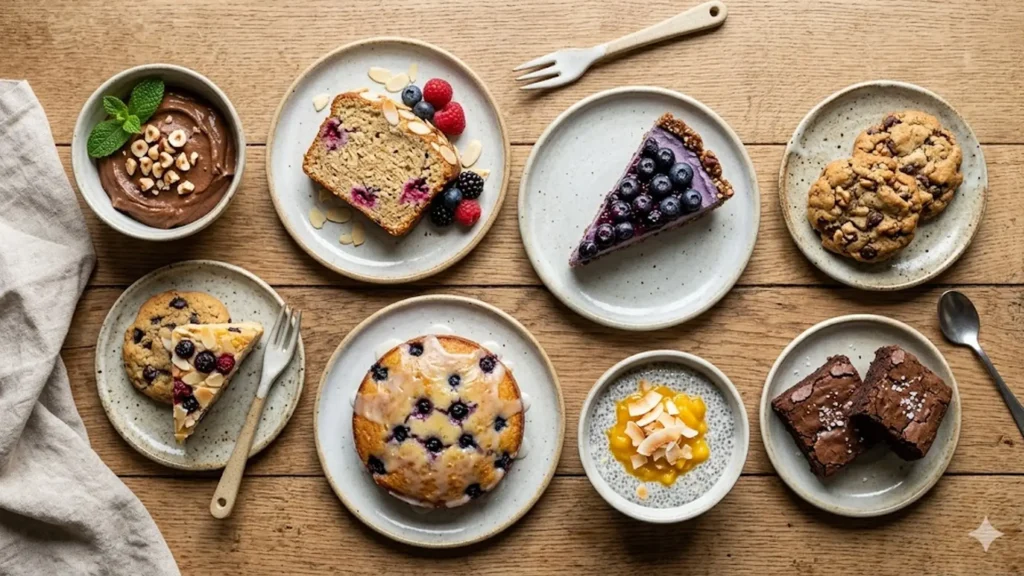
Vegan gluten free desserts are easier than they sound once you understand the one problem that trips everyone up: you are removing two structural ingredients at the same time, eggs and gluten, and both of them were holding your dessert together. The fix is to give each job back, a binder for what the egg did and a structure flour for what the gluten did, or to lean on desserts that never needed either. Get that right and you can make cakes, cookies, puddings, and frozen treats that nobody guesses are free of both. The two numbers to remember are one tablespoon of ground flax in three tablespoons of water for an egg, and about half a teaspoon of xanthan gum per cup of flour for structure.
I have baked my way through a lot of crumbling cakes and gummy cookies to learn this. The recipe roundups online give you 31 links and almost no understanding of why your own attempt fell apart. This guide is the understanding. Once you see the two-swap problem clearly, you can fix any recipe and even improvise your own.
A quick word on why both restrictions together feel so much harder than either alone. Plenty of people bake gluten-free with regular eggs and do fine, because the eggs cover the binding while a flour blend covers the structure. Plenty of vegan bakers use wheat flour and never think about it, because the gluten holds everything while a flax egg handles moisture. Combine the two diets and suddenly both safety nets are gone at once. That is the real reason vegan gluten-free desserts have a reputation for being finicky. It is not that either swap is hard, it is that you are doing both at the same time, and they interact. Understanding that interaction is most of the battle.
The Two-Swap Problem Nobody Names
Here is what is actually going wrong when a vegan gluten-free dessert turns into a sad pile of crumbs. In a normal cake, gluten builds the stretchy structure that traps air and holds the shape, and eggs bind everything together while adding moisture and lift. Strip out the wheat and you lose the structure. Strip out the eggs and you lose the binding. Most people swap one and forget the other, then wonder why the result is dense, dry, or falling apart.
The solution is to replace each function deliberately. For the gluten, you use a gluten-free flour that brings some structure, often helped by a small amount of binder like xanthan gum or psyllium husk. For the eggs, you use a separate egg replacer suited to the job. When a recipe accounts for both, it works. When it accounts for one, it fails. That single idea explains nearly every vegan gluten-free baking disaster I have ever had.
The shortcut, and the best-kept secret in this corner of baking, is that many of the best desserts never relied on gluten or eggs in the first place. Start there while you build confidence.
This is exactly where the popular guides leave you stranded. The big roundups hand you 31 recipe links sorted by photo, and the baking guides list flours and egg swaps as separate menus without ever connecting them to the failure you actually had. None of them tells you which swap fixes which symptom, and none separates the truly easy no-bake desserts from the projects. Keep this conversion handy as you read: 1 tablespoon ground flax plus 3 tablespoons water replaces one egg for binding, 3 tablespoons of aquafaba replaces one egg for lift, a quarter cup of applesauce replaces one egg for moisture, and half a teaspoon of xanthan per cup of flour rebuilds structure. Those four numbers solve most of what goes wrong.
Easy Mode: Desserts That Are Naturally Vegan and Gluten-Free
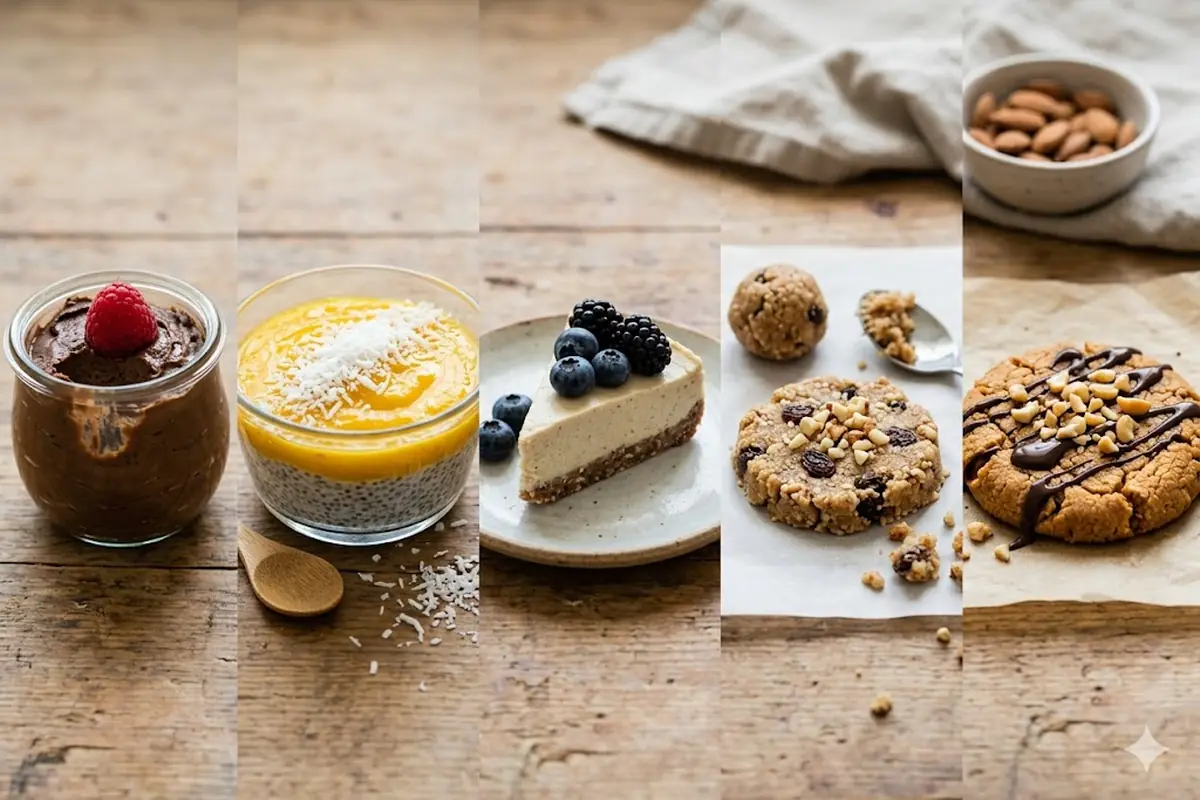
Before you touch a single specialty flour, know that a whole category of desserts is already vegan and gluten-free with no engineering required. These are where I send anyone who is nervous, because they are nearly impossible to ruin.
Chia pudding sets itself, no baking, just chia seeds in plant milk overnight. Sorbet is fruit, sugar, and water. Chocolate avocado mousse blends ripe avocado with cocoa and maple into something silky that hides its vegetable entirely. Coconut macaroons need only shredded coconut and a binder. Nice cream is frozen bananas blended until they turn to soft serve. A fruit crisp with an oat-and-nut topping bakes up bubbling and golden using certified gluten-free oats. None of these asks you to balance binders against structure flours, because there was never any gluten or egg to replace.
I lean on these constantly when I want dessert without a project. The avocado mousse in particular fools people every time, and it comes together in five minutes. If you keep frozen bananas on hand the way I do, nice cream is dessert in two minutes flat. These naturally-free options are also where the whole-food approach shines, since they taste like real ingredients rather than a lab attempt at mimicking wheat.
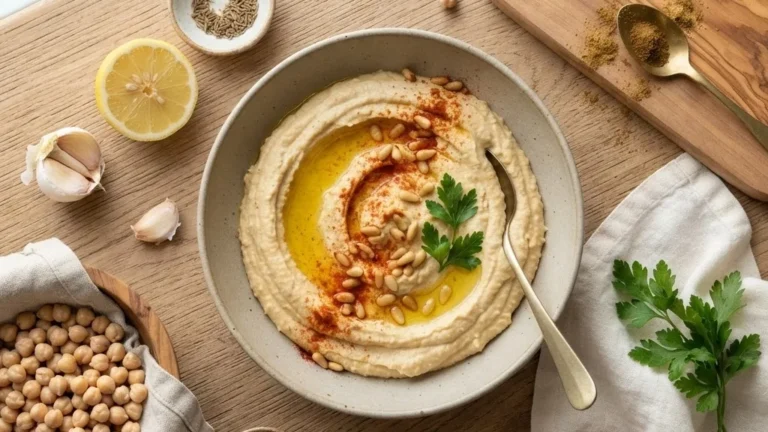
There is a strategic reason to master these first beyond just easy wins. They teach you the flavor side of dessert without the structural headaches, so by the time you move on to baked goods you already know how to balance sweetness, salt, and richness. A person who can nail a chocolate avocado mousse understands more about dessert than someone who can follow a complicated cake recipe by rote. Build the palate, then add the engineering. That order has never failed me, and it keeps the early wins coming while the harder skills develop in the background.
The Egg Substitute Decision Tree
When you do bake something that needs an egg replaced, the right swap depends entirely on what the egg was doing. This is the part the roundup articles skip, and it is the difference between a cookie that holds and one that spreads into a puddle.
| The egg’s job | Best swap | Ratio per egg |
|---|---|---|
| Binding (cookies, bars) | Flax or chia egg | 1 tbsp ground + 3 tbsp water, rest 10 min |
| Lift and airiness (meringue, mousse) | Aquafaba | 3 tbsp chickpea liquid = 1 egg |
| Moisture (cakes, muffins) | Mashed banana or applesauce | 1/4 cup = 1 egg |
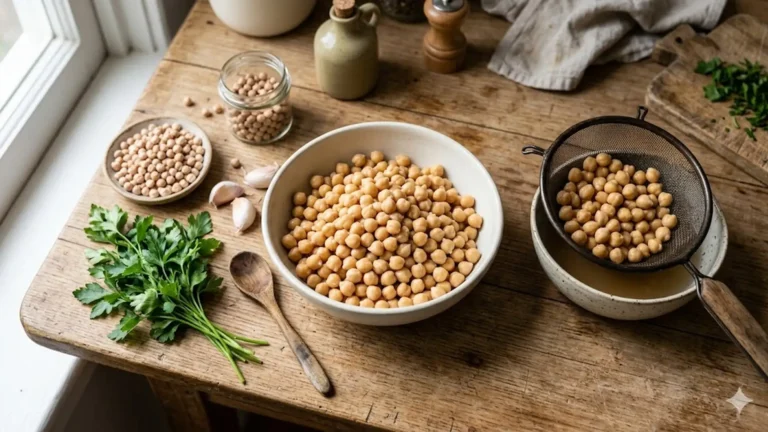
The flax egg is my workhorse. Grind a tablespoon of flax seeds, stir into three tablespoons of water, and let it sit for ten minutes until it goes gel-like. That gel mimics the binding an egg gives, which is exactly what cookies and bars need. Aquafaba, the liquid from a can of chickpeas, is the trick swap. It whips into a foam that holds air, so it is the only thing that makes vegan meringue or a light mousse possible. For moist cakes, banana or applesauce adds the moisture an egg brought, though banana brings flavor, so use applesauce when you want neutral.
Matching the Flour to the Dessert
There is no single gluten-free flour that does everything, and pretending otherwise is why so many bakes go wrong. Each flour has a personality, and the right one depends on the texture you want.
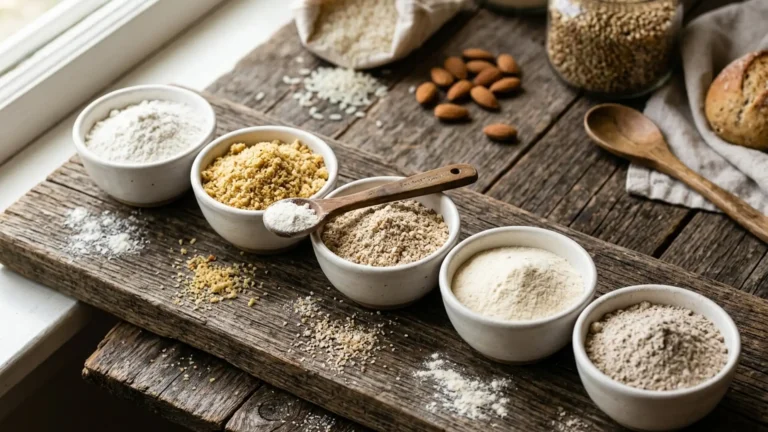
Almond flour makes dense, moist, tender bakes and is excellent for cakes and soft cookies, though it brings no structure of its own, so it needs a binder. Oat flour, which you can make by blitzing certified gluten-free oats, gives a chewy, hearty texture perfect for blondies and bar cookies. A good gluten-free all-purpose blend, the kind built from rice, sorghum, potato, and tapioca, is your best bet for anything that needs to behave like wheat flour, such as a layer cake. Coconut flour is a special case: it drinks moisture aggressively, so it only works in small amounts blended with other flours, never alone. Cassava flour comes closest to mimicking wheat one-to-one if you want a single-flour option.
The binder ties it together. Most gluten-free blends include xanthan gum already, but if yours does not, add about half a teaspoon per cup of flour for cakes. Psyllium husk is the stronger option for anything that needs real stretch, like a bread or a sturdy cake, and a single teaspoon does a lot. If you are also working out whether a dish counts as safe at all, my breakdown of what makes vegan versus vegetarian ingredients qualify is a useful companion when you read dessert labels.
Building the Four Dessert Types That Cover Most Cravings
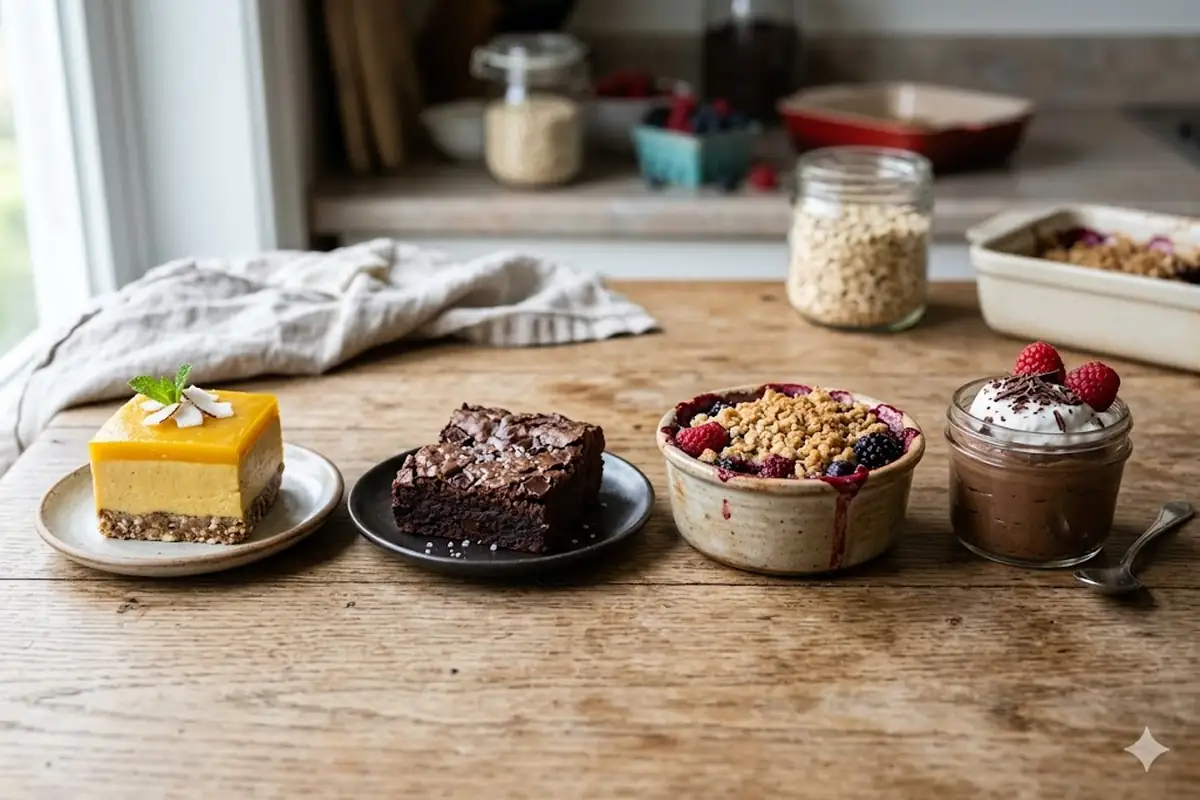
Once the swaps make sense, almost every dessert you want falls into one of four buildable types, and each has a reliable approach. Knowing the pattern for each means you rarely need to hunt for a recipe at all.
For chewy cookies, lean on oat flour and a flax egg, with a little extra fat like coconut oil or nut butter to keep them from drying. The flax binds, the oat flour gives that hearty chew, and the fat carries moisture. For a moist cake, reach for almond flour blended with a gluten-free all-purpose mix, applesauce for moisture, and a binder so it slices clean. For fudgy brownies, you almost cheat: brownies want to be dense, so a good gluten-free flour with a flax egg and plenty of melted chocolate gives you that gooey center with little risk of crumbling, since you were never chasing a light crumb. For anything custard-like, a pudding or a cheesecake filling, skip flour entirely and build on blended cashews, silken tofu, or coconut milk thickened with a spoon of cornstarch, roughly a third of the flour a recipe would otherwise call for.
That last one is the quiet hero. A no-bake cashew cheesecake on a date-and-nut crust is vegan, gluten-free, and more impressive than its effort deserves. It uses the same soaked-cashew base that powers dairy-free creams, so if you already keep cashews soaking, dessert is half done. The crust of dates and almonds pressed into a pan needs no baking and no flour, which sidesteps the two-swap problem entirely.
Sweeteners Matter More Than You Think
The sweetener you pick changes texture, not just sweetness, and this catches people off guard in gluten-free vegan baking where every ingredient is doing extra work. Liquid sweeteners like maple syrup and agave add moisture, which can be a gift in a dry almond-flour cake or a problem in a cookie that then spreads too far. Granulated sweeteners like coconut sugar behave more like white sugar and help cookies hold their shape. If you swap a liquid sweetener into a recipe written for granulated, you usually need to pull back on other liquids to compensate.
I default to maple syrup for cakes and puddings where moisture helps, and coconut sugar for cookies and bars where I want structure. Refined white sugar is technically vegan in many cases, though some is processed with bone char, so brands matter if that concerns you. For most home baking, the unrefined options taste better in these whole-food desserts anyway, with a caramel depth that suits the nut and oat flours you are already using. Dates blended into a paste are my favorite for no-bake treats, since they sweeten and bind at the same time, doing double duty the way the best ingredients in this style of baking always do.
The Crumbling Cake That Taught Me About Binders
My clearest lesson came from a chocolate cake that would not hold together. I had swapped in a gluten-free flour blend and used flax eggs, so I thought I had covered both jobs. Every slice collapsed into rubble the moment I lifted it. The flour blend I grabbed had no xanthan gum, and flax alone was not enough structure for a tall cake. The fix was a single teaspoon of psyllium husk in the batter, hydrated in a tablespoon of water first so it did not clump. The next cake sliced clean, and I have used that one-teaspoon psyllium insurance on every tall vegan gluten-free cake since.
That is the whole game in one story. When a vegan gluten-free bake crumbles, you are almost always short on binder, not flour or liquid. Add a little xanthan or psyllium and the structure returns. When a bake is gummy and dense instead, you used too much binder or too much moisture-heavy swap like banana, so pull back. Learning to read which way a failed bake went wrong is more useful than any recipe, because it lets you rescue the next one.
It helps to keep a short mental map of failures and their causes, because the same handful of problems repeat. A bake that crumbles is short on binder. A bake that is gummy or sinks in the middle has too much moisture or too much binder. A bake that comes out dry and sandy usually has too much almond or coconut flour without enough liquid or fat to balance it. A cookie that spreads into a flat puddle was too warm or too wet, so chill the dough 20 minutes and cut the liquid sweetener. Each symptom points to one lever, and once you connect the symptom to the lever, you stop throwing out whole batches and start adjusting one thing at a time. That diagnostic habit is the single most valuable thing to carry out of this guide.
The other thing experience teaches is to change one variable per attempt. When a bake fails, the temptation is to fix everything at once, more binder and more liquid and a different flour, and then you have no idea what actually helped. Change one thing, bake again, and learn. It feels slower, but it is how you build real instinct instead of a folder of recipes you do not understand.
Storage is the unglamorous truth nobody warns you about. Vegan gluten-free bakes dry out faster than conventional ones, usually within 2 to 3 days, because they lack the fat and gluten that keep wheat bakes moist. Freeze what you will not eat quickly. Most of these desserts freeze beautifully and thaw in an hour, so I bake a batch, eat some, and freeze the rest in portions, the same way I handle a wider vegan meal prep routine.
For tested recipes that already balance these swaps, Minimalist Baker has a deep bench of vegan gluten-free desserts, and the nutrition context on whole-food sweets at NutritionFacts.org is worth a read. If you want to carry the same flour logic into a savory bake, recipesbend has a solid gluten-free bread guide.
Frequently Asked Questions
Why do my vegan gluten-free desserts fall apart?
Almost always because they are short on binder. When you remove both eggs and gluten, you lose the two things holding the structure together. Add a small amount of xanthan gum, about half a teaspoon per cup of flour, or a teaspoon of psyllium husk, and the dessert holds. A flax egg alone is often not enough structure for a tall cake.
What is the best egg substitute for vegan gluten-free baking?
It depends on the egg’s job. Use a flax or chia egg, one tablespoon ground in three tablespoons of water, for binding cookies and bars. Use aquafaba, three tablespoons of chickpea liquid, when you need lift for meringue or mousse. Use a quarter cup of mashed banana or applesauce when you need moisture in cakes.
Which gluten-free flour is best for desserts?
Almond flour for dense, moist cakes and soft cookies; oat flour for chewy bars and blondies; and a rice-and-tapioca-based gluten-free all-purpose blend for layer cakes that need to behave like wheat flour. Coconut flour absorbs too much moisture to use alone, so blend it in small amounts. Cassava flour is the closest single substitute for wheat.
Are there vegan gluten-free desserts that need no special flour?
Yes, and they are the easiest place to start. Chia pudding, sorbet, chocolate avocado mousse, nice cream made from frozen bananas, and coconut macaroons are all naturally vegan and gluten-free with no flour engineering. They never relied on gluten or eggs, so there is nothing to replace and almost nothing to ruin.
Do I need xanthan gum in every recipe?
Not always. Many gluten-free all-purpose blends already include xanthan gum, so check the bag first. Naturally flour-free desserts like puddings and frozen treats need none. You mainly need a binder when baking structured items like cakes and cookies, and even then psyllium husk can do the job if you prefer to skip gums.
How long do vegan gluten-free desserts last?
Baked ones dry out faster than conventional desserts, usually within 2 to 3 days, because they lack the fat and gluten that retain moisture. Store them airtight and freeze anything you will not eat quickly. Most freeze well and thaw in about an hour. No-bake options like chia pudding keep 4 to 5 days in the fridge.
Can I just buy a gluten-free flour blend and swap it one-to-one?
Sometimes, but not reliably for vegan baking. A one-to-one blend handles the gluten side, but you still have to replace the eggs separately, and you may need to add moisture since gluten-free flours can bake dry. Treat the blend as solving half the problem, then add your egg substitute and a touch more liquid or fat.