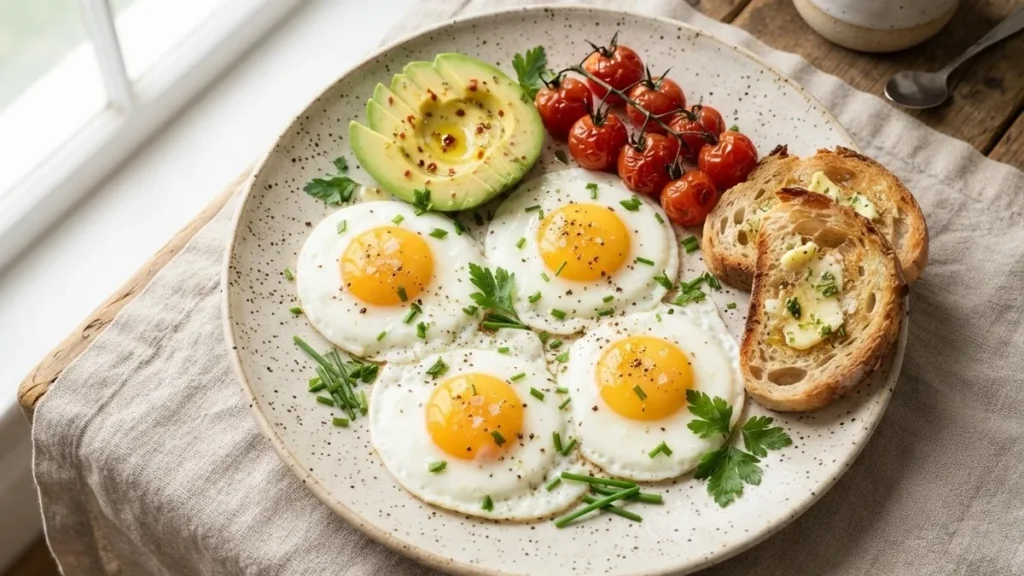
Are eggs vegan is one of the most common questions in a plant-based kitchen, and the short version is no, they are not. An egg is an animal product, so it sits outside a vegan diet the same way milk and honey do. What follows is the reasoning behind that answer, the arguments people raise to push back on it, and the substitutes that work when a recipe calls for one, two, or three eggs.
Sourcing draws on The Vegan Society definition and USDA nutrition data.
Quick answer: Eggs are not vegan. An egg is the ovum of a female hen, which makes it an animal product by definition, and The Vegan Society lists eggs among the foods vegans exclude alongside meat, dairy, and honey. Vegetarians who eat eggs are ovo-vegetarians, not vegans. The good news is that eggs are one of the easiest animal ingredients to replace: one tablespoon of ground flax plus three tablespoons of water binds a batter, aquafaba whips like egg whites, and pourable mung-bean products scramble. The rest of this guide matches each swap to the job.
What actually makes an egg an animal product
Veganism draws its line at the source of an ingredient, not at whether the animal was harmed to produce it. An egg comes out of a living hen, so it is an animal-derived food in the same bucket as cow’s milk, whey, gelatin, and honey. That single fact is what settles the question before any welfare argument even starts.
This trips people up because eggs feel different from meat. No animal is slaughtered to serve you an omelet, so the connection to the animal looks softer. But the definition vegans use does not hinge on slaughter. It hinges on whether a product is taken from an animal at all. A hen produced the egg, therefore the egg is not plant food, therefore it is not vegan. If you want the wider framing on where that boundary sits, the guide on what vegan actually means walks through it.
What The Vegan Society actually says
The reference point most people cite is The Vegan Society, the UK organization that coined the word vegan and set the modern definition in 1988. It describes veganism as “a philosophy and way of living which seeks to exclude, as far as is possible and practicable, all forms of exploitation of, and cruelty to, animals for food, clothing or any other purpose.”
In plain dietary terms, the same organization describes veganism as dispensing with all products derived wholly or partly from animals, and it names the categories directly: meat, including fish, shellfish, and insects; dairy; eggs; and honey. Eggs are not a gray area in that framing. They are on the list. So when someone asks whether a food with eggs in it can still be labeled vegan, the answer stays no, whether it is a fresh egg, dried egg powder in a cake mix, or albumen listed on a snack label.
Vegetarian versus vegan: eggs are the dividing line
A lot of the confusion comes from mixing up vegetarian and vegan. They are not the same thing, and eggs are one of the clearest places they split apart. Most vegetarians eat eggs. Vegans do not.
- Lacto-ovo vegetarian: eats both dairy and eggs, avoids meat and fish. This is the most common form of vegetarianism.
- Ovo-vegetarian: eats eggs but avoids dairy, meat, and fish.
- Lacto-vegetarian: eats dairy but avoids eggs, meat, and fish.
- Vegan: avoids all animal products, so no eggs, no dairy, no honey, no meat.
So if a friend tells you they are vegetarian and happily orders an omelet, nothing is contradictory. If a friend says they are vegan and orders that same omelet, something is off. The egg is the tell. The full comparison, including the parts beyond food, is in the vegetarian versus vegan guide.
Why vegans avoid eggs, not just egg-eating
For most vegans the objection to eggs is not really about the nutrition of the egg on the plate. It is about the system that produces it. Two numbers reframe this more than any label does. The red junglefowl, the wild bird that domestic hens descend from, lays roughly 10 to 15 eggs in a year. Modern laying hens have been bred to produce around 300. That gap is the product of decades of selective breeding aimed at squeezing eggs out of a body that never evolved to lay at that rate.
The other issue is what happens to the animals the industry cannot use. Male chicks do not lay eggs and are the wrong breed for meat, so in standard egg production they are killed shortly after hatching, usually by maceration or gassing. According to Surge, an animal-rights nonprofit, this happens across organic, free-range, barn, and cage systems alike. Laying hens themselves are typically killed once their output drops and they stop, in industry terms, earning their keep. Seen through that lens, eggs are not a byproduct a hen gives away. They are the reason an animal is bred, used, and discarded on a schedule.
The backyard and “ethical” egg debate
This is where the honest nuance lives, because the backyard-egg question is genuinely contested, even inside vegan circles. Some vegan groups ban the discussion outright because of the arguments it sets off. The scenario goes like this: you keep rescued hens in a roomy yard, they lay unfertilized eggs whether you collect them or not, no one is harmed, so why waste the eggs?
The counterarguments are worth understanding rather than waving away:
- Sourcing. Most backyard hens come from hatcheries, the same hatcheries that cull male chicks. Buying the hens can quietly fund the system a person is trying to opt out of.
- Disposability. When hens age and lay less, many keepers kill them. If the hen is valued for output, her worth is tied to production, which is the exact framing veganism pushes against.
- The hen’s own needs. Laying is nutritionally costly. Some hens practice re-feeding, eating their own unfertilized eggs to reclaim calcium and other nutrients they lost making them. Those eggs are not spare; they can serve the bird.
My own take is straightforward. A person with a couple of rescued hens eating their eggs is a completely different moral picture than the carton at the store, and there is no point pretending otherwise. But the label vegan describes avoiding animal products across the board, and an egg is an animal product regardless of how kind the yard is. You can make a thoughtful backyard choice and simply not call the result vegan. Both things can be true.
The nutrition question: protein, choline, and B12
People sometimes ask whether skipping eggs costs them nutritionally, so it is worth being specific rather than reassuring. A large egg gives you about 6 grams of protein and roughly 72 calories, which is genuinely useful. It also carries about 186 milligrams of cholesterol, according to the USDA, all of it in the yolk. Eggs are also one of the richest common sources of choline, a nutrient that supports memory and liver function, at roughly 147 milligrams per large egg. Those are the three things an egg brings that come up most in this conversation: protein, choline, and the assumption of B12.
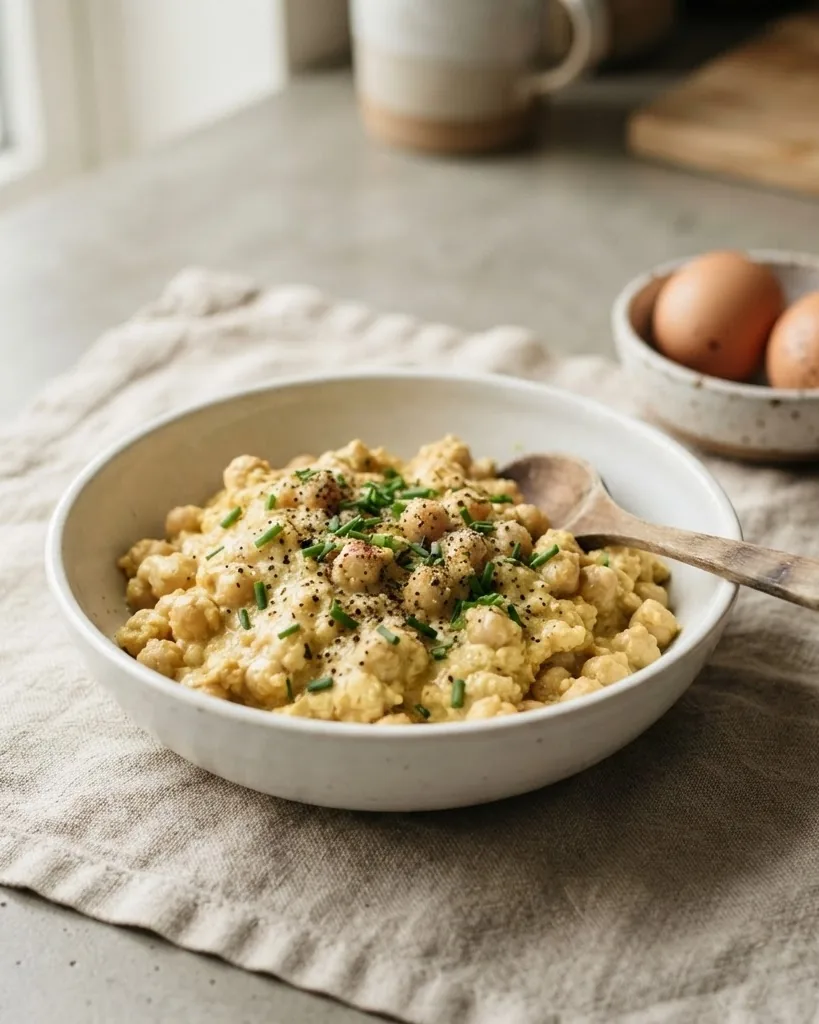
Protein is the easy one. The 6 grams an egg supplies is trivial to match across a plant-based day. A block of tofu, a cup of lentils, a scoop of tempeh, or a serving of chickpeas each clears that on its own, and a mung-bean product like JUST Egg lands near 5 grams per serving with zero cholesterol. Binders like flax and chia even add fiber and omega-3 fats that an egg does not carry at all.
Choline takes slightly more attention but is not hard. Plant sources include soybeans and tofu, other legumes, potatoes, cruciferous vegetables like broccoli and Brussels sprouts, nuts, seeds, and whole grains. Build meals around beans and soy foods and the numbers add up over a day. On a fully vegan diet this is a matter of variety, not a gap you cannot close.
B12 is the one nutrient that deserves a flag, and here the honest point cuts against a common assumption. Eggs are not a strong B12 source to begin with, so dropping them is not what creates the risk. Plant foods do not reliably contain B12 at all. The Vegan Society is blunt about this: fortified foods and supplements are the only dependable sources for vegans, with an adult target around 2.4 micrograms a day. A supplement and a fortified plant milk cover it, and anyone going vegan should sort out B12 first, before worrying about a single egg.
The best vegan egg substitutes, with exact ratios
Here is the part that matters at the counter. There is no single replacement that copies an egg in every role, because an egg does several different jobs: it binds, it leavens and lifts, it adds moisture, it sets custards, and it scrambles. Pick the swap that matches the job. These ratios each replace one whole egg.
| Substitute | Ratio (per 1 egg) | Best for |
|---|---|---|
| Flax egg (ground flax + water) | 1 Tbsp ground flax + 3 Tbsp water, rest 5 min | Binding: muffins, cookies, quick breads |
| Chia egg (ground chia + water) | 1 Tbsp ground chia + 3 Tbsp water, rest 5 to 10 min | Binding, adds browning; heartier bakes |
| Aquafaba (chickpea can liquid) | 3 Tbsp = 1 whole egg; 2 Tbsp = 1 egg white | Lift and air: meringue, macarons, light cakes |
| Unsweetened applesauce | 1/4 cup (add 1/2 tsp baking powder for lift) | Moisture in dense quick breads |
| Mashed ripe banana | 1/4 cup, about half a banana | Moist muffins and pancakes (adds banana flavor) |
| Blended silken tofu | 1/4 cup, blended smooth | Dense, custardy bakes: brownies, quiche |
| Commercial powder (Bob’s Red Mill, Ener-G) | Per package, about 1 Tbsp + water | Reliable binding and leavening in baking |
| Pourable mung-bean egg (JUST Egg) | 3 Tbsp pours like 1 egg | Scrambles, omelets, French toast, quiche |
A flax egg is the default for anything that needs to hold together, from banana muffins to a hearty cookie. Stir 1 tablespoon of ground flax into 3 tablespoons of water, let it sit five minutes, and it turns into a glossy gel that trails off a spoon. Chia works the same way and rests a touch longer; it browns bakes nicely but leaves faint specks, so it is best skipped in a pale vanilla batter.
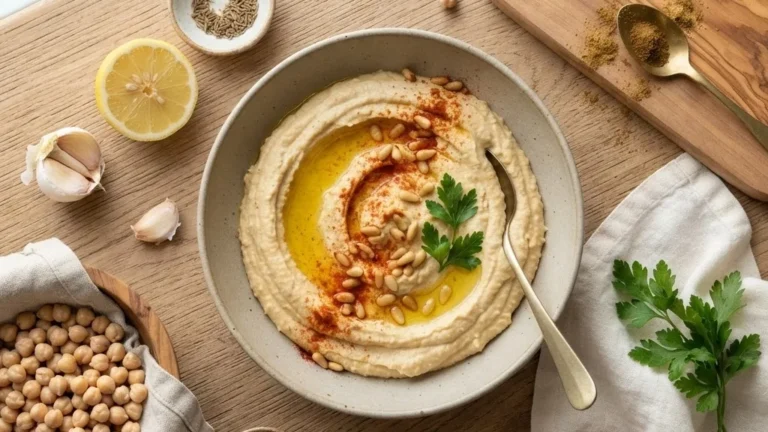
Aquafaba is the outlier that does what flax and chia cannot: it whips. The liquid from a can of chickpeas beats into stiff peaks that behave like egg whites, which is why it carries meringue, macarons, and airy cakes. Three tablespoons stand in for a whole egg; two tablespoons stand in for one white. It has a clear lane: in a dense brownie it has nothing to lift and leaves flat, gummy squares.
Matching the swap to the job
Once you stop looking for one universal egg and start reading what the egg is doing in a given recipe, the choice gets simple. A few rules worth following:
- Binding a dense batter (muffins, cookies, quick breads): flax egg, chia egg, or a commercial powder. These hold crumb together without needing to rise.
- Lift and airiness (light cakes, meringue, mousse): aquafaba, because it is the only common swap that whips and traps air.
- Moisture in something already sweet and dense (banana bread, pumpkin bread): applesauce or mashed banana, with a half teaspoon of baking powder if you want more rise.
- Custard, set, or fudgy density (brownies, quiche, cheesecake): blended silken tofu, which sets as it bakes and adds a little protein.
- Anything savory and egg-forward (scramble, omelet, breakfast sandwich): a pourable mung-bean product, or crumbled tofu seasoned with kala namak, the sulfurous Indian black salt that gives plant scrambles their eggy smell.
JUST Egg, made by Eat Just, is the closest thing to a drop-in pour. Its main ingredients are water and mung bean protein isolate, with expeller-pressed canola oil for richness and turmeric and carrot extract for the yellow color. It scrambles, sets in an omelet pan, and soaks bread for French toast. It will not whip like aquafaba or bind a cake like flax, so it stays in the savory lane where it belongs. For the full recipe-by-recipe breakdown, including which swaps fail and why, see the vegan egg substitute guide.
One habit worth copying: store ground flax and chia in the freezer, not the pantry. Both go rancid once ground, and a rancid binder will put a faint fishy note into an entire batch that vanilla cannot cover. Whole seeds keep longer, so grind small amounts as needed.
The commercial powders deserve a mention because they are the most reliable option when a recipe leans on the egg for structure. Bob’s Red Mill Egg Replacer is a blend of potato starch, tapioca flour, baking soda, and psyllium; the package direction runs about 1 tablespoon of powder whisked with 2 to 3 tablespoons of water per egg. Ener-G Egg Replacer, a potato and tapioca starch powder with leavening, uses roughly 1.5 teaspoons of powder beaten with 2 tablespoons of warm water per egg. Neither adds flavor, both bind and lift, and a box lasts months. When adapting an unfamiliar recipe with three or more eggs, start here, because starch-based replacers behave predictably where a fruit puree might leave the center wet.
The egg wash: how to get a golden shine without eggs
Egg does one more job that people forget until their pie crust comes out pale: the wash. A brush of beaten egg is what gives pastry, bread, and pie its glossy, deep-golden top. You can hit the same finish without it, and one option clearly comes out ahead.
- Maple syrup plus plant milk (the default): a 1:1 mix, about half a tablespoon of each, brushed thin. The sugar in the syrup browns and the milk cuts the stickiness so you get color plus a light sheen. Soy and oat milk brown best.
- Plant milk alone: plain soy milk gives a surprisingly egg-like golden finish on its own; King Arthur Baking rated it their top single-ingredient wash. Reach for it when you want color without added sweetness on a savory bake.
- Aquafaba plus a touch of syrup: chickpea liquid brushed on with a little agave or maple browns and smooths the surface, and it suits savory pastry where you do not want a sweet note.
Frequently asked questions
Are eggs vegan if they are free-range or organic?
No. Free-range, organic, and pasture-raised describe how a hen was housed, not what the egg is. The egg is still an animal product, and male chick culling occurs across those systems too, so the vegan answer does not change.
Are eggs vegetarian?
Yes for most vegetarians. Lacto-ovo and ovo vegetarians eat eggs. Only vegans and strict lacto-vegetarians avoid them, which is why eggs are a common point of confusion between the two labels.
Can vegans eat eggs from their own backyard hens?
By the standard definition, no, because an egg is an animal product regardless of the source. Some people make a personal ethical exception for rescued hens, but the result would not be called vegan.
What is the best egg substitute for baking a cake?
It depends on the cake. For a light, airy cake use aquafaba for lift. For a dense or fudgy one use blended silken tofu, and for a moist quick bread use applesauce or mashed banana.
Does an egg replacer taste like egg?
Most baking swaps like flax and applesauce are flavor-neutral or add a mild note. For a true eggy taste in savory dishes, season tofu or a mung-bean scramble with kala namak, which supplies the sulfurous flavor.
Is JUST Egg fully vegan?
Yes. JUST Egg is made from mung bean protein and water with no animal ingredients, and it carries about 5 grams of protein per serving with no cholesterol, unlike a chicken egg.nnSources: The Vegan Society (definition of veganism); USDA (egg cholesterol content); The Humane League and Surge (hen laying rates and industry practice).nnThe Vegan Society: definition of veganismnUSDA: cholesterol content of eggs