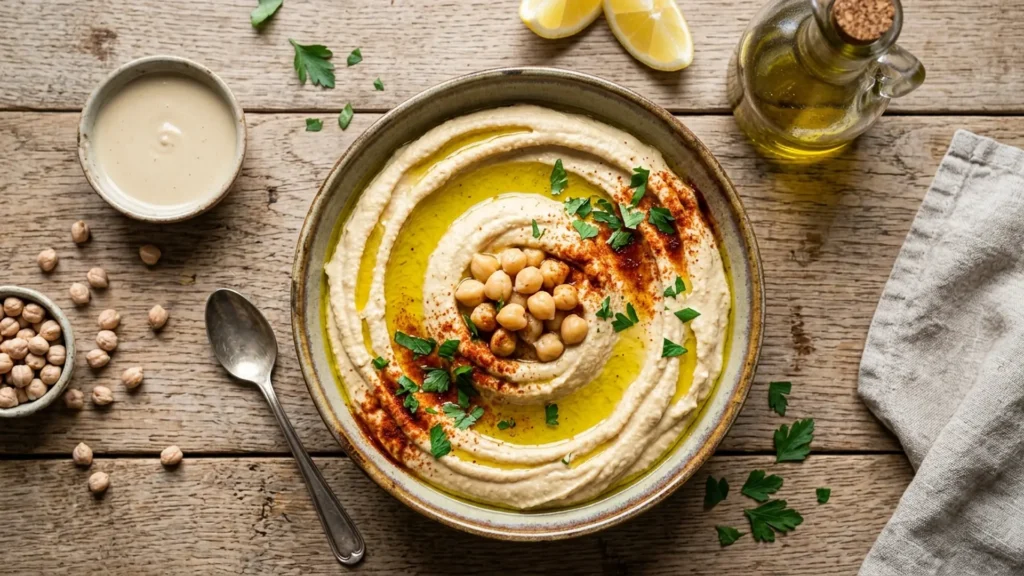
Is hummus gluten free? In its traditional form, yes. Classic hummus is built from chickpeas, tahini, lemon juice, garlic, olive oil, and salt, and not one of those ingredients contains gluten. That makes plain hummus one of the safest dips a gluten-free eater can reach for, and it happens to be naturally vegan too. The catch is that not every tub on the shelf sticks to the traditional recipe, and the way hummus is usually eaten, scooped up with pita or pretzels, is where gluten quietly sneaks back in.
This guide walks through exactly why plain hummus is gluten free, the specific store-bought additives and flavors that can break that promise, how to read a label in ten seconds, which dippers keep your snack safe, and how to make a reliable batch at home. It also covers the difference between celiac-level caution and a milder sensitivity, because that changes how careful you need to be about shared equipment.
Why traditional hummus is naturally gluten free
Gluten is a protein found in wheat, barley, and rye. To know whether any food is gluten free, you only have to check whether those three grains, or anything made from them, are present. Run that test on a classic hummus recipe and every ingredient passes.
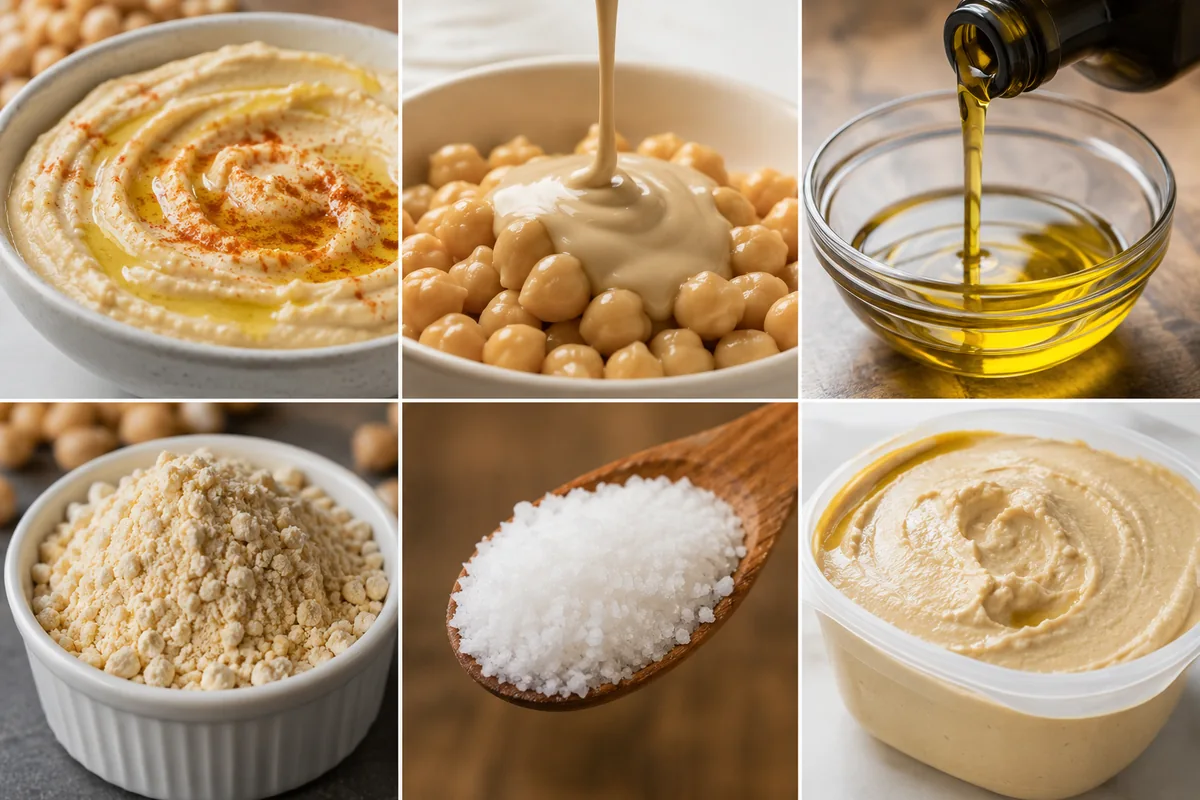
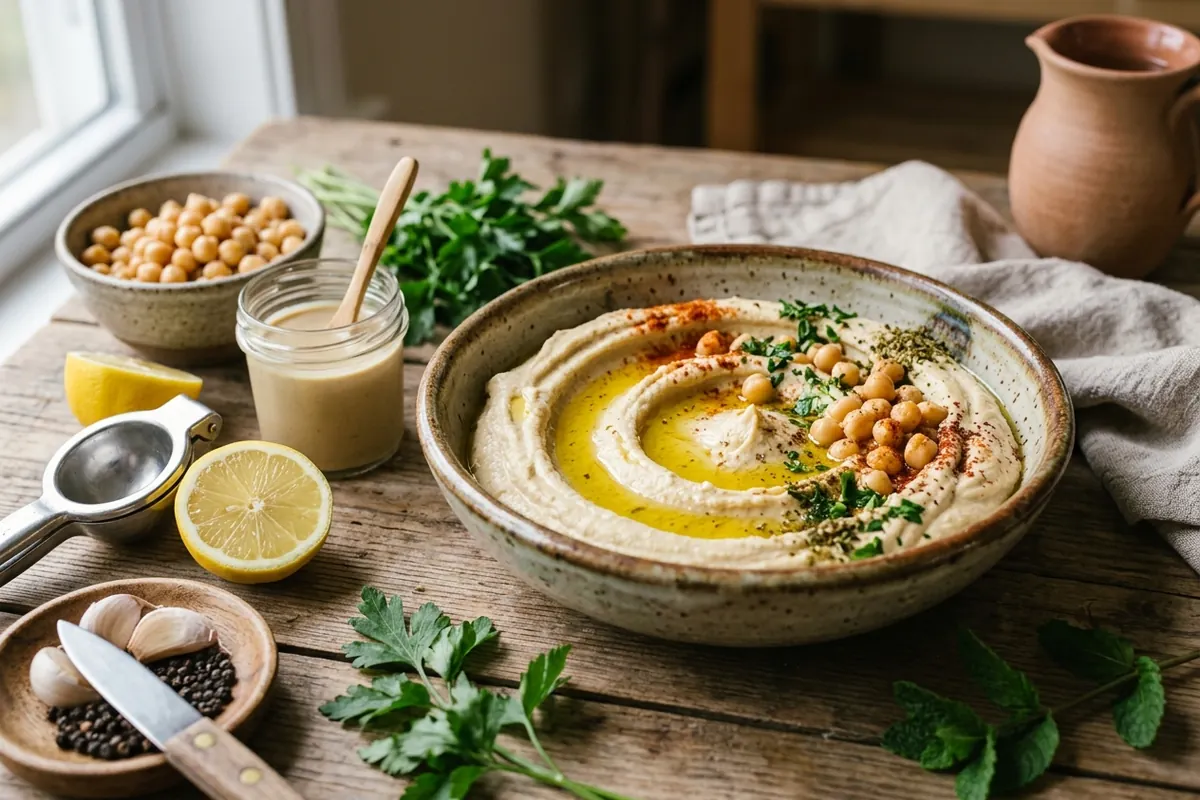
Chickpeas, also called garbanzo beans, are a legume, not a grain, and they are completely gluten free. Tahini is simply ground sesame seeds, which are seeds rather than cereal grains, so it is gluten free as well. Lemon juice, garlic, extra-virgin olive oil, and salt round out the recipe, and none of them carry gluten. The result is a dip that is gluten free by nature, with no special substitutions required. This is the same chickpea base that makes other Middle Eastern staples work, and if you cook your own beans, our guide on how to prepare chickpeas for cooking walks through soaking and simmering them from scratch.
Because chickpeas anchor the whole dish, hummus is also a genuinely useful food beyond being safe. It brings plant protein and fiber to the table, and if you are curious about where it lands nutritionally, our breakdown of whether hummus is healthy goes deeper on the numbers.
Where gluten sneaks into store-bought hummus
The phrase that matters most here is store-bought. A homemade batch you control is almost always safe, but a commercial tub introduces two separate risks: added ingredients and shared equipment. Both are real, and both are easy to miss if you do not read the label.
Added ingredients that carry gluten
Some manufacturers stray from the six-ingredient classic. The additions to watch for are wheat-based thickeners, modified food starch when it is derived from wheat, and flavorings that smuggle gluten in through a back door. Flavored hummus is the biggest offender, because a variety built around a topping or a seasoning blend can contain wheat without it being obvious. A few examples that have caused trouble:
- Soy sauce or teriyaki flavors. Standard soy sauce is brewed with wheat, so any Asian-inspired hummus may contain gluten unless it specifies a gluten-free tamari.
- Pretzel or “everything bagel” style toppings. Some novelty tubs come with a crunchy wheat topping baked right in.
- Wheat-based thickeners or fillers. Cheaper brands sometimes bulk out the dip with starches that may include wheat.
Shared-equipment cross contamination
Even when the recipe itself is clean, a label may read “may contain wheat” or “made on shared equipment.” That warning means the hummus is produced on lines that also handle wheat-containing products, so trace gluten can transfer. For someone with a mild sensitivity this trace amount may not matter, but for a person with celiac disease it can be enough to cause a reaction. This is the single most overlooked detail on a hummus tub, and it is exactly why label-reading beats assuming.
How to read a hummus label in ten seconds
You do not need to memorize ingredient science. A quick scan answers the question almost every time. Here is the order to check.
| What to look for | Why it matters | Verdict |
|---|---|---|
| “Certified Gluten-Free” seal | Tested to under 20 ppm gluten by a third party | Safest choice, buy with confidence |
| “Gluten-Free” on the front | In the US this is a regulated claim under 20 ppm | Reliable for most eaters |
| Plain ingredient list (chickpeas, tahini, oil) | No wheat, barley, or rye listed | Almost certainly safe |
| “May contain wheat” or “shared equipment” | Cross-contact risk from the production line | Skip if you have celiac disease |
| Soy sauce, malt, wheat starch, or a flavor topping | Direct gluten source in the recipe | Not gluten free, put it back |
In the United States, a “gluten-free” label is legally regulated and means the product tests below 20 parts per million of gluten, the threshold most celiac experts consider safe. That is why a front-of-pack “gluten-free” claim carries real weight rather than being marketing fluff. When you want to skip the label-reading entirely, blending your own is the surest route, and a clear walkthrough like the minimalistbaker guide to hummus from scratch shows just how few ingredients it takes.
Brands and certifications worth knowing
Many mainstream hummus brands are gluten free, and several carry a certification to prove it. Plain varieties from the big national brands are typically gluten free, and some are certified, but certifications and recipes change, so the label on the tub in your hand is always the final word. The pattern to remember is simple: plain and classic flavors are usually safe, while the further a variety drifts toward novelty toppings and complex seasoning blends, the more carefully you need to check.
If you want the highest level of confidence, look for the certified gluten-free mark rather than just a “gluten-free” front label. Certification means an independent organization has tested the product, which adds a layer of assurance on top of the manufacturer’s own claim. For anyone with celiac disease, that extra step is worth it.
The dippers are where most people slip up
Here is the part that trips up even careful shoppers: the hummus can be perfectly gluten free while the thing you dip into it is not. Pita bread, regular pretzels, and standard crackers are all made from wheat, so pairing safe hummus with them defeats the purpose. The fix is easy once you know which dippers stay gluten free.
| Gluten-free dippers | Dippers to avoid (contain gluten) |
|---|---|
| Carrot, cucumber, celery, and bell pepper sticks | Pita bread and naan |
| Corn tortilla chips (check the bag) | Regular pretzels |
| Rice cakes and rice crackers | Wheat crackers and crostini |
| Certified gluten-free crackers or pretzels | Breadsticks and pita chips |
| Roasted chickpeas, radishes, snap peas | Wheat crackers labeled “multigrain” |
Fresh vegetables are the no-brainer here. They are gluten free, they add crunch and nutrients, and they cost less than specialty crackers. If you want a starchy scoop, corn tortilla chips and rice crackers do the job, just confirm the bag is not processed alongside wheat.
Hummus at restaurants and the cross-contact problem
Ordering hummus out adds a wrinkle that a sealed tub does not have. The dip itself may be made with clean ingredients, but in a busy kitchen it often shares space, utensils, and serving plates with pita and other wheat foods. A scoop served right next to warm pita, with the same knife that just cut bread, can pick up trace gluten.
If you have celiac disease, it is worth asking the kitchen to plate the hummus with fresh vegetables instead of pita and to use clean utensils. Most restaurants handle this request easily once you explain it is a medical need rather than a preference. For a mild sensitivity, the risk is lower, but it is still smart to skip the pita and reach for the veggies on the plate.
Make reliable gluten-free hummus at home
The surest way to know your hummus is gluten free is to make it yourself, and it takes about five minutes with a food processor. You also get a fresher, brighter dip than most tubs, and you control the salt and oil. Here is a reliable ratio.
Combine one 15-ounce can of chickpeas (drained and rinsed, or about 1.5 cups home-cooked), 1/4 cup tahini, 2 tablespoons fresh lemon juice, 1 small garlic clove, 2 to 3 tablespoons cold water, and 1/2 teaspoon salt. Blend until smooth, drizzle in 1 to 2 tablespoons of olive oil while the motor runs, and add water a little at a time until it reaches the texture you like. For the creamiest result, peel the chickpeas or simmer them with a pinch of baking soda first so the skins slip off. Every ingredient there is naturally gluten free, so there is nothing to second-guess.
Homemade hummus keeps in the refrigerator for about four to five days in a sealed container. A thin layer of olive oil on top helps it stay fresh, and a squeeze of lemon revives it if it thickens. Because you used whole, single-ingredient foods, you never have to wonder about a hidden additive.
Celiac disease versus gluten sensitivity: how careful to be
How strict you need to be with hummus depends on why you are avoiding gluten in the first place. The two main reasons call for different levels of caution.
For people with celiac disease, an autoimmune condition, even trace gluten from shared equipment or a contaminated serving knife can trigger an immune response and intestinal damage. This group should stick to certified gluten-free hummus, avoid “may contain wheat” labels, and be vigilant about cross-contact at restaurants. The reaction is not about discomfort alone; repeated exposure damages the small intestine, which is why label-reading is a genuine health habit rather than caution for its own sake.
For those with non-celiac gluten sensitivity or a personal preference, trace amounts usually do not cause a serious reaction, so a plain hummus with a “may contain” disclaimer is often fine. Most people in this group can relax about shared equipment while still avoiding obvious gluten ingredients like soy-sauce flavorings. Knowing which camp you are in keeps you from being either careless or needlessly anxious.
Is hummus a good fit for a gluten-free vegan diet?
Hummus is one of the most useful foods you can keep on hand when you are eating both gluten free and plant based, because it satisfies both at once with zero compromise. It delivers protein and fiber from chickpeas, healthy fat from tahini and olive oil, and it works as a dip, a sandwich spread, a salad dressing base, or a sauce for grain bowls. Falafel is another chickpea favorite that raises the same question, and our look at whether falafel is gluten free covers the binders that can trip it up.
For broader context on building meals around legumes and whole plant foods, the evidence-based resource nutritionfacts.org on beans and legumes is a solid place to understand why a chickpea-forward diet holds up so well. Used that way, hummus is not just safe on a gluten-free vegan plate, it is one of the things that makes the plate work.
Common hummus flavors, ranked by gluten risk
Not all flavored hummus is equally risky, and it helps to know which varieties almost always pass and which deserve a closer label check. The plainer and more traditional the flavor, the safer the bet. Here is how the common supermarket options tend to sort out, though the label on the specific tub always overrides any general rule.
The lowest-risk flavors are the classics: plain or original, roasted red pepper, roasted garlic, lemon, and pine nut. These are built from the same chickpea-and-tahini base plus a vegetable or seasoning that carries no gluten of its own. They are the varieties most likely to be certified, and they are usually safe even at the trace level. Spicy versions like jalapeno or harissa are generally fine as well, since chili peppers and most spice blends are naturally gluten free, though a rare blend can hide a wheat-based anti-caking agent.
The flavors that call for caution are the novelty ones. Anything described as “everything bagel,” pretzel-topped, or built around a sauce like teriyaki, soy, or a beer-based seasoning belongs in the read-twice category. Dessert-style or sweet hummus made with cookie or graham flavors can also contain wheat. None of these are automatically off-limits, but they are the ones where a quick label scan actually changes the answer, so treat them as the exception that proves the rule.
Beyond the dip: cooking with gluten-free hummus
One reason hummus earns a permanent spot in a gluten-free vegan kitchen is how far it stretches past the snack bowl. Because the base is naturally gluten free, you can build it into full meals without adding any risk, which matters when wheat-based convenience foods are off the table and you want variety.
Thin a few spoonfuls with extra lemon juice, water, and a little olive oil and it becomes a creamy salad dressing or a sauce for roasted vegetables. Spread it thick on a slice of certified gluten-free bread or a corn tortilla in place of mayonnaise, and it turns a plain wrap into something with real protein. Stir a scoop into a warm grain bowl built on rice or quinoa, both naturally gluten free, and it pulls the whole bowl together. You can even swirl it into a soup at the end of cooking for body and richness. In each of these uses, the gluten-free promise holds as long as the things you pair it with are gluten free too, which is the same rule that governs the dippers. Treated this way, a single tub of plain hummus does the work of several condiments, none of which you have to second-guess.
The bottom line on hummus and gluten
Plain, traditional hummus is gluten free, and that is great news for anyone eating gluten free, vegan, or both. The two things that can change the answer are store-bought additives, especially in flavored varieties, and the wheat-based dippers most people reach for. Read the label, lean on certified products when you have celiac disease, choose vegetables or certified gluten-free crackers to dip, and when in doubt, blend a batch at home where you control every ingredient. Do that, and hummus stays exactly what it should be: an easy, safe, plant-based staple you never have to overthink.
Frequently Asked Questions
Is all hummus gluten free?
No. Traditional hummus made from chickpeas, tahini, lemon, garlic, oil, and salt is gluten free, but some store-bought and flavored versions add wheat-based ingredients or are made on shared equipment. Always check the label.
Is Sabra hummus gluten free?
Plain varieties from major national brands are typically gluten free, and some are labeled as such. Because recipes and certifications change, read the specific tub’s label and look for a gluten-free claim or certification seal to be sure.
Can celiacs eat store-bought hummus?
Yes, as long as it is certified gluten free or clearly labeled gluten free with no “may contain wheat” warning. People with celiac disease should avoid shared-equipment disclaimers and be careful about cross-contact with pita at restaurants.
What can I dip in hummus instead of pita?
Fresh vegetable sticks like carrots, cucumbers, celery, and bell peppers are naturally gluten free, as are corn tortilla chips, rice crackers, and certified gluten-free crackers. Regular pita, pretzels, and wheat crackers all contain gluten.
Does flavored hummus contain gluten?
It can. Flavored hummus is the most likely to include gluten through ingredients like soy sauce, malt, wheat starch, or crunchy wheat toppings. Plain and classic flavors are the safest bet, but you should still scan the ingredient list.
Is homemade hummus always gluten free?
Yes, as long as you use naturally gluten-free ingredients, which the classic recipe already does. Making it yourself removes the risk of hidden additives and shared-equipment cross contamination entirely.