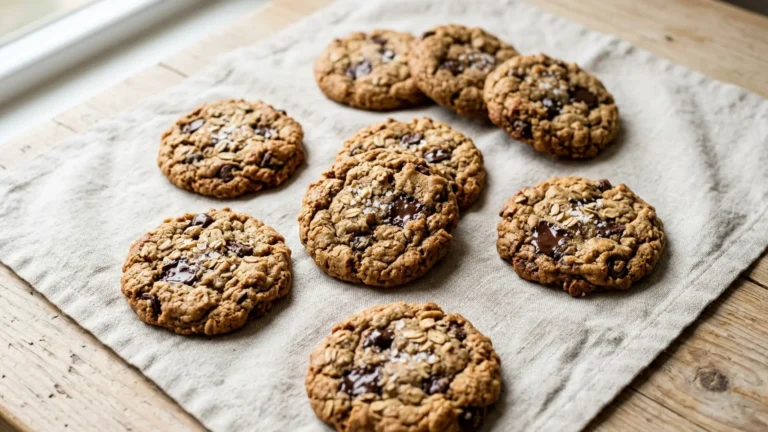
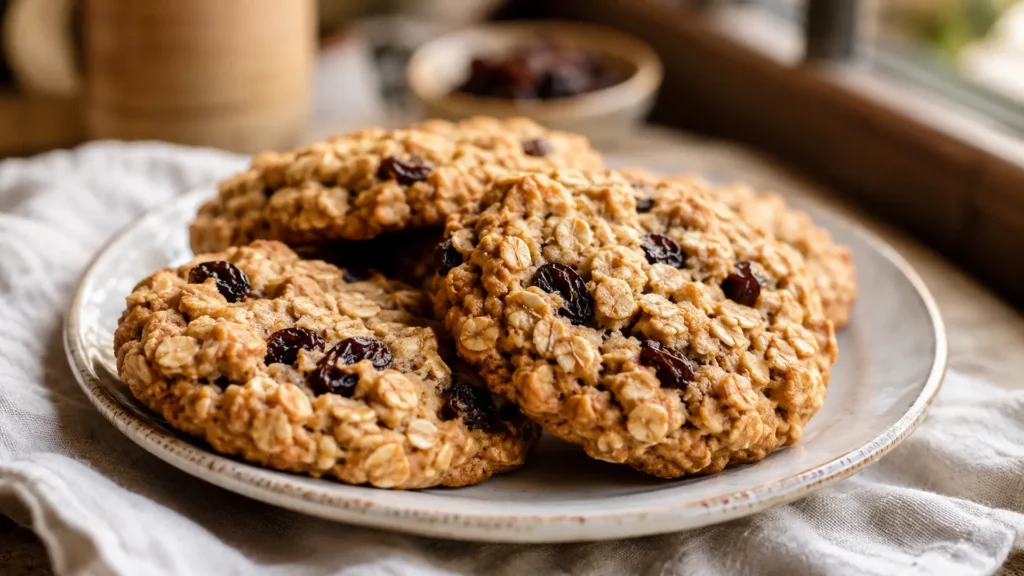
Vegan oatmeal cookies are the kind of bake that should be reliable and somehow trips people up more than almost any other cookie. The oats give you texture for free, the dough is forgiving, and yet batches often come out dry, crumbly, or flat and sad. The fix is almost always in how you treat the oats and how you replace the egg and butter, not in some secret ingredient. This guide goes deep on the method so you understand why oatmeal cookies behave the way they do, which oats to use, how to keep them moist without dairy, and how to riff on the base into raisin, chocolate chunk, or spiced versions without breaking the structure.
Once you learn the few rules that actually matter, you can throw this dough together from memory and have it work every time.
Why Oats Make Cookies Behave Differently
Oats are not just filler in an oatmeal cookie. They change the whole physics of the dough. Oats absorb a lot of liquid, far more than flour by weight, and they keep absorbing it as the dough rests and bakes. That is why an oatmeal cookie holds its shape better than a plain drop cookie and why it can turn dry if you are not careful with moisture. The oats also bring chew through their starches and a gentle, toasty flavor that gets stronger when you toast them first.
Because oats soak up liquid, oatmeal cookie dough loves a rest. Letting the dough sit for thirty minutes to an hour before baking gives the oats time to drink in moisture evenly, which means a cookie that bakes up tender in the middle instead of crunchy on the outside and raw in the center. This rest matters more in vegan baking, because your egg replacer is often also a moisture source that needs time to distribute. For a wider look at how plant-based binders work across recipes, this vegan egg substitute guide covers the swaps used here.
Choosing the Right Oats
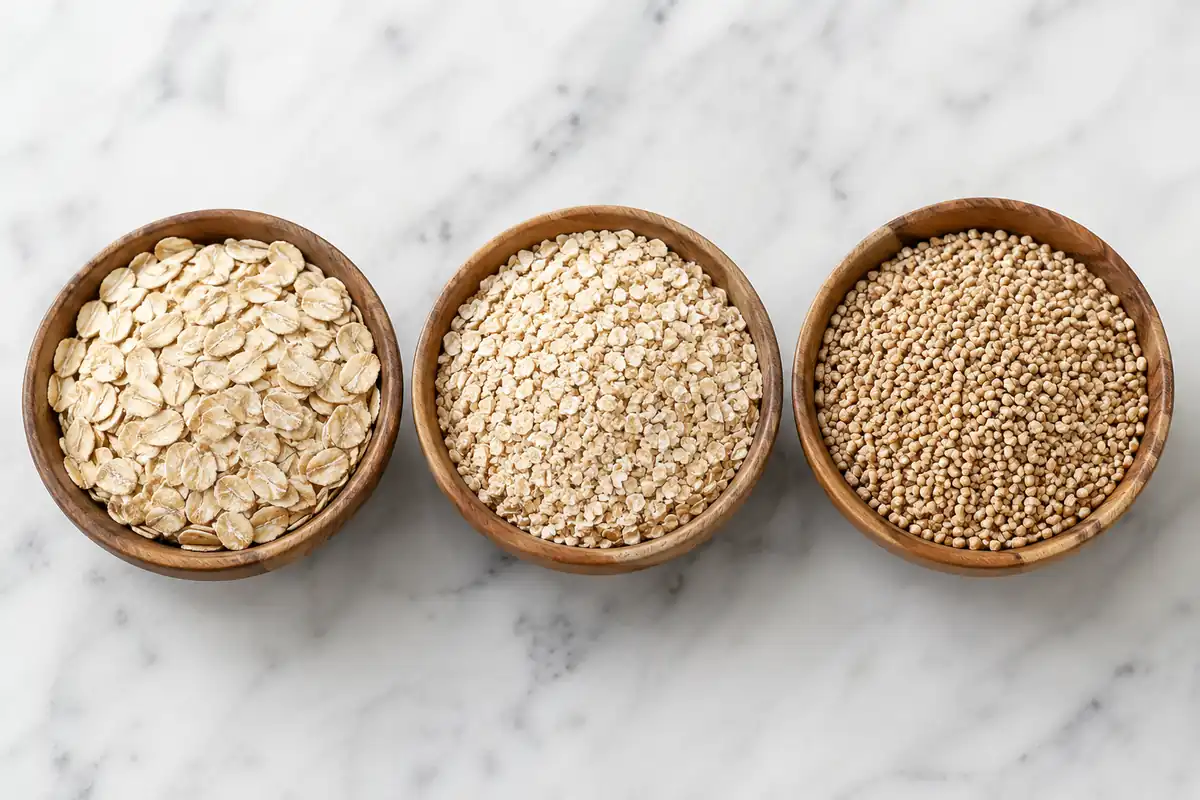
Not all oats behave the same, and the type you grab off the shelf changes the cookie more than most people expect. Here is how the common oats perform.
| Oat type | Texture in cookie | Notes |
|---|---|---|
| Old-fashioned rolled oats | Classic chew, defined oat flakes | The default and best all-rounder |
| Quick oats | Softer, more uniform, less chew | Good for a smoother cookie |
| Steel-cut oats | Very firm, gritty if not pre-cooked | Not recommended raw |
| Instant oats | Mushy, too much absorption | Avoid for cookies |
Old-fashioned rolled oats are the standard choice. They give you that visible flake and the chew people expect from an oatmeal cookie. Quick oats work in a pinch and make a softer, more cohesive cookie, but they lose the texture that makes these special. A useful trick is using mostly rolled oats with a small handful of quick oats or oat flour mixed in, which binds the dough a touch tighter while keeping the chew. One more note for celiac or gluten-sensitive bakers: oats are naturally gluten-free but are very often cross-contaminated with wheat during processing, so buy certified gluten-free oats if that matters to you. The science of oat cross-contact is laid out well by the nutrition team at this overview of oats.
Replacing the Egg and Butter
An oatmeal cookie leans on its egg for binding more than a plain cookie does, because all those oats need something to hold them together. The good news is that oatmeal cookies are the most forgiving cookie for vegan swaps, since the oats themselves add bulk and structure. My favorite egg replacer here is a flax egg, because its nutty flavor and gel-like body suit the rustic character of the cookie perfectly. Mix one tablespoon of ground flax with three tablespoons of water and let it sit for ten minutes until it thickens before adding it.
For the fat, firm vegan butter sticks give the cleanest result. Avoid soft tub spreads, which carry too much water and make the dough spread into thin, greasy cookies. If you want a slightly denser, oat-forward cookie, you can swap part of the butter for a nut butter like almond or peanut, which adds richness and helps bind. Coconut oil works too but firms up hard when cold, so the dough can be stiff to scoop. Across all these choices, the principle is the same one covered in the vegan gluten free desserts piece: match the function, not just the label.
The Moisture Problem and How to Beat It
Dry oatmeal cookies are the number one complaint, and it comes down to the oats winning the fight for moisture. Oats are thirsty, and if your recipe does not account for that, the cookie comes out sandy and crumbling. There are a few reliable ways to keep them moist. Brown sugar is the first, because the molasses in it holds water and keeps the crumb soft. Mostly brown sugar works best in oatmeal cookies for exactly this reason.
The second is adding a moisture-rich mix-in. Raisins are traditional for a reason: they plump in the oven and release moisture into the surrounding crumb. Other dried fruit, a spoon of applesauce, or even a mashed banana works the same way, though banana brings its own flavor. The third is simply not overbaking. Oatmeal cookies set up firmer than they look, and they keep cooking on the hot tray after you pull them. Take them out when the edges are golden and the centers still look soft, then let them finish on the sheet for five minutes. For more ways to add moisture and flavor through mix-ins, the dessert crowd over at this air fryer desserts collection has clever ideas worth borrowing.
Building Flavor With Toasting and Spice
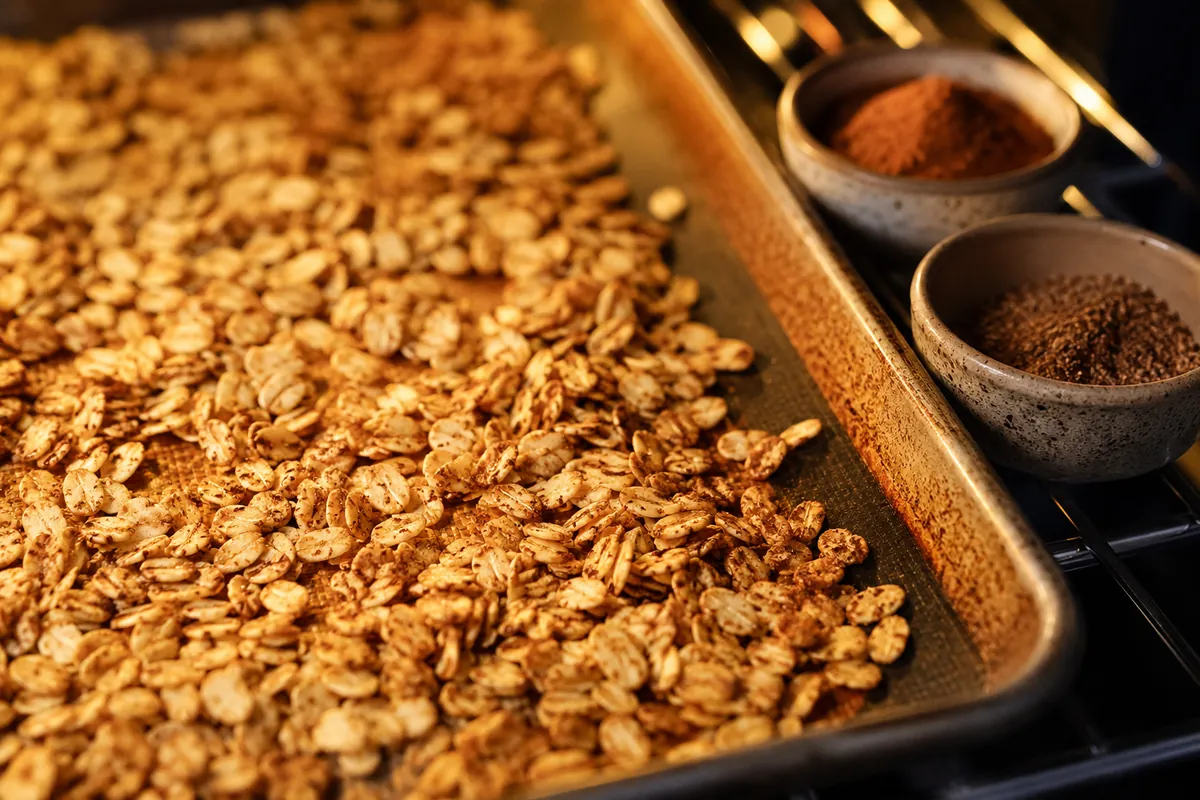
A flat-tasting oatmeal cookie is a missed opportunity, because oats are a blank canvas that rewards a little effort. The single best upgrade is toasting your oats before they go in. Spread them on a dry tray and bake them for about eight minutes until they smell nutty and turn a shade darker. This deepens the flavor through the same browning chemistry that makes toasted bread taste better than plain. You can read the underlying reaction, the Maillard reaction, in this clear explainer on browning, and it applies to oats, sugar, and nuts alike.
Spice is the other lever. Cinnamon is the classic, but a pinch of nutmeg, a little ground ginger, or a scrape of cardamom turns an ordinary cookie into something memorable. Salt matters here as much as in any sweet bake; without it the cookie tastes muted. A teaspoon of molasses or a splash of maple syrup in the dough also adds a caramel undertone that plays well with the oats. Vanilla rounds everything out. These small additions cost nothing and separate a forgettable cookie from one people remember.
| Add-in | Amount per dozen | Effect |
|---|---|---|
| Cinnamon | 1 to 1.5 tsp | Warm, classic spice |
| Raisins | 3/4 cup | Moisture and chew |
| Chopped walnuts | 1/2 cup | Crunch and richness |
| Dark chocolate chunks | 3/4 cup | Sweet contrast |
| Molasses | 1 tsp | Caramel depth, moisture |
The Mixing Method That Keeps Oats Intact
How you mix oatmeal cookie dough matters more than with a plain cookie, because you want the oats to stay whole and distinct, not get crushed into mush. Start by creaming your firm vegan butter with the sugars for a couple of minutes until the mixture lightens. This step traps a little air and dissolves the sugar slightly, which helps texture. Then beat in your flax egg and vanilla until combined. Only after the wet base is ready do you add the dry ingredients.
Add the flour, leavening, salt, and spices first and mix just until they disappear. Then fold in the oats and any mix-ins by hand with a spatula, not the mixer. Folding by hand keeps the oat flakes whole and stops you from overworking the dough, which would develop gluten in the flour and turn the cookies tough and bready. The dough should look thick and a little shaggy with visible oats throughout. If it looks like a smooth batter, you have either overmixed or added too much liquid.
This is also the moment to let the dough rest. Cover it and leave it for at least thirty minutes, or refrigerate it for a few hours. The rest does two things: it lets the oats absorb moisture so they soften and bind, and it firms the fat so the cookies hold their shape in the oven. Skipping the rest is the single most common reason oatmeal cookies come out either flat and greasy or dry and sandy. The oats simply need time to drink, and giving them that time fixes a lot of problems before they start.
Leavening and the Thick-Versus-Thin Question
Oatmeal cookies can go thick and cakey or thin and chewy, and the leavening plus the fat temperature control which way they fall. Baking soda promotes spread and browning, so a recipe heavy on soda gives flatter, chewier cookies with crisp edges. Baking powder gives lift and a softer, more cake-like crumb. Most oatmeal cookies use mostly baking soda because the chewy, spread style is what people want from this cookie, but a small amount of baking powder rounds out the texture.
The temperature of your dough and fat is the other big lever. Cold dough spreads less and bakes thicker, while room-temperature dough spreads more and bakes thinner. If you like a thick, bakery-style oatmeal cookie, chill the dough well and bake it cold. If you like a thinner, lacier cookie, let the dough warm up a bit before baking. Coconut oil makes especially thick cookies because it stays solid until it hits oven heat, then sets fast. Knowing these levers means you can dial the same dough toward whatever texture you are craving that day without rewriting the recipe.
Variations That Hold Together
The base oatmeal cookie is a platform, and once you understand the moisture balance you can riff endlessly. For oatmeal raisin, soak the raisins in warm water for ten minutes and pat them dry so they bake up plump instead of leathery. For oatmeal chocolate chunk, chop a dairy-free dark bar rather than using chips, so you get melty pools. For a spiced holiday version, lean into ginger and cinnamon and add a little orange zest. Each of these works because oats give the dough enough structure to carry heavy mix-ins without falling apart.
If you want a chewier cookie, push the brown sugar higher and pull the dough from the oven a touch early. If you want a crisper one, add a little white sugar and bake a minute or two longer. For a thicker cookie that does not spread, chill the dough hard and add a spoonful of oat flour. The dough is sturdy enough that small adjustments shift the result without breaking it, which is exactly why oatmeal cookies suit nervous beginners. If you want to keep baking after these, the vegan dessert recipes hub here has plenty more in the same forgiving spirit, and the dedicated oatmeal cookie collection elsewhere in the network is good for cross-pollinating ideas.
Troubleshooting a Batch That Went Wrong
Even a forgiving cookie can misbehave, so here is how to read the results and fix the next round. If your cookies came out flat and greasy, the fat was too warm or you used a soft tub spread instead of firm sticks. Chill the dough longer and switch to firm vegan butter, and add a couple of tablespoons of oat flour to tighten the structure. Flat cookies can also mean the tray was hot when the dough went on, so always start with a cool sheet.
If the cookies came out dry and crumbly, the oats drank up too much of the moisture. Push the recipe toward more brown sugar, add a moisture-rich mix-in like soaked raisins or a spoon of applesauce, and pull the cookies from the oven a minute earlier. Remember that oatmeal cookies firm up a lot as they cool, so a cookie that looks slightly underdone in the center is usually exactly right. Letting them finish on the hot tray for five minutes does the last bit of cooking gently.
If the cookies are tough or bready instead of tender, you overmixed the dough after adding the flour, which built up gluten. Next time, mix the dry ingredients in just until they disappear and fold the oats by hand. If the cookies spread into one big sheet, you crowded the tray; leave two inches between dough balls. And if the flavor falls flat, you are almost certainly short on salt, since salt is what makes the brown sugar and spices sing. Most oatmeal cookie failures trace back to one of these handful of causes, and once you spot the pattern the fix is quick.
| Problem | Likely cause | Fix |
|---|---|---|
| Flat and greasy | Warm fat or soft spread | Chill dough, use firm sticks |
| Dry and crumbly | Oats absorbed too much | More brown sugar, bake less |
| Tough and bready | Overmixed flour | Mix less, fold oats by hand |
| Flat tasting | Not enough salt | Add a pinch more salt |
Storage, Texture, and Make-Ahead
Oatmeal cookies are champions of the cookie jar because the oats hold moisture and keep them soft for days. Stored in an airtight container at room temperature, they stay good for about five days, longer than most cookies. To keep them from drying, drop a slice of bread in the container; the cookies pull moisture from it and stay tender. If they do firm up, ten seconds in the microwave brings back the soft center.
The dough freezes beautifully. Scoop it into balls, freeze them solid on a tray, then bag them for up to three months and bake from frozen with an extra minute or two. Because the oats benefit from a rest, frozen dough often bakes up even better than fresh, with the moisture fully distributed. This make-ahead trick means you can have warm oatmeal cookies on demand without committing to a full batch at once. For breakfast-leaning oat ideas that use the same hearty base, the vegan breakfast recipes on this site carry the theme forward.
Frequently Asked Questions
Why are my vegan oatmeal cookies dry and crumbly?
Oats absorb a lot of liquid, so dry cookies usually mean the dough did not have enough moisture or was overbaked. Use mostly brown sugar to hold water, add a moisture-rich mix-in like raisins, let the dough rest thirty minutes before baking, and pull the cookies while the centers still look soft. They firm up on the hot tray after baking.
What kind of oats are best for oatmeal cookies?
Old-fashioned rolled oats are the best choice because they give defined flakes and classic chew. Quick oats make a softer, more uniform cookie and work in a pinch. Avoid instant oats, which turn mushy, and raw steel-cut oats, which stay too hard. For gluten sensitivity, buy certified gluten-free oats since regular oats are often cross-contaminated.
Can I make vegan oatmeal cookies without a flax egg?
Yes. Oatmeal cookies are forgiving because the oats add structure. You can use a commercial egg replacer powder, a quarter cup of applesauce, or a mashed banana in place of the flax egg. Applesauce and banana add moisture, so reduce other liquids slightly. A commercial replacer gives the most neutral flavor if you want the oats and spices to lead.
How do I keep oatmeal cookies soft for days?
Store them in an airtight container with a slice of bread, which gives up its moisture to the cookies and keeps them tender. Using mostly brown sugar in the dough also helps, since its molasses holds water. They stay soft about five days at room temperature, and a quick ten seconds in the microwave revives any that firm up.