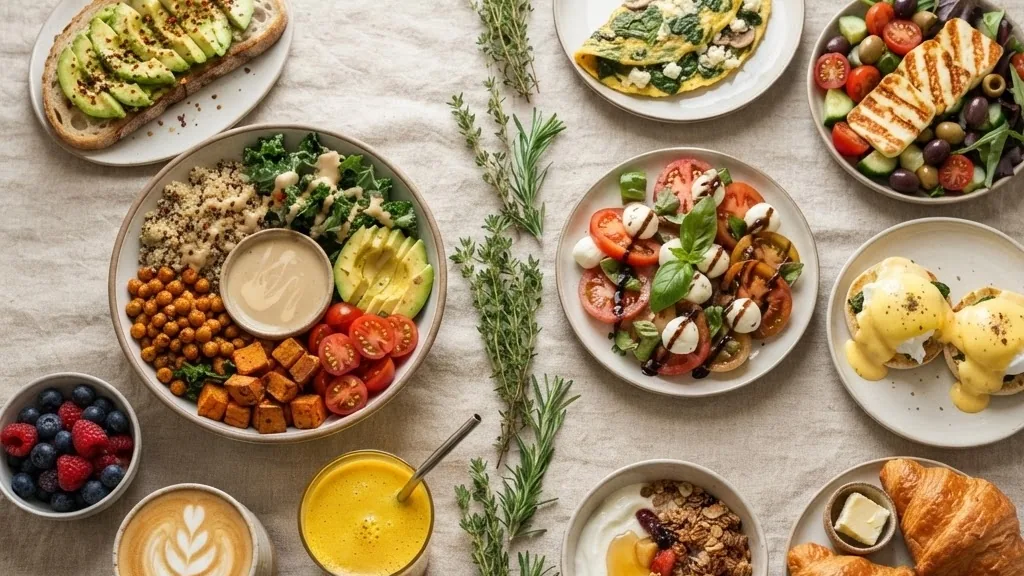
The difference between vegan and vegetarian is smaller than most people think and bigger than a single word can carry. In one line: a vegetarian skips the meat but may still eat eggs, dairy, and honey, while a vegan skips every animal product, full stop. That is the dietary core of it. The part that surprises people is how far the vegan version reaches once you follow it past the dinner plate, and that is where most of this guide focuses.
The definitions and nutrition figures below come from named nutrition authorities and the standard definition of veganism, not from memory.
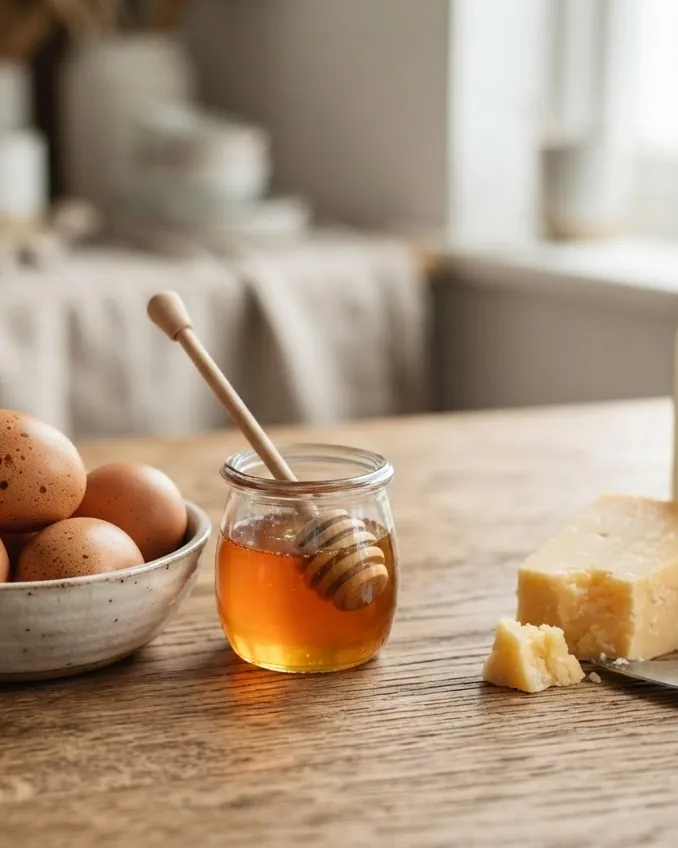
Quick answer: A vegetarian diet excludes meat, poultry, fish, and seafood, but can include animal by-products like eggs, dairy, and honey. A vegan diet excludes all of those plus the by-products, so no eggs, no dairy, no honey, nothing that came from an animal. Veganism also usually extends beyond food to clothing and cosmetics, while vegetarianism is almost entirely about what is on the plate. If you remember one thing, remember the three-item test: eggs, dairy, honey. Vegetarians may say yes to those, vegans always say no.
The one-line difference: eggs, dairy, honey
Almost every argument about these two labels dissolves once you focus on three ingredients. Eggs, dairy, and honey are the by-products that a typical vegetarian keeps and a vegan removes. Neither diet includes meat, poultry, fish, or shellfish, so that part is shared. The entire dividing line runs through those three animal by-products.
This is why a cheese omelet is vegetarian but not vegan, why a drizzle of honey turns a vegetarian tea into something a vegan skips, and why a butter croissant sits on one side of the line and a plant-based one sits on the other. Put in one sentence: same no-meat foundation, but vegetarians keep the eggs, milk, and honey that vegans give up.
It helps to picture veganism as the strictest branch of vegetarianism rather than a separate tree. Every vegan is technically eating a vegetarian diet, plus a stricter set of rules on top. Not every vegetarian is vegan. If the dairy side of this is what you are really untangling, the companion piece on whether vegan is the same as dairy free walks through that overlap in detail.
What a vegetarian actually eats
A vegetarian eats a plant-forward diet built on vegetables, fruit, grains, legumes, nuts, and seeds, and then, depending on the person, adds back some animal by-products. The most common Western vegetarian eats both eggs and dairy freely, which is why cheese, yogurt, butter, milk, and eggs are staples in a lot of vegetarian cooking. Many vegetarians also eat honey without a second thought.
What stays off the plate is animal flesh in every form: beef, pork, chicken, turkey, lamb, fish, and shellfish. That is the non-negotiable core of vegetarianism. Some people who call themselves vegetarian do eat fish, but strictly speaking that is a pescatarian, an adjacent pattern rather than true vegetarianism.
Because eggs and dairy are still on the table, a vegetarian diet is often easier to keep nutritionally balanced without much planning. Eggs bring complete protein and vitamin B12, dairy brings calcium and more B12, and that safety net quietly covers a couple of nutrients that vegans have to source more deliberately. It is one of the practical reasons some people start vegetarian before deciding whether to go further.
What a vegan actually eats
A vegan eats an entirely plant-based diet: vegetables, fruit, whole grains, beans and lentils, soy foods like tofu and tempeh, nuts, seeds, and the growing shelf of plant milks, cheeses, and meat alternatives. What is gone is every animal input, including the by-products vegetarians keep. No eggs, no dairy, no honey, and by extension no whey, casein, gelatin, or carmine either.
Removing animal products entirely has one automatic effect worth naming: a vegan diet contains 0 grams of dietary cholesterol, because cholesterol is only found in animal foods. It also means a vegan has to be a little more intentional about a short list of nutrients, covered below. The trade-off is real in both directions, and pretending otherwise does not help anyone eat well.
The honey question is the one that catches new vegans off guard, because it feels different from meat or milk. It still comes from an animal, the honeybee, so it sits outside the vegan line. The full reasoning, and the plant-based sweeteners to swap in, are laid out in the guide to whether honey is vegan.
The vegetarian subtypes worth knowing
“Vegetarian” is really an umbrella over a few more precise patterns, and knowing the names makes restaurant menus and family dinners a lot easier to navigate. Here are the three true subtypes, plus two adjacent patterns people often lump in.
- Lacto-ovo vegetarian: eats both dairy and eggs. This is the most common type in the West, and it is usually what people mean when they just say “vegetarian.”
- Lacto-vegetarian: eats dairy but not eggs. Common in parts of the world where dairy is central but eggs are avoided.
- Ovo-vegetarian: eats eggs but not dairy. Useful to know if you are lactose intolerant but not avoiding all animal foods.
- Pescatarian: eats fish and seafood along with a vegetarian base. Not technically vegetarian, but frequently grouped in.
- Flexitarian: mostly plant-based with occasional meat. A stepping stone rather than a strict category.
Vegan does not need a modifier because it is already the endpoint: no animal products at all. That is why you will never see “lacto-vegan” or “ovo-vegan.” The moment eggs or dairy are in, it stops being vegan and becomes one of the vegetarian subtypes above.
Beyond food: why vegan is a lifestyle, not just a diet
Here is the part that genuinely separates the two words, and the part food articles often skip. Vegetarianism is a diet. Veganism, as The Vegan Society defines it, is a way of living that seeks to exclude, as far as is practicable, all forms of animal exploitation and cruelty, whether for food, clothing, or any other purpose. That definition reaches well past the kitchen.
In practice that means many vegans also avoid leather, wool, silk, and down in their clothing, choose cosmetics and household products made without animal testing, and skip other goods with animal-derived components. A vegetarian, by contrast, is usually making a food choice and may wear leather or use products that involve animal testing without any contradiction. Neither approach is wrong; they are answering different questions. Vegetarianism asks “what do I eat,” and veganism asks “how do I want to interact with animals across my whole life.”
This is also why motivations tend to differ. Vegetarians often cite health, religion, or environmental reasons. Vegans usually add animal ethics as a central driver, which is what pushes the choice past food and into the rest of daily life. Understanding that makes the two groups a lot easier to talk to, because you are really talking about two different scopes, not two levels of willpower.
Nutrition: where the two diets diverge
Both diets can be genuinely healthy, and both can be junk if built on fries and white bread. The differences that matter are in a handful of specific nutrients, and they come straight from the eggs-and-dairy divide.
Vitamin B12 is the big one. It is not reliably found in plant foods, so vegans must get it from fortified foods or a supplement, with an adult RDA around 2.4 micrograms per day. Lacto-ovo vegetarians get some B12 from dairy and eggs, so their risk is lower, though not zero. This single nutrient is the clearest nutritional line between the two diets.
Protein is easier than the internet suggests for both groups. The adult RDA is roughly 0.8 grams per kilogram of body weight, which works out to about 56 grams a day for a 70 kg adult, and legumes, soy, grains, nuts, and seeds cover it comfortably; vegetarians can also lean on eggs and dairy. Iron from plants is non-heme and absorbed less efficiently than the heme iron in meat, so both diets benefit from pairing iron-rich foods with a vitamin C source. Calcium at about 1000 mg per day is easy for vegetarians through dairy and takes a little planning for vegans through fortified plant milks, calcium-set tofu, and leafy greens. Omega-3s come from flax, chia, walnuts, or an algae-based supplement on a vegan diet.
The Harvard T.H. Chan School of Public Health notes that well-planned vegetarian and vegan diets are both associated with lower LDL cholesterol, lower blood pressure, and lower type 2 diabetes risk on average, so the health upside is real when either is done thoughtfully.
Which one is healthier?
There is no clean winner, and anyone who gives you one is selling something. Both a vegan and a vegetarian diet can be excellent, and both can be poorly planned. A vegan diet removes dietary cholesterol entirely and tends to be higher in fiber, but it asks more of you on B12, vitamin D, calcium, and omega-3s. A vegetarian diet is generally easier to keep balanced because eggs and dairy quietly cover several of those nutrients, but it can also carry more saturated fat if it leans hard on cheese.
My honest take after cooking both ways: the healthiest version of either is the one built on whole plant foods rather than processed stand-ins. A vegetarian living on cheese pizza is not ahead of a vegan living on lentils and greens, and vice versa. Pick the scope that matches your values and your willingness to plan a few nutrients, and the health follows from how you fill the plate, not from the label on it.
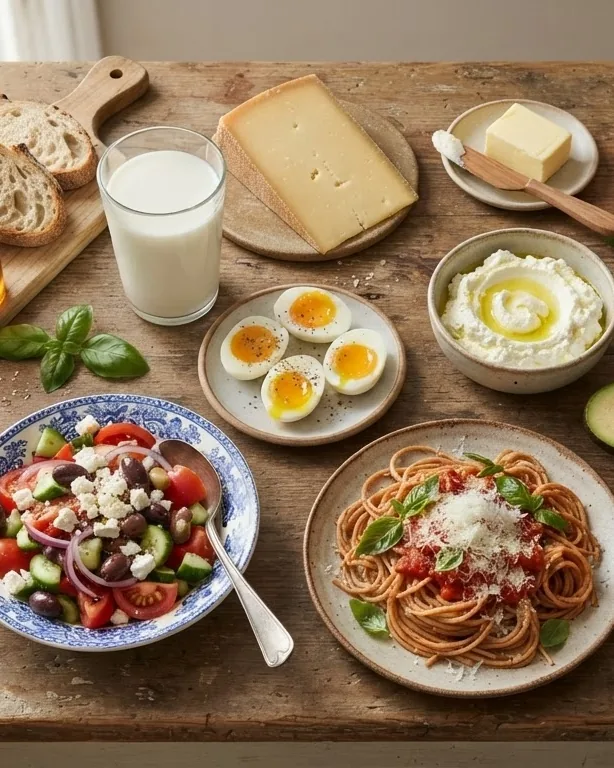
How to choose, and how to move between them
Plenty of people arrive at veganism through vegetarianism, and that path is a feature, not a failure. Going vegetarian first lets you rebuild your everyday cooking around plants while you still have eggs and dairy as a cushion. Then, when you are ready, you swap those out one at a time: plant milk for dairy, an egg substitute in baking, a plant-based sweetener for honey.
If you are experimenting in the kitchen, the by-products are the whole project, so the vegan egg substitute guide keeps a running list of swaps, because eggs are usually the last and trickiest thing people replace. Whichever label you land on, the win is the same: more plants, less guesswork, and food you actually want to eat.
A day of eating on each diet, side by side
Definitions are easier to feel when you can picture a plate, so here is a normal day on each. A lacto-ovo vegetarian might have scrambled eggs with toast and butter for breakfast, a grilled cheese and tomato soup for lunch, and a vegetable curry with yogurt for dinner. Nothing there involves meat, but eggs, cheese, butter, and yogurt all show up, and every one of them is an animal by-product.
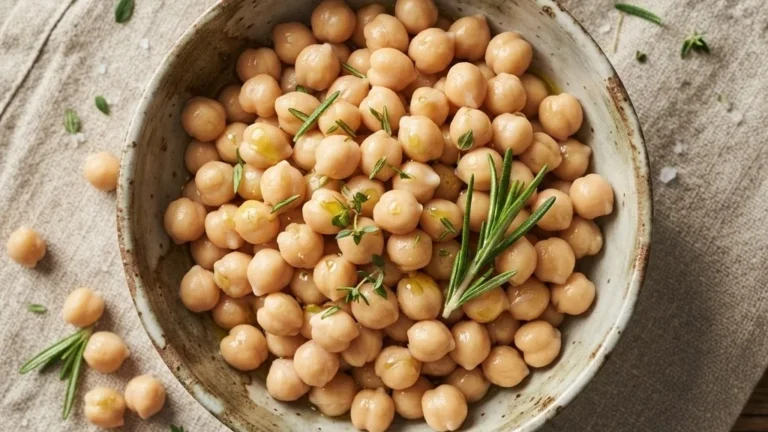
A vegan doing the same day swaps each of those out. Breakfast becomes tofu scramble on toast with olive oil, or oats with peanut butter and banana. Lunch is a grilled sandwich with plant-based cheese, or a chickpea salad wrap. Dinner is the same vegetable curry, but finished with coconut milk instead of dairy yogurt. Same flavors, same satisfaction, just the by-products replaced. When you lay the two days next to each other, the difference stops being abstract: it is eggs, cheese, butter, yogurt, and honey on one side, and their plant counterparts on the other.
Seeing it this way is also what convinces a lot of people the vegan version is doable. The structure of the meals barely changes; only a handful of ingredients get swapped. That is the practical reality behind the definitions, and it is why so many people who assume vegan eating is restrictive discover it is mostly a matter of substitutions they already had in the cupboard.
The ethics and environment behind the two choices
Because vegetarianism is a diet and veganism is a broader stance, the reasons people give for each tend to differ, and understanding that makes the labels click. Vegetarians often cite health first, along with religious tradition or a general discomfort with eating animals. The choice is real, but it stays mostly at the table.
Vegans usually put animal ethics at the center, and that is the engine that pushes the choice past food and into clothing, cosmetics, and daily purchases. Many also weigh the environmental footprint of animal agriculture, since animal products, especially from ruminants, tend to carry a heavier land, water, and emissions cost than plant foods. A vegetarian who keeps dairy is still tied to that system through milk and cheese production, which is one reason some people move from vegetarian to vegan once the ethics or the environment become the primary concern rather than health alone. None of this is about ranking people. It is about noticing that the two labels often sit on top of two different motivations, and the motivation usually predicts how far past the plate the choice will travel.
Common myths about both diets
A few misconceptions come up so often that they are worth clearing directly, because they muddy the difference between the two diets.
- “Vegetarians do not eat animals.” They do not eat animal flesh, but most eat animal by-products like eggs and dairy every day. Only vegans remove those too.
- “Vegans cannot get enough protein.” Both diets meet the roughly 0.8 grams per kilogram protein target easily with beans, soy, grains, nuts, and seeds. Protein is rarely the real challenge; vitamin B12 is the nutrient that actually needs attention on a vegan diet.
- “Vegetarian automatically means healthy.” A diet of cheese, white bread, and fried food is vegetarian and not especially healthy. Quality of the plant foods matters more than the label.
- “Honey is fine for vegans.” It is not, because it comes from bees. It is, however, fine for most vegetarians, which is one of the cleanest examples of the dividing line.
- “You have to be all or nothing.” Flexitarian and vegetarian steps are legitimate on their own and are also common on-ramps toward vegan eating. Progress counts.
Clear those five up and the difference between the two words gets much easier to explain to family, servers, and yourself. Most confusion is really one of these myths in disguise.
Cost, convenience, and everyday life
Beyond nutrition and ethics, the two diets differ in the small logistics of daily life, and those details are often what decide whether someone sticks with a change. Vegetarian eating is usually the easier one to slot into an existing routine, because eggs and dairy are everywhere and most restaurants have a cheese-based vegetarian option without any special request. You can travel, eat at a friend’s house, or grab a quick lunch with less planning.
Vegan eating asks for a little more forethought, especially at first, because you are removing ingredients that hide in a lot of prepared food: butter in the pastry, whey in the chips, honey in the granola, milk powder in the bread. The upside is that the core of a vegan diet, beans, grains, vegetables, and fruit, is among the cheapest food you can buy. A pot of lentils or chickpeas and a bag of rice feeds you for a few dollars, which is why the idea that plant-based eating is expensive is usually about the pricey packaged meat and cheese alternatives, not the actual staples. Both diets can be done on a tight budget, and both can get expensive if you lean on convenience products.
My honest experience is that the first few weeks of either change take the most attention, and then it becomes automatic, because you build a short list of go-to meals and stop thinking about it. The label matters far less day to day than the handful of recipes you actually rotate through, which is the real lesson hiding inside the whole vegan-versus-vegetarian question.
Frequently asked questions
What is the main difference between vegan and vegetarian?
The main difference is animal by-products. Vegetarians skip meat, poultry, and fish but may still eat eggs, dairy, and honey. Vegans skip all of those plus every by-product, so no eggs, dairy, or honey at all. Veganism also usually extends beyond food to clothing and cosmetics.
Can vegetarians eat eggs and cheese?
Most can. A lacto-ovo vegetarian, the most common type, eats both eggs and dairy. Lacto-vegetarians eat dairy but not eggs, and ovo-vegetarians eat eggs but not dairy. Vegans eat none of these, since they all come from animals.
Is vegan just a stricter vegetarian?
In dietary terms, essentially yes. A vegan diet is the strictest form of vegetarian eating, removing eggs, dairy, and honey on top of meat and fish. But veganism goes further than diet, avoiding animal products in clothing and other goods, so it is also a broader lifestyle.
Which is healthier, vegan or vegetarian?
Neither is automatically healthier. Both can be very healthy when built on whole plant foods, and both can be unbalanced. Vegans need to plan vitamin B12, calcium, and omega-3s more carefully, while vegetarians get some of those from eggs and dairy. The quality of the food matters more than the label.
Do vegetarians and vegans need supplements?
Vegans should take or eat fortified vitamin B12, since plants do not reliably provide it, at about 2.4 micrograms per day for adults. Vegetarians get some B12 from eggs and dairy but may still fall short. Both diets benefit from attention to iron, calcium, and omega-3s.
Why do vegans avoid honey but many vegetarians do not?
Honey is made by bees, so it is an animal product and falls outside the vegan definition. Vegetarians are focused on avoiding animal flesh, not by-products, so most eat honey freely. It is one of the clearest small examples of where the two diets part ways.nnSources: Healthline, Vegan vs Vegetarian (definitions and subtypes); The Vegan Society (definition of veganism as a lifestyle beyond diet); Harvard T.H. Chan School of Public Health, The Nutrition Source (vitamin B12, protein, calcium, and health outcomes of plant-based diets).