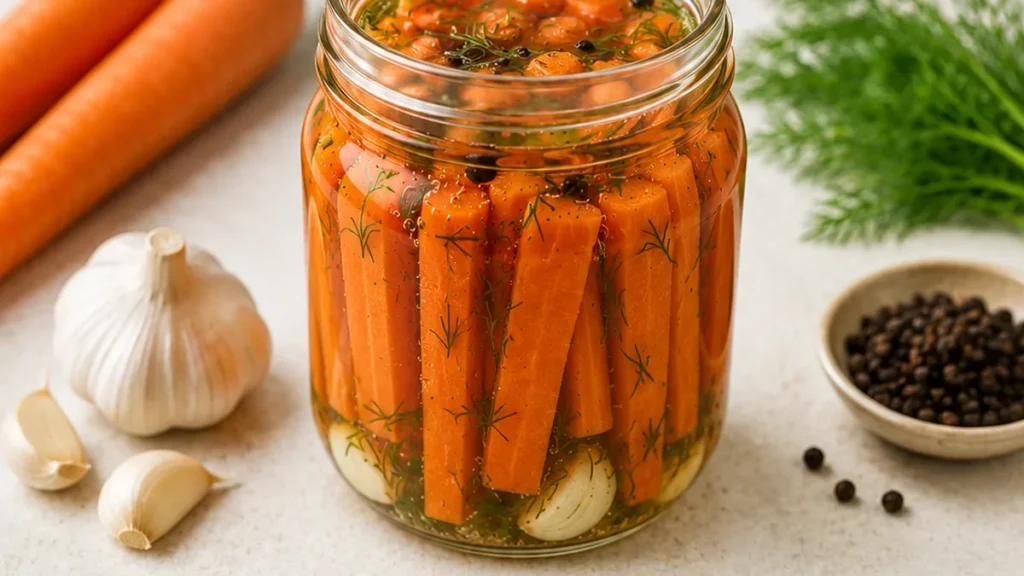
Unlock the bright world of fermented foods with this simple Dilly Carrots recipe. Perfect for beginners, this gut-friendly snack offers a delightful tangy crunch that improves any meal. These Dilly Carrots are more than just a side dish; they are a powerhouse of probiotics, supporting your digestive health with every bite. Learn how easy it is to bring this healthy staple to your table.
Key takeaways
- Lacto-fermentation transforms simple carrots into a gut-friendly, crunchy snack.
- Proper salt brine and submersion are critical for successful fermentation and preventing spoilage.
- Monitor fermentation closely; look for bubbling and avoid mold for optimal results.
- Experiment with fresh herbs and spices for varied flavor profiles.
Dill Carrots: Gut-Loving Crunch!
Ingredients
- 1 lb carrots, peeled and cut into sticks of similar size (or enough to tightly pack the jar)
- 1 tbsp unrefined, non-iodized fine sea salt
- ½ tsp dried dill or 1 sprig fresh dill
- 3 cloves garlic, peeled and smashed
- Filtered water
- 1 teaspoon whole black peppercorns
Instructions
- Combine the smashed garlic cloves, dried dill, and 1 Tbsp. fine sea salt in the bottom of a clean quart-size mason jar.
- Tightly pack the peeled carrot sticks vertically into the jar, ensuring they are snug to prevent floating.
- Fill the jar with filtered water, leaving about one inch of headspace at the top.
- Loosen the lid slightly and place the jar at room temperature (around 70°F/21°C) for 3-5 days, checking daily for desired crunch and sourness.
- Once fermented to your liking, tighten the lid and transfer the jar to the refrigerator for storage up to 6 months.
Notes
– Taste daily after day 3 to find your perfect level of tanginess.
– Store in the fridge; they last for months! Nutrition information is an estimate, calculated automatically. Values vary with brands, substitutions and portion sizes.
The technique that makes it
The magic behind these dilly carrots lies in lacto-fermentation. This ancient preservation method uses naturally occurring lactic acid bacteria (LAB) present on the surface of vegetables to convert sugars into lactic acid. This acid acts as a preservative, inhibiting the growth of spoilage organisms and creating a tangy, complex flavor profile. For this recipe, the key is creating the right brine. The salt draws water out of the carrots, creating an environment where LAB can thrive. It also helps to draw out excess moisture from the vegetables, preventing a mushy texture. The peppercorns and garlic add aromatic complexity and further flavor development during fermentation. Ensuring the carrots are fully submerged in the brine is crucial to prevent mold growth. The fermentation process typically takes 5-10 days at room temperature, during which you’ll observe bubbles forming – a sign that fermentation is active. The resulting dilly carrots will have a delightful crunch, a pleasant tang, and a boost of beneficial probiotics.
Troubleshooting
- Problem: Carrots are mushy.
Fix: This often happens if the carrots are over-fermented or if the salt concentration was too low, not drawing enough water out. Ensure you use the correct salt ratio and monitor fermentation time closely. Cut carrots into uniform sizes for even fermentation. - Problem: Mold on the surface.
Fix: Mold indicates that the carrots were not fully submerged or that contamination occurred. Discard the batch if mold is present. Ensure all vegetable matter is below the brine level using a fermentation weight or a clean plastic bag filled with brine. - Problem: No bubbling or activity.
Fix: The brine might be too weak, the temperature too cold, or the vegetables might have been too clean (lacking sufficient natural LAB). Try a slightly stronger brine, move to a warmer spot (ideally 68-72°F or 20-22°C), or ensure you’re using unrefined salt which often contains more beneficial microbes. - Problem: Off-putting smell.
Fix: While fermentation produces distinct aromas, a truly foul or rotten smell suggests spoilage. This can be caused by insufficient salt, improper submersion, or contamination. It’s best to discard and start again, ensuring cleanliness and correct brine ratios.
Substitutions
- Dill: Fresh dill can be used instead of dried. Use about 1 tablespoon of chopped fresh dill per 1/2 teaspoon of dried dill. The flavor will be brighter and more pronounced.
- Garlic: If you don’t have fresh garlic, you can substitute with 1/4 teaspoon of garlic powder. However, fresh garlic provides a more complex and nuanced flavor to the brine.
- Peppercorns: While whole black peppercorns are ideal for slow flavor release, you can substitute with 1/4 teaspoon of coarsely ground black pepper. Be aware that ground pepper may make the brine cloudy.
- Carrots: For a variation, you can use other root vegetables like parsnips or daikon radish cut into similar stick shapes. The fermentation time and flavor profile may vary slightly.
Pro tips
- Ensure carrots are fully submerged to prevent mold.
- Taste daily after day 3 to find your perfect level of tanginess.
- Store in the fridge; they last for months!
Enjoy these zesty, gut-loving Dilly Carrots as a healthy condiment or snack. Experiment with other vegetables to discover your new favorite fermentation!
More from Vegan Air Fryer →
Frequently asked questions
How long do dilly carrots typically ferment?
Dilly carrots usually ferment for 5 to 10 days at room temperature (around 68-72°F or 20-22°C). You’ll see active bubbling during this period. Taste them periodically after day 5 to determine when they reach your desired level of tanginess and crunch.
What is the role of salt in this recipe?
The salt is essential for drawing moisture out of the carrots, creating the brine, and selecting for beneficial lactic acid bacteria. It inhibits the growth of undesirable microbes, ensuring a safe and flavorful fermentation process.
Are dilly carrots good for gut health?
Yes, dilly carrots are rich in probiotics due to the lacto-fermentation process. These beneficial bacteria can contribute to a healthy gut microbiome, aiding digestion and potentially boosting the immune system.
How should I store fermented dilly carrots?
Once fermented to your liking, transfer the dilly carrots and their brine to an airtight container or jar and store them in the refrigerator. They will continue to ferment slowly and can last for several months.