Learning how to cook tofu well is mostly about two things: getting the water out and getting the flavor in. Tofu arrives soaked in packing liquid, and that moisture is the reason so many first attempts end up pale, soft, and forgettable. Press out the water, coat the cubes in a little cornstarch, and cook them hot, and the same block turns golden, crisp at the edges, and chewy in the middle. From there, tofu will carry almost any flavor you give it, which is exactly what makes it the most useful protein in a plant-based kitchen.
This guide covers which type of tofu to buy for which job, how to press and marinate it, four reliable cooking methods with the texture each one gives you, the freezer trick that makes tofu meatier, and how to fix the usual failures. By the end, bland tofu will not be a problem you have anymore.
Know Your Tofu: Types and Best Uses
Tofu is sold by firmness, and the firmness is set by how much water has been pressed out during manufacturing. Picking the wrong type is the most common reason a recipe goes sideways, silken tofu will never crisp, and extra-firm will never blend into a silky sauce. Match the type to the job first.
| Type | Texture | Best for |
|---|---|---|
| Silken | Soft, custard-like | Blending into sauces, smoothies, desserts, dressings |
| Soft / medium | Delicate, scoopable | Soups, braises, gentle scrambles |
| Firm | Holds shape, some give | Scrambles, stir-fries, light pan-frying |
| Extra-firm | Dense, chewy | Baking, pan-frying, air-frying, grilling |
| Super-firm / high-protein | Very dense, pre-pressed | Crispy cubes with no pressing needed |
For crispy tofu, the goal most people have, buy extra-firm. If you can find super-firm or high-protein tofu, which is vacuum-packed rather than water-packed, it is already so dense that you can skip pressing entirely and go straight to cooking.
Why and How to Press Tofu

Even extra-firm tofu holds a surprising amount of water, and that water is the enemy of crispness. It steams in the pan instead of browning, makes cornstarch coatings slide off, and causes cubes to crumble. Pressing solves all of it at once by squeezing the moisture out and leaving behind a firmer, chewier block that browns properly and soaks up marinade.
Pressing without any special tool
Wrap the block in a clean kitchen towel or a few paper towels, set it on a plate, lay another plate on top, and weight it down with something heavy like a cast-iron skillet or a couple of cans. Leave it for at least thirty minutes; longer is better if you have the time. A dedicated tofu press, which screws down to apply even pressure, is worth the small cost if you cook tofu often, but it is not required. Silken and soft tofu are too fragile to press, only press firm and extra-firm.
Marinating: Getting Flavor Into the Block
Tofu is famously bland on its own, and that is its superpower, because it takes on whatever you give it. The key is sequence: press first, then marinate. A pressed block has room to absorb liquid, while an unpressed one is already full of water and just sheds the marinade. Give it at least thirty minutes, or up to overnight in the fridge for a deeper flavor.
One counterintuitive tip: go easy on oil in the marinade. Oil coats the surface and actually blocks water-based flavors like soy sauce, citrus, and vinegar from soaking in, so a leaner marinade penetrates better. Save the oil for the pan. If you cook for anyone avoiding soy or gluten, tamari, coconut aminos, or a splash of miso thinned with water all stand in for soy sauce nicely.
Four Ways to Cook Tofu
 baked-tofu-cornstarch-before-after-sheet-pan-comparison-1024×683.webp” alt=”Two parchment lined sheet pans side by side showing pale raw cornstarch coated tofu cubes on the left and deeply golden baked crispy tofu cubes on the right.” class=”wp-image-3082″/>
Each method gives a different texture. Here is what to expect, and the cornstarch trick that lifts all of them.
| Method | Time & heat | Result |
|---|---|---|
| Pan-fry | Medium-high, 8-10 min | Fast, crisp edges; the everyday method |
| Bake | 425°F, 25-30 min | Hands-off, even, chewy; great for batches |
| Air-fry | 400°F, 12-15 min | Crunchiest, almost crouton-like, little oil |
| Scramble | Medium, 5-8 min | Soft, eggy; crumble firm tofu, no pressing |
The cornstarch trick
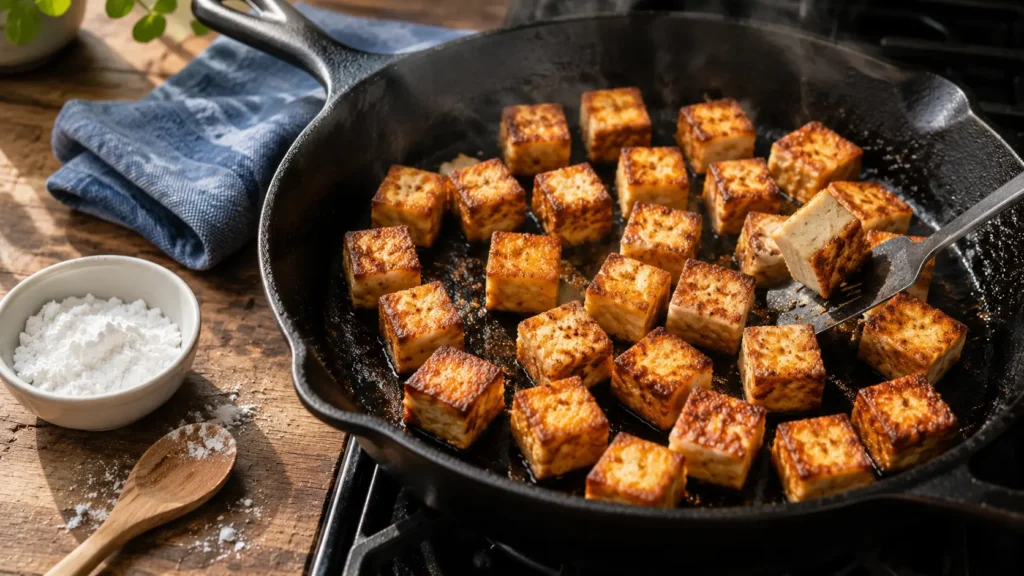
For any of the crisping methods, toss your pressed, cubed tofu in a tablespoon or two of cornstarch (or arrowroot) with a pinch of salt before it hits the heat. The starch forms a thin shell that fries up shatteringly crisp and seals the chewy interior. It is the single most reliable upgrade you can make, and it is the difference between soft beige cubes and the crackly tofu you get at a good restaurant.
Pan-frying step by step
- Cut the pressed block into one-inch cubes or slabs.
- Toss with cornstarch and salt until lightly coated.
- Heat a couple tablespoons of oil in a non-stick or well-seasoned pan over medium-high.
- Add the tofu in a single layer and leave it alone, moving it too soon tears the crust. Flip only once each side is golden, about two to three minutes per face.
- Add sauce only at the very end so the crust stays crisp.
If you love the air-fryer route for its crunch and minimal oil, the same principles apply to a lot of vegetables, and a good library of air fryer techniques transfers directly to tofu cubes.
Baking, air-frying, and scrambling
Baking is the best method for cooking a large batch with almost no babysitting. Spread the coated cubes on a parchment-lined sheet, leaving space between them, and bake at 425°F for twenty-five to thirty minutes, flipping once halfway through so every side firms up. The result is evenly chewy with a dry, sturdy exterior that holds sauce well. It is what I make on prep day when I want crispy tofu ready for bowls all week.
Air-frying gives the crunchiest result of all. Arrange the cubes in a single layer in the basket, mist them with a little oil, and air-fry at 400°F for twelve to fifteen minutes, shaking the basket once or twice. Because hot air circulates on all sides, you get an almost crouton-like crunch with barely any oil, which is why the air fryer has become many people’s default for weeknight tofu.
A scramble is the one method that skips both pressing and cornstarch. Crumble firm tofu straight into a hot, oiled pan, season with turmeric for color, black salt (kala namak) for an eggy aroma, and whatever vegetables you like, and cook until heated through and slightly golden. It is the fastest way to use tofu and the closest plant-based stand-in for scrambled eggs at breakfast.
How to Cut Tofu for Different Dishes
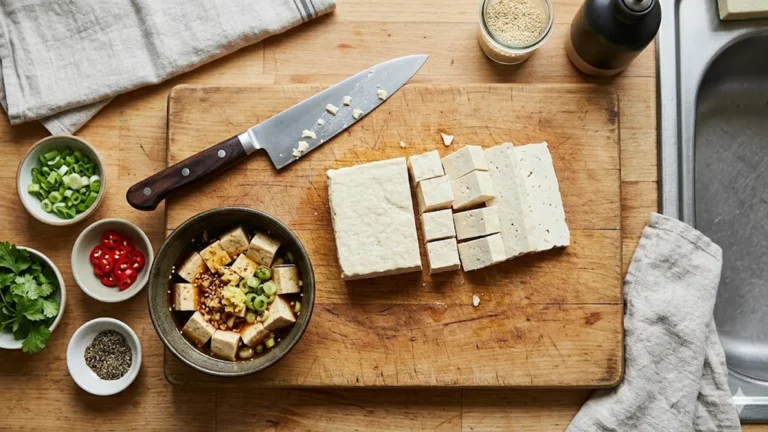
The shape you cut changes both the texture and how the tofu behaves in a dish, so it is worth a moment of thought before the knife comes out. Cubes, around three-quarters to one inch, are the all-purpose choice for bowls, stir-fries, and snacking, giving you a good ratio of crisp surface to tender center. Thin slabs or planks crisp fastest and are ideal for sandwiches and for tofu you want to glaze. Triangles, made by cutting slabs on the diagonal, look appealing in a bowl and crisp on more edges. Tearing pressed tofu into rough, irregular chunks instead of cutting it creates craggy surfaces that catch oil and turn especially crisp, a restaurant trick worth stealing. Whatever shape you choose, keep the pieces a uniform size so they cook at the same rate.
A Simple Tofu Marinade Formula
You do not need a recipe so much as a ratio you can riff on. A balanced tofu marinade is built from four parts: a salty base, a touch of sweetness, an aromatic, and acid or heat to keep it lively. Once you understand the formula, you can build a marinade from whatever is in the cupboard.
- Salty base: soy sauce, tamari, or coconut aminos, about three tablespoons.
- Sweet: maple syrup or a little sugar, one tablespoon, which also helps the tofu brown.
- Aromatic: grated garlic and ginger, or a spoon of curry paste or miso.
- Lift: rice vinegar, lime juice, or a squeeze of sriracha for heat.
Whisk those together, pour over pressed tofu, and let it sit for at least thirty minutes. Remember to keep the oil out of the marinade and save it for the pan, since a leaner marinade soaks in far better. If you want the flavor to go deeper, marinate overnight, and reserve a few spoonfuls of the mixture to brush on or toss with the tofu at the very end of cooking as a fast glaze.
The Freezer Trick for Meatier Tofu
Here is the move that turns tofu skeptics around. Freeze a block of firm or extra-firm tofu in its package, then thaw it overnight in the fridge and press out the water as usual. Freezing forms ice crystals that leave behind a network of tiny holes, giving the thawed tofu a spongier, chewier, almost meat-like texture that drinks up marinade like nothing else. It takes planning, but it costs nothing and dramatically changes the result, ideal for stir-fries and anywhere you want tofu to feel hearty.
Troubleshooting Common Tofu Problems
- It will not get crispy. Almost always too much water. Press longer, pat the cubes dry, use a cornstarch coating, and do not crowd the pan.
- It sticks and falls apart. The pan was not hot enough or you moved it too soon. Heat the oil fully and let each side set before flipping.
- It tastes like nothing. Tofu needs seasoning inside and out. Marinate a pressed block, salt the coating, and finish with a flavorful sauce.
- It is mushy. You likely used soft or silken tofu for a crisping method. Switch to extra-firm.
Serving and Pairing Cooked Tofu
Crispy tofu belongs in grain bowls, stir-fries, wraps, salads, and noodle dishes, or simply piled on rice with a good sauce. Because it is mild, it pairs with bold, bright flavors: a sweet-savory glaze, a peanut or tahini sauce, or a scoop of garlic hummus for an easy creamy contrast. A side of quick-pickled dilly carrots adds the sharp crunch that rich tofu loves, and a tray of root vegetable fries rounds a bowl of tofu into a full plate. Tofu is also naturally gluten-free, so it slots cleanly into a rotation of allergy-aware gluten-free dinners.
Nutrition: What Tofu Brings
Tofu is a complete protein, meaning it supplies all nine essential amino acids, with roughly twenty grams of protein in a cup of firm tofu for relatively few calories. It also delivers calcium and iron, especially when made with calcium sulfate, and it is low in saturated fat. Soy foods have a strong track record in the research, and both NutritionFacts.org and Forks Over Knives are good places to read the evidence rather than the headlines. For dependable, well-tested techniques on pressing, baking, and marinating, Minimalist Baker is a reliable reference.
What About Soy? Clearing Up the Worries
Plenty of people hesitate over tofu because of things they have heard about soy, so it is worth addressing plainly. The most common worry is about the plant estrogens in soy, called isoflavones. These are not the same as human estrogen and do not act like it in the body at the amounts found in food. Large reviews of the research have found that eating soy foods like tofu, tempeh, and edamame is safe for both men and women and is linked to neutral or beneficial effects on health, not harm. Whole soy foods are minimally processed and have been dietary staples across East Asia for centuries.
The sensible takeaway is the same one that applies to most foods: enjoy tofu as part of a varied diet rather than living on it alone. A serving or two a day fits comfortably into a balanced plant-based pattern. If you have a specific medical condition or a soy allergy, that is a conversation for your doctor, but for the vast majority of people, tofu is a wholesome, well-studied protein.
Storing Tofu
Once a package is opened, keep unused tofu submerged in fresh water in a sealed container in the fridge, and change the water daily; used this way it keeps for about four to five days. Cooked tofu stores in an airtight container for three to four days, though it loses some crispness, so a quick reheat in a hot skillet or air fryer brings the crunch back. For longer storage, freeze raw tofu using the texture trick above, or freeze cooked tofu for up to a couple of months, accepting that it will be chewier than fresh.
Frequently Asked Questions
Do you have to press tofu before cooking?
For crispy results, yes, pressing firm or extra-firm tofu removes the water that prevents browning. The exceptions are super-firm or high-protein vacuum-packed tofu, which is already dense enough to skip pressing, and silken or soft tofu, which is too delicate to press and is meant for blending or soups.
What is the best type of tofu for crispy tofu?
Extra-firm tofu is the standard choice for crispy cubes. Super-firm or high-protein tofu is even better if you can find it, because it is so dense you can skip pressing. Avoid silken and soft tofu for crisping; they will fall apart.
How do you make tofu crispy without deep frying?
Press the tofu well, toss the cubes in cornstarch with a little salt, and then bake at 425°F, air-fry at 400°F, or pan-fry in a thin layer of hot oil. The cornstarch shell crisps up dramatically with only a small amount of oil, no deep frying required.
Why is my tofu not getting crispy?
The usual cause is leftover moisture. Press the tofu longer, pat it dry, coat it in cornstarch, use enough heat, and avoid crowding the pan so the cubes brown instead of steaming each other.
How long does cooked tofu last in the fridge?
Cooked tofu keeps three to four days in an airtight container. It softens as it sits, so reheat it in a hot skillet or air fryer to restore the crisp edges. Opened raw tofu lasts four to five days if stored submerged in fresh water that you change daily.
Can you freeze tofu?
Yes, and freezing raw tofu is a popular trick. Freezing forms ice crystals that give thawed, pressed tofu a chewier, spongier, meatier texture that absorbs marinade well. Thaw it overnight in the fridge and press out the water before cooking.
Bottom Line
Great tofu is not complicated once you know the levers. Buy extra-firm for crispy cooking, press out the water, marinate the pressed block, and coat it in cornstarch before cooking it hot in a pan, oven, or air fryer. Reach for silken when you want a creamy sauce and the freezer trick when you want a meatier bite. Season it inside and out, finish with a bold sauce, and the once-bland block becomes the most adaptable and satisfying protein you cook all week. Keep a press, a bag of cornstarch, and your favorite sauce on hand, and good tofu stops being a special occasion and starts being a weeknight default.