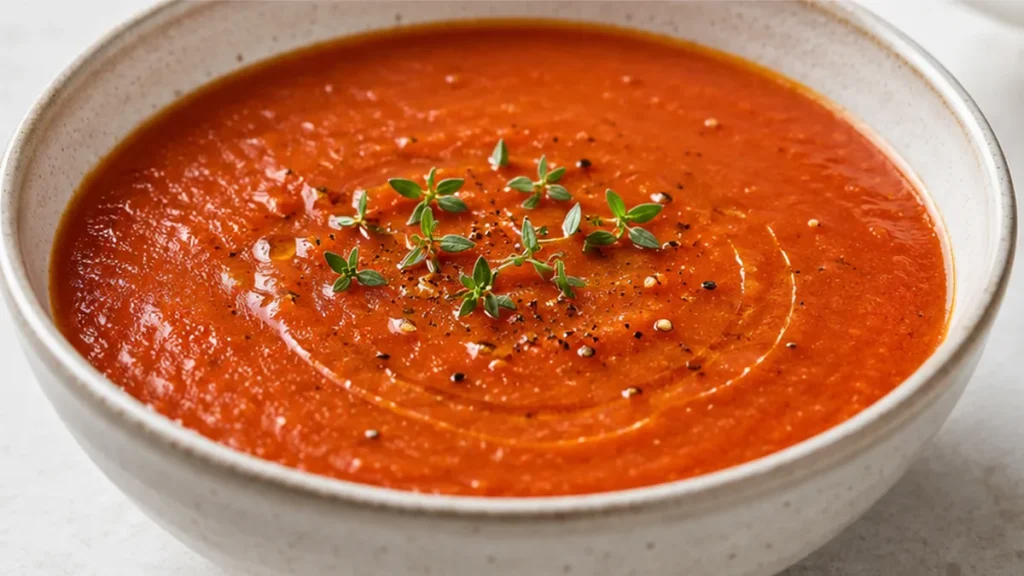
Roasted tomato soup is a game-changer for anyone who loves the rich, sweet tang of sun-ripened tomatoes. The secret? Roasting them until they caramelize, a simple step that unlocks a depth of flavor you won’t get from simmering alone. I remember the first time I tried roasting tomatoes for soup; the aroma filling my kitchen was incredible, and the resulting soup was far more vibrant than any I’d made before. This recipe transforms humble ingredients into a sophisticated dish, perfect for a cozy weeknight or entertaining guests. This roasted tomato soup is for those seeking to elevate a classic comfort food, offering a velvety texture and an irresistible taste that will make it a staple in your kitchen.
Key takeaways
- Roasting tomatoes, onion, and garlic develops deep, complex flavors through caramelization and the Maillard reaction.
- Ensure ingredients are well-roasted until slightly browned for maximum flavor concentration.
- Adjust seasoning and consistency after blending to achieve the desired taste and texture.
- Don’t be afraid to experiment with herbs or a touch of acidity balancer like balsamic vinegar.
Roasted Tomato Soup: Comfort in a Bowl
Ingredients
- 28 ounce can whole tomatoes
- 1/2 onion, cut into quarters
- 1 garlic clove, peeled
- 2 sprigs fresh thyme
- 1 tablespoon olive oil
- salt and pepper to taste
- 1 cup vegetable broth
Instructions
- Preheat oven to 400°F.
- Place tomatoes, onion, garlic, and thyme on a sheet tray; toss with olive oil, salt, and pepper.
- Roast for 30 minutes until onions caramelize.
- Blend roasted vegetables with reserved tomato juice and vegetable broth until smooth.
Video
Notes
The Technique That Makes It: Roasting for Depth
The magic behind this simple roasted tomato soup lies in the Maillard reaction and caramelization that occurs when the tomatoes, onion, and garlic are roasted. Instead of simply boiling ingredients, roasting concentrates their natural sugars and develops complex, savory flavors. The high heat breaks down cell walls, releasing moisture and allowing sugars to brown. This browning process, the Maillard reaction, creates hundreds of new flavor compounds, transforming the raw, acidic taste of tomatoes into a rich, deeply savory base. The olive oil helps facilitate even browning and prevents sticking, while the garlic and onion become sweet and mellow, losing their sharp bite. Roasting also concentrates the tomato flavor by evaporating excess water, leading to a thicker, more intense soup.
Troubleshooting
- Problem: Soup is too acidic or bland. Fix: Ensure tomatoes were well-roasted until slightly charred. You can also add a pinch of sugar during roasting or a tiny splash of balsamic vinegar at the end to balance acidity and add complexity.
- Problem: Garlic is bitter. Fix: Garlic can burn easily during roasting. If it browned too quickly, it might have burned. Next time, consider adding the garlic halfway through the tomato roasting time, or wrapping it loosely in foil.
- Problem: Soup is too thin. Fix: Roasting naturally reduces liquid, but if it’s still too thin, simmer the blended soup uncovered for 10-15 minutes to allow more moisture to evaporate. Alternatively, you can thicken it slightly with a cornstarch slurry (1 tbsp cornstarch mixed with 2 tbsp cold water, simmered in the soup).
- Problem: Texture is grainy or not smooth enough. Fix: Use an immersion blender or transfer the soup carefully to a standard blender. Blend until completely smooth. For an ultra-smooth texture, you can pass the blended soup through a fine-mesh sieve.
Substitutions
- Tomatoes: You can substitute 28 ounces of high-quality canned diced tomatoes (fire-roasted if possible) if fresh tomatoes are out of season. The flavor will be slightly less intense than roasting fresh, but still good.
- Onion: A large shallot can be used instead of half an onion. It will provide a slightly milder, sweeter onion flavor.
- Thyme: Fresh basil sprigs (about 4-5) can be roasted alongside the tomatoes for a different aromatic profile. The flavor will be brighter and more herbaceous.
- Vegetable Broth: Chicken broth can be used for a richer, non-vegetarian soup. Water can be used in a pinch, but the soup will be less flavorful.
Pro tips
– Use good quality canned whole peeled tomatoes; they form the backbone of this soup’s flavor. San Marzano are excellent if available. – Don’t overcrowd the baking sheet when roasting the vegetables. Give them space to caramelize properly, or they will steam instead of roast. – For an extra creamy texture, a splash of heavy cream or coconut milk can be added at the end, before serving. My own experience taught me to add it off the heat to prevent curdling. – Store leftover roasted tomato soup in an airtight container in the refrigerator for up to 3-4 days, or freeze for up to 2 months.
This roasted tomato soup is a testament to how simple techniques can yield extraordinary results. Give this recipe a try and savor the deep, comforting flavors of perfectly roasted tomatoes!
Frequently asked questions
Can I use fresh tomatoes instead of canned?
Yes, absolutely! For this recipe, using fresh, ripe tomatoes is ideal. You’ll need about 2-2.5 pounds. Halve or quarter them, toss with olive oil, salt, and pepper, and roast them as directed. This will yield the best flavor.
What if I don’t have fresh thyme?
If fresh thyme isn’t available, you can substitute dried thyme. Use about 1 teaspoon of dried thyme, adding it during the last 15 minutes of roasting or directly into the soup before blending. You can also use other herbs like basil or rosemary, adjusting the quantity as needed.
How can I make this soup creamy?
To achieve a creamy texture, you can stir in 1/4 to 1/2 cup of heavy cream, half-and-half, or full-fat coconut milk after the soup has been blended. Gently heat the soup without boiling to incorporate the cream.
Can I freeze leftover roasted tomato soup?
Yes, roasted tomato soup freezes very well. Allow the soup to cool completely before transferring it to an airtight container or freezer bag. It can be stored in the freezer for up to 3 months. Thaw overnight in the refrigerator and reheat gently.
More from Vegan Bowls →