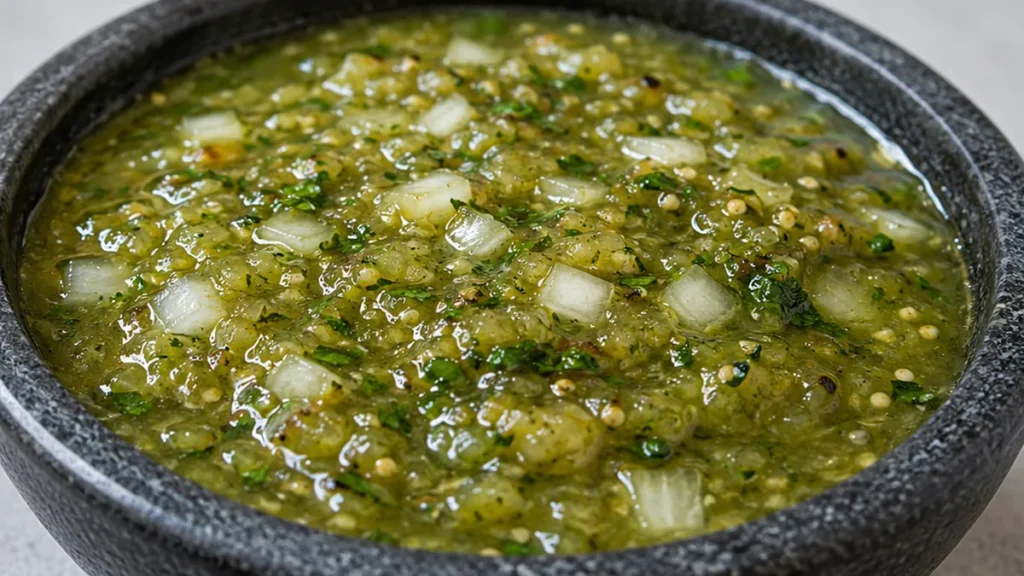
Roasted tomatillo salsa is a game-changer for anyone who loves Mexican-inspired flavors. The simple act of broiling tomatillos, garlic, and onion transforms their raw intensity into a smoky, sweet, and complex base. This tomatillo salsa recipe elevates everyday dishes, offering a fresh, tangy counterpoint to rich meats or a bright dip for your favorite tortilla chips. Roasted tomatillos have a much deeper aroma than raw ones, which makes this method the better choice.
Key takeaways
- Roasting tomatillos, onion, and garlic caramelizes sugars and mellows acidity for deeper flavor.
- Achieve a slight char on the tomatillos for optimal sweetness and complexity.
- Don’t overcrowd the pan during roasting to prevent steaming and ensure proper caramelization.
- Adjust lime juice and salt at the end to balance the flavors perfectly.

Roasted Tomatillo Salsa: Flavor Explosion!
Ingredients
- 10 tomatillos, husked and rinsed, about 1 pound
- 2 small garlic cloves
- 1 Small Onion, cut into chunks
- 1/2 cup Fresh Cilantro, packed
- juice of 1 lime
- 1/2 tsp kosher salt
Instructions
- Preheat oven broiler.
- Place tomatillos, garlic, and onion on a foil-lined baking sheet.
- Broil for 10 minutes, then cool.
- Puree all ingredients in a food processor.
- Serve with tortilla chips or over grilled fish/chicken.
Notes
The Magic of Roasting Tomatillos
The key to this vibrant tomatillo salsa lies in the roasting process. Roasting the tomatillos, onion, and garlic intensifies their natural sweetness and develops a complex, slightly smoky flavor profile that raw ingredients can’t achieve. When tomatillos are heated, their acidity mellows, and their sugars caramelize. The onion chunks soften and sweeten, while the garlic becomes mellow and creamy. This controlled application of dry heat, often referred to as the Maillard reaction and caramelization, is crucial. It transforms the raw components into a deeply flavorful base. Unlike boiling, which can leach flavor and create a watery salsa, roasting concentrates the flavors and creates a thicker, more robust texture. The goal is to achieve a tender, slightly charred exterior on the tomatillos, indicating that their sugars have begun to break down and develop complex flavors.
Troubleshooting
- Salsa is too watery: Ensure your tomatillos are not overcrowded on the baking sheet, allowing steam to escape rather than condense. You can also roast for an additional 5-10 minutes to evaporate excess moisture.
- Salsa lacks brightness: If the roasted ingredients mute the flavor, add the lime juice gradually at the end, tasting as you go. Fresh cilantro also adds a crucial herbaceous lift.
- Salsa is too bitter or sharp: This can happen if the tomatillos are underripe or if not enough of them are roasted to develop sweetness. Ensure a good char on the tomatillos during roasting. Roasting the onion and garlic also helps mellow any harshness.
- Texture is too chunky or too smooth: Adjust the blending time to your preference. Pulse for a chunkier salsa, or blend longer for a smoother consistency. For a smoother texture without over-blending, consider adding a tablespoon of water or olive oil.
Substitutions
- Tomatillos: Green tomatoes can be used, but they will result in a less tangy and slightly different flavor profile. The texture may also be firmer.
- Garlic: Roasted shallots can offer a milder, sweeter alternative to garlic, though the distinct garlic notes will be absent.
- Cilantro: If cilantro is unavailable or disliked, a combination of fresh parsley and a pinch of cumin can provide herbaceousness and depth, though the characteristic cilantro flavor will be missing.
- Lime Juice: Lemon juice can be substituted for lime juice, offering a similar acidity but a different citrus aroma. White wine vinegar could also be used in a pinch, but add it sparingly as it’s more potent.
Pro tips
- For extra heat, add a jalapeño or serrano pepper to the baking sheet with the tomatillos and roast it as well. Remove the seeds for less spice.
- If you don’t have a broiler, you can roast the tomatillos, garlic, and onion in a 400°F (200°C) oven for 20-25 minutes, until softened and slightly charred.
- This salsa can be stored in an airtight container in the refrigerator for up to 5 days. For longer storage, freeze it for up to 3 months.
This roasted tomatillo salsa is incredibly versatile and flavorful. Experiment with different heat levels and enjoy this vibrant addition to your meals!
Frequently asked questions
Why roast the tomatillos instead of using them raw?
Roasting transforms the tomatillos by mellowing their acidity and intensifying their natural sweetness through caramelization. This process also develops a subtle smoky depth that is essential for a flavorful salsa, whereas raw tomatillos can be overly tart and lack complexity.
My salsa is too watery. What went wrong?
Excess moisture is usually the culprit. Ensure the vegetables are not overcrowded on the baking sheet, allowing steam to escape. You might also need to roast them for a few extra minutes to evaporate any residual liquid before blending.
Can I make this salsa ahead of time?
Yes, this salsa can be made a day or two in advance. The flavors will meld and deepen over time, often resulting in an even more delicious salsa. Store it in an airtight container in the refrigerator.
What is the best way to blend the roasted ingredients?
For a traditional salsa texture, pulse the ingredients in a food processor or blender until mostly combined but still slightly chunky. For a smoother consistency, blend for a longer duration, but be careful not to over-process into a liquid.
More from Vegan Air Fryer →