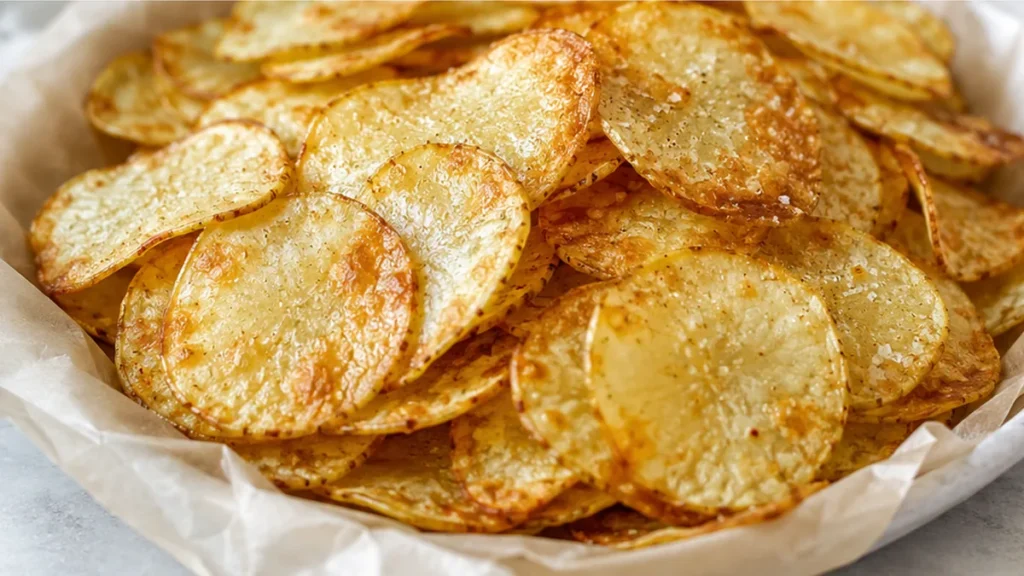
Baked potato chips are a game-changer for anyone craving a crunchy snack without the deep-fried indulgence. This recipe transforms simple potatoes into wonderfully crisp, golden chips that are seasoned to perfection. The key to truly crispy baked potato chips lies in thin slicing and thorough drying, ensuring each chip bakes evenly to a delicate crunch. Skipping the drying step leaves the chips a bit soggy. A little extra prep makes all the difference between soggy and perfectly crisp. This method is not only healthier but also incredibly satisfying, making it an ideal choice for a family snack or party appetizer.
Key takeaways
- Slice potatoes uniformly thin for even cooking.
- Thoroughly dry potato slices to remove surface moisture.
- Bake in a single layer without overlapping for maximum crispness.
- Monitor closely during the final minutes to prevent burning.
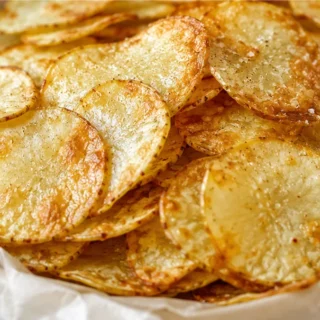
Crispy Homemade Baked Potato Chips!
Ingredients
- 2 potatoes (russet, Yukon gold, or sweet potatoes work great)
- 1 tablespoon vegetable oil, olive oil or avocado oil (plus extra for greasing the pans)
- sea salt or kosher salt, to taste
- 2 large sheets of parchment paper or foil
- A mandoline or sharp knife
- Clean kitchen towels or paper towels
Instructions
- Preheat oven to 400°F (200°C). Lightly grease two baking sheets with oil or line with parchment paper.
- Using a mandoline or sharp knife, slice the potatoes into thin rounds, about 1/8 inch thick.
- Lay the sliced potatoes on a clean kitchen towel or paper towels and pat completely dry. This is crucial for crispiness!
- Combine the potatoes, oil, and salt in a bowl or resealable bag and toss to coat evenly.
- Arrange the chips in a single layer on the prepared baking sheets, making sure they don’t overlap.
- Bake for 15 minutes, then carefully flip each chip and continue baking for another 5 to 10 minutes until golden brown and crispy. Keep a close eye on them in the final minutes, as they can burn quickly. Some chips may finish before others, so pull those early and let the rest continue cooking.
- Let cool for a few minutes before serving. They will continue to crisp up as they cool to the perfect texture.
Notes
The Science of Crispy Baked Potato Chips
Achieving truly crispy baked potato chips at home hinges on two primary factors: moisture removal and even heat distribution. Potatoes are naturally high in water content. When sliced thinly, this water needs to be evaporated efficiently in the oven to prevent them from steaming and becoming limp. The key is a two-pronged approach: pre-baking preparation and controlled oven temperature. First, thoroughly drying the potato slices after washing and slicing is crucial. Any surface moisture will hinder the crisping process. Using a mandoline or a very sharp knife ensures uniform thickness, which is vital for even cooking. Slices that are too thick will remain chewy, while those too thin may burn before others are cooked. Second, a moderate oven temperature (around 400°F or 200°C) allows the chips to dehydrate and crisp up without burning. Baking directly on the oven rack or on a perforated baking sheet can also aid in air circulation, promoting crispiness. However, for this recipe, using parchment paper or foil provides a barrier that helps prevent sticking and allows for easier handling, while still enabling crisping when the oven temperature is managed correctly. The oil coats the potato surface, facilitating heat transfer and contributing to browning and crispness through the Maillard reaction and caramelization.
Troubleshooting
- Problem: Chips are soggy or limp.
Fix: Ensure potato slices are dried thoroughly with towels before oiling and seasoning. Increase oven temperature slightly (by 25°F/15°C) for the last few minutes of baking, watching carefully to prevent burning. Ensure slices are not overlapping on the baking sheet.
- Problem: Chips are unevenly cooked (some burnt, some soft).
Fix: Use a mandoline or very sharp knife for consistent slice thickness. Arrange slices in a single layer on the baking sheet, ensuring no overlap. Rotate the baking sheet halfway through the baking time.
- Problem: Chips stick to the pan.
Fix: Ensure the parchment paper or foil is adequately greased with oil. If using foil, make sure it’s smooth and not wrinkled. For future batches, consider using a perforated baking sheet if available.
- Problem: Chips are too oily and greasy.
Fix: Use only the specified amount of oil (1 tablespoon for 2 potatoes). After baking, you can lightly blot the chips with a paper towel to absorb any excess oil.
Substitutions
- Potatoes: While russet or Yukon gold are ideal for their starch content, sweet potatoes can be used. They will result in a slightly sweeter chip with a different texture, often a bit softer but still delicious.
- Oil: Any neutral-flavored oil with a high smoke point like grapeseed or canola oil can be substituted for vegetable, olive, or avocado oil. This will not significantly alter the outcome, though olive oil might impart a subtle fruity note.
- Salt: Kosher salt or fine sea salt are interchangeable. If using table salt, use a slightly smaller amount as it is more finely granulated and can be saltier.
- Parchment Paper/Foil: While these are recommended for easy cleanup and even baking, you can bake directly on a well-greased baking sheet. However, this increases the risk of sticking and may require more careful monitoring.
Pro tips
- Slice thinly: Use a mandoline for uniformly thin slices (1/8 inch or less). This ensures even cooking and maximum crispiness. Uneven slices will cook at different rates.
- Dry thoroughly: Pat the potato slices completely dry with kitchen towels. Excess moisture is the enemy of crispiness and will result in soggy chips.
- Don’t overcrowd: Arrange slices in a single layer on the baking sheets without overlapping. Overcrowding traps steam, preventing them from crisping up properly.
- Watch closely: Chips can go from perfectly golden to burnt in seconds. Keep a close eye during the last 5-10 minutes, pulling out any that are done early.
- Storage & Reheating: Store cooled baked potato chips in an airtight container at room temperature for up to 3 days. Reheat briefly in a 300°F (150°C) oven for 5 minutes to restore crispiness.
These homemade baked potato chips are a fantastic way to enjoy a classic snack with a healthier twist. Experiment with different seasonings like paprika or garlic powder for endless variations. Enjoy your crispy, guilt-free treat!
Frequently asked questions
Can I make these chips without oil?
While oil helps achieve crispiness and browning by facilitating heat transfer, you can attempt to make them with minimal or no oil. Ensure slices are extremely thin and dry, and bake at a slightly higher temperature, watching very closely to prevent burning. The texture will likely be different, less uniformly crisp and potentially drier.
What is the best way to slice the potatoes?
For the crispiest and most evenly cooked chips, a mandoline slicer set to a very thin setting (about 1/16 to 1/8 inch) is ideal. If you don’t have a mandoline, use your sharpest knife and slice as thinly and uniformly as possible. Consistency is key.
How long should I bake the potato chips?
Baking time typically ranges from 15 to 25 minutes at 400°F (200°C). This can vary based on the thickness of your slices and your oven. Start checking around the 15-minute mark, flipping the chips, and continue baking until they reach your desired level of crispness, usually another 5-10 minutes.
Can I add other seasonings besides salt?
Absolutely! Once the chips are baked and still warm, you can toss them with your favorite seasonings. Popular choices include garlic powder, onion powder, paprika, chili powder, or dried herbs like rosemary or thyme. Ensure seasonings are added after baking to prevent them from burning.
More from Vegan Air Fryer →