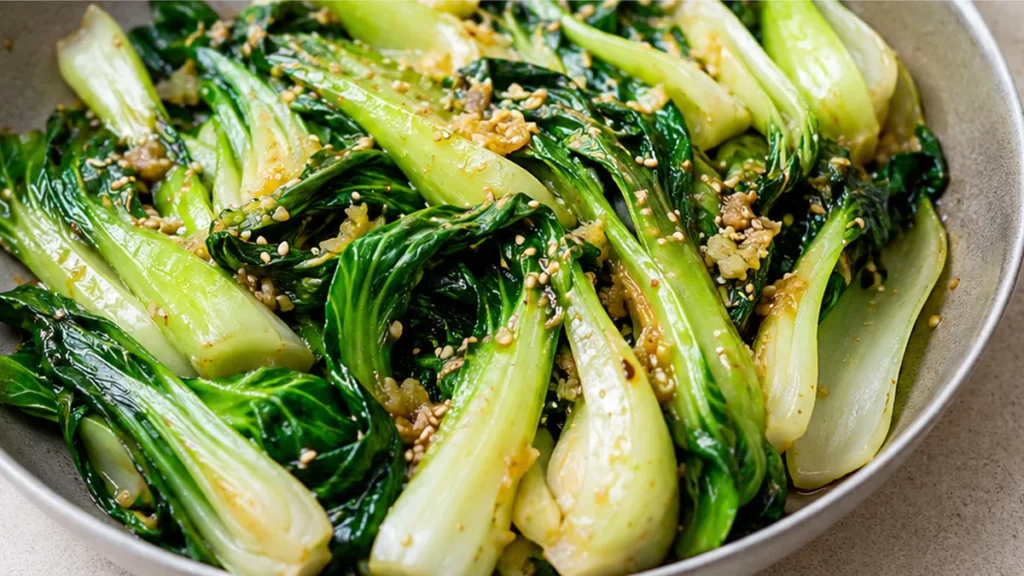
Sautéed baby bok choy is a fantastic way to elevate your weeknight meals with minimal effort. This easy recipe highlights the crisp-tender texture and mild, slightly peppery flavor of baby bok choy, making it a versatile side that pairs beautifully with almost any main course. Quick, high-heat sautéing is key to preserving the vibrant color and delicate crunch of baby bok choy, avoiding the common mistake of overcooking it into a mushy state. This method ensures your baby bok choy remains bright green and delicious every time. It’s a simple dish that truly shines, perfect for those seeking a healthy yet incredibly satisfying vegetable side.
Key takeaways
- High heat is crucial for crisp-tender bok choy.
- Cook quickly to preserve color and flavor.
- Don’t overcrowd the pan to avoid sogginess.
- Fresh garlic and ginger provide the best flavor base.
Flavor Bomb Baby Bok Choy: Quick & Delicious Side!
Ingredients
- 1 tablespoon oil
- 2 garlic cloves, minced
- 1 inch piece ginger, peeled and grated
- 1 pound baby bok choy, roughly chopped
- 2 tablespoons water
- 1/2 teaspoon kosher salt
- 1 teaspoon sesame seeds, optional
Instructions
- Heat the oil in a large skillet or wok over medium-high heat.
- Add the garlic and ginger, and saute for 1 minute, until fragrant.
- Add the bok choy, stir to coat with the oil, and saute for 2-3 minutes until the leaves start to wilt.
- Add the water and salt. Cover the pan and cook for 5 minutes, until the bok choy is tender but still bright green.
- Sprinkle sesame seeds on top and serve.
Notes
The Technique: High Heat and Quick Cooking
The key to perfectly cooked baby bok choy lies in high heat and rapid cooking. Baby bok choy has a delicate texture and a high water content. When subjected to intense heat, like in a wok or a very hot skillet, the outer leaves wilt and soften quickly while the stems remain slightly crisp. This rapid cooking process, often referred to as stir-frying, is crucial for several reasons. Firstly, it helps to preserve the bok choy’s vibrant green color and its fresh, slightly sweet flavor. Overcooking will lead to a mushy texture and a dull appearance. Secondly, the high heat allows for a slight caramelization of the natural sugars in the bok choy stems, adding a layer of complexity to the flavor profile without the need for extensive sauces or marinades. The addition of a small amount of water towards the end of cooking creates a brief burst of steam. This steam helps to cook the thicker stem parts through and wilts the leaves further, ensuring even cooking without making the dish watery, provided the heat remains high to evaporate excess moisture quickly.
Troubleshooting
- Problem: Bok choy is watery and soggy.
- Fix: Ensure your pan is very hot before adding the bok choy. Do not overcrowd the pan, cook in batches if necessary. Cook uncovered after adding the water to allow steam to escape.
- Problem: Bok choy stems are tough and undercooked.
- Fix: Chop the bok choy so the stems are separated from the leaves, or cut stems into smaller pieces. Add the stems to the pan a minute before the leaves to give them a head start.
- Problem: Garlic and ginger are burnt.
- Fix: Add the garlic and ginger after the oil is hot but before adding the bok choy. Stir constantly and add the bok choy immediately after the aromatics become fragrant (about 30 seconds).
- Problem: Dish lacks flavor.
- Fix: Ensure you are using fresh garlic and ginger. Don’t skip the salt, as it enhances the natural flavors. Consider adding a splash of soy sauce or oyster sauce at the end for an umami boost.
Substitutions
- Bok Choy: If baby bok choy is unavailable, regular bok choy can be used. Separate the stems from the leaves and chop them. Add stems first, then leaves, as they require different cooking times. The texture will be slightly less tender.
- Oil: Any neutral cooking oil like canola, grapeseed, or avocado oil can replace the specified oil. Olive oil can be used, but its flavor may be more pronounced, and it has a lower smoke point, requiring slightly lower heat.
- Garlic/Ginger: Garlic powder and ground ginger can be substituted in a pinch, but fresh aromatics provide a superior flavor. Use about 1/4 teaspoon of each powder for the specified amount of fresh.
- Sesame Seeds: Toasted cashews or slivered almonds can add a similar nutty crunch if sesame seeds are not on hand. The flavor profile will shift slightly towards a different nuttiness.
Pro tips
– Don’t overcrowd the pan: Sautéing in batches if necessary ensures the bok choy steams rather than fries, leading to a softer texture. Maintain high heat for proper searing. – For a touch of spice, add a pinch of red pepper flakes with the garlic and ginger. – Storage: Leftover sautéed bok choy can be stored in an airtight container in the refrigerator for up to 3 days. Reheat gently on the stovetop or microwave.
This simple Sautéed Baby Bok Choy recipe is a testament to how quickly and easily you can create a truly flavorful and healthy side dish. Experiment with different seasonings next time you’re craving a quick vegetable fix. Enjoy!
Frequently asked questions
Can I use regular bok choy instead of baby bok choy?
Yes, you can use regular bok choy. It’s best to separate the thicker stems from the delicate leaves and chop them. Add the stems to the hot pan a minute before the leaves, as they require a longer cooking time to become tender.
What if I don’t have fresh ginger or garlic?
While fresh ginger and garlic offer the best flavor, you can substitute them with powders. Use approximately 1/4 teaspoon of garlic powder and 1/4 teaspoon of ground ginger. Add them towards the end of the aromatics’ cooking time to prevent burning.
My bok choy turned out watery. What went wrong?
This usually happens if the pan isn’t hot enough or if it’s overcrowded. Ensure your pan is smoking hot before adding ingredients. Cook in batches if necessary, and keep the lid off after adding water to allow excess moisture to evaporate quickly.
Can I make this dish spicier?
Absolutely. For a spicy kick, add a pinch of red pepper flakes along with the garlic and ginger. Alternatively, a drizzle of sriracha or chili garlic sauce stirred in at the very end of cooking will add heat and flavor.
More from Vegan Air Fryer →