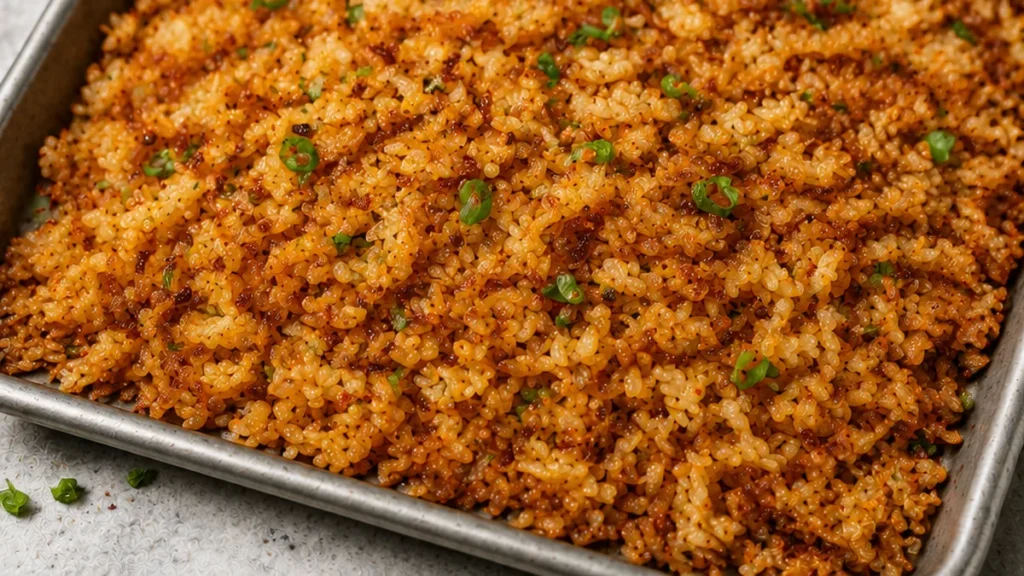
Unlock the secret to perfectly crispy rice with this incredibly simple sheet pan recipe. Forget bland, mushy grains; this method transforms cooked rice into golden, crunchy bites that are unbelievably addictive. Whether you’re looking for a unique snack, a flavorful base for your favorite bowls, or a way to use up leftover rice, this crispy rice recipe delivers. Perfect for busy weeknights or quick party appetizers, this recipe requires minimal effort and common pantry staples. The magic happens in the oven, creating a delightful texture contrast that will have everyone asking for seconds. Get ready to improve your rice game!
Key takeaways
- Use cold, day-old rice for best results.
- Ensure rice is in a single layer for even crisping.
- Don't overcrowd the pan; cook in batches if necessary.
- Adjust heat to prevent burning while achieving crispiness.
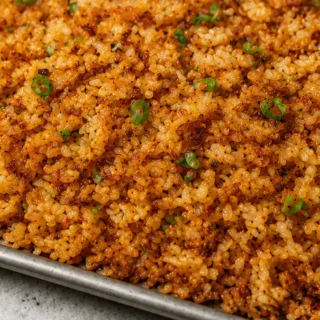
Crispy Rice Perfection! Unlock Ultimate Flavor!
Ingredients
- 2 cups cooked rice
- 1 tablespoon sesame oil
- 1 teaspoon coconut aminos, soy sauce, or tamari
- 1 teaspoon garlic powder
- Optional: Pinch of salt
Instructions
- Preheat your oven to 400°F (200°C).
- Place the cooked rice in a pile on an 18×13 inch sheet pan. Drizzle with sesame oil and soy sauce alternative, then sprinkle with garlic powder and a pinch of salt if using. Mix thoroughly to coat every grain.
- Spread the seasoned rice evenly across the sheet pan in a single layer. Pat it down firmly with a spatula or your hands to create a compact surface.
- Bake for 12-20 minutes, tossing halfway through (around 8-10 minutes), until the rice is golden brown and crispy to your preference.
- Serve immediately for the best crispy texture. This rice is delicious as a snack or as a base for bowls and salads.
- To store, let the crispy rice cool completely, then keep it in an airtight container at room temperature for up to 2 days.
Notes
The technique that makes it
Achieving perfectly crispy rice hinges on two crucial elements: the moisture content of the rice and the cooking method. For this recipe, using day-old, refrigerated cooked rice is paramount. Refrigeration dries out the rice grains, reducing their internal moisture. When the rice is then exposed to high heat, this lower moisture content allows the exterior to crisp up rather than steam and become mushy. The key is to create a barrier between the grains. By lightly coating the rice with sesame oil and a touch of soy sauce or its alternatives, you’re preparing the surface for browning. The oil acts as a conductor of heat, promoting even crisping, while the saltiness from the soy sauce or aminos enhances flavor and aids in caramelization. The cooking method, typically pan-frying or baking, needs to provide sufficient direct heat. Pan-frying in a hot, oiled skillet allows for direct contact, creating a golden-brown crust. Baking, especially on a preheated baking sheet, also works by surrounding the rice with dry, hot air, facilitating dehydration and crisping of the outer layer.
Troubleshooting
- Rice is mushy, not crispy: This usually indicates the rice was too fresh or too moist. Ensure you’re using cold, day-old rice. If it still seems wet, spread it on a baking sheet and let it air dry for 30 minutes before cooking.
- Rice is burnt on the bottom, soft on top: The heat is likely too high, or the rice is overcrowded in the pan. Reduce the heat slightly and ensure the rice is in a single layer. For pan-frying, resist the urge to stir too frequently; let it develop a crust.
- Rice is dry and hard: You may have overcooked it, or the initial rice was too dry. Ensure you’re using the correct amount of oil and don’t cook for an excessive amount of time. Adding a tiny splash of water or broth towards the end of cooking can help rehydrate slightly if needed.
- Uneven crisping: This can happen if the rice isn’t spread into a uniform layer or if the heat source is uneven. Rotate the pan during cooking or use a baking method for more consistent results.
Substitutions
- Sesame oil: For a different nutty flavor profile, you can substitute with avocado oil or a neutral vegetable oil like canola. The crisping effect will be similar, though the distinct sesame aroma will be absent.
- Coconut aminos: If you don’t have coconut aminos, soy sauce or tamari are direct replacements, offering a similar salty and umami depth. For a milder flavor, a light soy sauce can be used.
- Garlic powder: Fresh minced garlic can be used, but sauté it briefly in the oil before adding the rice to prevent burning and to release its flavor. Use about 1 clove of minced garlic for this amount.
- Salt: If using regular soy sauce, you may not need additional salt. If using tamari or coconut aminos and you prefer a saltier taste, add a pinch of salt to taste.
Pro tips
- For extra crispiness, ensure the rice is spread in a thin, even layer.
- If you don’t have coconut aminos, soy sauce or tamari work perfectly.
- This crispy rice is best enjoyed fresh, but can be stored at room temperature for up to 2 days.
Enjoy this versatile crispy rice as a satisfying snack or a delightful component in your favorite dishes. Experiment with toppings and seasonings to make it your own!
More from Vegan Air Fryer →
Frequently asked questions
Can I use freshly cooked rice?
While possible, freshly cooked rice is not ideal. It contains more moisture, which will steam the grains instead of crisping them. For the best crispy texture, always opt for cold, day-old rice that has been refrigerated.
What is the best cooking method?
Pan-frying in a hot skillet with a bit of oil is excellent for direct crisping. Baking on a preheated baking sheet also works well, providing consistent heat for even browning and crisping.
How do I get it really crispy?
The key is low moisture content in the rice and sufficient heat. Ensure the rice is cold and dry, spread it in a single layer, and don’t move it too often during pan-frying to allow a crust to form.
Can I make this recipe gluten-free?
Yes, this recipe is easily made gluten-free by using tamari or coconut aminos instead of soy sauce. Ensure your cooked rice is also prepared without gluten-containing ingredients.