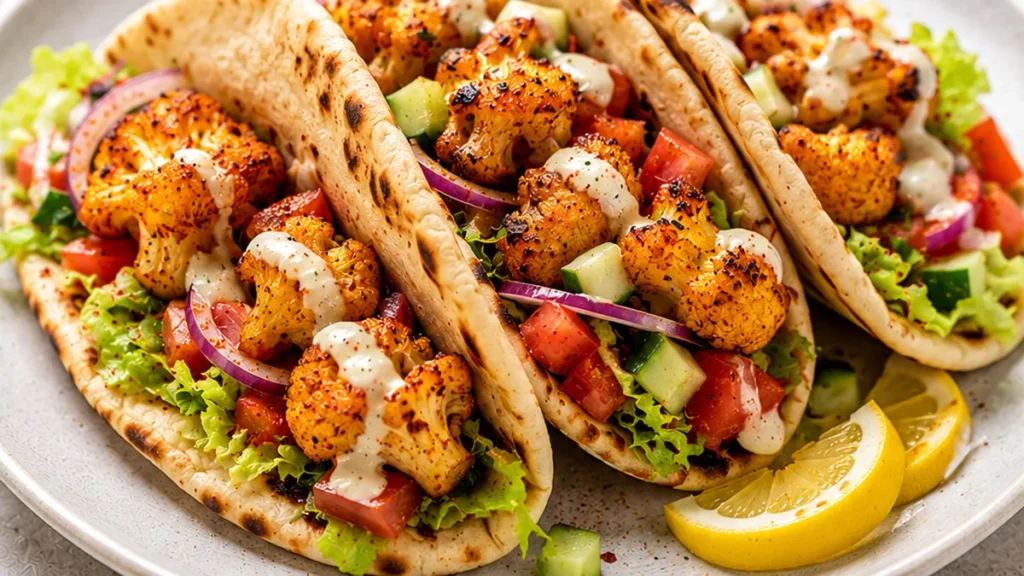
These cauliflower pitas are a big flavor waiting to happen. Combining smoky roasted cauliflower with a bright, spicy zhug sauce and creamy garlic tahini, this recipe improves the humble pita to a dish. It’s perfect for a quick yet impressive weeknight dinner or a show-stopping appetizer. The star of this cauliflower pitas recipe is undoubtedly the perfectly roasted cauliflower, infused with warm spices and a hint of heat. Paired with the fresh, herbaceous zhug, it creates a harmonious balance that will leave you wanting more.
Key takeaways
- Processing cauliflower to a rice-like consistency is key for binding.
- Blooming spices in oil intensifies their flavor.
- Roast cauliflower until dry to prevent sogginess.
- Adjust seasoning and moisture for optimal texture and taste.
Craveable Cauliflower Pitas: Your New Obsession!
Ingredients
- 1 large head cauliflower, cut into florets
- 3 tablespoons extra-virgin olive oil
- 1 tablespoon smoked or sweet paprika
- 2 teaspoons ground cumin
- 1/2 teaspoon ground cardamom
- ½ teaspoon ground turmeric
- 1/4 – ½ teaspoon cayenne pepper
- juice from half a lemon
- 4 garlic cloves, chopped
- kosher salt and black pepper
Instructions
- Preheat oven to 425°F (220°C).
- On a large baking sheet, toss cauliflower florets with olive oil, paprika, cumin, cardamom, turmeric, cayenne pepper, lemon juice, chopped garlic, kosher salt, and black pepper. Ensure everything is well coated.
- Bake for 15 minutes. Toss the cauliflower and bake for another 15 minutes, or until tender and lightly charred at the edges.
- While cauliflower bakes, prepare the zhug: Combine all zhug ingredients (cilantro, parsley, jalapeños, garlic, cardamom, cumin, coriander, salt, pepper, olive oil, lemon juice) in a food processor or blender. Pulse until finely chopped.
- If the zhug is too thick, add water, 1 tablespoon at a time, until desired consistency is reached. Taste and adjust salt if needed.
- Assemble the pitas: Spread a generous layer of zhug onto each pita. Top with fresh lettuce, the roasted cauliflower, and thinly sliced red onion. Drizzle with more zhug. Add tahini and harissa if desired.
Notes
The technique that makes it
The magic behind these craveable cauliflower pitas lies in a two-pronged approach: achieving tender, flavorful cauliflower and creating a pliable, cohesive pita. First, the cauliflower florets are pulsed in a food processor until they resemble coarse sand or rice. This fine texture is crucial for binding and creating a dough-like consistency. Roasting the cauliflower briefly before incorporating it into the pita mixture helps to evaporate excess moisture, preventing a soggy end product. The spices – paprika, cumin, cardamom, turmeric, and cayenne – are then bloomed in olive oil with garlic. This step, known as ‘tempering’ or ‘blooming’ spices, intensifies their flavor and aroma by releasing their fat-soluble compounds. Combining the roasted, spiced cauliflower with the lemon juice and salt creates the flavorful base. The lemon juice not only adds brightness but also helps to tenderize the cauliflower further. The goal is to achieve a moist but not wet mixture that can be pressed and formed into discs without crumbling.
Troubleshooting
- Pitas are crumbly and won’t hold their shape: This usually indicates too much moisture has evaporated during roasting or the cauliflower wasn’t processed finely enough. Try adding a tablespoon of water or another tablespoon of olive oil to help bind the mixture. Ensure the cauliflower is processed to a rice-like consistency.
- Pitas are soggy or wet: The cauliflower may have contained too much moisture. Ensure it’s roasted until dry to the touch, or even slightly browned, to drive off excess water. You can also try processing the roasted cauliflower further to break it down more.
- Pitas are bland: The spices may not have been fully bloomed, or the seasoning is insufficient. Ensure the spices are sautéed in the oil and garlic until fragrant. Taste the mixture before forming the pitas and adjust salt and cayenne pepper as needed.
- Pitas are sticking to the pan: Use parchment paper for both the initial roasting and for shaping the pitas. Ensure the pan is adequately greased with olive oil.
Substitutions
- Cauliflower: Broccoli florets can be substituted for cauliflower. The flavor will be slightly different, and you may need to roast them a bit longer to achieve a similar texture.
- Smoked/Sweet Paprika: Regular paprika can be used, but you’ll lose the smoky depth. You could add a tiny pinch of liquid smoke to the oil if using regular paprika for a similar effect.
- Lemon Juice: Lime juice can be used for a tangier flavor profile. White wine vinegar or apple cider vinegar could also work in a pinch, though they will alter the taste more significantly.
- Cayenne Pepper: Red pepper flakes can be used as a direct substitute for heat. Adjust the quantity to your spice preference.
Pro tips
- For extra char on the cauliflower, ensure your oven is fully preheated and don’t overcrowd the baking sheet.
- Adjust the spice level of the zhug by adding more or fewer jalapeños.
- Serve immediately for the best texture, or store components separately and assemble just before eating.
Enjoy this delightful cauliflower pitas recipe, a bright dish that’s as beautiful as it is delicious. It’s a testament to how simple ingredients can create extraordinary flavors.
More from Vegan Air Fryer →
Frequently asked questions
Can I make cauliflower pitas ahead of time?
Yes, you can prepare the cauliflower mixture up to 2 days in advance and store it in an airtight container in the refrigerator. For best results, assemble and bake the pitas just before serving to ensure they are warm and have the ideal texture.
What can I substitute for cauliflower in this recipe?
While cauliflower is key for texture, you could experiment with finely chopped broccoli florets or even finely grated zucchini. However, be aware that these substitutions may alter the flavor and moisture content, potentially affecting the final pita consistency.
How do I know when the cauliflower pitas are done baking?
The pitas are ready when they are golden brown around the edges and feel firm to the touch. They should hold their shape well. If they seem too soft, continue baking for a few more minutes, keeping a close eye to prevent burning.
What are good fillings for cauliflower pitas?
These pitas are versatile! Try classic hummus and falafel, a fresh Mediterranean salad with cucumber and tomato, or even a smoky baba ghanoush. For a heartier option, add some seasoned black beans or a dollop of vegan tzatziki.