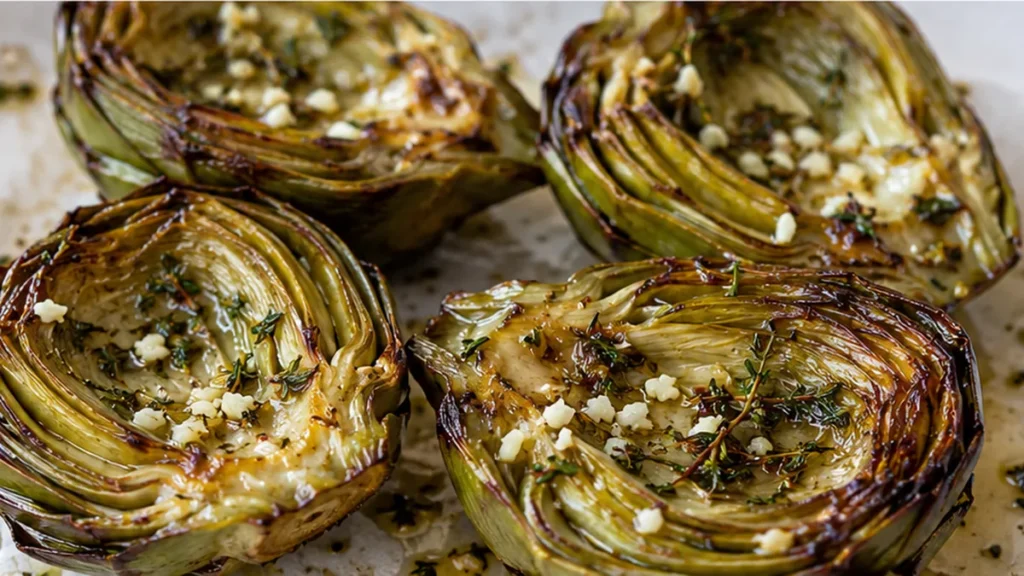
Roasted artichokes offer a unique flavor profile. This recipe uses a lemon-shallot vinaigrette to enhance the natural taste of roasted artichokes, making them a perfect side.
Key takeaways
- Roasting artichokes involves a two-stage cooking process: initial steaming for tenderness, followed by uncovered roasting for caramelization and flavor development.
- The steaming phase, using lemon juice and covered foil, tenderizes the artichoke by breaking down fibers.
- The second roasting phase allows for browning and caramelization, creating a desirable texture and depth of flavor.
- Finishing with a bright vinaigrette balances the richness of the roasted artichoke.
Roasted Artichokes: The Secret to Amazing Flavor!
Ingredients
- Cooking spray
- 4 large artichokes, stems trimmed, outer leaves removed, and tips of leaves trimmed
- Juice of ½ lemon (1 ½ – 2 tablespoons)
- 2 garlic cloves, finely minced
- 1 tablespoon avocado oil or olive oil
- 8 lemon slices
- 8 fresh thyme sprigs
- Fine salt and black pepper
- ½ cup avocado oil or olive oil
- 2 ½ tablespoons champagne vinegar (may substitute white wine vinegar or apple cider vinegar)
Instructions
- Preheat oven to 400℉.
- Spray a 9×13-inch glass baking dish with cooking spray and set aside.
- Using a large knife, cut each artichoke in half and use a spoon to scrape out the fuzzy choke.
- Brush all sides of the artichokes with lemon juice and place cut-side down in the baking dish.
- Roast artichokes for 15 minutes. Remove baking dish from oven and flip the artichokes over so the cut side is up.
- Sprinkle artichokes with garlic and drizzle with oil. Sprinkle with salt and pepper.
- Place a lemon slice and sprig of thyme on top of each artichoke half (sprinkle with dried thyme if not using fresh). Lightly spray artichokes with cooking spray.
- Cover the baking dish tightly with foil and return the dish to the oven.
Notes
The technique that makes it
The magic behind these roasted artichokes lies in a two-stage cooking process that ensures tenderness and deep flavor development. First, the artichokes are par-cooked in a flavorful liquid (lemon juice, minced garlic, and oil) under a tent of foil. This steaming phase, facilitated by the trapped moisture and the acidity of the lemon, begins the tenderizing process. The trapped steam and the lemon juice help to break down the tough cellulose and pectin in the artichoke leaves and heart, making them palatable and moist. The garlic and thyme infuse their aromas during this stage.
Following the initial steaming, the foil is removed, and the artichokes are roasted further. This second stage is crucial for developing the characteristic roasted flavor and texture. The increased heat and direct exposure to the oven’s dry heat cause the natural sugars in the artichoke to caramelize (Maillard reaction and caramelization), leading to browning on the leaf tips and the heart. The avocado or olive oil used in this stage helps conduct heat, promoting even browning and preventing sticking. The final drizzle of champagne vinegar creates a bright, acidic counterpoint to the richness of the roasted artichoke, cutting through any potential bitterness and enhancing the overall flavor profile.
Troubleshooting
- Problem: Artichokes are tough and stringy.
Fix: Ensure the initial steaming phase is long enough (about 25-30 minutes) to adequately break down the artichoke’s fibers. Overcooking in the second roasting stage can also lead to toughness, so monitor closely. - Problem: Artichoke hearts are not tender.
Fix: The heart is the densest part. Make sure it has been exposed to sufficient steam during the initial covered roasting. If still tough, you can slice the heart in half lengthwise during the uncovered roasting stage to expose it more directly to heat. - Problem: Artichokes are dry or burnt.
Fix: Ensure the foil tent is sealed well during the initial steaming to trap moisture. In the second stage, reduce the oven temperature slightly or shorten the roasting time if you notice excessive browning or drying. The initial oil and lemon juice help prevent dryness. - Problem: Artichoke leaves are difficult to eat.
Fix: Properly trimming the outer tough leaves and the thorny tips is essential. The steaming process should also make the leaves tender enough to scrape the fleshy part off with your teeth.
Substitutions
- Vinegar: White wine vinegar or apple cider vinegar can be used instead of champagne vinegar. The result will be a slightly different but still pleasantly acidic finish, with white wine vinegar offering a milder fruitiness and apple cider vinegar a tangier, fruitier note.
- Oil: While avocado oil is recommended for its high smoke point, good quality olive oil can be substituted. The flavor profile will be slightly more pronounced with olive oil, which is desirable in this recipe.
- Herbs: Fresh rosemary sprigs can be used in place of thyme. This will impart a more pungent, pine-like aroma and flavor, complementing the roasted artichoke well.
- Garlic: If finely minced garlic is unavailable, 1 teaspoon of garlic powder can be used. The flavor will be less intense and fresh, but it will still contribute garlic notes.
Pro tips
- Don’t skip trimming the artichokes properly; removing the tough outer leaves and fuzzy choke is key to a pleasant eating experience.
- For perfectly tender roasted artichokes, ensure your baking dish is tightly covered with foil to steam them effectively in the oven.
- To check for doneness, a knife should easily pierce the base of the artichoke. If it resists, roast for a few more minutes.
- Store leftover roasted artichokes in an airtight container in the refrigerator for up to 3 days. Reheat gently in the oven or enjoy cold in salads.
This roasted artichokes recipe is a fantastic way to enjoy a delicious and healthy vegetable. Experiment with different herbs like rosemary or oregano for a twist. Enjoy your culinary creation!
Frequently asked questions
How do I prepare artichokes for roasting?
Trim the stems, remove the tough outer leaves, and snip off the thorny tips of the remaining leaves. Cut the artichoke in half lengthwise and scoop out the fuzzy choke if desired, though it can be roasted and removed later. Rinse thoroughly.
Why are my roasted artichokes tough?
Toughness usually results from insufficient steaming. Ensure the initial covered roasting period is long enough for the steam to penetrate and tenderize the artichoke’s fibers. The artichoke should be fork-tender before uncovering.
Can I roast artichokes without the lemon?
Yes, you can omit the lemon slices and juice. However, the lemon adds a crucial brightness that cuts through the richness of the artichoke and oil, enhancing the overall flavor. Without it, the dish may taste less vibrant.
How do I know when the artichokes are done roasting?
The artichoke leaves should be easily pulled away from the base, and the tips should show signs of browning and caramelization. The heart should be tender when pierced with a fork. The internal temperature should be around 200-210°F (93-99°C).
More from Vegan Air Fryer →