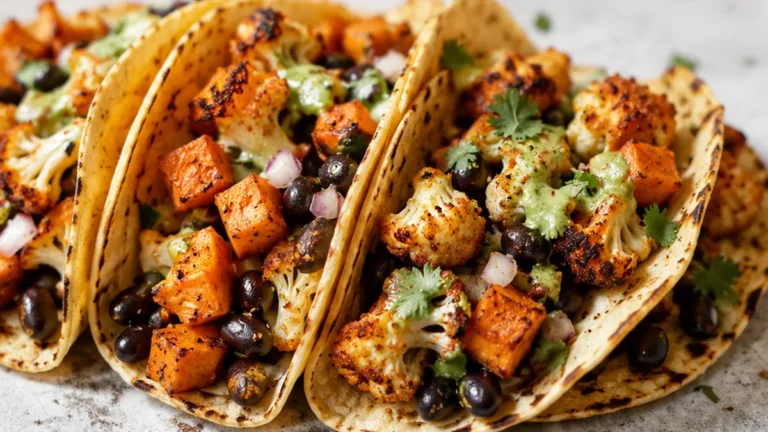
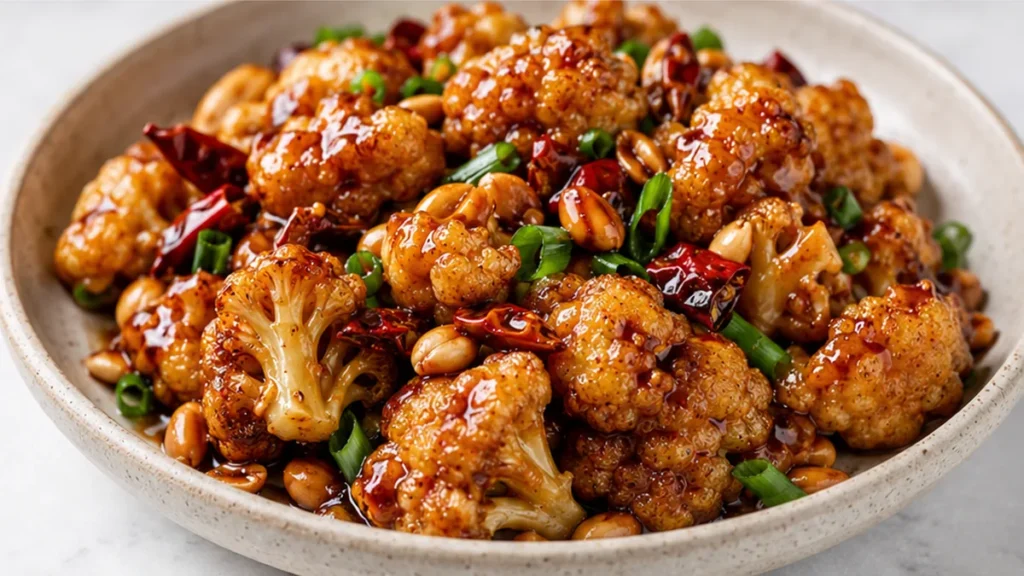
This Kung Pao cauliflower recipe offers a vegetarian twist on a classic favorite, delivering an intensely flavorful and satisfying meal. It transforms humble cauliflower into a star dish with a perfectly sticky, sweet, and spicy glaze. This dish is ideal for those seeking a flavorful meat-free option or a bright side dish that is both healthy and addictive. Perfectly balanced with savory, sweet, and a hint of heat, this Kung Pao cauliflower is a guaranteed crowd-pleaser. It’s simple enough for a weeknight dinner but impressive enough for guests.
Key takeaways
- Coat cauliflower florets evenly with cornstarch and coconut milk for optimal crispness.
- Simmer the sauce uncovered to achieve the desired sticky consistency.
- Cook cauliflower in batches if needed to prevent overcrowding and ensure crisping.
- Adjust sauce consistency and seasoning to personal preference before coating the cauliflower.
Sticky Kung Pao Cauliflower Recipe
Ingredients
- 1 large head cauliflower, cut into florets
- 2 tablespoons cornstarch
- 2 tablespoons canned full fat coconut milk
- 1/3 cup + 2 tablespoons low sodium soy sauce or Braggs Liquid Aminos
- 3 tablespoons hoisin sauce
- 2 tablespoons real maple syrup or honey
- 2 tablespoons rice vinegar
- 1 tablespoon sesame or peanut oil
- 2 cloves garlic, minced or grated
- 1 inch fresh ginger, grated
Instructions
- Preheat the broiler to high. Line a baking sheet with parchment.
- In a large bowl, toss the cauliflower with 1 tablespoon cornstarch to coat. Add the coconut milk and 2 tablespoons soy sauce, tossing to evenly coat all the florets. Spread the cauliflower in an even layer on the prepared baking sheet. Transfer to the oven and broil for 3-4 minutes, until the cauliflower is just beginning to char on the edges. Reduce the oven temp to 425 and bake another 5 minutes, until just tender.
- Meanwhile, make the sauce. Combine the remaining 1/3 cup soy sauce, hoisin sauce, honey, vinegar, crushed red pepper flakes, and a pinch of pepper.
- Add 1/4 cup water and the remaining 1 tablespoons cornstarch, whisking until combined and smooth.
- Heat the oil in a large skillet over medium heat for 1 minute. Add the garlic, ginger, and cook until fragrant, about 30 seconds. Stir in the soy sauce mixture and bring to a boil over medium heat. Once boiling, reduce the heat to low. Add the cauliflower and cook, stirring occasionally, until the sauce thickens slightly, about 5 minutes.
- Serve the cauliflower and sauce over bowls of rice. Top with additional peanuts and green onions. Enjoy!
Notes
The technique that makes it
The key to achieving perfectly crispy yet tender kung pao cauliflower lies in the initial preparation of the florets. A light coating of cornstarch is essential. When tossed with the cauliflower, the cornstarch adheres to the surface, creating a barrier that helps the florets crisp up during cooking, rather than becoming soggy. The coconut milk acts as a binder for the cornstarch, ensuring an even coating and adding a subtle richness without overpowering the other flavors. This combination allows the cauliflower to achieve a delightful texture, similar to traditional deep-fried versions, but with a much healthier approach. The subsequent tossing in the flavorful sauce ensures each piece is coated in the sticky, savory, and slightly sweet glaze characteristic of kung pao.
Troubleshooting
- Soggy Cauliflower: Ensure cauliflower florets are completely dry before tossing with cornstarch. Overcrowding the pan during the initial cooking phase can also lead to steaming instead of crisping; cook in batches if necessary.
- Sauce Too Thin: If the sauce remains too liquid after simmering, it might be due to insufficient reduction or too much liquid added initially. Simmer for a few extra minutes, uncovered, to allow excess moisture to evaporate. Alternatively, a small slurry of 1 teaspoon cornstarch mixed with 1 tablespoon water can be whisked in and simmered for a minute to thicken.
- Sauce Too Thick: If the sauce becomes too concentrated, it can be thinned by adding a tablespoon or two of water, broth, or even a splash more soy sauce until the desired consistency is reached.
- Lack of Flavor: Ensure all sauce ingredients are properly measured and that the garlic and ginger are fresh and potent. Tasting and adjusting seasoning before coating the cauliflower is crucial; a pinch of salt or a dash more soy sauce can enhance the overall taste.
Substitutions
- Soy Sauce/Braggs Liquid Aminos: For a gluten-free option, tamari can be used. The flavor profile is similar, though tamari is often less salty than soy sauce, so you may need to adjust seasoning.
- Maple Syrup/Honey: Agave nectar or brown sugar can be substituted. Agave will provide a similar sweetness level, while brown sugar will add a slightly deeper, molasses-like note.
- Coconut Milk: Unsweetened almond milk or even water can be used in a pinch, though the sauce may be slightly less rich and the cornstarch coating might not bind as effectively.
- Sesame/Peanut Oil: A neutral oil like avocado oil or grapeseed oil can be used for sautéing the aromatics if you have allergies or prefer a different flavor. However, sesame or peanut oil contributes significantly to the authentic kung pao aroma and taste.
Pro tips
- For extra crispiness, ensure cauliflower florets are dry before coating.
- Adjust the red pepper flakes to your spice preference.
- Use full-fat coconut milk for the best creamy coating.
- Don’t overcrowd the baking sheet for even broiling and baking.
Enjoy this delicious and bright Kung Pao cauliflower as a healthy, flavorful meal. Experiment with adding other vegetables like bell peppers or snap peas for variety.
More from Vegan Air Fryer →
Frequently asked questions
Can I make Kung Pao cauliflower ahead of time?
Yes, you can prepare components in advance. The sauce can be mixed and stored in the refrigerator for up to 3 days. The cauliflower can be roasted and stored separately, but it’s best to toss it with the sauce and reheat just before serving to maintain crispiness.
What can I substitute for Sichuan peppercorns in Kung Pao sauce?
If you can’t find Sichuan peppercorns, you can omit them or use a pinch of white pepper for a similar mild heat. Some cooks also use a tiny amount of black peppercorns, but this will alter the authentic numbing sensation. The dish will still be delicious without them.
How do I know when the cauliflower is done?
The cauliflower should be tender when pierced with a fork but still retain a slight bite, meaning it’s not mushy. It should also have nicely caramelized edges from roasting, indicating a good depth of flavor and texture. Aim for fork-tender with crispy edges.
What to serve with sticky Kung Pao cauliflower?
This dish pairs wonderfully with steamed jasmine rice or brown rice to soak up the flavorful sauce. For a complete meal, consider serving it alongside stir-fried greens like bok choy or snap peas. It can also be a delicious appetizer on its own.