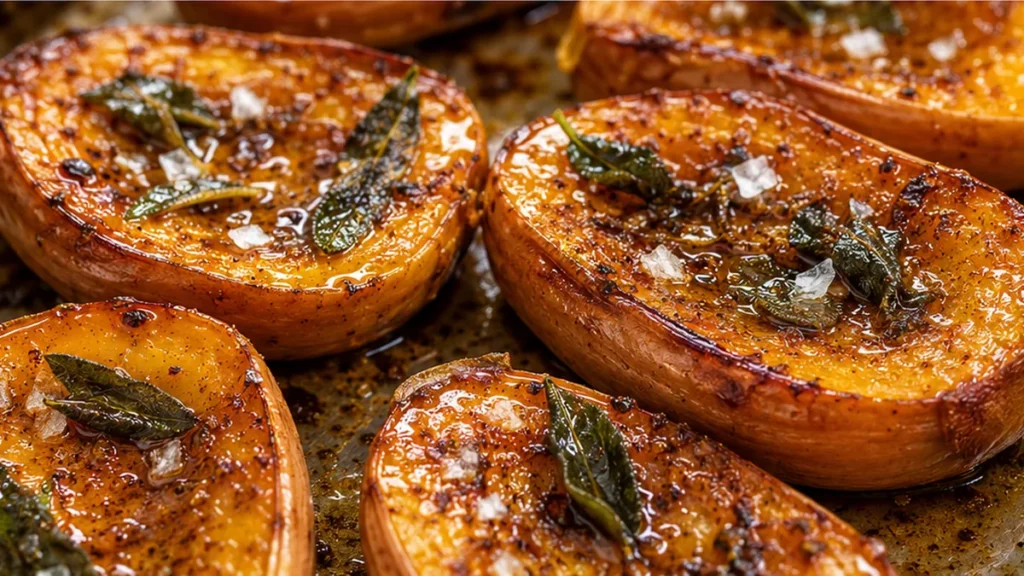
This honeynut squash recipe is the ultimate way to enjoy this small, sweet winter squash. Roasted to caramelized perfection with a delightful blend of brown sugar, pineapple, and a hint of chipotle, it’s incredibly easy to prepare and delivers an unforgettable flavor profile. Perfect for beginners and seasoned cooks alike, this honeynut squash dish offers a fantastic balance of sweet, savory, and spicy notes. It transforms a simple vegetable into a standout side dish that is worth making your family and guests.
Key takeaways
- Roast honeynut squash cut-side down first to concentrate sugars and prevent wateriness.
- The pineapple and chipotle in the glaze create a balanced sweet, spicy, and smoky flavor.
- Sage leaves added at the end provide an aromatic counterpoint to the glaze.
- Adjust glaze ingredients for sweetness and spice levels to suit your palate.
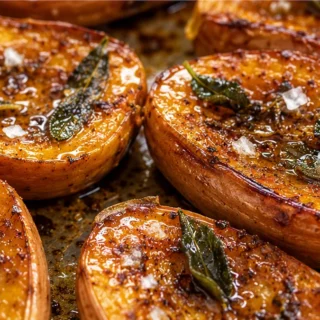
Craveable Honeynut Squash – Sweet & Spicy Bliss
Ingredients
- 4 honeynut squash, halved lengthwise and seeded
- 6 tablespoons salted butter, melted
- 1/3 cup canned crushed pineapple
- 2 tablespoons dark brown sugar
- 1 teaspoon cinnamon
- 1 teaspoon chipotle chile powder
- 2 tablespoons salted butter, melted
- 12 fresh sage leaves
- Flaky sea salt, to taste
Instructions
- Preheat oven to 425° F (220° C). Arrange squash halves cut-side up on a baking sheet.
- In a bowl, mix 6 tablespoons melted butter, crushed pineapple, dark brown sugar, cinnamon, chipotle powder, and a pinch of flaky sea salt. Rub squash all over with half of this sauce.
- Flip squash cut-side down and bake for 20 minutes.
- Remove squash from oven. Flip cut-side up, brush with remaining sauce. Bake for another 10 minutes, until caramelized and tender.
- Meanwhile, in a skillet, melt the remaining 2 tablespoons of butter over medium heat. Add sage leaves and cook until butter browns and sage crisps.
- Serve squash warm, topped with the crispy sage and a final sprinkle of flaky sea salt.
Notes
The technique that makes it
What makes this honeynut squash recipe work is the interplay of roasting and glazing. Halving the squash lengthwise and seeding it prepares it for even cooking. Roasting cut-side down initially allows the natural sugars within the honeynut squash to caramelize directly on the pan, concentrating their sweetness and developing a tender, yielding texture. This method prevents the squash from becoming watery. The glaze, a rich combination of melted butter, crushed pineapple, brown sugar, cinnamon, and chipotle chile powder, is then brushed onto the cut surfaces. The pineapple provides a tropical sweetness and a touch of acidity that balances the richness of the butter and the earthiness of the squash. Brown sugar adds depth and aids in caramelization. Cinnamon introduces warmth, while chipotle chile powder offers a smoky, subtle heat that cuts through the sweetness, creating a complex flavor profile. The final roasting stage, often with the squash cut-side up, allows this glaze to bubble and thicken, coating the squash in a sticky, flavorful shell. Adding fresh sage leaves during the final minutes infuses their aromatic, slightly peppery notes, which complement the sweet and spicy glaze beautifully. Finishing with flaky sea salt enhances all the flavors, providing crucial contrast.
Troubleshooting
- Squash is watery: Ensure squash is roasted cut-side down initially to allow moisture to escape and sugars to concentrate before glazing. Do not overcrowd the pan.
- Glaze is too thin: If the glaze hasn’t thickened sufficiently after the final roasting, you can carefully remove the squash from the pan and simmer the remaining glaze for a few minutes until it reaches a syrupy consistency. Brush it back on the squash.
- Squash is unevenly cooked: Smaller squash halves may cook faster than larger ones. Monitor the squash closely and remove individual pieces as they become tender. Ensure the oven temperature is accurate.
- Flavor is too sweet or too spicy: Adjust the brown sugar and chipotle chile powder in the glaze to your preference. For less sweetness, reduce brown sugar; for less spice, reduce chipotle.
Substitutions
- Honeynut Squash: Acorn squash can be substituted. It has a similar texture but may require slightly longer roasting time. Butternut squash is another option, though its flavor is milder.
- Salted Butter: Unsalted butter can be used; simply add an extra pinch of salt to the glaze. Ghee is also a good alternative for a nuttier flavor.
- Crushed Pineapple: Applesauce can be used for a similar sweetness and moisture, though it will alter the tropical notes. A tablespoon of orange juice concentrate could also work for acidity.
- Dark Brown Sugar: Maple syrup or honey can replace brown sugar, offering a different but complementary sweetness. Adjust quantity as they are sweeter than brown sugar.
- Chipotle Chile Powder: Smoked paprika can be used for smokiness without the heat, or cayenne pepper for direct heat if chipotle is unavailable.
Pro tips
- Use dark brown sugar for a richer caramelization and deeper flavor.
- Ensure the sage leaves are fully submerged in the browning butter to crisp up properly.
- Don’t overcook the squash; it should be tender but not mushy.
Try this recipe for a unique and delicious way to serve honeynut squash. It’s a simple dish that delivers complex flavors. Enjoy!
More from blog →
Frequently asked questions
Can I use butternut squash instead of honeynut squash?
Yes, butternut squash is a good substitute. Honeynut squash is smaller and sweeter, so you might need to adjust the roasting time slightly. Cut the butternut squash into similar-sized pieces as you would the honeynut for even cooking. The flavor will be slightly less sweet but still delicious with the spice blend.
How do I know when the honeynut squash is fully cooked?
The squash is done when it is fork-tender and easily pierced with a fork. The edges should be slightly caramelized and browned. Avoid overcooking, which can make the squash mushy. Roasting time can vary depending on the size of your squash pieces and your oven’s calibration.
How long does cooked honeynut squash last in the fridge?
Leftover cooked honeynut squash can be stored in an airtight container in the refrigerator for up to 3-4 days. Reheat gently on the stovetop or in the oven. It can also be enjoyed cold as part of a salad or grain bowl. Ensure it cools completely before storing.
What can I serve with spicy honeynut squash?
This spicy honeynut squash pairs wonderfully with a variety of dishes. Serve it as a side to vegan roasts, lentil loaves, or hearty grain bowls. It’s also delicious alongside black beans and rice, or as a topping for salads. Its sweetness and spice make it a versatile accompaniment.