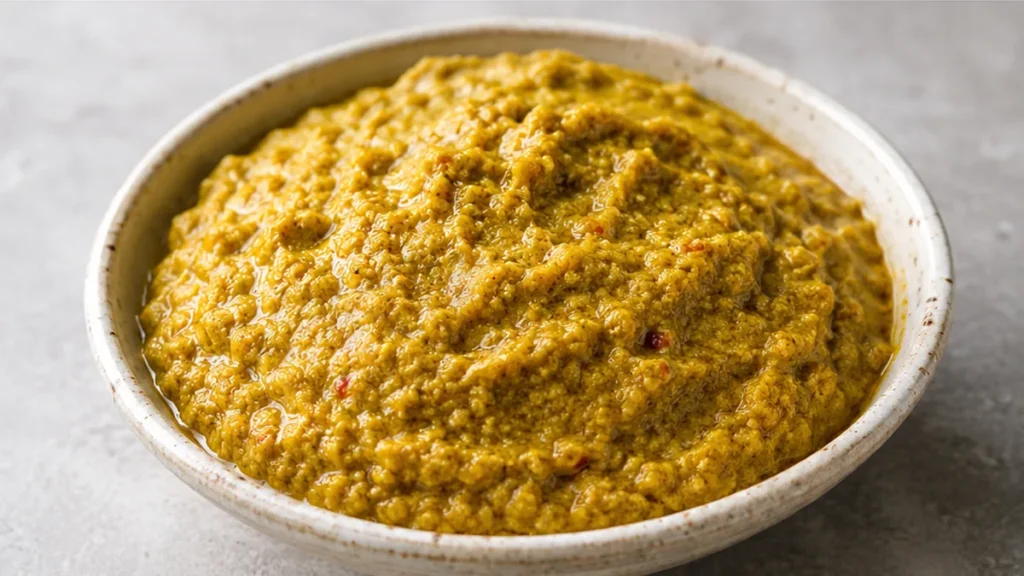
Creating an authentic yellow curry paste at home might seem daunting, but this recipe for yellow curry paste simplifies the process, delivering a depth of flavor far superior to store-bought versions. The secret lies in roasting the aromatics, which caramelizes their natural sugars and intensifies their essence. This paste is the foundation for countless delicious Thai dishes, offering a versatile base that can be customized to your preferred spice level. Once you master this yellow curry paste, you’ll find yourself reaching for it again and again for its vibrant color and complex flavor profile. Roasting the aromatics can look like a step to skip, but it is crucial for the paste’s signature depth and worth every minute.
Key takeaways
- Use fresh aromatics for the best flavor.
- Control the heat by adjusting the number of dried chilies.
- Sauté shallots and garlic gently to avoid bitterness.
- Blend thoroughly for a smooth, cohesive paste.
Easy Homemade Thai Yellow Curry Paste
Ingredients
- 4 large shallots
- 6 tablespoons avocado oil
- 4 large heads of garlic
- 6 -inch piece of fresh ginger
- 5-20 whole dried Thai chili peppers
- 1 1/2 tablespoons salt
- 2-3 tablespoons turmeric
- 2-3 tablespoons mild curry powder
- 2 teaspoons roasted ground coriander
- 3 tablespoons lemongrass paste
Instructions
- Preheat the oven to 350 degrees F (175 C).
- Prep the aromatics: Peel the shallots, drizzle with 2 tablespoons oil, and wrap in foil. Peel the ginger, slice thinly, drizzle with 2 tablespoons oil, and wrap in foil. Pull outer paper off garlic, cut pointy tops off, drizzle with 2 tablespoons oil, and wrap each head in foil.
- Bake the aromatics: Place all foil packets on a baking sheet. Bake for 15 minutes. Remove ginger (it should be soft), increase temperature to 400 F (200 C), and roast shallots and garlic for another 30 minutes until golden brown and fragrant. When cooled, squeeze garlic cloves out of paper.
- Soak the chilis: While aromatics roast, pour boiling water over chili peppers to rehydrate. Let them soak for 15 minutes. Drain the water.
- Make the paste: Combine roasted shallots, garlic, ginger, rehydrated chilis, salt, turmeric, mild curry powder, roasted ground coriander, and lemongrass paste in a food processor or blender. Add a splash of avocado oil if needed. Blend until a smooth paste forms, scraping down sides as necessary.
Notes
The Technique Behind Perfect Yellow Curry Paste
The key to a vibrant and flavorful homemade yellow curry paste lies in the proper preparation and combination of its aromatic ingredients. This recipe emphasizes a balance of fresh aromatics and dried spices, with the avocado oil acting as a crucial binder and flavor carrier. The shallots and garlic, when sautéed gently, undergo a mild Maillard reaction, developing sweetness and depth without becoming bitter. This step is vital; over-browning can introduce acrid notes that will dominate the paste. Similarly, the ginger and lemongrass provide pungent, citrusy, and slightly sweet notes that are essential to the yellow curry profile. The dried Thai chilies, adjusted for heat preference, are rehydrated to soften them, making them easier to blend into a smooth paste. The turmeric not only contributes the characteristic yellow hue but also adds an earthy, slightly peppery flavor. Roasting the coriander seeds before grinding intensifies their aroma and adds a warm, complex note. Finally, the salt acts as a flavor enhancer and preservative, while the mild curry powder provides a foundational warmth and complexity. Blending these ingredients thoroughly until a smooth, cohesive paste is formed ensures that all the flavors meld together harmoniously.
Troubleshooting
- Problem: Paste is too dry and difficult to blend. Fix: Add a tablespoon of avocado oil at a time while blending until the desired smooth consistency is reached. Ensure all ingredients are roughly chopped before blending.
- Problem: Curry paste tastes bitter or burnt. Fix: This usually indicates the shallots and garlic were browned too quickly or at too high a heat. To mitigate, add a pinch more salt and a touch of sweetness (like a teaspoon of sugar or honey) and blend thoroughly. For future batches, reduce the heat during the sautéing step.
- Problem: Heat level is too high or too low. Fix: For future batches, adjust the number of dried Thai chili peppers. If the paste is already made and too spicy, you can mellow the heat by adding more coconut milk or a sweetener when using it in a curry dish. If it’s not spicy enough, you can add a pinch of cayenne pepper or a fresh chili to the finished paste and re-blend.
- Problem: Paste lacks depth of flavor. Fix: Ensure you are using fresh aromatics (shallots, garlic, ginger, lemongrass). Toasting the coriander seeds before grinding can also significantly boost flavor. Consider adding a small amount of fish sauce when using the paste for an umami boost.
Substitutions
- Shallots: Substitute with 1 cup of finely chopped yellow onion. The flavor will be slightly less sweet and more pungent, but still acceptable.
- Avocado Oil: Use a neutral-flavored oil like grapeseed or canola oil. Coconut oil can be used, but it will impart a distinct coconut flavor.
- Fresh Ginger: Use 1 tablespoon of ground ginger. The flavor will be less bright and pungent than fresh ginger.
- Lemongrass Paste: Substitute with 2 tablespoons of finely minced fresh lemongrass (use the tender lower white and light green parts only). The texture might be slightly less smooth.
Pro tips
- For extra heat, increase the number of dried Thai chili peppers. For a milder paste, use fewer, or soak them longer to reduce their potency.
- Store the paste in an airtight container in the refrigerator for up to 2 weeks, or freeze in ice cube trays for longer storage (up to 3 months).
- If your paste is too thick, add an extra tablespoon of avocado oil while blending to achieve the desired consistency.
- When roasting the garlic, make sure the cloves are soft and easily squeezed out. If they are still firm, roast for a few more minutes.
Mastering this homemade yellow curry paste is a game-changer for any home cook. Experiment with different curry recipes and enjoy the rich, authentic flavors you’ve created from scratch. Share your culinary creations with us!
Frequently asked questions
How can I adjust the spice level of this yellow curry paste?
The spice level is primarily determined by the number of dried Thai chili peppers used. For a milder paste, start with fewer chilies (around 5-10) and increase the quantity for more heat. You can always add more spice when cooking, but it’s harder to reduce it once the paste is made.
What is the best way to store homemade yellow curry paste?
Store the paste in an airtight container in the refrigerator for up to two weeks. For longer storage, freeze the paste in an ice cube tray; once frozen, transfer the cubes to a freezer bag. This method allows you to easily use small portions as needed.
Can I make this yellow curry paste without dried chilies?
While dried chilies are traditional, you can substitute them with fresh chilies like jalapeños or serranos for a different heat profile. For a completely non-spicy version, omit the chilies entirely, but be aware this will significantly alter the characteristic flavor of curry paste.
My paste is not smooth. What went wrong?
Achieving a smooth paste often requires a powerful blender or food processor and sufficient blending time. Ensure your ingredients are roughly chopped before blending. If the mixture is too dry, add a little more avocado oil, one tablespoon at a time, until it blends more easily.
More from Vegan Air Fryer →