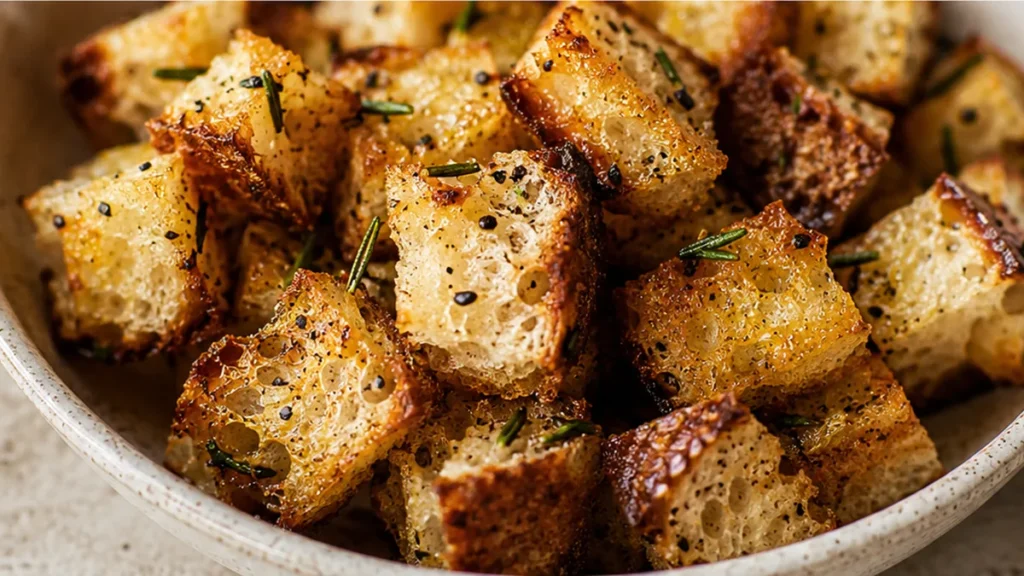
Homemade croutons are an absolute game-changer for anyone looking to elevate their soups and salads. While store-bought versions often fall flat, making your own offers unparalleled freshness, flavor, and that irresistible crunch. This recipe for homemade croutons, specifically using sourdough, transforms a simple ingredient into a culinary star. These can burn quickly, so watch for even browning and flip them promptly. This recipe highlights how easy it is to achieve gourmet results with minimal effort, making it perfect for both novice and experienced home cooks. These homemade croutons are not just an accompaniment; they’re a key component that adds texture, flavor, and a touch of homemade warmth to any dish. They are incredibly versatile and can be seasoned to match any meal.
Key takeaways
- Use day-old sourdough for the best texture.
- Ensure bread cubes are evenly coated in seasoned oil, but not saturated.
- Bake at a moderate temperature, tossing halfway for even crisping.
- Watch closely to prevent burning, aiming for golden brown and crisp.
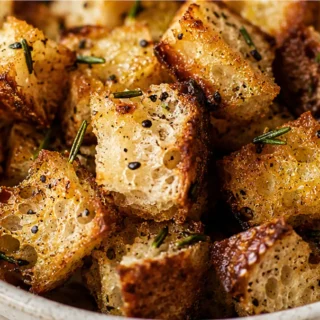
” Crispy Sourdough Croutons: Soup’s Best Friend”
Ingredients
- half a loaf of sourdough bread
- 1/2 cup olive oil
- 1 clove garlic, finely grated
- salt to taste
- freshly ground black pepper to taste
- 1 tablespoon fresh rosemary, chopped
Instructions
- Preheat oven to 400°F (200°C). Tear the sourdough bread into crouton-sized chunks.
- In a large bowl, combine the olive oil and finely grated garlic. Add the torn bread chunks and gently massage to ensure the oil is fully absorbed (some bread might crumble, adding great texture). Season thoroughly with salt and plenty of freshly ground black pepper.
- Spread the seasoned bread in a single layer on a baking sheet.
- Bake for about 15 minutes, flipping the croutons halfway through, until they are golden brown and crispy.
- Remove from oven and let cool completely before serving or storing.
Notes
The Technique Behind Crispy Sourdough Croutons
The magic of these sourdough croutons lies in achieving a perfect balance between a tender interior and a shatteringly crisp exterior. This is primarily driven by two factors: the fat and the heat. The olive oil acts as a conduit for heat, ensuring even browning and crisping of the bread’s surface. By coating the bread cubes thoroughly, we create a barrier that limits excessive moisture loss from the inside while promoting the Maillard reaction and caramelization on the outside. The grated garlic infuses the oil with aromatic compounds, which then transfer to the bread during baking. Sourdough’s inherent structure, with its open crumb and slightly chewy texture, is ideal because it can absorb the oil without becoming completely saturated and gummy, and it holds its shape well during the baking process. Baking at a moderate temperature (375°F or 190°C) allows sufficient time for the moisture to evaporate from the surface, leading to crispness, without burning the exterior before the interior is properly toasted. The rosemary adds an aromatic layer that complements the toasty bread flavor.
Troubleshooting
- Problem: Croutons are too hard and dry, like rocks.
- Fix: Reduce baking time or lower the oven temperature slightly. Ensure the bread isn’t stale to begin with, as this exacerbates dryness.
- Problem: Croutons are soggy or greasy.
- Fix: Make sure the bread cubes were evenly coated but not swimming in oil. Increase the baking temperature slightly or bake for a few minutes longer to allow excess oil to render off and moisture to evaporate. Ensure your oven rack is in the center for even heat circulation.
- Problem: Croutons are unevenly browned, some burnt, some pale.
- Fix: Toss the croutons halfway through baking to ensure all sides are exposed to the heat. If your oven has hot spots, consider rotating the baking sheet as well.
- Problem: Croutons lack flavor.
- Fix: Ensure you’ve seasoned generously with salt and pepper. The garlic and rosemary should be well distributed. For more intense garlic flavor, consider roasting whole garlic cloves and mashing them into the oil.
Substitutions
- Bread: While sourdough is ideal for its texture, a day-old baguette or ciabatta can be used. The result will be slightly less chewy and tangy.
- Olive Oil: Avocado oil or another neutral high-heat oil can be substituted. The flavor profile will change slightly, becoming less fruity.
- Garlic: Garlic powder (about 1/2 teaspoon) can replace fresh garlic. The flavor will be less pungent and fresh.
- Rosemary: Dried rosemary (about 1 teaspoon) or other herbs like thyme or oregano can be used. Adjust quantity based on herb potency; dried herbs are more concentrated.
Pro tips
- For extra flavor, toast the garlic gently in the olive oil before adding to the bread.
- Ensure the bread pieces are evenly sized for consistent baking. If the dough cracks, don’t worry, these small crumbles add great texture.
- Leftover croutons can be stored in an airtight container at room temperature for up to 5 days, or frozen for up to 1 month. Re-toast in the oven to restore crispness.
- For a richer flavor, add a pinch of dried herbs like oregano or thyme to the olive oil mixture.
Elevate your everyday meals with these incredible homemade croutons. Their unmatched crispness and garlicky kick will quickly make them a staple in your kitchen. Enjoy!
Frequently asked questions
Can I use fresh sourdough bread?
Using fresh sourdough will result in softer, less crispy croutons as the moisture content is higher. It’s best to use bread that is at least a day old, allowing it to dry out slightly, which promotes better crisping during baking.
How should I store homemade croutons?
Store completely cooled croutons in an airtight container at room temperature. They will maintain their crispness for up to a week. Avoid refrigeration, as this can make them soggy.
Can I make these croutons without herbs?
Yes, you can omit the rosemary if you prefer. The croutons will still be delicious with just the garlic, salt, and pepper. You can also experiment with other dried or fresh herbs like thyme or oregano.
What is the best way to cut the bread for croutons?
Cut the sourdough into roughly 1-inch cubes. Aim for uniform size to ensure even baking and crisping. A serrated knife works well for slicing the bread before cubing.
More from Vegan Air Fryer →