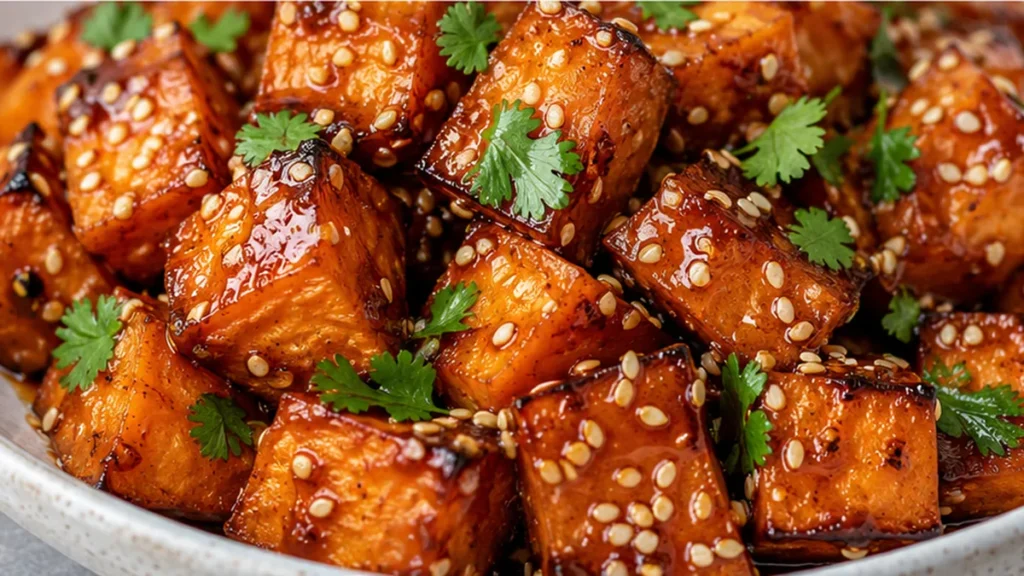
The secret to perfectly sticky and flavorful sesame sweet potatoes lies in a two-stage roasting process and a generous finishing drizzle. This recipe improves a simple root vegetable into a dish that can stand alone or complement any main course. Sesame sweet potatoes are a fantastic weeknight option, requiring minimal hands-on time for maximum flavor impact. A little extra toss during the higher heat phase helps every wedge caramelize without burning. It’s an easy way to add a healthy, satisfying component to your meal.
Key takeaways
- Roast sweet potatoes until tender and slightly browned for optimal sweetness and texture.
- Ensure wedges have space on the baking sheet to prevent steaming and encourage browning.
- Whisk glaze ingredients thoroughly to create a smooth, emulsified coating.
- Toss the glaze with hot, freshly roasted sweet potatoes for best adhesion.
Sticky Sesame Sweet Potatoes
Ingredients
- 2 sweet potatoes, peeled and cut into wedges
- 1 tablespoon vegetable oil
- 1/2 teaspoon chili powder
- A pinch of cayenne pepper for spiciness
- Salt and pepper to taste
- 2 tablespoons roasted sesame oil
- 2 tablespoons tahini
- 2 tablespoons sesame seeds
- 1/4 cup fresh cilantro, chopped
Instructions
- Preheat the oven to 375 degrees F. Toss the sweet potatoes with the vegetable oil, chili powder, cayenne, and salt and pepper. Place on a baking sheet and roast for 20 minutes, stirring gently every 5-10 minutes.
- Increase the heat to 400 degrees F and roast for another 5-10 minutes until the sweet potatoes are turning golden brown. Continue to stir the sweet potato pieces as needed to prevent over-browning. Remove from the oven and let cool slightly.
- On a separate platter or directly on the baking sheet, drizzle the sweet potatoes with the sesame oil and tahini. Sprinkle with sesame seeds. Add a handful of cilantro leaves. Serve immediately.
- For an extra touch, garnish with a squeeze of lime juice before serving.
Notes
The Technique: Achieving the Perfect Sticky Glaze
The magic of these sesame sweet potatoes lies in creating a luscious, sticky glaze that coats the tender wedges. This is achieved through a two-stage cooking process and the careful emulsification of the glaze ingredients. First, the sweet potatoes are roasted to develop their natural sweetness and achieve a tender interior. The dry heat of the oven encourages the Maillard reaction, browning the edges and intensifying their flavor. Crucially, ensure the sweet potato wedges are not overcrowded on the baking sheet. This allows for proper air circulation, promoting even browning and preventing steaming, which would result in a mushy texture rather than a desirable slight crispness. Overcrowding is the enemy of good roasting.
The second stage involves creating the sticky glaze. The roasted sesame oil and tahini form the base. When combined with the residual heat from the roasted sweet potatoes, they create a rich, nutty coating. Tahini, a paste made from ground sesame seeds, contains natural emulsifiers that help bind the oil and create a smooth, cohesive sauce. Stirring the glaze ingredients thoroughly before tossing ensures an even distribution. The residual heat from the potatoes will slightly warm and thin the glaze, allowing it to adhere beautifully without becoming oily or separated. The final toss with sesame seeds adds texture and reinforces the sesame flavor.
Troubleshooting
- Problem: Sweet potatoes are mushy and not browned.
Fix: Ensure the oven temperature is correct (around 400°F/200°C) and the wedges have enough space on the baking sheet. Do not overcrowd; use two sheets if necessary. Roasting at too low a temperature or without adequate space leads to steaming instead of roasting. - Problem: The glaze is too thick and clumpy.
Fix: The glaze might have cooled too much. Gently re-warm the tahini and sesame oil mixture slightly before tossing with the hot sweet potatoes. Alternatively, add a tiny splash (1/2 teaspoon) of warm water to loosen it. - Problem: The glaze is oily and separating.
Fix: This can happen if the tahini is not well-emulsified or if the glaze is too warm when tossed. Ensure the tahini is stirred well before measuring. Toss the glaze with the slightly cooled, but still warm, sweet potatoes to allow the tahini’s emulsifiers to bind the oils. - Problem: The sesame flavor is too intense or overpowering.
Fix: Reduce the amount of roasted sesame oil and tahini in the glaze, and consider using toasted sesame seeds instead of plain for a milder flavor. You can also increase the amount of cilantro to balance the richness.
Substitutions
- For Vegetable Oil: Avocado oil or another neutral high-heat oil can be used for roasting. The result will be similar browning and texture.
- For Tahini: Peanut butter or cashew butter can be substituted. This will change the flavor profile significantly, making it more peanutty or nutty, but will still create a sticky glaze.
- For Roasted Sesame Oil: A good quality toasted sesame oil is key here for flavor. If unavailable, a neutral oil can be used, but the distinct sesame aroma and taste will be diminished.
- For Cilantro: Fresh parsley or green onions (scallions) can be used as a garnish. This will provide a fresh, herbaceous note, though the specific flavor of cilantro will be missed.
Pro tips
- For crisper edges, ensure sweet potato wedges are in a single layer on the baking sheet without overcrowding.
- If your tahini is very thick, warm it slightly or thin with a tiny bit of water to make it easier to drizzle.
- Don’t skip the fresh cilantro; its bright, herbaceous note perfectly balances the rich sesame flavors.
- To store: Leftovers can be refrigerated in an airtight container for up to 3 days. Reheat gently in the oven at 300°F (150°C) for 10-15 minutes.
These sesame sweet potatoes are a versatile and delightful addition to any meal. Experiment with a squeeze of lime juice at the end for an extra zing, or a sprinkle of red pepper flakes for more heat. Enjoy this simple yet impressive side dish!
Frequently asked questions
Can I use raw sesame seeds instead of roasted?
Using raw sesame seeds will result in a less intense nutty flavor and a softer texture compared to roasted ones. For the best flavor and crunch, toasting raw sesame seeds lightly in a dry pan before adding them to the dish is recommended.
What if I don’t have tahini?
If tahini is unavailable, you can substitute it with smooth peanut butter or cashew butter. Be aware that this will alter the flavor profile, making it more nutty, but it will still create a delicious sticky coating.
How can I make this dish spicier?
To increase the heat, you can add more cayenne pepper to the sweet potato wedges before roasting. Alternatively, a pinch of red pepper flakes can be added to the glaze mixture for an extra kick of spice.
Can I prepare the sweet potatoes ahead of time?
You can roast the sweet potatoes ahead of time and reheat them in the oven before tossing with the glaze. However, for the stickiest and best-adhered glaze, it’s ideal to toss them immediately after they come out of the oven while they are still hot.
More from Vegan Air Fryer →