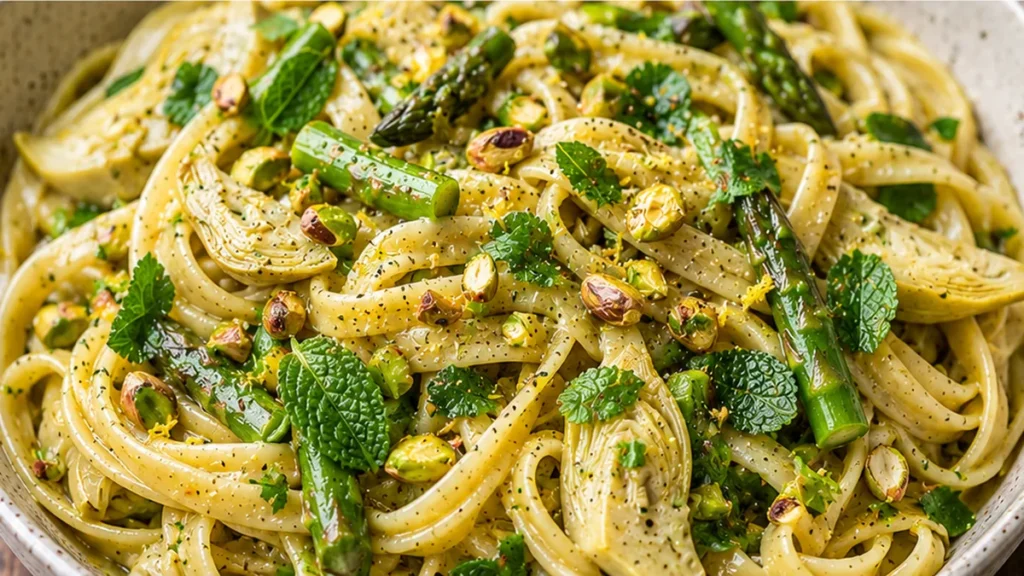
This lemony artichoke pasta with asparagus pistachio pesto is a mix of fresh flavors and delightful textures. It combines the bright zestiness of lemon, the satisfying crunch of pan-fried artichokes, and the herbaceous punch of a homemade pesto. Perfect for a quick weeknight meal or a light yet impressive dinner, this dish proves that bright, complex flavors can come from simple ingredients and straightforward preparation.
Key takeaways
- The success of this artichoke pasta lies in creating a stable emulsion for the uncooked sauce.
- Use fresh, high-quality ingredients, especially herbs, for optimal flavor.
- Whisk vigorously and stream in olive oil to achieve a creamy, well-coated sauce.
- Troubleshoot thinness with more cheese/nuts or oiliness with extra lemon juice.
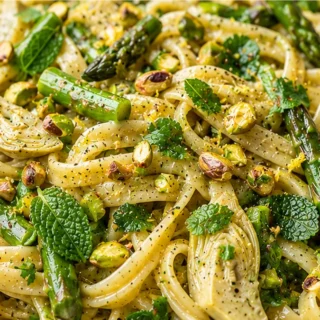
Lemon Artichoke Pasta Dream!
Ingredients
- 1 bunch of asparagus
- 1/4 cup fresh mint leaves
- 1/3 cup fresh cilantro or flat-leaf parsley (I used cilantro)
- 1/2 cup fresh basil leaves
- 1/2 cup grated parmesan cheese (omit if making vegan)
- 1/3 cup toasted pistachios
- 1-2 clove garlic (grated)
- Juice of 1 lemon
- 1/3 cup olive oil (or possibly more)
- Salt and freshly ground pepper
Instructions
- Snap the very ends of the asparagus off. Bring a large pot of heavily salted water to boil. Fill a medium size bowl with ice water. Blanche the asparagus for 3-4 minutes, until just tender. Drain the asparagus and place in the ice water. Drain and dry well.
- Cut the asparagus into 1 inch pieces. Add the asparagus to a food processor. Add the mint, cilantro, basil, pistachios, garlic, lemon juice, olive oil and salt, pulse until until combined. Mix in the parmesan, taste and adjust as needed. Set aside or store in the fridge for up to one week.
- Working with 1 artichoke at a time, using a knife, trim off all but 2 inches of the leaves. Pull off and discard the dark green outer leaves, then peel and trim the bottom and the stem. Quarter the artichoke and scrape out the hairy choke (if using baby artichokes skip this step). Rub the artichoke quarters all over with the lemon half, squeeze the extra lemon juice into a small bowl of water and add the quartered artichoke to the lemon water. Repeat with the remaining artichokes.
- In a medium saucepan of salted boiling water, blanch the artichokes until they are crisp-tender, about 3 minutes. Drain, transfer to a plate and pat dry.
- In a medium high-sided skillet, heat 1 inch of oil over medium heat. Fry the artichokes until crisp on all sides, about 3 to 5 minutes. Transfer to paper towels to drain.
- In a medium bowl, toss the artichokes with cilantro (or parsley) lemon zest, and crushed red pepper. Season with sea salt.
- Bring a large pot of salted water to a boil and boil your pasta until al dente. Add the pesto to a large pasta bowl. Drain the pasta and toss with the pesto. Serve the artichokes with the pasta and fresh feta cheese. EAT!
Notes
The technique that makes it
This artichoke pasta recipe relies on a bright, uncooked sauce that emulsifies beautifully, coating the pasta without the need for heavy cream or extensive cooking. The key is the balance of fresh ingredients and the proper blending technique. First, ensure your herbs (mint, cilantro/parsley, basil) are fresh and bright; wilting reduces their aromatic intensity. Grate the garlic finely or use a microplane to avoid any harsh, raw garlic bites. The lemon juice and olive oil are crucial for creating the sauce’s base. When combined, especially with the finely grated garlic and herbs, they begin to break down slightly and form a cohesive dressing. The parmesan cheese adds a salty, umami depth and also helps to bind the sauce. The pistachios provide a delightful textural contrast and a subtle nutty flavor that complements the lemon and herbs. For the best emulsification, combine the olive oil, lemon juice, garlic, and herbs in a bowl and whisk vigorously. Gradually stream in the olive oil while whisking continuously. This process, known as emulsification, creates a stable mixture where oil and water-based ingredients (lemon juice, herb juices) are suspended together, resulting in a creamy, well-coated sauce that clings to the pasta. Avoid over-processing if using a blender; a quick pulse is often enough to combine without making it watery.
Troubleshooting
- Problem: Sauce is too thin or watery. Fix: This can happen if the olive oil isn’t fully emulsified or too much liquid was added. Whisk in a little more grated parmesan cheese or a few more finely chopped pistachios to help thicken. You can also gently warm the pasta and sauce together over very low heat, stirring constantly, to encourage further emulsification, but be careful not to cook the herbs.
- Problem: Sauce is too oily. Fix: If the sauce seems to have separated or is overwhelmingly oily, try whisking in another tablespoon of lemon juice. The acidity will help to re-emulsify the sauce and cut through the richness. Alternatively, add a bit more grated parmesan.
- Problem: Garlic taste is too strong. Fix: Raw garlic can be pungent. If you find it overpowering, ensure you’ve grated it very finely. Next time, you can lightly sauté the garlic in a tablespoon of the olive oil for about 30 seconds before adding it to the other sauce ingredients to mellow its flavor.
- Problem: Herbs are not flavorful enough. Fix: Ensure you are using fresh, high-quality herbs. If the flavor is still lacking, you may need to increase the quantity of herbs slightly or add a pinch more salt and pepper to enhance their natural taste.
Substitutions
- Asparagus: Substitute with blanched green beans, sugar snap peas, or broccoli florets. The texture will be slightly different, but the fresh, crisp element will remain.
- Pistachios: Toasted pine nuts, slivered almonds, or even sunflower seeds can be used for a similar crunchy texture. The flavor profile will shift subtly.
- Parmesan Cheese: For a vegan version, nutritional yeast can be used to mimic the cheesy, umami flavor. Alternatively, a vegan parmesan alternative can be substituted.
- Fresh Herbs: While the specific combination is key to the flavor, if you’re missing one, you can slightly increase the others. For example, if you don’t have mint, use more basil and cilantro. The overall profile will change but remain delicious.
Pro tips
- For extra crispy artichokes, ensure they are patted very dry after blanching.
- Adjust the amount of lemon juice and zest to your preference.
- If you don’t have pistachios, toasted almonds or walnuts also work well in the pesto.
- For a vegan version, omit the parmesan cheese and use a vegan alternative or nutritional yeast.
Enjoy this fresh and flavorful artichoke pasta dish, a perfect balance of fresh, zesty, and crispy elements.
More from Vegan Pasta →
Frequently asked questions
Can I use jarred artichoke hearts for this pasta?
Yes, jarred artichoke hearts work perfectly for this recipe. Drain them well and chop them into bite-sized pieces before adding them to the sautéed garlic and lemon zest. This will save you prep time while still delivering delicious flavor to your pasta.
How do I store leftovers of Lemon Artichoke Pasta Dream?
Store any leftovers in an airtight container in the refrigerator for up to 3 days. Reheat gently on the stovetop with a splash of water or vegetable broth to prevent the pasta from drying out. Avoid microwaving as it can make the pasta mushy.
What can I serve with Lemon Artichoke Pasta Dream?
This pasta is wonderful served with a crisp green salad dressed with a light vinaigrette. Grilled or roasted asparagus also makes a lovely side dish. For a heartier meal, consider adding some pan-seared tofu or vegan chicken strips.
Can I make Lemon Artichoke Pasta Dream ahead of time?
It’s best to assemble this dish just before serving for optimal texture. You can prep the components ahead: chop the artichokes, zest and juice the lemons, and mince the garlic. Cook the pasta and toss everything together when you’re ready to eat.