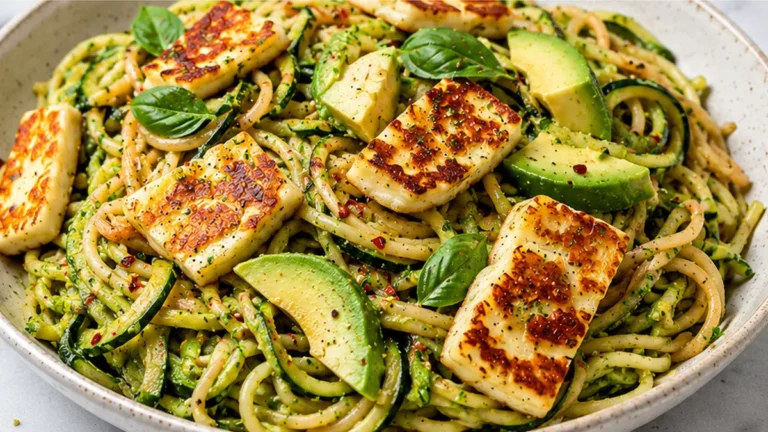
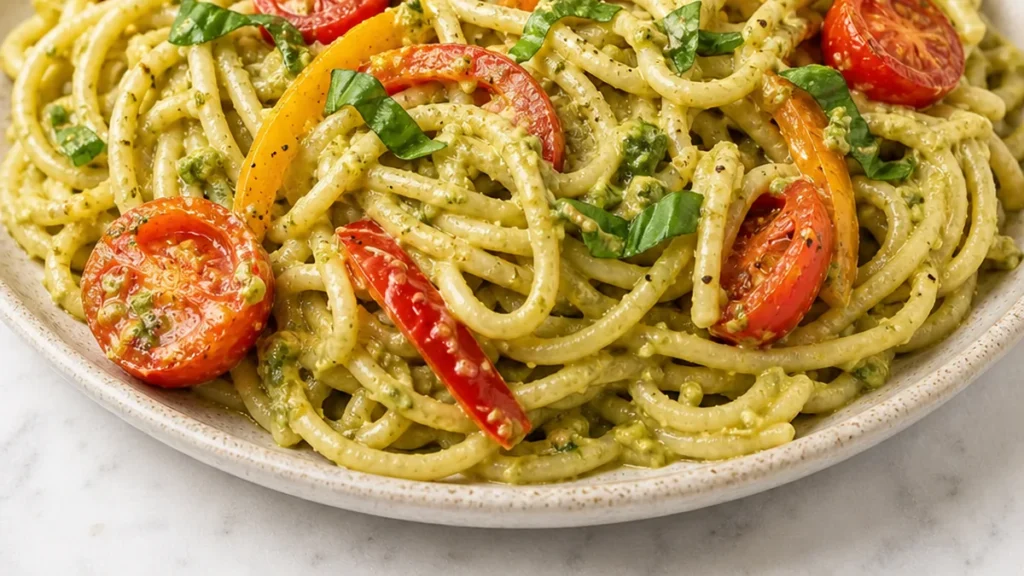
This 20-minute Mediterranean Hummus Noodles recipe is your new go-to for a quick, flavorful, and satisfying weeknight meal. It perfectly blends the creamy comfort of hummus with the bright, fresh taste of the Mediterranean, all without spending hours in the kitchen. Ideal for busy home cooks, this dish transforms simple ingredients into a fresh and delicious pasta experience. You’ll love how easily it comes together, proving that gourmet-tasting meals can be achieved in under half an hour.
Key takeaways
- The key to a creamy hummus noodle sauce is emulsifying with starchy pasta water.
- Reserve more pasta water than you think you'll need.
- Add pasta water gradually to achieve the right sauce consistency.
- Fresh basil and pesto balance the hummus flavor.
20-Min Mediterranean Hummus Noodles
Ingredients
- 2 cup cherry tomatoes
- 12 baby bell peppers
- 4 tablespoons olive oil
- Salt and pepper
- 3/4 pound thin spaghetti
- 3/4 cup hummus
- 1 cup pasta cooking water
- 2 tablespoons basil pesto
- 1 cup fresh basil
- pinch crushed red pepper flakes
Instructions
- Bring a large pot of salted water to a boil.
- Heat a grill or grill pan to high heat. Toss the tomatoes and baby bell peppers with 2 tablespoons olive oil, salt, and pepper. Grill the peppers until grill marks appear, about 3 minutes per side. Grill tomatoes until they just start to blister. Remove from heat. Set aside.
- Once the water is boiling, cook the pasta until al dente. Just before draining, reserve at least 1 cup of the cooking water. Drain the pasta.
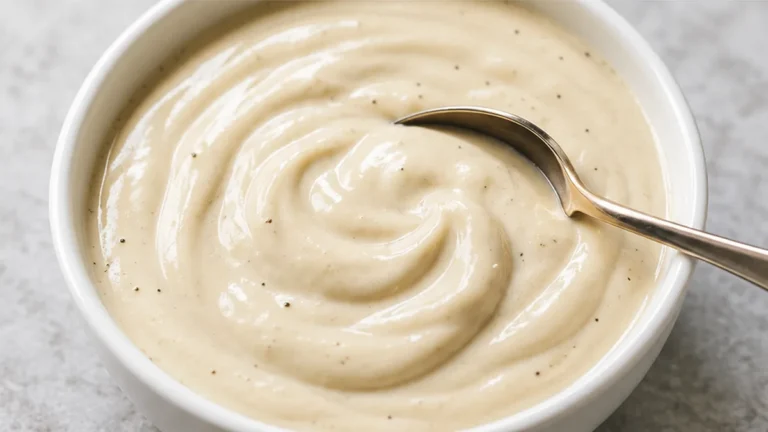
- In a large bowl, whisk together the hummus, pesto, basil, and crushed red pepper flakes. Add 1 cup of the reserved pasta water and whisk until smooth. Add the hot pasta and toss well to coat. Let sit for five minutes for the sauce to thicken.
- Divide the pasta among bowls. Top with the blistered tomatoes and grilled peppers. Enjoy warm!
Notes
The technique that makes it
The magic behind these 20-Minute Mediterranean Hummus Noodles lies in creating a creamy, emulsified sauce using the starchy pasta water. When spaghetti cooks, it releases starches into the water. This starchy water acts as a binder, preventing the hummus and pesto from becoming a greasy, separated mess. The key is to reserve about 1.5 cups of this pasta water before draining the spaghetti. Then, while the pasta is still hot, you’ll gradually whisk the reserved water into the mixture of hummus, pesto, olive oil, salt, and pepper. Start with about half a cup and add more as needed until you achieve a smooth, cohesive sauce that coats the noodles beautifully. This process is essentially creating a warm emulsion, similar to how a vinaigrette is made, but with the added body from the starch. The heat from the pasta and the water helps to loosen the hummus and pesto, allowing them to meld together seamlessly. Don’t rush this step; adding the water gradually ensures the sauce emulsifies properly, resulting in a rich, velvety texture rather than a watery or clumpy one. The cherry tomatoes and baby bell peppers, lightly sautéed in olive oil with salt and pepper, add bursts of sweetness and a slight crunch, complementing the creamy sauce without overpowering it.
Troubleshooting
- Sauce is too thick: Add more reserved pasta water, one tablespoon at a time, whisking continuously until the desired consistency is reached. The starch in the water will help thin the sauce without making it watery.
- Sauce is too thin: Continue to cook the sauce gently over low heat, stirring constantly, to allow some of the liquid to evaporate. You can also add a little more hummus or pesto to thicken it, but do so sparingly to avoid altering the flavor balance.
- Sauce is greasy or separated: This usually happens if not enough pasta water was used or if it wasn’t whisked in gradually. Try vigorously whisking in a little more hot pasta water. If that doesn’t work, you can attempt to re-emulsify by slowly drizzling in a bit more olive oil while whisking constantly.
- Hummus flavor is too strong: Adjust the amount of basil pesto and fresh basil. The pesto and fresh herbs can help to balance the earthiness of the hummus. A squeeze of lemon juice can also brighten the flavors.
Substitutions
- Thin spaghetti: Linguine, fettuccine, or even whole wheat spaghetti will work. Adjust cooking time as needed. The sauce will coat any long pasta shape well.
- Hummus: Tahini can be used, but the sauce will be less creamy and more intensely nutty; you may need to add a bit more liquid or a touch of yogurt for creaminess. Plain Greek yogurt or ricotta can also be used for a creamier sauce, though the flavor profile will change significantly.
- Basil pesto: Sun-dried tomato pesto offers a different but complementary flavor. Alternatively, you can omit the pesto and increase the fresh basil and add a clove of minced garlic for a simpler herby flavor.
- Cherry tomatoes: Grape tomatoes or even diced ripe tomatoes (added at the end to avoid becoming mushy) can be used. For a different vegetable, consider adding sautéed zucchini or spinach.
Pro tips
- Use a good quality plain hummus for the creamiest sauce.
- Don’t skip reserving the pasta water; it’s key to emulsifying the sauce.
- Adjust the red pepper flakes to your spice preference.
- Add a squeeze of lemon juice at the end for extra brightness.
Experience the delightful fusion of creamy and fresh with these Mediterranean Hummus Noodles. It’s a quick, flavorful dish that’s sure to become a family favorite.
More from Vegan Pasta →
Read also on TastyBend: Nutrition Shakes Nutrition Facts: Complete Expert Health Guide.
Frequently asked questions
Can I use regular pasta instead of noodles for hummus noodles?
Absolutely! Regular pasta like spaghetti or linguine works perfectly as a substitute for noodles. Simply cook your chosen pasta according to package directions until al dente. The hummus sauce will coat any pasta shape beautifully, delivering the same delicious Mediterranean flavors.
How do I make hummus noodles ahead of time?
You can prepare the hummus sauce and cook the noodles separately up to two days in advance. Store the sauce in an airtight container in the refrigerator. Cook the noodles just before serving to prevent them from sticking together. Reheat the sauce gently and toss with freshly cooked noodles.
What are good toppings for Mediterranean hummus noodles?
Enhance your hummus noodles with fresh toppings like chopped Kalamata olives, sun-dried tomatoes, crumbled vegan feta, a sprinkle of fresh parsley or mint, and a drizzle of extra virgin olive oil. Toasted pine nuts or chickpeas also add a delightful crunch and flavor.
How long do leftover hummus noodles last in the fridge?
Leftover hummus noodles are best consumed within 2-3 days. Store any remaining portions in an airtight container in the refrigerator. When ready to eat, gently reheat the noodles and sauce on the stovetop over low heat or in the microwave, adding a splash of water if the sauce has thickened too much.