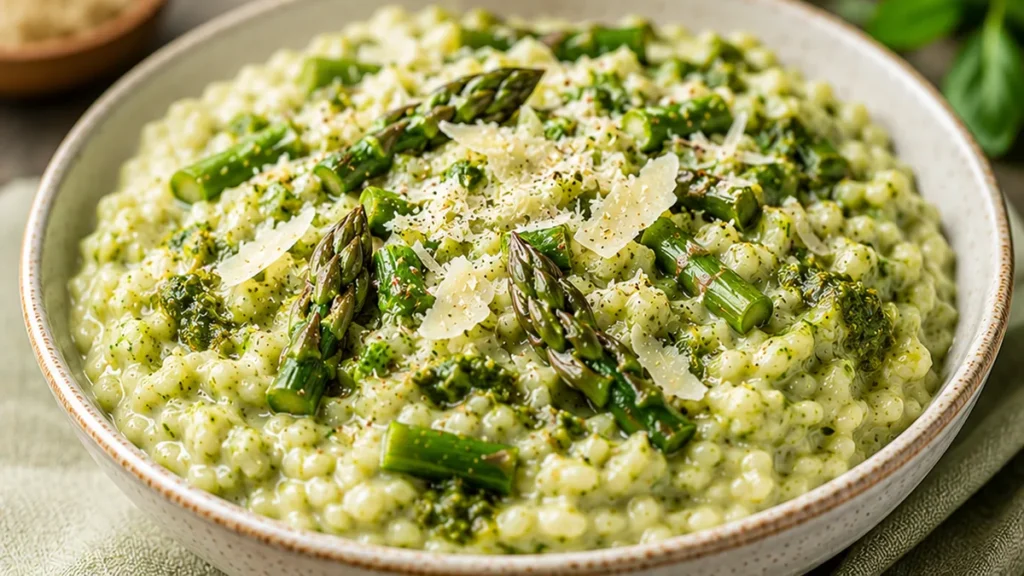
This cauliflower risotto offers a lighter, yet incredibly satisfying take on the classic Italian dish. Utilizing finely grated cauliflower instead of rice, it achieves a wonderfully creamy texture without the heavy carbs. It’s a versatile meal that’s perfect for a weeknight dinner or a light lunch, allowing the bright, fresh flavor of fresh asparagus and a zesty hemp seed pesto to shine. Our focus on fresh ingredients and simple techniques ensures that this cauliflower risotto is not only delicious but also remarkably easy to prepare. It’s a fantastic option for those seeking healthier alternatives without compromising on flavor or comfort.
Key takeaways
- Finely grating the cauliflower is key to mimicking rice texture.
- Gradually adding warm broth and stirring develops creaminess from cauliflower starches.
- Toasting the grated cauliflower before adding liquid reduces raw flavor.
- Finishing with fat (coconut milk/cream, cheese) creates a luscious sauce.
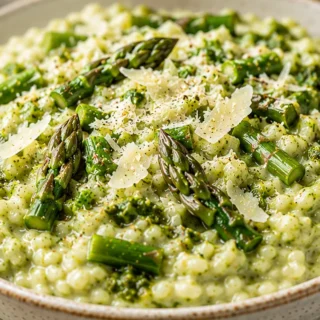
Creamy Cauliflower Risotto with Pesto
Ingredients
- 1/4 cup olive oil
- 1/2 small onion (finely chopped)
- 1 large or 2 small heads cauliflower (finely grated*)
- 2 cloves garlic (minced or grated)
- 1/3 cup white wine
- 1 inch small bunch asparagus (cut into 1-2 sticks)
- 1/2 cup veggie or chicken broth + more if needed
- zest of 1 lemon
- 1/2 cup full-fat canned coconut milk (or cream)
- 1/2-3 /4 cup parmesan cheese (use nutritional yeast for vegan eaters)
Instructions
- For the Cilantro-Basil Hemp Seed Pesto: In a bowl, combine the cilantro, basil, hemp seeds, 2 tablespoons olive oil, lemon juice, garlic (if using), parmesan cheese (if using), crushed red pepper and a pinch of both salt and pepper. Taste and adjust seasonings. Add water to thin if desired.
- Heat a large, high-sided skillet over medium heat and add 2 tablespoons olive oil. Add the onion, season with salt and pepper, and cook until caramelized, about 8 minutes.
- Add the grated cauliflower and the minced garlic to the skillet. Season with salt and pepper and cook for 2 more minutes.
- Deglaze the pan with white wine and cook, stirring constantly, until the liquid is almost evaporated. Stir in the asparagus.
- Slowly pour in the veggie broth and coconut milk. Bring to a simmer and cook until the cauliflower and asparagus are tender and the mixture is creamy, about 6 to 8 minutes.
- Remove from heat. Stir in the lemon zest and parmesan cheese. Taste and adjust seasonings.
- Divide the risotto among bowls. Top generously with the prepared pesto.
Notes
The technique that makes it
The magic behind a truly creamy cauliflower risotto lies in two key techniques: the initial sauté of aromatics and the gradual addition of liquid. Starting with finely chopped onion and minced garlic, sautéed in olive oil until softened and translucent, builds a foundational layer of flavor. This process, known as sweating, releases their natural sugars and creates a sweet, aromatic base without browning, which would impart a bitter taste. The finely grated cauliflower, mimicking the texture of Arborio rice, is then added and toasted for a few minutes. This step is crucial; it slightly caramelizes the cauliflower, reducing its raw flavor and enhancing its nutty notes, while also helping it absorb the subsequent liquids more effectively. The addition of white wine is another critical step. Allowing it to simmer and evaporate almost completely deglazes the pan, lifting any flavorful bits from the bottom and infusing the cauliflower with acidity and complexity. The subsequent gradual addition of warm broth, one ladleful at a time, is the hallmark of risotto making. Each addition should be absorbed before the next is added, allowing the grated cauliflower to release its starches, which thicken the liquid and create the signature creamy texture without the need for traditional rice. Stirring frequently during this process prevents sticking and further aids in starch release. Finally, finishing with lemon zest, coconut milk (or cream), and Parmesan cheese emulsifies into a rich, luscious sauce that coats every piece of cauliflower.
Troubleshooting
- Failure: Risotto is too watery.
Fix: Continue cooking, uncovered, over medium-low heat, stirring frequently, until the excess liquid has evaporated and the risotto has thickened to your desired consistency. You may need to add a little more Parmesan or nutritional yeast to help thicken. - Failure: Risotto is dry or gummy.
Fix: Stir in an additional splash of warm broth or coconut milk/cream, a tablespoon at a time, until it reaches a creamier consistency. Ensure you didn’t overcook the cauliflower initially. - Failure: Cauliflower tastes too strongly of raw cauliflower.
Fix: Ensure you grated the cauliflower very finely and toasted it sufficiently in the pan before adding liquid. A longer sauté time for the aromatics can also help mellow the cauliflower’s flavor. - Failure: Lack of creaminess.
Fix: Make sure to use full-fat coconut milk or cream and incorporate the Parmesan cheese (or nutritional yeast) thoroughly at the end. Stirring vigorously helps emulsify the fats and starches for maximum creaminess.
Substitutions
- Cauliflower: While this recipe is designed for cauliflower, finely grated broccoli stems or parsnips can be used for a similar texture, though they will impart different flavor profiles. Parsnips will add sweetness, while broccoli stems will offer a slightly earthier taste.
- Coconut Milk/Cream: Heavy cream, half-and-half, or even a plant-based milk like unsweetened cashew milk can be substituted. Cashew milk will provide a neutral creaminess, while dairy options will offer a richer flavor.
- Parmesan Cheese: For a vegan version, nutritional yeast is the primary substitute, offering a cheesy, umami flavor. A vegan hard cheese alternative can also be used, though results may vary in meltability and flavor intensity.
- White Wine: Dry sherry or vermouth can be used for a similar acidic and aromatic component. If avoiding alcohol entirely, substitute with an equal amount of additional broth mixed with a teaspoon of lemon juice or white wine vinegar for acidity.
Pro tips
- Ensure your cauliflower is finely grated for the best creamy texture.
- Don’t skip caramelizing the onion; it adds a deep flavor base.
- Adjust broth and coconut milk as needed to reach desired creaminess.
- For a vegan option, use nutritional yeast instead of parmesan.
Enjoy this lighter, brighter take on risotto. It’s a testament to how delicious healthy eating can be. Feel free to experiment with other herbs or vegetables!
More from Vegan Pasta →
Frequently asked questions
Can I make cauliflower risotto ahead of time?
You can prepare the cauliflower base and pesto a day in advance. Store them separately in airtight containers in the refrigerator. When ready to serve, reheat the cauliflower base gently and stir in the pesto just before serving to maintain its bright color and fresh flavor. Avoid overcooking when reheating.
What can I substitute for Arborio rice in cauliflower risotto?
While Arborio rice is traditional, you can use other short-grain rice varieties like Carnaroli or Vialone Nano for a similar creamy texture. For a grain-free option, finely riced cauliflower can be used as a complete substitute, but the texture will be softer and less al dente.
How do I know when cauliflower risotto is done?
The risotto is done when the cauliflower is tender but not mushy, and the sauce has thickened to a creamy consistency. The grains of rice (if used) should be al dente, meaning they have a slight bite. Stirring frequently helps achieve the perfect texture. Taste and adjust seasoning as needed.
How should I store leftover cauliflower risotto?
Allow the risotto to cool completely before storing. Transfer it to an airtight container and refrigerate for up to 3 days. Reheat gently on the stovetop with a splash of vegetable broth or water to loosen it up. Avoid microwaving, as it can make the texture uneven.