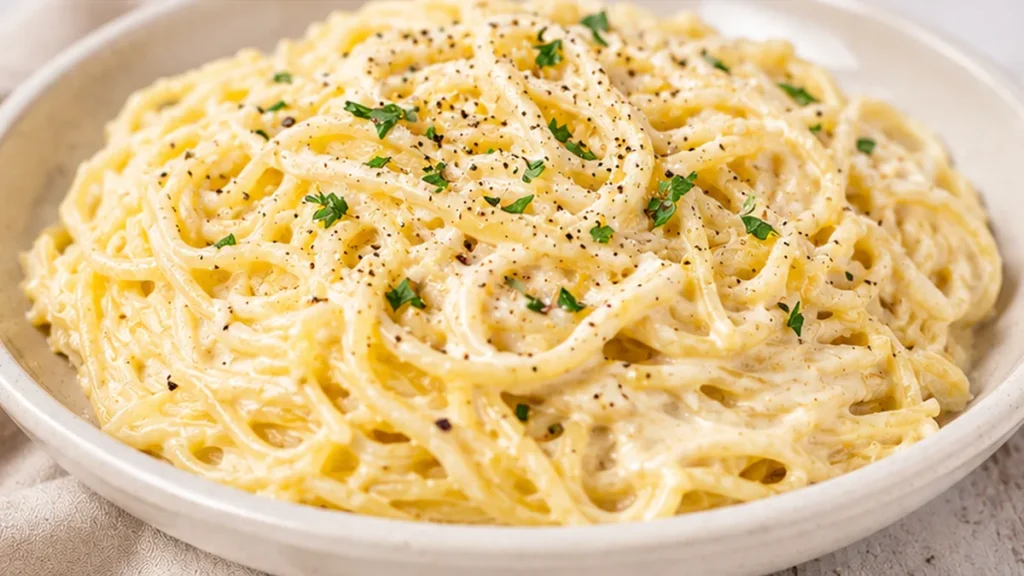
This creamy coconut cashew spaghetti squash alfredo offers a healthier, dairy-free take on a beloved Italian classic. It transforms humble spaghetti squash and roasted cauliflower into a rich, satisfying meal that is both visually appealing and incredibly delicious. Ideal for those seeking comfort food without the heaviness, this squash alfredo recipe is surprisingly simple to prepare, making it perfect for busy weeknights or impressing guests with a wholesome yet decadent dish.
Key takeaways
- Roast spaghetti squash cut-side down for optimal noodle texture.
- Steam cauliflower thoroughly for a smooth, creamy sauce.
- Adjust liquid and seasoning during blending for perfect consistency and flavor.
- Soak cashews to ensure a silky smooth sauce base.
Golden Spaghetti Squash Alfredo – Creamy Bliss!
Ingredients
- 1 medium spaghetti squash (halved + seeds removed)
- 1 head cauliflower (cut into florets)
- 2 tablespoons olive oil
- 1 teaspoon chili powder
- salt + pepper (to taste)
- 1 cup canned full fat coconut milk
- 3/4 cup salted roasted cashews
- 2 tablespoons lemon juice
- 1/4 cup nutritional yeast OR parmesan cheese
- 2 cloves garlic (smashed)
Instructions
- Preheat oven to 400°F (200°C).
- Halve spaghetti squash, drizzle cut sides with 1 tbsp olive oil, season with salt and pepper. Place cut-side up on a baking sheet and bake for 30-45 minutes, until tender.
- Toss cauliflower florets with remaining 1 tbsp olive oil, chili powder, salt, and pepper. Roast on a separate baking sheet for 25-30 minutes, until lightly charred.
- Make the sauce: In a blender, combine coconut milk, roasted cashews, lemon juice, nutritional yeast, smashed garlic, salt, and pepper. Blend until completely smooth and creamy.
- Scrape the spaghetti squash into strands. Toss the squash strands with the creamy coconut cashew sauce.
- Serve warm, topped with fresh herbs, a sprinkle of red pepper flakes, and optional garnishes.
Notes
The technique that makes it
The trick to this squash alfredo lies in transforming humble vegetables into a luxuriously creamy sauce. The core technique involves two key steps: properly preparing the spaghetti squash and creating a smooth, emulsified sauce base. First, roasting the halved spaghetti squash cut-side down on a baking sheet allows the flesh to steam and soften, making it easy to shred into ‘noodles’. Pricking the squash before roasting helps release steam, preventing it from bursting. For the sauce, the cauliflower florets are steamed until very tender. This is crucial for achieving a smooth consistency. The steamed cauliflower, along with the cashews (which have been soaked to soften them, aiding blendability), coconut milk, lemon juice, nutritional yeast or parmesan, and smashed garlic, are then blended until completely smooth. The high-speed blending emulsifies the ingredients, creating the signature creamy texture without traditional dairy or heavy cream. The chili powder and salt are added during the squash roasting to infuse flavor, while final seasoning adjustments are made to the sauce.
Troubleshooting
- Problem: Sauce is too thick. Fix: Gradually add more coconut milk or a splash of water while blending until the desired consistency is reached.
- Problem: Sauce is grainy or not smooth. Fix: Ensure the cauliflower is cooked until very tender before blending. If using cashews, make sure they are soaked and softened. Blend for a longer duration, preferably with a high-powered blender.
- Problem: Spaghetti squash is watery. Fix: Ensure the squash is roasted cut-side down to allow moisture to escape. Avoid overcrowding the baking sheet, which can lead to steaming rather than roasting.
- Problem: Alfredo sauce lacks flavor. Fix: Adjust salt and pepper to taste. Ensure adequate lemon juice is used for brightness and nutritional yeast/parmesan for cheesy depth. Sautéing the garlic briefly before adding it to the blender can also enhance its flavor.
Substitutions
- Cauliflower: Zucchini or broccoli florets can be used, though they may alter the flavor profile slightly. Ensure they are steamed until very tender.
- Cashews: Soaked sunflower seeds or blanched almonds can be used for a nut-free or alternative nut option. Adjust soaking time as needed.
- Coconut Milk: Full-fat oat milk or a neutral-flavored plant-based milk can be substituted, but the sauce may be less rich.
- Nutritional Yeast/Parmesan: For a vegan option, nutritional yeast provides a cheesy umami flavor. If not vegan, grated Parmesan cheese adds a classic savory note.
Pro tips
- Ensure your coconut milk is full-fat for the creamiest sauce.
- Roast the cashews beforehand for a deeper, nuttier flavor.
- Adjust lemon juice and seasoning to your personal taste preference.
- Don’t overcook the spaghetti squash; it should be tender but still hold its shape.
Enjoy this delightful and nourishing squash alfredo as a comforting main course. Experiment with different herbs and spices to make it uniquely yours.
More from Vegan Pasta →
Read also on TastyBend: El Dip Más Fácil y Cremoso de Queso.
Frequently asked questions
How do you know when spaghetti squash is cooked?
Spaghetti squash is done when the strands are tender and easily pulled away from the rind with a fork. Pierce the squash several times with a knife and bake at 400°F (200°C) for 40-60 minutes, depending on size. The flesh should yield easily to pressure.
Can I make spaghetti squash alfredo ahead of time?
Yes, you can prepare the spaghetti squash and the alfredo sauce separately ahead of time. Store them in airtight containers in the refrigerator for up to 3 days. Reheat the sauce gently and then toss with the cooked squash just before serving to prevent sogginess.
What can I substitute for cashews in vegan alfredo sauce?
For a cashew-free alfredo, try using blanched almonds, sunflower seeds, or silken tofu as the base for your sauce. Soaking almonds or seeds is still recommended for creaminess. Silken tofu offers a very smooth texture with a neutral flavor.
How long does leftover spaghetti squash alfredo last?
Leftover spaghetti squash alfredo can be stored in an airtight container in the refrigerator for up to 3 days. It’s best to store the squash and sauce separately if possible to maintain texture. Reheat gently on the stovetop or in the microwave.