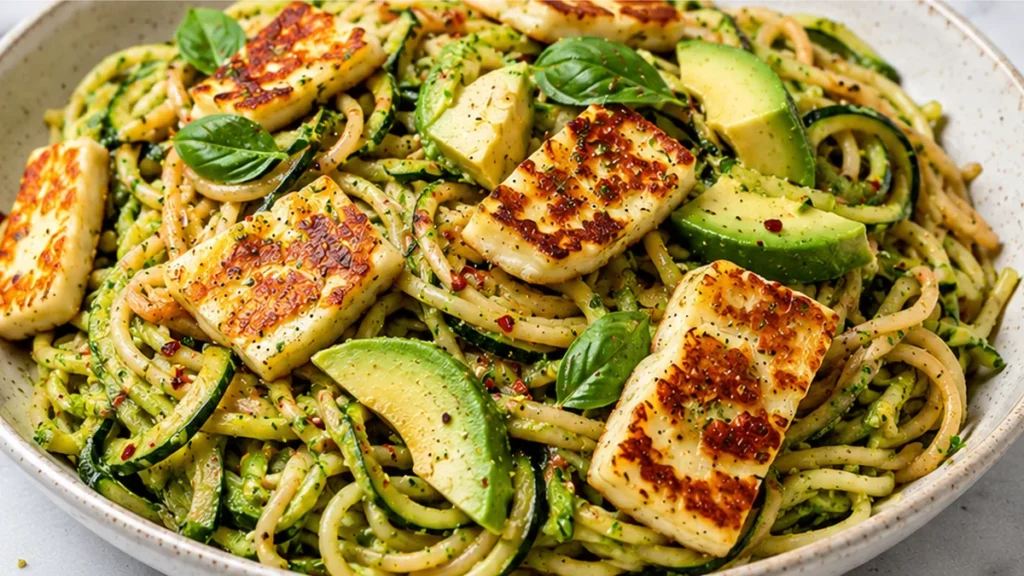
This Green Goddess Zucchini Pasta is a truly spectacular dish that redefines healthy eating. It masterfully combines the freshness of spiralized zucchini with a creamy, herb-infused avocado-tahini sauce, all crowned with delightfully crispy fried halloumi. Perfect for a quick yet impressive weeknight meal, this zucchini pasta recipe is a celebration of bright, fresh flavor and textures that will leave you feeling satisfied and nourished. Designed for those seeking a lighter, plant-forward meal without sacrificing taste, this recipe is incredibly adaptable. You can adjust the herbs, spice level, and even swap the pasta for more zucchini noodles for a fully low-carb experience. The star, however, is the irresistible combination of the cool, creamy sauce against the warm, chewy pasta and the salty, golden-brown halloumi.
Key takeaways
- The key to this dish is preparing the zucchini noodles to be al dente and achieving a crispy sear on the halloumi.
- Ensure your zucchini noodles are well-drained to prevent a watery sauce.
- Don't overcrowd the pan when frying halloumi for optimal crispiness.
- Adjust seasoning and freshness of ingredients like garlic and lemon for the best sauce flavor.
Goddess Zucchini Pasta & Crispy Halloumi
Ingredients
- 1/2 pound spaghetti (or gluten-free pasta)
- 2-3 zucchini (spiralized)
- 1/4 cup tahini (sesame seed paste)
- 1-2 cloves garlic
- 1/2 an avocado
- 2 tablespoons lemon juice
- 2 tablespoons roasted pistachios
- 1 cup fresh basil
- 1/2 cup fresh mint
- 1 jalapeno (seeded)
Instructions
- Bring a large pot of salted water to a boil. Boil the pasta according to package directions. Just before draining, reserve 1 cup of the pasta cooking water. Drain the pasta and add to a bowl with the spiralized zucchini.
- In a food processor or blender, combine tahini, garlic, avocado, lemon juice, pistachios, basil, mint, jalapeno, and 1 tbsp olive oil. Blend until smooth, adding more olive oil if needed to thin.
- Stir in 1/4 cup of the reserved pasta water and season the sauce with salt and pepper to taste. Pour the sauce over the hot pasta and zucchini. Toss well to combine, thinning with more pasta water if needed for desired consistency.
- Heat a large skillet over medium heat and add a drizzle of olive oil. Once hot, add the Halloumi slices and cook for 1-2 minutes per side, until lightly golden and crispy. Remove from skillet and drain on paper towels.
- Divide the sauced pasta and zucchini among bowls. Top generously with the fried halloumi slices.
- Garnish with extra fresh basil, mint, and a sprinkle of pistachios. Serve immediately and enjoy!
Notes
The technique that makes it
The success of this zucchini pasta hinges on two key techniques: proper zucchini noodle preparation and achieving perfectly crispy halloumi. For the zucchini noodles, it’s crucial to spiralize them just before cooking. Overly wet zucchini will lead to a watery sauce and mushy noodles. After spiralizing, a light salting and patting dry with paper towels can help remove excess moisture, ensuring they retain a pleasant al dente texture when tossed with the sauce. Avoid overcooking them; they should be tender-crisp, not limp. The halloumi requires a medium-high heat and a non-stick or well-seasoned cast-iron skillet. Ensure the halloumi slices are dry before searing. This allows for proper caramelization and the development of a golden-brown, crispy exterior while keeping the inside delightfully squeaky and soft. Don’t overcrowd the pan, as this will steam the cheese instead of searing it, preventing crispiness.
Troubleshooting
- Problem: Watery Sauce
Fix: Ensure zucchini noodles are well-drained after spiralizing. Pat them dry with paper towels to remove excess moisture before tossing with the sauce. Also, make sure your tahini is at room temperature and not overly oily. - Problem: Bland Sauce
Fix: Adjust seasoning with salt and pepper to taste. The garlic and lemon juice are essential for brightness; ensure you’re using fresh ingredients. Consider adding a pinch of red pepper flakes for a subtle kick. - Problem: Soggy Halloumi
Fix: Pat the halloumi slices completely dry before frying. Use a skillet heated to medium-high heat and avoid overcrowding the pan. Let each side sear undisturbed for 2-3 minutes until golden brown and crispy. - Problem: Gummy Pasta
Fix: If using traditional spaghetti, cook it al dente according to package directions. For zucchini noodles, avoid overcooking; they should be tender-crisp. Toss them with the warm sauce immediately after cooking to prevent them from releasing too much water.
Substitutions
- For Zucchini Noodles: You can substitute with yellow squash or even sweet potato noodles for a different flavor profile and color. Note that denser vegetables like sweet potato will require a slightly longer cooking time.
- For Tahini: Almond butter or cashew butter can be used, though they will alter the flavor significantly, making it nuttier and less traditional for a goddess dressing. Ensure they are unsweetened.
- For Pistachios: Toasted almonds, walnuts, or even sunflower seeds can provide a similar crunch and nutty flavor.
- For Halloumi: Pan-fried feta cheese (though it will be softer and saltier) or firm tofu (pressed and pan-fried until golden) can be used as alternatives.
Pro tips
- For an extra creamy sauce, use a very ripe avocado.
- Adjust the jalapeno to your spice preference, or omit for a milder sauce.
- Don’t overcook the zucchini noodles; they should retain a slight bite.
- Fry the halloumi in batches to ensure it gets perfectly crispy on all sides.
This Zucchini Pasta with Green Goddess sauce and Halloumi is a testament to how delicious healthy eating can be. Enjoy this bright, satisfying dish!
More from Vegan Pasta →
Frequently asked questions
Can I make goddess zucchini pasta ahead of time?
The zucchini noodles are best fresh, as they can become watery when stored. However, you can prep the goddess dressing and crisp the halloumi a few hours in advance. Store the dressing in an airtight container in the fridge and gently reheat the halloumi before serving to maintain crispiness.
What can I substitute for halloumi in this recipe?
For a vegan alternative, firm or extra-firm tofu pressed and pan-fried until golden and crispy works well. Alternatively, you could use pan-fried tempeh or even roasted chickpeas for a similar textural contrast. Ensure they are well-seasoned before adding to the pasta.
How do I know when the zucchini noodles are done?
Zucchini noodles cook very quickly, usually in just 2-3 minutes. You want them to be tender-crisp, not mushy. Stir them gently in the warm sauce until they soften slightly but still retain a slight bite. Overcooking will release too much water.
How to store leftover goddess zucchini pasta?
It’s best to store components separately if possible. Store any leftover dressing in the refrigerator. If you have leftover cooked pasta, keep it in an airtight container in the fridge for up to 2 days. Reheat gently and add fresh toppings if desired.