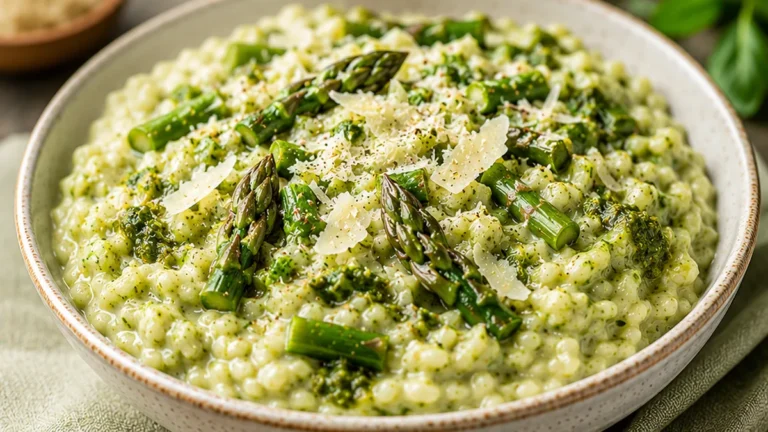
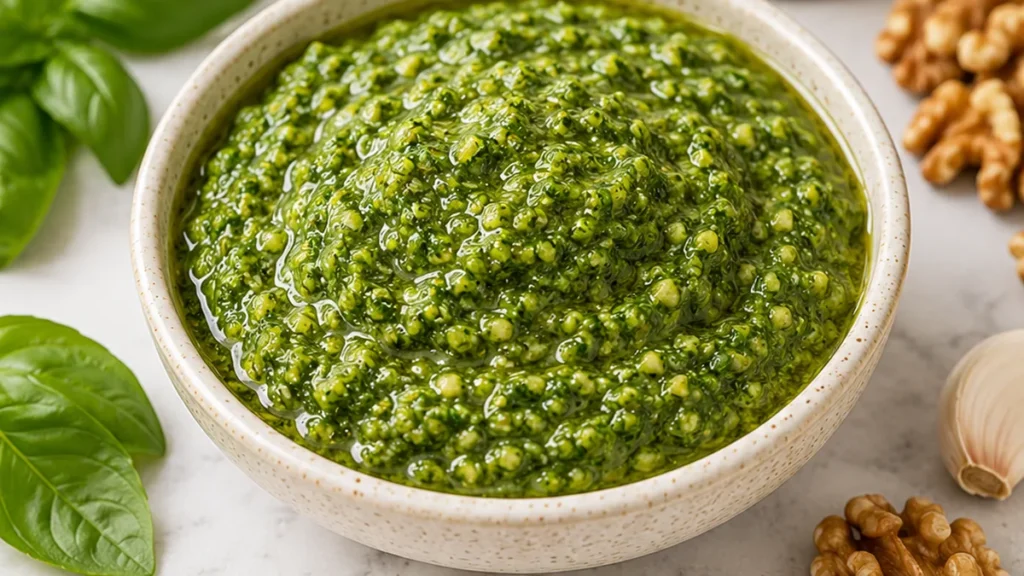
This basil walnut pesto recipe is a real upgrade for anyone looking to improve their home cooking with fresh flavors. Forget the pre-made stuff; this homemade version is incredibly easy to make and tastes infinitely better. Ready in just minutes, it’s perfect for busy weeknights or when you want to add a gourmet touch to any meal. Whether you’re tossing it with pasta, spreading it on a sandwich, or using it as a dip, this basil pesto is versatile and delicious. You’ll be amazed at how simple it is to achieve such a rich and satisfying flavor profile with just a few quality ingredients.
Key takeaways
- The key to bright basil pesto is gentle processing to avoid bruising the basil.
- Ensure basil leaves are thoroughly dried before blending.
- Adjust consistency by gradually adding more oil if needed.
- Experiment with nut and herb substitutions to create variations.
Basil Walnut Pesto: So Fresh & Easy!
Ingredients
- 4 ounces fresh basil (about 2 cups packed leaves)
- ¼ cup walnut halves or pieces
- 1 garlic clove, peeled and smashed
- 1 teaspoon lemon juice
- ¼ cup + 2 tablespoons extra-virgin olive oil or avocado oil
- Sea salt and fresh ground black pepper to taste
Instructions
- Combine 2 cups basil, ¼ cup walnuts, 1 smashed garlic clove, 1 teaspoon lemon juice, and ¼ cup olive oil in a food processor.
- Pulse ingredients until coarsely chopped, about 10-15 pulses.
- With the motor running on low, slowly stream in the remaining 2 tablespoons of olive oil over 30 seconds.
- Continue blending until the pesto is creamy and well combined, about 1 minute.
- Taste and season with sea salt and fresh ground black pepper, starting with ¼ teaspoon of each.
- Blend briefly for 10 seconds more to incorporate seasonings.
Notes
The technique that makes it
The key to a fresh basil pesto lies in the preparation of the basil and the order of ingredient addition. Fresh basil leaves should be thoroughly washed and dried. Excess moisture can lead to a watery pesto and dilute the fresh basil flavor. A salad spinner is ideal for drying, followed by a gentle pat with paper towels. When blending, it’s crucial to avoid over-processing, especially if using a food processor. Over-blending can generate heat, which will bruise the basil leaves, turning them a dull, brownish-green color and imparting a slightly bitter taste. Instead, pulse the ingredients in short bursts. Start by pulsing the basil, walnuts, and garlic until coarsely chopped. Then, gradually stream in the olive oil while the processor is running or continue pulsing. This emulsifies the oil and helps create a smoother, more cohesive texture without overworking the basil. The lemon juice not only adds a bright, acidic note but also helps preserve the basil’s bright green color by slightly lowering the pH, acting as a mild antioxidant.
Troubleshooting
- Problem: Pesto is bitter.
Fix: Bitterness often comes from over-processing the basil, which can bruise the leaves, or from using older, tougher basil stems. Ensure you’re using only the leaves and pulse gently. If the basil is older, try blanching the leaves very briefly in boiling water (10-15 seconds) then immediately plunging them into ice water before drying and blending; this can help mellow bitterness. - Problem: Pesto is watery or oily.
Fix: This usually indicates too much oil or insufficient drying of the basil. Ensure basil leaves are thoroughly dried before blending. If too oily, try adding a bit more basil or a tablespoon of grated Parmesan cheese (if not vegan) to help absorb excess oil and thicken the consistency. - Problem: Pesto lacks fresh basil flavor.
Fix: This can happen if the basil was bruised during processing or if too many other strong flavors are overpowering it. Use fresh, bright basil leaves. Process gently, and consider adding a little more fresh basil at the end if the flavor isn’t pronounced enough. Ensure your walnuts are fresh, as stale nuts can impart off-flavors. - Problem: Pesto is too thick or paste-like.
Fix: While a thick pesto is desirable, if it’s too difficult to spread or mix, gradually drizzle in a little more olive oil, a tablespoon at a time, while pulsing or stirring, until the desired consistency is reached.
Substitutions
- Nuts: Pine nuts are the traditional choice for pesto, offering a milder, creamier flavor. Almonds (blanched and slivered) or even sunflower seeds (for a nut-free option) can also be used, though they will alter the flavor profile slightly. Almonds will provide a nuttier taste, while sunflower seeds offer a more neutral, earthy note.
- Herbs: While basil is the star, you can experiment with adding other fresh herbs. A small amount of fresh parsley or mint can add complexity. For a different flavor profile entirely, consider replacing half the basil with arugula for a peppery kick or spinach for a milder, sweeter taste.
- Acid: If lemon juice is unavailable, a splash of white wine vinegar or apple cider vinegar can provide the necessary acidity. Use sparingly, as these vinegars can be more potent than lemon juice and may alter the flavor more significantly.
- Oil: While extra-virgin olive oil provides the classic pesto flavor, a neutral oil like avocado oil or grapeseed oil can be used if you want the basil and walnut flavors to be more prominent without the distinct taste of olive oil.
Pro tips
- Use fresh, bright basil leaves for the best flavor and color.
- Toasting the walnuts briefly before adding can enhance their nutty flavor.
- For a smoother pesto, add a splash of pasta water when tossing with pasta.
- Store pesto in an airtight container in the refrigerator for up to 5 days; top with a thin layer of olive oil to prevent browning.
Enjoy this versatile and delicious basil walnut pesto on everything from pasta to pizzas. It’s a simple way to add a burst of fresh, herbaceous flavor to your favorite dishes.
More from Vegan Pasta →
Frequently asked questions
How do I get my basil pesto to stay green?
To maintain a bright green color, use fresh basil and avoid over-processing, which causes bruising. Adding a touch of lemon juice helps preserve the color by slightly lowering the pH. Storing the pesto with a thin layer of olive oil on top can also prevent oxidation and color loss.
Can I make basil pesto without a food processor?
Yes, you can make pesto by hand using a mortar and pestle. This traditional method allows for excellent control over the texture and can produce a wonderfully rustic pesto. It requires more physical effort and time, but many find the result superior in flavor and texture.
How long does homemade basil pesto last?
Fresh basil pesto can be stored in an airtight container in the refrigerator for about 5 to 7 days. For longer storage, freeze the pesto in ice cube trays and then transfer the frozen cubes to a freezer bag. This method keeps it fresh for up to 6 months.
What is the best way to store basil pesto?
Store basil pesto in an airtight container in the refrigerator. To prevent browning and maintain freshness, pour a thin layer of olive oil over the surface of the pesto before sealing the container. This creates a barrier against air exposure, which is the primary cause of oxidation.