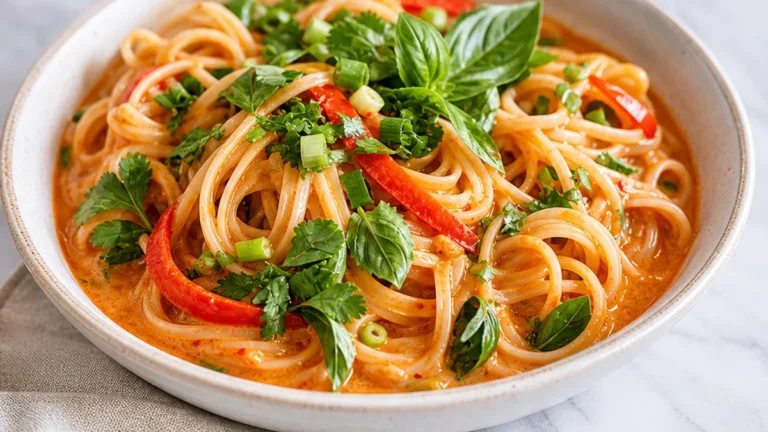
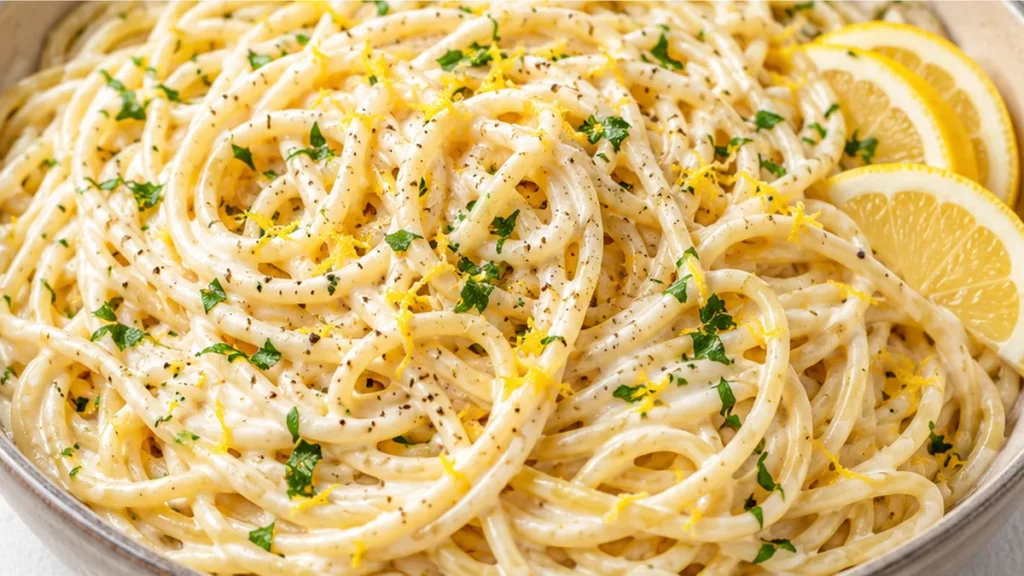
This creamy vegan lemon pasta is a simple yet flavorful dish. Made with a cashew cream sauce, it offers a rich texture and zesty taste.
Key takeaways
- Emulsifying with cashew cream creates a rich texture.
- Adjust acidity with sugar if the lemon flavor is too strong.
- Use reserved pasta water to help the sauce cling to the pasta.
- Experiment with ingredient swaps to customize the dish.
Creamy Vegan Lemon Pasta
Ingredients
Instructions
- Cook the pasta in salted water according to the package directions until al dente.
- Heat the olive oil in a large skillet over medium heat. Add the chopped garlic and sauté for 1 minute until fragrant.
- Stir in the lemon zest, lemon juice, and coconut cream. Allow the sauce to simmer gently for 2 minutes until slightly thickened.
- Season the sauce with salt and freshly ground black pepper to your taste.
- Add the cooked pasta directly to the skillet with the sauce. Toss well to coat every strand.
- Garnish generously with chopped fresh parsley and serve immediately while hot.
Understanding the Creamy Emulsion in Vegan Lemon Pasta
The key to achieving a creamy texture in vegan lemon pasta lies in the emulsion process. An emulsion occurs when two ingredients that normally do not mix, such as oil and water, are combined into a stable mixture. For this recipe, the use of cashew cream or silken tofu provides the necessary fat content to create a smooth, creamy sauce. The ideal ratio of cashews to water is about 1:2, blended until completely smooth. This ensures that the sauce clings well to the pasta, enhancing the overall mouthfeel.
Common Issues and Their Solutions
- Too Thick Sauce: If your sauce turns out too thick, it may be due to insufficient liquid. Add more vegetable broth or pasta cooking water gradually until you reach the desired consistency.
- Overly Sour Flavor: If the lemon flavor is too strong, it can overpower the dish. To balance this, incorporate a pinch of sugar or a splash of plant-based cream to mellow the acidity.
- Grainy Texture: A grainy sauce indicates that the nuts were not blended thoroughly. Ensure that you blend the cashews or tofu until completely smooth, using a high-speed blender for best results.
- Pasta Not Coating Well: If the sauce is not coating the pasta properly, it may be too dry. Adding reserved pasta water can help loosen the sauce and improve adherence.
Ingredient Swaps and Their Impact
- Cashews for Sunflower Seeds: Using sunflower seeds instead of cashews can create a nut-free version. However, the flavor will be slightly different, and the sauce may not be as creamy.
- Lemon Zest vs. Lemon Juice: If you prefer a less acidic flavor, you can use lemon zest alone instead of both zest and juice. The zest adds a fragrant citrus aroma without the tartness.
- Gluten-Free Pasta Options: For a gluten-free version, opt for chickpea or lentil pasta. These alternatives provide a different texture and flavor but maintain the dish’s nutritional value.
- Herbs Variations: Instead of basil, you can use parsley or dill for a different aromatic profile. Each herb will impart its unique flavor, altering the dish’s overall character.
Unique Characteristics of This Dish
This creamy vegan lemon pasta stands out due to its use of plant-based ingredients that mimic traditional creamy sauces without dairy. The combination of lemon juice and zest provides a bright, refreshing flavor that is often absent in conventional pasta dishes. Additionally, the use of nuts or tofu not only contributes to the creaminess but also adds protein, making this dish both satisfying and nutritious. This balance of flavors and textures is what sets this recipe apart from other pasta dishes.
Understanding the Impact of Ingredient Quality on Flavor
The quality of ingredients plays a crucial role in the overall taste of creamy vegan lemon pasta. Fresh, organic lemons provide a vibrant acidity that enhances the dish, while high-quality olive oil contributes to a rich mouthfeel. When selecting pasta, opt for whole grain or artisanal varieties, which can add depth to the flavor profile. Additionally, the use of raw cashews for the creamy base is essential; they should be soaked adequately to achieve a smooth texture. This attention to ingredient quality not only improves flavor but also elevates the nutritional value of the dish.
Make-Ahead Strategies for Creamy Vegan Lemon Pasta
Preparing creamy vegan lemon pasta ahead of time can save effort on busy weeknights. To do this effectively, cook the pasta al dente, as it will continue to absorb liquid when stored. The creamy sauce can be made in advance and stored in the refrigerator for up to three days. When ready to serve, gently reheat the sauce while adding a splash of water or vegetable broth to restore its creaminess. Combine with freshly cooked pasta, and finish with a sprinkle of lemon zest for brightness. This method ensures that the dish remains flavorful and satisfying even after being stored.
Scaling Recipes for Larger Gatherings
Scaling creamy vegan lemon pasta for larger gatherings requires careful adjustments to maintain flavor and texture. When doubling or tripling the recipe, ensure that the ratio of sauce to pasta remains consistent. For instance, if using a larger pot, adjust the cooking time slightly, as more water may take longer to boil. Additionally, consider making the sauce in batches to prevent it from cooling too much before serving. This approach not only ensures even distribution of flavors but also allows for easier management of cooking times, especially when preparing for a crowd.
Choosing the Right Equipment for Optimal Results
The equipment used in making creamy vegan lemon pasta can significantly influence the final dish. A high-speed blender is recommended for achieving a perfectly smooth sauce from the cashews, while a large pot is essential for cooking the pasta evenly. If available, using a pasta pot with a built-in strainer can streamline the cooking process. Additionally, a good-quality non-stick skillet is ideal for combining the pasta and sauce without sticking. Investing in the right tools not only enhances the cooking experience but also improves the overall quality of the dish.
How to Achieve the Perfect Creamy Texture in Vegan Lemon Pasta
To create a truly creamy texture in your vegan lemon pasta, it is essential to understand the role of emulsification. An emulsion is a mixture of two liquids that normally do not mix, such as oil and water. In this dish, the starches from the pasta help to bind with the oil and the lemon juice, creating a creamy sauce. A good ratio to aim for is approximately 60-70% pasta water to 30-40% oil. This allows the starches to thicken the sauce while maintaining a silky finish. Additionally, using a high-speed blender to puree any nuts or tofu will help achieve a smoother consistency. Be cautious not to overheat the sauce after combining, as excessive heat can break the emulsion, leading to a greasy texture.
Optimal Serving Techniques for Creamy Vegan Lemon Pasta
When serving creamy vegan lemon pasta, presentation and temperature are crucial for an enjoyable dining experience. It is best served immediately after preparation to retain the creamy texture. Allow the pasta to rest for no more than five minutes before serving to avoid clumping. To enhance the dish, consider garnishing with fresh herbs such as basil or parsley, which add brightness and contrast. Additionally, serving with a sprinkle of nutritional yeast can provide a cheesy flavor without dairy. If you plan on making this dish ahead of time, consider storing the sauce separately to prevent the pasta from absorbing too much liquid and losing its creamy texture.
Scaling Up Creamy Vegan Lemon Pasta for Gatherings
When scaling up creamy vegan lemon pasta for larger gatherings, it’s important to consider both ingredient ratios and cooking techniques. For every additional serving, increase your pasta by approximately 80-100 grams per person, while maintaining the same ratio of sauce ingredients. This ensures that the creamy consistency remains intact. Cooking the pasta in larger batches may require a larger pot, and it’s essential to keep the water at a rolling boil to prevent sticking. Additionally, if you are preparing the dish in advance, consider using a chafing dish or warming tray to keep the pasta warm without overcooking it. Finally, always taste and adjust seasoning before serving to ensure the flavors are balanced, especially when scaling up.
Understanding the Impact of Ingredient Freshness on Flavor
The freshness of ingredients plays a crucial role in the overall flavor profile of creamy vegan lemon pasta. Fresh lemons, for instance, provide a vibrant acidity that can elevate the dish, while older lemons may lack the zesty punch needed for a bright flavor. Similarly, using fresh herbs such as basil or parsley can enhance the dish’s aroma and taste, while dried herbs may contribute a more muted flavor. In terms of plant-based cream alternatives, newer products often have a creamier texture and richer taste compared to older ones. When preparing this dish, consider sourcing seasonal produce, as they tend to be fresher and more flavorful. For example, using locally sourced lemons during peak season can significantly enhance the dish compared to out-of-season imports. Aim for using ingredients within a week of purchase to maximize their flavor potential.
Scaling Up for Larger Portions Without Compromising Quality
When scaling up creamy vegan lemon pasta for larger gatherings, it’s essential to maintain the balance of flavors and textures. A common mistake is to simply double or triple the ingredients without adjusting cooking times or methods. For instance, when increasing the quantity of pasta, ensure that the water is adequately salted for each batch and that it is cooked in a sufficiently large pot to maintain a steady boil. Additionally, when preparing the sauce, consider making it in smaller batches to ensure even distribution of flavors. If using a blender for the sauce, process in batches to achieve the desired creamy consistency. The ratio of lemon juice to cream should remain consistent to prevent the dish from becoming too tangy or too bland. Lastly, when serving larger portions, consider a garnish of fresh herbs or a sprinkle of nutritional yeast to enhance visual appeal and flavor without overwhelming the dish.
Pro tips
Pro tip: Best served immediately while hot!
Frequently asked questions
Can I use a different nut instead of cashews?
Yes, you can substitute cashews with almonds or macadamia nuts. However, the flavor and creaminess may vary slightly, so be sure to adjust the blending time accordingly.
How can I make this recipe gluten-free?
To make creamy vegan lemon pasta gluten-free, simply use gluten-free pasta made from rice, chickpeas, or lentils. These alternatives will maintain the dish’s integrity while accommodating gluten sensitivities.
What can I add for extra protein?
To increase the protein content, consider adding chickpeas or lentils to the pasta. You can also sprinkle nutritional yeast on top for a cheesy flavor and additional nutrients.
How should I store leftovers?
Store any leftovers in an airtight container in the refrigerator for up to 3 days. Reheat gently on the stove, adding a splash of water or vegetable broth to loosen the sauce.
More from Vegan Pasta →