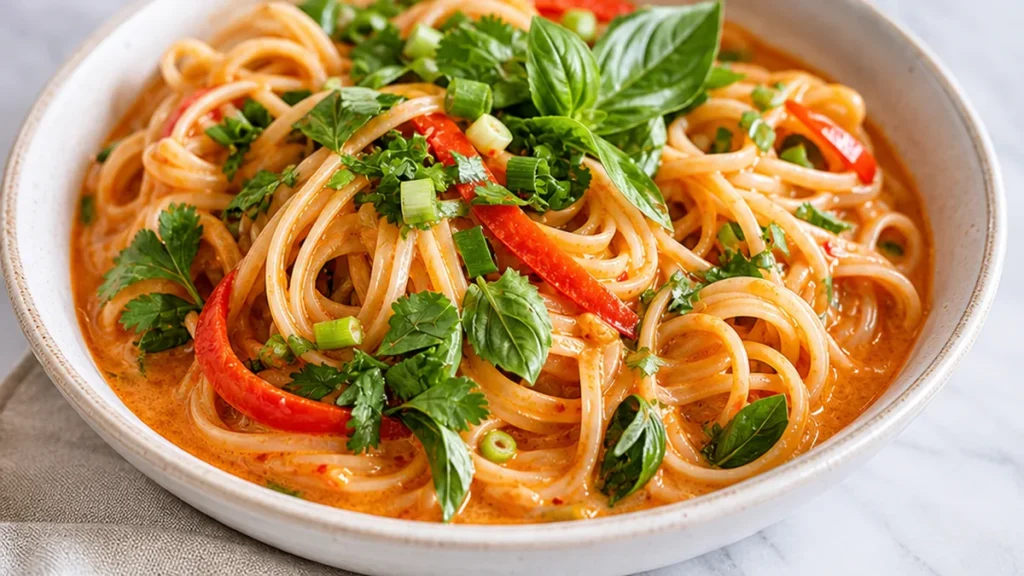
This quick curry noodles recipe is a real upgrade for busy weeknights. Ready in just 20 minutes, it delivers incredible flavor with aromatic basil, garlic, ginger, and a spicy kick from Thai red curry paste. The combination of fragrant infused oil and fresh herbs creates a dish that is both simple and profoundly satisfying. It’s perfect for anyone seeking a delicious, fast meal that doesn’t compromise on taste.
Key takeaways
- Properly blooming the Thai red curry paste in hot oil is crucial for developing its full flavor.
- Cook rice noodles to al dente to prevent mushiness.
- Adjust curry paste and chili flakes for desired spice level.
- Fresh herbs add brightness; substitute with dried sparingly if needed.
20-Min Red Curry Noodles
Ingredients
- Sesame oil
- Green onions
- Thai red curry paste
- Garlic
- Ginger
- Crushed red pepper flakes
- Fresh basil
- Fresh cilantro
- Rice noodles
- Tamari
Instructions
- In a skillet, cook the sesame oil and green onions over medium heat until very fragrant, 3-5 minutes. Lower the heat, stir in the red curry paste, cook 2 minutes.
- In a large bowl, mix the garlic, ginger, basil, cilantro, and season with chili flakes.
- Pour the hot oil mixture over the herbs and garlic/ginger in the bowl.
- Cook the noodles according to package directions, then drain well.
- Toss the warm noodles and tamari with the infused oil and herb mixture until well coated.
- Serve the noodles immediately, garnished with additional sliced green onions.
Notes
The technique that makes it
The key to achieving a rich, layered flavor in these 20-Minute Red Curry Noodles lies in properly blooming the Thai red curry paste. This aromatic paste is a concentrated blend of spices, chilies, and aromatics. When added directly to hot oil, the heat helps to release and intensify its complex flavors and fragrances. This process, often referred to as ‘blooming’ or ‘toasting’ the paste, is crucial. It transforms the raw, sometimes pungent notes of the paste into a deeper, more nuanced base for the sauce.
Start by heating the sesame oil in your wok or large skillet over medium-high heat. Once shimmering, add the Thai red curry paste. Stir and cook for about 1 to 2 minutes, ensuring it doesn’t burn. You’ll notice the aroma becoming more pronounced and fragrant. Following this, add the minced garlic, grated ginger, and crushed red pepper flakes. Continue to stir-fry for another 30-60 seconds until the garlic and ginger are fragrant. This step builds the foundational flavor profile of the dish, ensuring that the spices are fully activated and integrated into the oil before any liquid is added.
Simultaneously, prepare your rice noodles according to package directions. It’s important to cook them until just tender (al dente), as they will continue to cook slightly when tossed with the sauce. Overcooked noodles can become mushy and detract from the dish’s texture. Once the noodles are drained, add them directly to the skillet with the bloomed curry paste mixture. Toss thoroughly to coat each strand. Finally, add the fresh basil and cilantro, tossing briefly just until wilted. The residual heat will wilt the herbs, preserving their fresh flavor and bright color.
Troubleshooting
- Failure: Curry paste tastes raw or bitter.
Fix: Ensure you are sautéing the curry paste in oil over medium-high heat for at least 1-2 minutes before adding other ingredients. This ‘blooming’ process is essential for developing its full flavor. - Failure: Noodles are mushy.
Fix: Cook rice noodles to al dente according to package directions. Drain them immediately and consider rinsing briefly with cool water to stop the cooking process before adding to the sauce. - Failure: Sauce is too thick or too thin.
Fix: If too thick, add a tablespoon of water or vegetable broth at a time until desired consistency is reached. If too thin, let it simmer for an extra minute or two to reduce, or toss with the noodles for a minute longer to allow them to absorb some liquid. - Failure: Not enough spice or flavor.
Fix: Adjust the amount of Thai red curry paste used. For more heat, add extra crushed red pepper flakes. Ensure your curry paste is fresh, as older pastes can lose potency.
Substitutions
- Thai Red Curry Paste: While Thai red curry paste offers a specific flavor profile, you can substitute with other curry pastes like green or yellow, adjusting the quantity to taste as heat levels vary. The resulting flavor will be different but still delicious.
- Rice Noodles: Any long noodle can work, such as spaghetti, linguine, or even ramen noodles. Cook them according to their specific package directions. The texture will vary, but they will absorb the curry sauce well.
- Sesame Oil: A neutral oil like vegetable, canola, or avocado oil can be used for sautéing the aromatics. However, you’ll miss the distinct nutty flavor of sesame oil. A drizzle of toasted sesame oil at the end can compensate.
- Fresh Basil/Cilantro: If fresh herbs are unavailable, you can omit them or use dried herbs sparingly. Dried basil or cilantro can be added during the sauce simmering stage, but the fresh, bright notes will be less pronounced.
Pro tips
- Use good quality Thai red curry paste for the best flavor.
- Adjust the amount of red curry paste and chili flakes to your spice preference.
- Ensure noodles are well-drained before tossing to avoid a watery sauce.
Enjoy this fresh and flavorful curry noodles dish. It’s a fantastic way to spice up your meal rotation!
More from Vegan Pasta →
Read also on TastyBend: Sweetgreen Nutrition Facts: Complete Expert Guide to Healthy Fast-Casual Dining.
Frequently asked questions
Can I make 20-min red curry noodles ahead of time?
While the noodles are best fresh, you can prep the sauce and vegetables up to two days in advance and store them in an airtight container in the refrigerator. Cook the noodles just before serving and toss with the reheated sauce and vegetables for optimal texture and flavor.
What can I substitute for coconut milk in red curry noodles?
For a creamy alternative, you can use cashew cream or silken tofu blended with a little water. If neither is available, evaporated milk can work in a pinch, though it will alter the flavor slightly. For a lighter option, vegetable broth can be used, but the sauce will be less rich.
How do I know when the noodles are cooked?
Noodles should be al dente, meaning tender but still firm to the bite. Taste a strand after about 5-7 minutes of cooking. They should not be mushy or overly soft. Adjust cooking time based on the specific type of noodles you are using, as thickness varies.
What to serve with 20-min red curry noodles?
These noodles are a complete meal on their own, but they pair wonderfully with fresh cilantro, chopped peanuts, a squeeze of lime, or a side of steamed or stir-fried greens like bok choy or spinach. A sprinkle of red pepper flakes can add extra heat if desired.