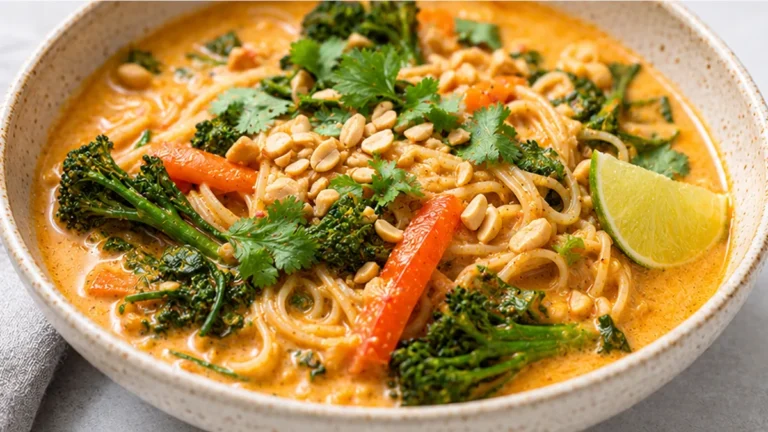
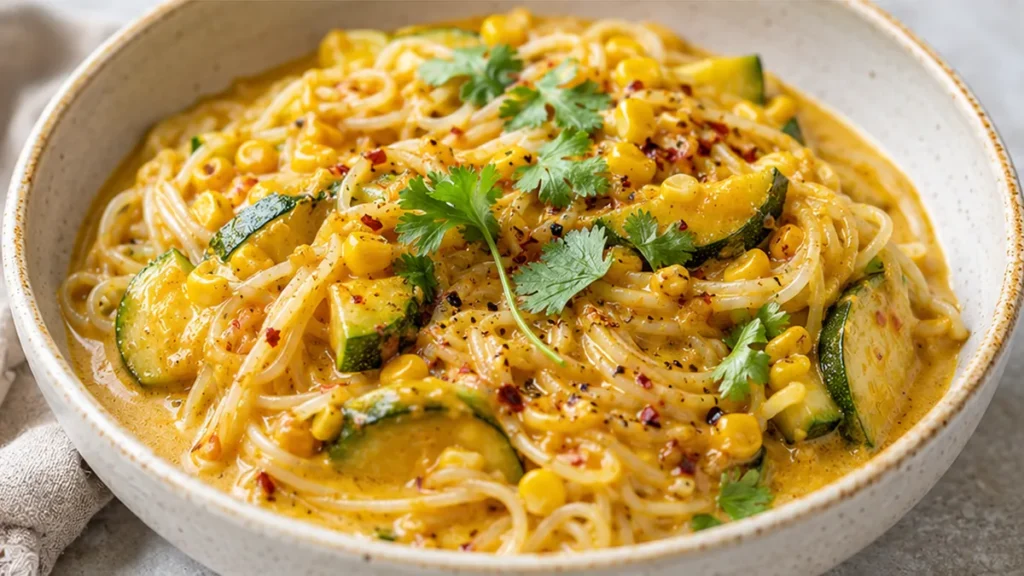
Coconut curry is the ultimate fusion of flavors and comfort food. This coconut curry recipe combines rice noodles and fresh garden vegetables for a fresh and satisfying dish. It’s perfect for busy weeknights or when you’re craving something rich and creamy. With just a few simple ingredients and steps, you’ll have a delightful meal ready in no time, perfect for both vegans and non-vegans alike. In this recipe, the star ingredients are the creamy coconut milk and aromatic Thai red curry paste, giving a wonderful flavor profile that will impress anyone who tries it. Packed with nutrients from fresh vegetables like zucchini and corn, this dish is not just tasty but also healthy, making it a great addition to any meal plan.
Key takeaways
- Bloom the red curry paste in hot oil to develop its full flavor.
- Use full-fat coconut milk and stir gently to achieve a creamy, emulsified sauce.
- Add vegetables in stages according to their cooking times for optimal texture.
- Cook rice noodles separately to avoid them becoming mushy in the curry.
Coconut Curry Delight with Rice Noodles
Ingredients
- 8 ounces rice noodles
- 2 tablespoons coconut oil
- 1 sweet onion, diced
- 2 zucchini, or summer squash, diced
- 2 ears sweet corn kernels, removed from the cob
- 2 cloves garlic, minced or grated
- 1 tablespoon fresh ginger, grated
- 2-3 tablespoons Thai red curry paste
- 1 14 ounce can full fat coconut milk
- 1 tablespoon fish sauce (soy sauce for vegan option)
Instructions
- Cook rice noodles according to packaged directions.
- Heat the coconut oil in a large skillet over high heat. Add the onion and cook for 5 minutes until fragrant. Add zucchini, corn, garlic, and ginger. Cook for another 5 minutes until veggies begin to soften.
- Stir in the curry paste and cook until fragrant, about 1 minute.
- Add the coconut milk, 1/3-1/2 cup water, fish sauce, and honey. Stir to combine, bring to a boil, and cook for 5 minutes until the sauce thickens slightly. Add additional water if needed.
- Remove from heat and stir in the lime juice and zest, cilantro, and basil.
- Divide the noodles among bowls and spoon the curry over top. Top with peppers and green onions.
Notes
The technique that makes it
The success of this Coconut Curry Delight hinges on two key techniques: blooming the curry paste and achieving the right consistency with the coconut milk. First, properly blooming the Thai red curry paste in hot coconut oil is crucial. This step, often overlooked, involves gently sautéing the paste for 1-2 minutes until it becomes fragrant. This process releases its aromatic compounds and deepens its flavor, transforming it from raw spices into a complex flavor base. If the paste is added directly to liquid without this initial sauté, the curry can taste flat and uncooked. Next, the full-fat coconut milk is essential for achieving a rich, creamy texture. When it’s heated, the fat separates slightly. Stirring it gently as it simmers allows the fat and water components to emulsify, creating a smooth, cohesive sauce. Avoid boiling the coconut milk vigorously, as this can cause it to curdle. The vegetables are added in stages based on their cooking time: aromatics like garlic and ginger are sautéed briefly to release their flavors without burning, while denser vegetables like zucchini are added before the liquid to soften slightly. The corn, being quick-cooking, is added towards the end to retain its sweetness and slight crunch. Finally, the rice noodles should be cooked separately according to package directions and then added to the curry just before serving, or served alongside, to prevent them from becoming overly soft and mushy.
Troubleshooting
- Curry is too spicy: If the red curry paste makes the dish too hot, you can temper the heat by adding a touch more coconut milk to dilute it, or a pinch of sugar to balance the spice. A squeeze of lime juice can also help cut through the intensity.
- Sauce is too thin: If the sauce lacks the desired thickness after simmering, you can create a slurry by mixing 1 teaspoon of cornstarch or arrowroot powder with 2 tablespoons of cold water. Stir this mixture into the simmering curry and cook for another minute until it thickens.
- Vegetables are mushy: This often happens if vegetables are added too early or if the curry is overcooked. To prevent this, add vegetables like zucchini towards the end of the cooking process, allowing them to cook just until tender-crisp. Ensure corn is added last.
- Coconut milk has separated or curdled: This can occur from high heat or vigorous boiling. Gently whisk the sauce over low heat; often, it will re-emulsify. Using full-fat coconut milk and avoiding a rolling boil helps prevent this issue.
Substitutions
- Rice noodles: For a gluten-free alternative, quinoa or millet pasta can be used, though they will alter the texture. Regular wheat-based pasta or even spiralized vegetables like zucchini noodles can also work, adjusting cooking times accordingly.
- Coconut oil: Any neutral cooking oil, such as vegetable oil, canola oil, or even avocado oil, can be substituted. Olive oil is not recommended as its flavor profile is too distinct for this dish.
- Thai red curry paste: Green or yellow curry paste can be used, but be aware that they have different flavor profiles and heat levels. Adjust the quantity based on your spice preference. Peanut butter can be added for creaminess if curry paste is unavailable, but it will significantly change the flavor.
- Fish sauce: For a vegan or vegetarian version, soy sauce or tamari (for gluten-free) is a direct substitute. Mushroom soy sauce can add an extra layer of umami. A vegetarian oyster sauce is another option.
Pro tips
- Use fresh herbs like cilantro and basil for extra flavor.
- Swap vegetables based on seasonality or personal preference.
- Adjust the level of curry paste for spice tolerance.
- Make it a one-pot dish by cooking the noodles in the curry sauce.
Try this coconut curry recipe today and enjoy a deliciously creamy dish that you can customize to your liking. Share your version with friends and family!
More from Vegan Pasta →
Read also on TastyBend: Nutrition Shakes Nutrition Facts: Complete Expert Health Guide.
Frequently asked questions
Can I make coconut curry delight ahead of time?
Yes, this curry can be made a day in advance. Store it in an airtight container in the refrigerator. The flavors meld beautifully overnight. Reheat gently on the stovetop or in the microwave. You may need to add a splash of water or vegetable broth if it thickens too much upon reheating.
What can I substitute for rice noodles in this curry?
If you don’t have rice noodles, other pasta options work well. Try spaghetti, linguine, or even udon noodles. For a gluten-free alternative besides rice noodles, consider zucchini noodles or spiralized sweet potato. Ensure your chosen noodle is cooked al dente before adding to the curry sauce.
How do I know when the curry is cooked?
The curry is ready when the vegetables are tender-crisp and the sauce has thickened slightly. The coconut milk should be fully incorporated and heated through. Taste and adjust seasonings, adding more curry paste, salt, or a squeeze of lime juice as needed. Ensure all ingredients are heated through.
How long does coconut curry delight last in the fridge?
Leftover coconut curry delight can be stored in an airtight container in the refrigerator for up to 3 days. Ensure it cools completely before refrigerating. Reheat thoroughly before serving. It is best enjoyed within the first 2 days for optimal flavor and texture.