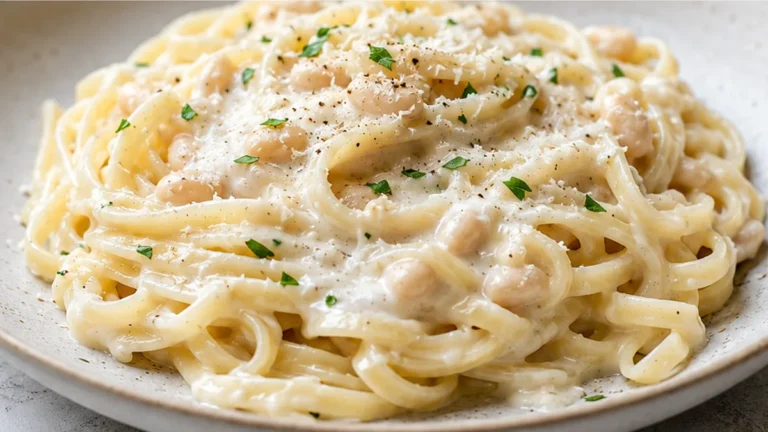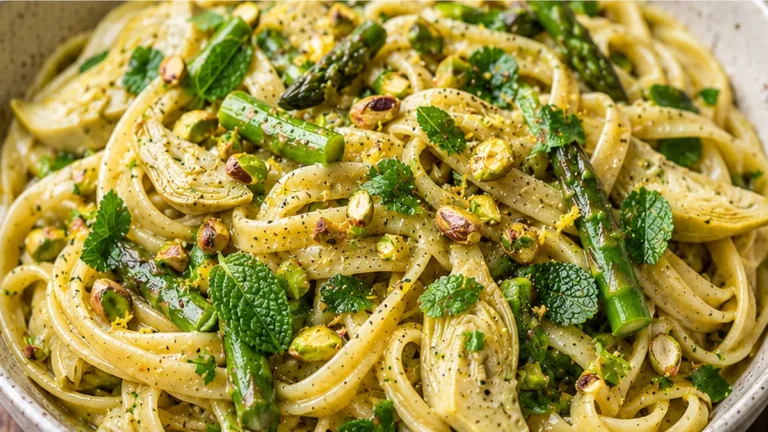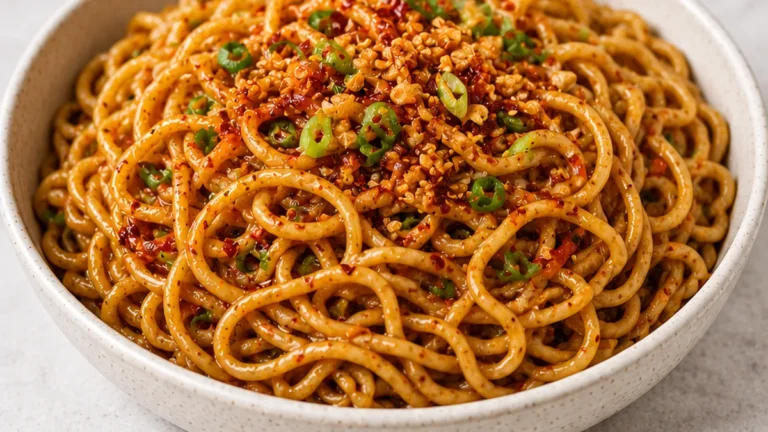
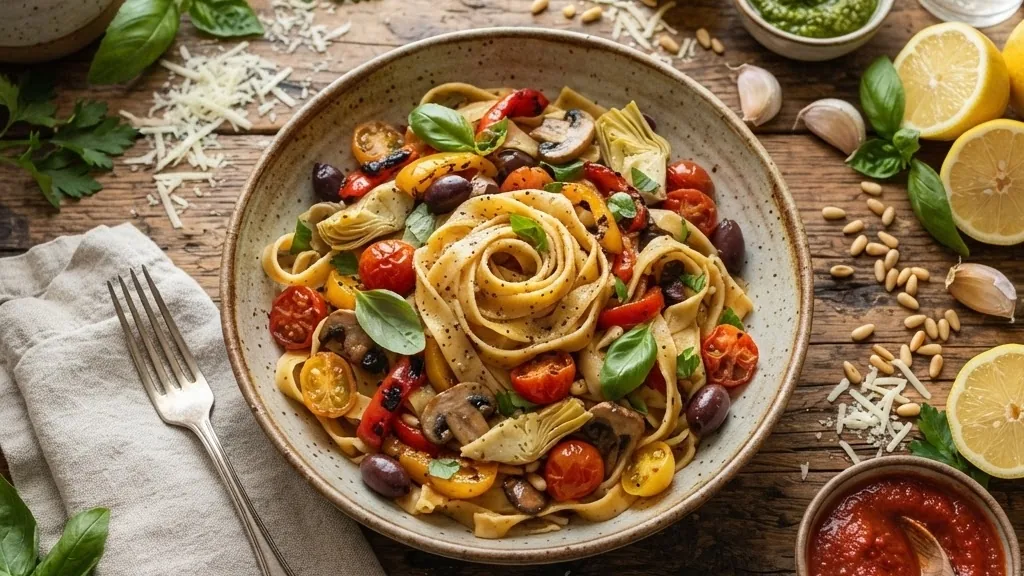
Is pasta vegan? For most dried boxed shapes on a supermarket shelf, the answer is yes. The honest version of ‘is pasta vegan’ is that it turns on three variables: whether the dough carries egg, what the sauce is built from, and whether a coloring or protein additive quietly parks an animal ingredient on the panel. Plain durum wheat semolina and water is one of the cleanest vegan staples in any store. Fresh pasta, stuffed shapes and certain high-protein lines are where things get slippery. The habit that settles it is the same one behind whether almond milk is gluten free: read the ingredient panel and ignore the front of the box.
Quick answer: is pasta vegan most of the time? Yes for standard dried pasta, which by Italian law must be durum wheat semolina and water only. Usually no for fresh and filled pasta, where egg is the traditional binder and the legal minimum for “pasta all’uovo” is 4 whole eggs, about 200 grams, per kilogram of semolina. Colored pasta, gnocchi and “high-protein” lines each carry their own egg or dairy risk. The reliable move is to read the allergen line on the packet, since egg and milk must be declared under labeling law in the US, the EU and the UK.
Is Pasta Vegan by Type? Dried, Fresh and Stuffed
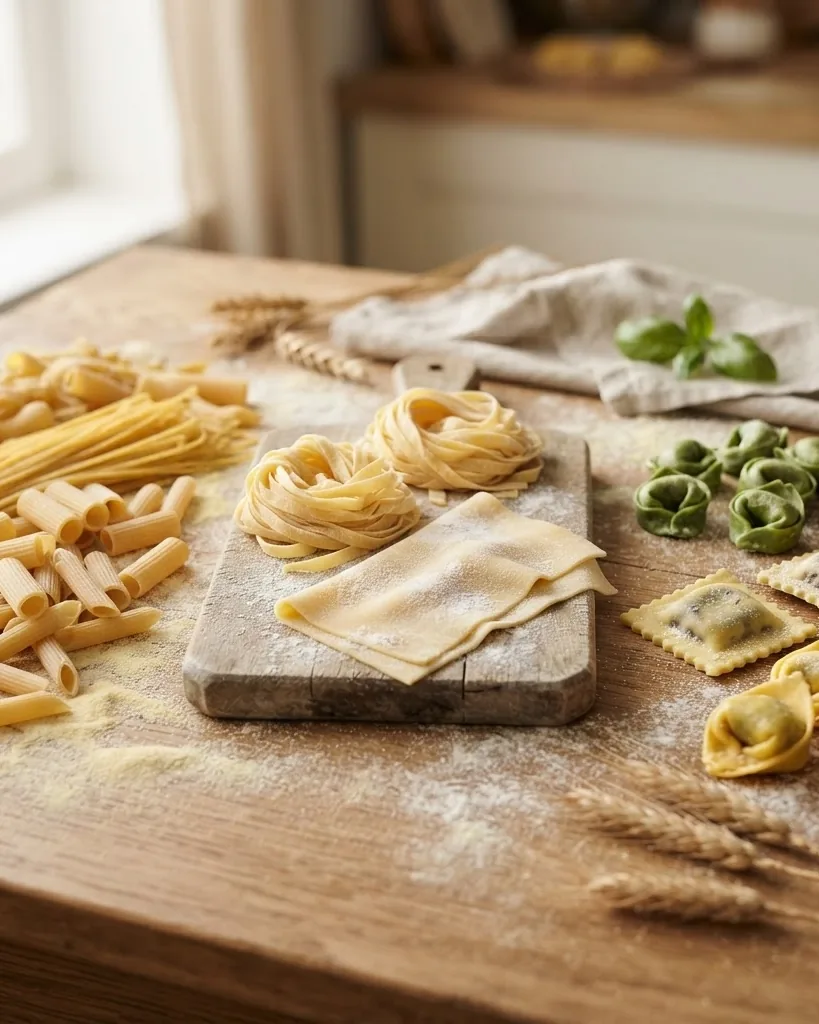
Dried pasta and fresh pasta come from different recipes, and the recipe decides the vegan answer. A standard dry box is durum wheat semolina and water. Fresh pasta is usually flour and egg, a formula tied to Northern Italian regions like Emilia-Romagna, Piedmont and Lombardy. Under Italian pasta legislation, specifically Law No. 580/1967 as consolidated by Legislative Decree No. 187/2001, dried pasta labeled “pasta di semola di grano duro” must be made exclusively from durum wheat semolina and water. That statute is the reason standard Italian dry pasta is vegan by default. Egg pasta sits under a separate rule: to be sold as “pasta all’uovo” it must contain at least 4 whole eggs, roughly 200 grams of shelled egg, per kilogram of semolina. Stuffed shapes such as ravioli, tortellini and agnolotti double the risk, since both the wrapper and the filling need checking. Gnocchi is technically a dumpling rather than pasta, traditionally bound with egg and potato, though egg-free versions exist.
The practical takeaway splits along the shelf. Grab a box off the dry aisle and the ingredient line is almost always just semolina and water, sometimes with added vitamins. Reach into the refrigerated case for tagliatelle or a filled shape and you should assume egg until the panel proves otherwise.
Here is how the main families usually break down:
- Dried boxed shapes (spaghetti, penne, fusilli): semolina and water, vegan by default.
- Fresh or refrigerated pasta: commonly flour and egg, so treat it as non-vegan unless labeled otherwise.
- Stuffed pasta (ravioli, tortellini, agnolotti): check both the dough and the filling, which often hides ricotta or Parmesan.
- Gnocchi: sometimes egg-free potato dough, sometimes egg-bound; the panel is the only way to know.
Colored and flavored pasta adds another layer. Vegetable-based colorings, like spinach or tomato, are generally fine, while squid ink and carmine are not. Once the shape is sorted, the sauce becomes the next checkpoint, and there is a whole bench of naturally plant-based options to build from, from marinara to aglio e olio. For a broader run of ideas, a catalog of pasta sauce recipes worth bookmarking covers the vegan-friendly end well.
Why the egg matters for texture
Beyond ethics, the semolina-and-water base changes how the pasta behaves. Industry bodies such as the National Pasta Association and the International Pasta Organisation define dry pasta around durum wheat semolina precisely because that protein and starch structure holds shape in boiling water. Egg adds richness and elasticity, which is why fresh egg dough rolls thin for tagliatelle and lasagne sheets. Take the egg out and you lean harder on gluten development and resting time, but the pasta still cooks and still holds sauce. That is the culinary reason a vegan kitchen loses very little by defaulting to semolina pasta.
Hidden Animal Ingredients on a Pasta Label
Egg is the ingredient most likely to make pasta non-vegan, but it hides under several names. On a label it can appear as whole egg, egg yolk, egg white, albumen, dried egg or egg powder. Dairy shows up as whey, casein, ricotta or Parmesan, especially in filled shapes. Two coloring and preservative ingredients trip up even careful shoppers. Carmine, also called cochineal and coded E120 in the European Union, is a red pigment made from insects, and it turns up in some colored or flavored pasta. Squid ink, sold as nero di seppia and used in pasta al nero di seppia, is a cephalopod secretion containing melanin, mucopolysaccharides and amino acids, with no vegan substitute in the traditional recipe. Lysozyme is a subtler one: it is an egg-derived enzyme used as a preservative in some cheeses and processed foods, so it can appear anywhere dairy or egg processing is involved.
One label word causes needless panic. Despite the “lacto” prefix, the lactic acid used in packaged pasta and gnocchi is overwhelmingly fermented commercially from plant carbohydrates such as cornstarch or beet sugar, not milk, so it is vegan-friendly in the vast majority of products.
The reason these names matter is that manufacturers are not required to print “not vegan” anywhere. Labeling law forces disclosure of allergens like egg and milk, which is a gift to vegans, but it says nothing about insects or cephalopods. Carmine and squid ink are neither of the major allergens, so they sit in plain sight in the ingredient list rather than in any warning box. That is why scanning the full ingredient line beats trusting a “plant-based” style claim on the front.
Keep a short mental blocklist and most traps disappear: any form of egg, any dairy derivative, carmine, squid ink and lysozyme. Everything else on a typical pasta panel, from durum wheat semolina to vitamins and plant colorings, is plant-based.
How to Read Allergen Labels in the US, the EU and the UK
Reading a pasta label is a transferable skill once you know which laws force disclosure. In the United States, egg and milk must be clearly declared on packaged food. In the European Union and the United Kingdom, both must be emphasized in the ingredient list. The United States rule comes from the Food Allergen Labeling and Consumer Protection Act of 2004, enforced by the U.S. Food and Drug Administration. The FDA now recognizes 9 major food allergens: the original 8 under that Act, plus sesame, which was added by the 2021 FASTER Act and took effect in January 2023. Egg and milk both sit on that list. Across the European Union, EU Regulation (EU) No. 1169/2011 requires 14 allergens, including egg and milk, to stand out in the ingredient list, a rule in force since December 13, 2014. The United Kingdom Food Standards Agency enforces the same 14-allergen emphasis after Brexit, and the Canadian Food Inspection Agency runs a comparable priority-allergen list that also covers egg and milk.
“Contains egg” versus “may contain traces of egg”
The two phrases that confuse shoppers are “contains egg” and “may contain traces of egg.” The first is a definite ingredient declaration: egg is in the recipe, full stop. The second is a voluntary cross-contact warning, meaning the product was made on shared equipment where egg is handled, but egg is not a deliberate ingredient. Strict ethical vegans often avoid “may contain” products on principle; flexible plant-based eaters frequently accept them. Neither reading is wrong; it is a line each person draws. You can review the plain-language version of these requirements on the FDA’s food and allergen pages.
Here is the full set of egg-derived terms to scan for on any pasta panel:
- Whole egg, egg yolk, egg white
- Albumen (the technical name for egg white)
- Dried egg and egg powder
- Lysozyme, the egg-derived preservative enzyme
A quick worked example shows the payoff. Take a refrigerated tortelloni packet in a UK supermarket: under the Food Standards Agency rules, “egg” will stand out inside the ingredient list, and any “ricotta” or “Parmesan” filling will flag milk the same way. The same product in a US store shows egg and milk in a “Contains” statement beneath the ingredients, thanks to the FDA rule. Same pasta, two label formats, one skill. Spot where each jurisdiction hides the emphasis and brand names stop mattering.
What this buys you is independence from static “safe brand” lists that go stale the moment a manufacturer reformulates. The Academy of Nutrition and Dietetics can tell you a well-planned vegan diet is nutritionally sound, and USDA FoodData Central can give you the numbers, but only the panel in your hand tells you what is in that specific box today. Two more habits make it bulletproof. Read the ingredient list top to bottom rather than trusting front-of-pack claims, since “high protein” or “artisan” carry no legal vegan meaning. Then, when a product is imported, check for a local allergen box, because a pack made for the European Union market still tends to carry the bold-allergen format required since December 13, 2014.
The High-Protein Pasta Trap Most Guides Skip
High-protein pasta is the newest trap for vegans, because the extra protein often comes from animals. To hit a bigger protein number, some manufacturers add egg white protein, whey protein concentrate or casein rather than a plant source. Barilla Protein+ is the obvious brand-level example to check. The tell sits in the ingredient panel, well away from the marketing burst on the front. Watch for the terms “egg white,” “whey,” “milk protein” and “casein,” any of which flags an animal-derived boost. Plenty of high-protein lines are plant-based instead, built from lentil, chickpea, pea or soy flour, and those are fine. The category is simply mixed, which is why “high protein” on its own tells you nothing about vegan status. Barilla is a useful reference for a second reason: it publishes full ingredient declarations for its European Union products, so you can confirm that its standard dry lines list only “durum wheat semolina” and “water,” while its egg lines list “pasteurised eggs (20%).”
Italy’s statutory floor of 4 whole eggs, about 200 grams, per kilogram of semolina equals roughly 16 to 17 percent of the finished blend, so Barilla’s 20 percent pasteurised-egg content simply clears that minimum rather than contradicting it. The rule for the protein aisle stays narrow: never assume, always read, and remember that a legume-based high-protein pasta and an egg-white-fortified one can sit side by side on the same shelf.
Why do brands reach for egg white or whey at all? Both are cheap, complete proteins that dissolve into dough without wrecking texture, which lets a box advertise a higher gram count than plain semolina pasta. That marketing incentive is not going away, so the category will keep growing, and the label-reading habit from the allergen rules above is what protects you in it.
Certified Vegan Logos and What They Actually Verify
Two logos do the label-reading for you, within limits. The Vegan Trademark, run by The Vegan Society, and the Certified Vegan logo, run by Vegan Action, both confirm a product contains no animal ingredients. Each also sets a policy on shared production lines and cross-contact. The Vegan Society, founded in 1944 and the world’s oldest vegan organization, coined the word “vegan” and now certifies products internationally, checking ingredients and manufacturing practice rather than just the recipe. Vegan Action runs the U.S.-based Certified Vegan program, which appears on a growing share of American products. Neither logo guarantees zero cross-contamination, which matters to strict ethical vegans; what they guarantee is that no animal ingredient is deliberately used and that the maker has answered the cross-contact questions. As a secondary check, PETA keeps a searchable “accidentally vegan” database, useful for logo-free shapes.
Ordering Fresh Pasta and Noodles When You Eat Out
Fresh pasta in an authentic Italian restaurant should be assumed egg-based by default. That heuristic comes from regional tradition in Emilia-Romagna, Piedmont and Lombardy, where egg dough is the norm for tagliatelle and filled shapes. Ask the kitchen before ordering rather than guessing from the menu. Two Italian phrases settle it fast. “Pasta fresca” means fresh pasta and usually implies egg; “pasta secca” means dried pasta and usually does not; “pasta all’uovo” states egg outright. Asking which one a dish uses beats reading a translated menu. The same caution applies to Asian noodle dishes, where the generic word “noodle” hides real differences. Rice noodles are usually vegan, soba varies by its buckwheat-to-wheat blend, and ramen, lo mein and Chinese egg noodles are frequently egg-based despite the plain “noodle” name. Broth is a second checkpoint in those dishes, since many ramen and pho bases start from meat or fish stock.
A short script keeps this painless at the table. Ask whether the fresh pasta is made with egg, whether any filling contains ricotta or Parmesan, and whether the sauce or broth is animal-based. Most kitchens answer without fuss, and many can swap in a dried, water-based shape on request. Treat the “assume egg” rule as a prompt to verify, since some modern Italian kitchens do run egg-free fresh dough.
Delivery and packaged “fresh” pasta from a deli case follow the restaurant logic, not the dry-box logic. If it sat in a refrigerated case with a short shelf life, it is far more likely to be egg dough than a shelf-stable box of spaghetti. When in doubt, the dried aisle is the safer default, and a plain marinara or aglio e olio over dried penne is a fully vegan meal with zero interrogation required.
Making Egg-Free Pasta and Vegan Sauces at Home
Egg-free pasta at home starts from the same base as commercial dried pasta: flour or semolina and water. Traditional fresh dough uses about 1 large egg per 100 grams of flour, so the vegan version swaps that egg for extra water plus a richness booster. Aquafaba or a smooth tofu puree stands in well. The texture question is real, since egg gives fresh dough its elasticity and yellow color. Aquafaba, the liquid from a can of chickpeas, mimics some of egg’s binding and emulsifying behavior, while blended silken tofu adds body without any animal input. Rest the dough longer than an egg version to let the gluten relax, and roll it a touch thicker for shapes like tagliatelle. For filled pasta, skip the ricotta and build a filling from blended white beans, herbs and nutritional yeast, which brings a savory, cheese-like note. Sauces are the easy part, since marinara, aglio e olio and a nut-and-nutritional-yeast pesto are vegan by construction.
Want a gluten-free base as well? Lentil, chickpea, rice and corn shapes all work, though you should still check their binders; a roundup of gluten-free pasta and pizza options is a decent starting point. For sauce inspiration beyond the classics, a bright homemade cilantro vinaigrette works as a cold pasta dressing that needs no dairy at all.
One reason home cooks quietly prefer plain semolina pasta: the cooking water. Starchy, egg-free pasta water is prized for emulsifying oil-based sauces, which is exactly what pulls an aglio e olio together into something glossy instead of greasy. Egg dough clouds that water differently, so the simplest vegan pasta is also the most useful in the pan.
What Egg-Free Pasta Means for Nutrition
Egg is not needed for pasta to be a solid source of carbohydrate and protein. According to USDA FoodData Central, a roughly 140-gram cup of cooked, unenriched regular spaghetti carries about 220 kilocalories, 8 grams of protein, 1.3 grams of fat, 43 grams of carbohydrate and 2.5 grams of fiber. Those numbers come from plain semolina pasta with no egg at all, which settles the worry: the protein in a bowl of spaghetti comes mostly from wheat, not egg. Egg pasta shifts the macros slightly, adding a little fat and protein, but the gap is small next to what you put on top. Exact values can drift by database revision, so confirm the current entry through the USDA’s public nutrient database if you need precision.
Frequently Asked Questions
Is Barilla pasta vegan?
Most standard Barilla dry pasta is vegan. Its spaghetti, penne and fusilli lines list only durum wheat semolina and water. Its egg pasta is not vegan and states u0022pasteurised eggs (20%)u0022 on the panel, and its high-protein line can include animal protein, so read the specific box rather than trusting the brand name.
Is gluten-free pasta always vegan?
Not automatically. Gluten-free pasta made from rice, corn, lentil, chickpea or quinoa is usually vegan, but the binder matters. Some formulas use egg to hold the dough together in the absence of gluten. Scan the ingredient list for egg or dairy terms the same way you would with a standard wheat pasta.
Are egg noodles vegan?
No. Egg noodles contain egg by definition, whatever the packet’s translation says. The bigger trap is generic u0022noodles,u0022 since many ramen, lo mein and Chinese noodle products are egg-based despite the plain name. Check the ingredient panel for egg, and when eating out, ask whether the noodles and the broth are animal-free.
Is gnocchi vegan?
Sometimes. Gnocchi is technically a dumpling, not pasta, and traditional recipes bind potato with egg. Plenty of shelf-stable and homemade versions are egg-free, using just potato, flour and salt. Any lactic acid on the label is almost always plant-fermented, so it is not a red flag. Check for egg specifically.
Is ramen vegan?
Usually not, on two counts. The noodles themselves are frequently egg-based, and the classic broth is built from pork, chicken or fish stock. Vegan ramen exists and pairs a plant broth with egg-free noodles, but it is the exception. At a restaurant, confirm both the noodle and the broth before ordering.
Is high-protein pasta vegan?
It depends on the protein source. Legume-based high-protein pasta from lentils, chickpeas or peas is vegan, while lines fortified with egg white protein, whey or casein are not. Barilla Protein+ is a good example to check on the panel. The words u0022egg white,u0022 u0022wheyu0022 or u0022milk proteinu0022 are the ones that disqualify it.
The One Habit That Settles the Pasta Question
The vegan question comes down to one habit: read the ingredient line, and treat the front of the box as advertising. Dried semolina pasta is a reliable vegan staple; fresh, stuffed, colored and high-protein pasta each need a quick panel check for egg, dairy, carmine or squid ink. Learn the allergen rules once and you can clear any pasta anywhere. Then build the rest of the plate, like a batch of smoky walnut chorizo tacos, around it.