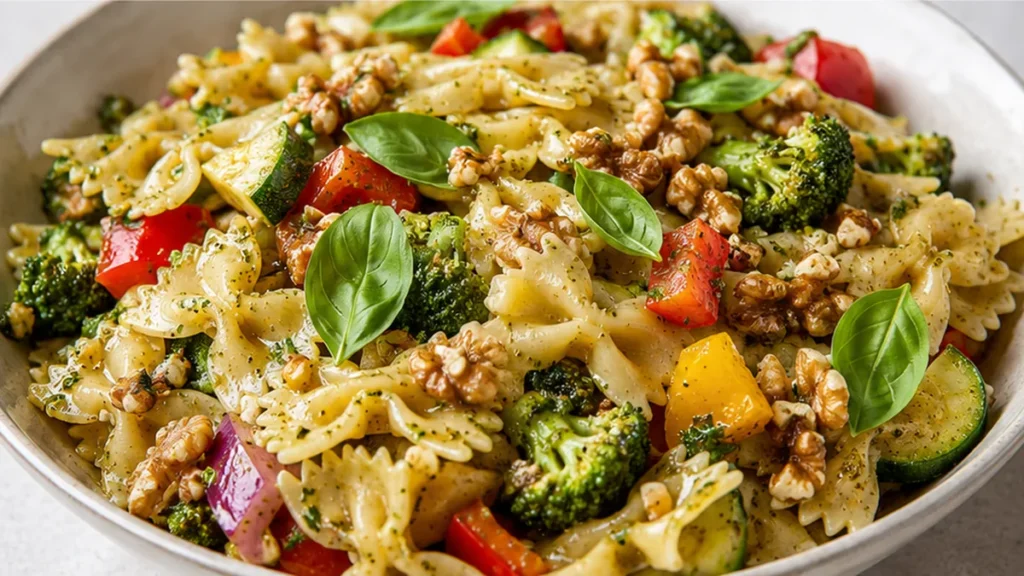
This walnut pesto pasta embodies the freshness and simplicity of a farmers’ market haul, transforming simple ingredients into a truly satisfying meal. It’s a versatile dish that celebrates seasonal vegetables, making it perfect for any time of year when you’re looking for a light yet fulfilling option. The rich, nutty walnut pesto elevates the pasta and complements the sweet, caramelized notes of roasted vegetables. Roasting the garlic directly with the vegetables adds a sweet, mellow flavor. This walnut pesto pasta is designed for ease and maximum flavor, proving that healthy eating can be both delicious and straightforward.
Key takeaways
- Achieve a stable pesto emulsion by blending vigorously and adding oil slowly.
- Cook vegetables quickly over medium-high heat to maintain crispness and color.
- Salt pasta water generously for well-seasoned pasta.
- Taste and adjust seasoning of the final dish before serving.
Farmers’ Market Pasta: Your New Favorite Weeknight Meal!
Ingredients
- 8 ounces pasta (half of a box of farfalle, rigatoni, penne, whatever you like)
- 6 cups fresh, seasonal veggies (see notes)
- 3 cloves garlic
- a drizzle of olive oil
- salt to taste
- 1 cup walnuts
- 1 1/2 cups tightly packed basil leaves (you can sub other greens if you don’t have enough basil)
- 1/4 cup olive oil
- 1 very small clove of garlic
- juice of 1 lemon (just use half if it’s really juicy)
Instructions
- Preheat the oven to 425 degrees F (220 C). Arrange the fresh, seasonal veggies on a rimmed baking pan. Toss with a little bit of olive oil and salt.
- Peel the 3 garlic cloves. Place them in the center of a small piece of foil, drizzle with a little oil, and wrap it up. Place on the baking pan with the veggies. Roast everything for 20-30 minutes (depends on what kind of veggies you’re using). When done, mash the roasted garlic so it makes a paste.
- While the veggies roast, pulse the walnuts, basil leaves, 1/4 cup olive oil, the very small clove of garlic, and lemon juice in a food processor until a smooth pesto forms.
- Also while the veggies roast, cook pasta according to package directions until al dente. Drain, reserving some pasta water, then toss with a little oil, and set aside.
- Combine the roasted vegetables, mashed roasted garlic, cooked pasta, and the walnut pesto in a large bowl. Toss to combine, adding a splash of reserved pasta water if needed to reach desired consistency. Serve immediately, seasoned with extra salt to taste.
Notes
The Technique That Makes It
The success of this Farmers’ Market Pasta hinges on two key techniques: achieving a vibrant, emulsified pesto and properly cooking the vegetables to complement the pasta and sauce. The pesto relies on the high-speed blending of basil, walnuts, garlic, and olive oil. The fat from the olive oil and the natural oils released from the basil and walnuts, when blended vigorously, create a stable emulsion. This means the oil and water-based components (from the basil leaves) bind together, resulting in a smooth, cohesive sauce rather than an oily, separated mess. Adding the lemon juice at the end helps to brighten the flavors and can also contribute to the emulsion’s stability by providing a touch of acidity. For the vegetables, the goal is to retain their fresh texture and flavor. Sautéing them quickly in olive oil with garlic allows them to soften slightly without becoming mushy. This method, often referred to as a quick stir-fry or sauté, preserves their vibrant colors and nutrients. The heat control is crucial here; high enough to cook quickly, but not so high as to scorch the garlic or overcook the vegetables into submission. The final step of tossing the cooked pasta, sautéed vegetables, and pesto together allows the residual heat from the pasta to slightly warm the pesto, making it more fluid and easier to coat every piece of pasta and vegetable evenly, creating a harmonious dish.
Troubleshooting
- Problem: Pesto is oily and separated. Fix: Blend the pesto ingredients for longer at a higher speed. Ensure the olive oil is added slowly in a thin stream while the blender is running to help create a stable emulsion.
- Problem: Vegetables are soggy. Fix: Ensure your pan is hot before adding vegetables. Cook them in batches if necessary to avoid overcrowding the pan, which steams vegetables instead of sautéing them.
- Problem: Pasta is bland. Fix: Always salt your pasta water generously (it should taste like the sea). Ensure the pesto is well-seasoned with salt, and taste and adjust seasoning after tossing everything together.
- Problem: Pesto is too thick. Fix: Thin the pesto with a tablespoon or two of the reserved pasta cooking water or a little more olive oil until it reaches your desired consistency before tossing with the pasta and vegetables.
Substitutions
- Walnuts: Pine nuts are the traditional choice for pesto and will yield a classic, slightly sweeter flavor. Almonds can also be used for a different nutty profile.
- Basil: A mix of spinach and arugula can be used if basil is unavailable. This will alter the flavor profile, making it less intensely basil-forward and potentially more peppery or earthy.
- Seasonal Veggies: Asparagus, peas, zucchini, bell peppers, or cherry tomatoes are excellent choices. The key is to select vegetables that cook quickly and offer a fresh, bright flavor.
- Lemon Juice: A splash of white wine vinegar or apple cider vinegar can provide acidity, but will impart a different flavor note than fresh lemon.
Pro tips
- Use a high-quality food processor for the pesto to ensure a smooth, creamy texture. If your pesto seems too thick, add a tablespoon of reserved pasta water or a little extra olive oil.
- Don’t overcrowd your baking sheet when roasting vegetables; this ensures they caramelize and brown nicely instead of steaming. Use two pans if necessary.
- For meal prep, cook the pasta and roast the vegetables ahead of time. Store them separately in the refrigerator for up to 3 days. Prepare the walnut pesto fresh just before serving for the best flavor.
This farmers’ market pasta with walnut pesto is a testament to fresh, simple ingredients. Experiment with different seasonal vegetables to make it your own, and enjoy this wholesome, flavorful dish!
Frequently asked questions
Why is my pesto oily and separated?
This usually happens if the ingredients weren’t blended long enough or the olive oil was added too quickly. Try blending for longer at a higher speed, and drizzle the olive oil in a thin, steady stream while the blender is running to help create a stable emulsion.
How can I prevent my vegetables from becoming mushy?
Ensure your pan is sufficiently hot before adding the vegetables. Avoid overcrowding the pan, as this causes vegetables to steam rather than sauté. Cook in batches if needed to achieve a nice sear and retain their texture.
Can I make the pesto ahead of time?
Yes, you can make the pesto up to 2-3 days in advance. Store it in an airtight container in the refrigerator, pressing plastic wrap directly onto the surface to prevent oxidation and browning. Add a thin layer of olive oil on top before sealing.
What kind of pasta is best for this recipe?
Any short pasta shape with ridges or nooks will work well, as they help to catch and hold the pesto and small vegetable pieces. Farfalle, rigatoni, penne, or fusilli are excellent choices for this dish.
More from Vegan Pasta →