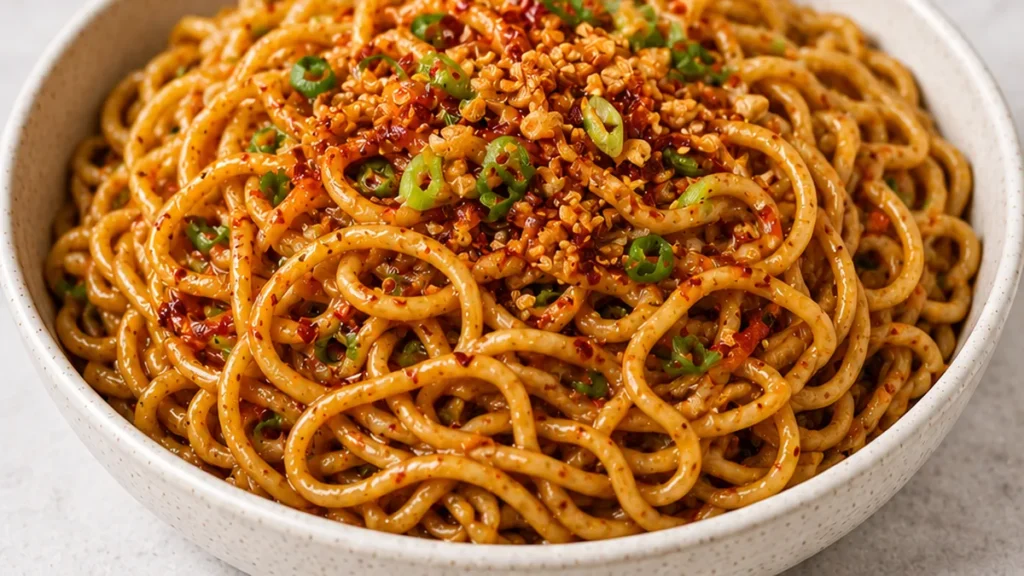
Craving a big flavor that’s both spicy and deeply savory? These Crispy Garlic Chili Oil Noodles are the viral sensation you need to try. With minimal effort, you can transform simple ingredients into a dish that’s restaurant-quality delicious. This recipe focuses on creating an intensely aromatic and flavorful chili oil that coats every strand of noodle. It’s perfect for a quick weeknight dinner or an impressive appetizer that’s sure to become a fast favorite.
Key takeaways
- Gentle, low heat is crucial for infusing aromatics without burning.
- Monitor oil temperature carefully to avoid bitterness.
- Use fresh chili flakes for optimal color and flavor.
- Adjust spice levels to your personal preference.
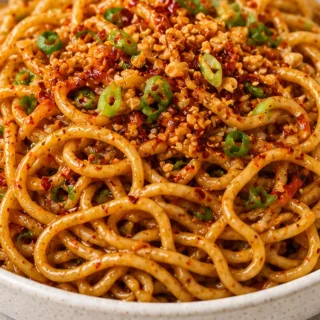
Crispy Garlic Chili Oil Noodles! So Easy!
Ingredients
- 3/4 cup sesame or peanut oil
- 1 small head garlic, finely chopped
- 2 smaller shallots, thinly sliced
- 1 bay leaf
- 3 tablespoons sesame seeds
- 3 teaspoons ginger, grated
- 1-3 tablespoons crushed red pepper flakes, to taste
- 1 tablespoon Korean chili flakes (Gochugaru) ( (optional))
- 1/2 teaspoon paprika
- 1/4-1 /2 teaspoon cayenne pepper, to taste
Instructions
- In a medium skillet, combine the sesame oil, garlic, shallots, and bay leaf. Cook over medium heat until the garlic turns golden and is crisping, about 5-8 minutes.
- Stir in the sesame seeds and ginger, cook for 1 minute more until fragrant.
- Pour the infused oil into a large heatproof bowl. Add the crushed red pepper flakes, Gochugaru (if using), paprika, and cayenne pepper. Season with salt to taste.
- Cook your favorite noodles according to package directions. During the last 3 minutes of cooking, add any desired vegetables like bell peppers.
- Save about 1/4 cup of the starchy noodle water, then drain the noodles and vegetables.
- Toss the hot noodles and vegetables immediately with the chili oil mixture. Add a splash of the reserved noodle water to reach your desired sauce consistency. Add tamari or soy sauce and any fresh herbs.
Notes
The technique that makes it
The magic behind truly flavorful chili oil lies in the gentle infusion of aromatics into the oil at the correct temperature. This recipe utilizes a low-and-slow heating process, which is crucial for extracting the maximum flavor from the garlic, shallots, and spices without burning them. Burning the garlic or chili flakes will result in a bitter, acrid taste that cannot be salvaged. The oil acts as a solvent, drawing out fat-soluble flavor compounds. Starting with cold oil and gradually increasing the heat allows the aromatics to release their essence gradually. The shallots provide a subtle sweetness and depth, while the garlic offers its pungent, savory notes. The bay leaf contributes a faint herbal aroma that complements the other ingredients. Toasting the sesame seeds in the oil adds a nutty complexity. The different types of chili flakes (red pepper, gochugaru, cayenne) provide layers of heat and color. Gochugaru, in particular, offers a mild, smoky sweetness and bright red hue. Paprika adds color and a mild pepper flavor. Maintaining a temperature that simmers gently, rather than aggressively frying, is key to achieving a rich, aromatic, and deeply colored chili oil that is smooth and palatable, not harsh or burnt.
Troubleshooting
- Problem: Chili oil tastes burnt or bitter.
Fix: This is usually due to overheating. The garlic, shallots, or chili flakes likely burned. Unfortunately, burnt chili oil is difficult to salvage. You may need to start over, ensuring the heat is kept very low, just enough to gently sizzle the aromatics. - Problem: Chili oil is not very flavorful or aromatic.
Fix: The oil may not have been heated long enough, or the temperature was too low to effectively extract flavors. Try gently reheating the oil with the aromatics for a longer period, ensuring it simmers without burning. Ensure you used enough garlic and shallots. - Problem: Chili oil has a weak or dull color.
Fix: This can happen if the chili flakes were old or if the oil wasn’t heated sufficiently to extract the pigment. Using fresh, bright chili flakes, especially gochugaru if possible, and ensuring a proper, gentle heating process will yield a richer color. - Problem: Chili oil is too spicy.
Fix: Adjust the amount of cayenne pepper and red pepper flakes in future batches. For immediate relief, you can dilute the current batch by mixing it with a neutral oil like vegetable or canola oil.
Substitutions
- Sesame or Peanut Oil: You can substitute with a neutral oil like canola, vegetable, or grapeseed oil. The flavor profile will be less nutty and complex, but the infusion process remains the same.
- Shallots: Finely minced yellow or white onion can be used, though the sweetness will be slightly different and the texture might be less delicate. Use about half the amount of onion compared to shallots.
- Korean Chili Flakes (Gochugaru): If unavailable, you can omit them or increase the amount of regular red pepper flakes slightly. The unique smoky sweetness and color of gochugaru will be missed.
- Ginger: While fresh ginger adds a bright, zesty note, you can omit it if necessary. The chili oil will still be delicious, just without that specific aromatic lift.
Pro tips
- Use good quality chili flakes for the best flavor and color.
- Don’t burn the garlic! Watch it carefully to achieve a golden crisp, not bitter.
- Adjust the spice level by varying the amount of chili flakes and cayenne.
Enjoy these addictive chili oil noodles and feel free to customize with your favorite additions. Perfect for any occasion!
More from Vegan Pasta →
Frequently asked questions
Can I make chili oil for noodles ahead of time?
Yes, homemade chili oil can be prepared several days in advance. Store it in an airtight container at room temperature. It will continue to meld and deepen in flavor. Ensure all ingredients are fully submerged in the oil for optimal preservation and to prevent spoilage.
What can I substitute for Sichuan peppercorns in chili oil?
If Sichuan peppercorns are unavailable, you can omit them or substitute with a pinch of black peppercorns for a slight peppery bite. For a different aromatic, consider a tiny amount of star anise, but use it sparingly as it has a strong flavor. The overall heat and chili flavor will still be prominent.
How do I store leftover crispy garlic chili oil noodles?
Leftover noodles are best stored in an airtight container in the refrigerator for up to 2 days. The noodles may become slightly softer upon refrigeration. For best results, reheat gently in a pan or microwave, adding a splash of water or oil if they seem dry.
Are there other vegetables that go well with chili oil noodles?
Absolutely! Bok choy, spinach, or steamed broccoli are excellent additions. For added texture and flavor, consider sautéed mushrooms, snap peas, or edamame. These vegetables complement the richness of the chili oil and add a healthy boost to the dish.