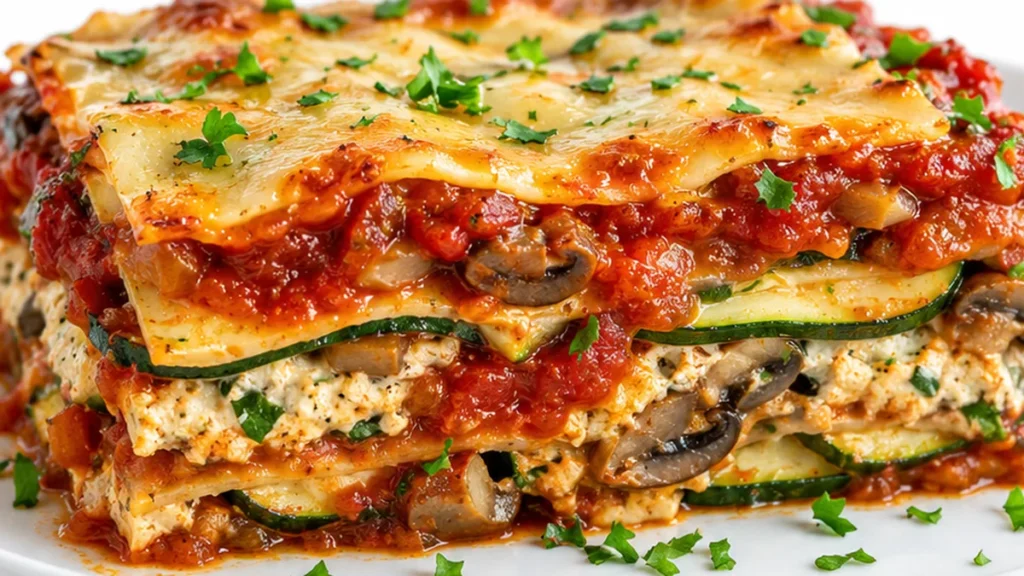
This vegan zucchini lasagna recipe uses fresh zucchini slices instead of pasta. It’s layered with a rich tomato sauce and creamy cashew cheese.
Key takeaways
- Properly salting and drying zucchini prevents excess moisture.
- Using nutritional yeast enhances flavor and provides nutrients.
- Experimenting with different vegetables can add unique flavors.
- Controlling cooking time is crucial for maintaining texture.
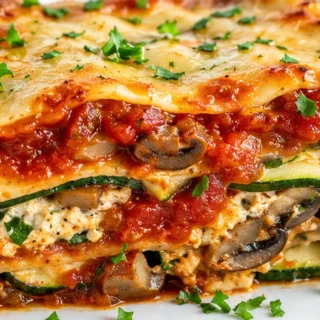
Vegan Zucchini Lasagna Recipe
Ingredients
Instructions
- Preheat oven to 350°F (175°C) and grease a 9×13 inch casserole dish.
- Slice zucchini lengthwise into very thin lasagna sheets.
- Heat olive oil in a skillet over medium heat. Add mushrooms and shallots, season with salt, and cook until tender, about 5-7 minutes.
- Stir in marinara sauce and cook for 2 minutes until bubbling.
- In a food processor, combine cashews, tofu, nutritional yeast, lemon juice, basil, and salt. Process until smooth and creamy, adding water if needed.
- Assemble the lasagna: spread marinara sauce on the bottom, layer zucchini, cashew-tofu mixture, and more marinara. Repeat layers twice more, ending with marinara.
- Cover with foil and bake for 30 minutes. Remove foil and bake for another 10-15 minutes until bubbly.
Understanding Zucchini’s Role in Lasagna
Zucchini serves as a low-carb alternative to traditional pasta in this vegan zucchini lasagna recipe. Its high water content—about 95%—can lead to a watery dish if not managed properly. To mitigate this, it’s essential to salt the zucchini slices and let them sit for 20-30 minutes before cooking. This process draws out excess moisture, helping to maintain the structure of the lasagna.
Common Issues with Zucchini Lasagna and How to Fix Them
One common issue with zucchini lasagna is excessive moisture, which can lead to a soggy dish. This typically occurs when the zucchini is not properly salted or cooked before layering. To prevent this, ensure to salt the slices, allow them to rest, and pat them dry before assembling the lasagna. Another issue is the lack of flavor in the filling; using strong herbs and spices can enhance the overall taste. Additionally, overcooking the zucchini can result in a mushy texture, so aim for a tender yet firm bite.
Ingredient Swaps and Their Impact
While zucchini is the star of this dish, there are several ingredient swaps that can be made. For instance, if you’re looking for a different flavor profile, consider using eggplant instead of zucchini. Eggplant has a similar texture but offers a slightly different taste and can hold up well in layers. Alternatively, using a mix of spinach and mushrooms in the filling can add depth and earthiness. However, be aware that adding more vegetables may require adjustments in cooking time to ensure everything is properly cooked through.
The Unique Aspect of Vegan Zucchini Lasagna
This vegan zucchini lasagna recipe stands out because it utilizes nutritional yeast as a cheese substitute. Nutritional yeast not only adds a cheesy flavor but also provides a boost of protein and B vitamins. This ingredient is particularly beneficial in vegan cooking, as it helps to create a satisfying umami flavor that mimics traditional cheese. Additionally, the layering technique used here can be adapted for various vegetables, making this dish versatile and customizable.
How to Successfully Make Ahead and Store Vegan Zucchini Lasagna
Preparing vegan zucchini lasagna in advance can save time and ensure a delicious meal is ready when needed. To make ahead, assemble the lasagna but do not bake it. Cover it tightly with plastic wrap or aluminum foil and refrigerate for up to 24 hours. If you wish to store it for longer, consider freezing it. Wrap the assembled lasagna in plastic wrap and then in aluminum foil to prevent freezer burn. It can be frozen for up to three months. When ready to eat, thaw it overnight in the refrigerator before baking. Bake at the recommended temperature, adding 10-15 minutes to the cooking time if baking from frozen. Proper storage allows the flavors to meld and can even enhance the taste of the dish.
Scaling the Recipe for Larger Gatherings
Scaling a vegan zucchini lasagna recipe can be straightforward, but attention to ingredient ratios is crucial for maintaining flavor and texture. For every additional layer, increase the amount of zucchini by about 200 grams and adjust the sauce and cheese components accordingly. If you typically use a 400-gram zucchini for a single batch, consider using 800 grams for a double batch. Ensure you have a larger baking dish to accommodate the increased volume, which may require a longer baking time. Monitor the lasagna closely as it cooks, as larger portions may need additional time to ensure everything is heated through and the flavors meld properly.
Understanding the Impact of Equipment on Cooking Time and Texture
The type of equipment used can significantly affect the outcome of your vegan zucchini lasagna. A glass baking dish may require a longer cooking time compared to metal, which conducts heat more effectively. Additionally, using a convection oven can reduce baking time by about 25%, allowing for a crispier texture. If using a slow cooker, be mindful that the lasagna may not develop the same caramelized top as when baked in an oven. Adjust the liquid content accordingly, as slow cookers retain moisture. Always check for doneness by ensuring the zucchini is tender and the sauce is bubbling.
Pairing and Serving Suggestions for Vegan Zucchini Lasagna
When serving vegan zucchini lasagna, consider complementary side dishes and beverages to enhance the meal experience. A simple arugula salad with a lemon vinaigrette pairs well, providing a fresh contrast to the rich flavors of the lasagna. For beverages, a light-bodied red wine, such as Pinot Noir, can complement the savory tomato sauce. Alternatively, a sparkling water with a slice of lemon can cleanse the palate. For a more substantial meal, consider serving the lasagna with garlic bread or a side of roasted vegetables. These pairings can elevate the dish and create a well-rounded dining experience.
Understanding the Role of Zucchini in Texture and Flavor
Zucchini serves as a key component in vegan zucchini lasagna, contributing not only to the dish’s flavor but also its overall texture. When sliced thinly, zucchini can mimic the structure of traditional lasagna noodles, providing a satisfying bite. However, the moisture content in zucchini can lead to a soggy lasagna if not properly managed. To mitigate this, it’s essential to salt the zucchini slices beforehand, allowing them to release excess water. This process, known as sweating, can reduce the moisture content significantly, ensuring a firmer texture in the final dish. For optimal results, aim for a resting period of at least 30 minutes after salting, then pat the slices dry with a paper towel. This technique not only enhances the texture but also intensifies the zucchini’s flavor, creating a more balanced dish.
Choosing the Right Vegan Cheese for Optimal Melting
The choice of vegan cheese can greatly influence the final outcome of your zucchini lasagna. Different brands and types of vegan cheese have varying melting properties, which can affect the overall texture and creaminess of the dish. For a lasagna that closely resembles its dairy counterpart, look for vegan cheeses that contain starches or emulsifiers, as these ingredients help achieve a gooey, melty consistency. Brands that specifically market their products for melting, such as cashew-based or coconut oil-based cheeses, tend to perform better. When using these cheeses, consider adding a touch of nutritional yeast to enhance the cheesy flavor profile. Additionally, layering the cheese throughout the lasagna rather than just on top can help ensure that each bite is flavorful and creamy.
Adapting Cooking Times Based on Equipment
The equipment used to prepare vegan zucchini lasagna can significantly impact cooking times and the final texture. For instance, using a glass baking dish may require longer cooking times compared to metal pans due to differences in heat conduction. Typically, metal pans promote more even cooking and browning, while glass may lead to slower heat absorption. As a general rule, if using a glass dish, increase the baking time by about 10-15 minutes and keep an eye on the lasagna to prevent overcooking. Additionally, if you opt for a convection oven, reduce the temperature by 20°C (about 35°F) and check for doneness earlier, as convection ovens circulate hot air more efficiently. Understanding these nuances can help achieve the perfect balance of cooked zucchini and melted cheese in your lasagna.
Understanding the Best Techniques for Layering Vegan Zucchini Lasagna
Layering is a crucial aspect of creating a successful vegan zucchini lasagna. The order in which ingredients are layered can significantly affect the final texture and flavor. Start with a base layer of sauce to prevent the bottom noodles from sticking. Then alternate between layers of zucchini, sauce, and vegan cheese. Each layer should be spread evenly to ensure proper cooking and flavor distribution. Aim for about 2-3 layers, depending on the depth of your baking dish. A common mistake is overloading the layers, which can lead to a soggy lasagna. Keep in mind that zucchini releases moisture during cooking; therefore, it’s essential to balance the amount of sauce and cheese to maintain a cohesive structure. A good guideline is to use approximately 500 grams of zucchini for every 300 grams of sauce. This ratio helps keep the dish moist without becoming overly watery.
How to Adjust Cooking Time Based on Zucchini Thickness and Oven Variability
The thickness of the zucchini slices can greatly influence the cooking time of your vegan zucchini lasagna. Thicker slices may require additional cooking time to become tender, while thinner slices can cook more quickly and risk becoming mushy. Ideally, aim for slices that are about 0.5 cm thick for optimal results. If you find that your lasagna is still firm after the recommended cooking time, cover it with foil and continue baking for an additional 10-15 minutes. Oven variances can also affect cooking time; some ovens may run hotter or cooler than the set temperature. Using an oven thermometer can help ensure accurate temperatures. A good practice is to check for doneness by inserting a knife into the lasagna; it should slide in easily when fully cooked. If you are using a convection oven, reduce the temperature by about 20°C (approximately 36°F) and monitor the cooking time closely, as convection ovens tend to cook food faster.
Pro tips
Pro tip: Best served immediately while hot!
Frequently asked questions
Can I use other vegetables instead of zucchini?
Yes, you can substitute zucchini with eggplant or thinly sliced bell peppers. Each vegetable will bring its own flavor and texture, but make sure to manage moisture levels accordingly.
How do I prevent the lasagna from being watery?
To avoid a watery lasagna, salt the zucchini slices and let them sit for at least 20 minutes. Pat them dry before layering to remove excess moisture.
Is nutritional yeast necessary for this recipe?
Nutritional yeast is not strictly necessary, but it adds a cheesy flavor and nutritional benefits. If you prefer, you can substitute it with vegan cheese or omit it altogether.
How should I store leftovers?
Store any leftover zucchini lasagna in an airtight container in the refrigerator for up to 3-4 days. Reheat in the oven or microwave until warmed through.
More from Vegan Pasta →